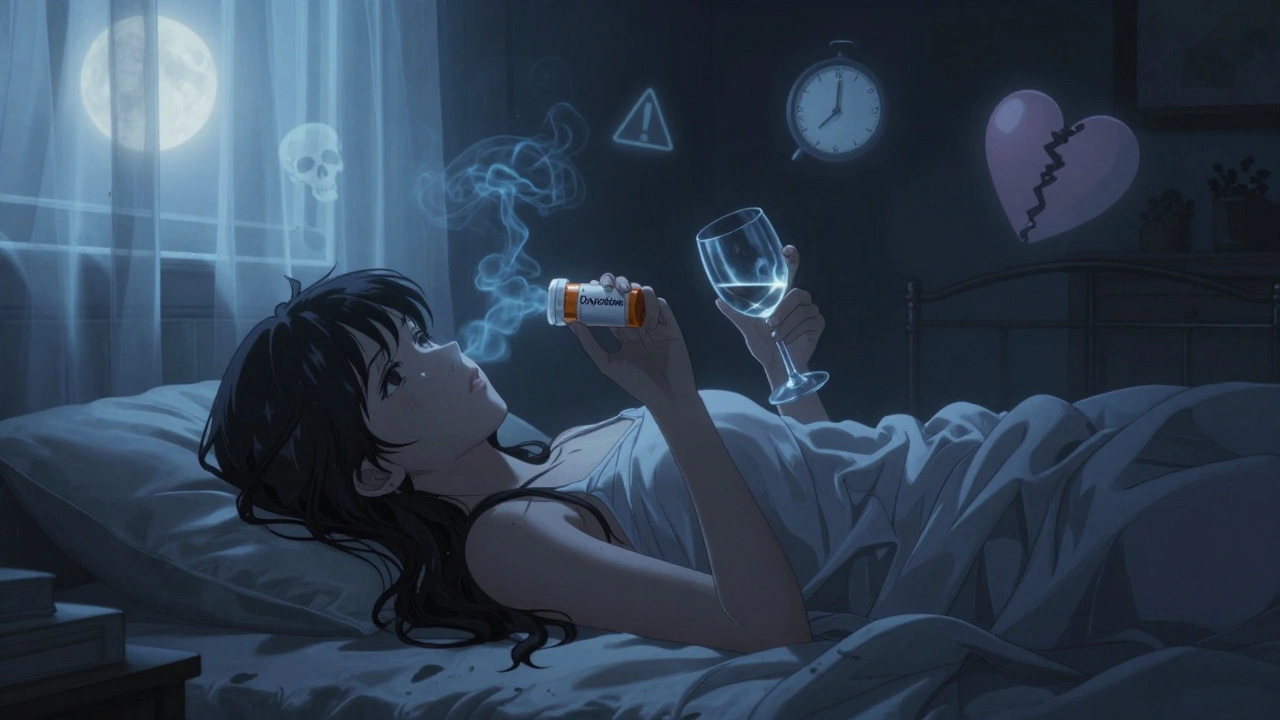
Opioid-Alcohol Risk Calculator
Critical Warning
WARNING: There is NO safe amount of alcohol when taking opioids. Even one drink significantly increases risk of fatal respiratory depression.
According to FDA data, alcohol involvement in opioid deaths increased by 90% between 2010-2019. Mixing alcohol with opioids is not about "moderation"—it's about survival.
Results
Naloxone is critical:
Keep naloxone (Narcan) available—30% of fatal buprenorphine overdoses included alcohol. Many pharmacies now offer it without a prescription.
When you mix alcohol and opioids, you’re not just doubling the risk-you’re multiplying it. The combination doesn’t just make you drowsy or dizzy. It can shut down your breathing completely, and fast. This isn’t a hypothetical danger. It’s happening right now, in homes, hospitals, and emergency rooms across the country. In 2022, alcohol and opioids were involved in over 107,000 overdose deaths in the U.S.-more than 80% of all drug overdose fatalities that year. And it’s not just street drugs. Many of these deaths involve prescription painkillers taken exactly as directed, with a glass of wine or a few beers on the side.
Why This Combination Is So Dangerous
Both alcohol and opioids are central nervous system depressants. That means they slow down your brain’s control over vital functions like breathing and heart rate. Alone, they’re risky. Together, they don’t just add up-they amplify each other in a way that’s hard to predict.A 2017 study found that 20mg of oxycodone alone reduced breathing by 28%. Add alcohol to reach a blood alcohol level of just 0.1%-the legal limit for driving in most states-and breathing dropped another 19%. That’s not a small increase. It’s enough to trigger apnea, where breathing stops for dangerous periods. Older adults are especially vulnerable. Their bodies process these substances slower, and their lungs are less able to recover from even minor suppression.
The FDA issued a black-box warning in 2016-the strongest possible alert-for all prescription opioids. It explicitly says: do not mix with alcohol. This warning didn’t come from theory. It came from real deaths. Data from the Drug Abuse Warning Network showed alcohol was involved in nearly 22% of all opioid-related deaths at the time. That number has only climbed since.
Which Opioids Are Most Dangerous With Alcohol?
Not all opioids carry the same risk, but the most commonly prescribed ones are among the deadliest when mixed with alcohol:- Oxycodone (OxyContin, Percocet)
- Hydrocodone (Vicodin, Norco)
- Fentanyl (Duragesic, Sublimaze)
- Methadone (used for pain and addiction treatment)
Even buprenorphine, often thought of as safer because it’s used in medication-assisted treatment, becomes far more dangerous with alcohol. Research from the University of Florida found that 30% of buprenorphine-related fatal overdoses included alcohol in the system.
Fentanyl is especially concerning. Between 2010 and 2019, alcohol involvement in fentanyl deaths jumped from 9% to 17%. That’s a rise of nearly 90% in less than a decade. Meanwhile, deaths involving prescription opioids and alcohol stayed steady at 10-15%, but that’s still hundreds of preventable deaths every year.
Who’s at the Highest Risk?
You might think this only affects people who misuse drugs. But that’s not true. The real danger lies in the quiet, everyday choices:- Someone taking oxycodone for back pain who has a glass of wine with dinner
- A person on methadone for opioid use disorder who drinks to cope with stress
- An older adult on hydrocodone after surgery who takes a sleeping pill and a beer
Men are more likely to die from this combination-77% of alcohol-opioid deaths in Texas between 2010 and 2019 were male. But women are not immune. And the risk isn’t just about quantity. Even small amounts of alcohol can tip the balance.
People with alcohol use disorder are 3.2 times more likely to overdose on opioids, according to the American Society of Addiction Medicine. That’s not a coincidence. It’s a direct link. When your body is already struggling to manage one depressant, adding another pushes you over the edge.
What Happens in the Body
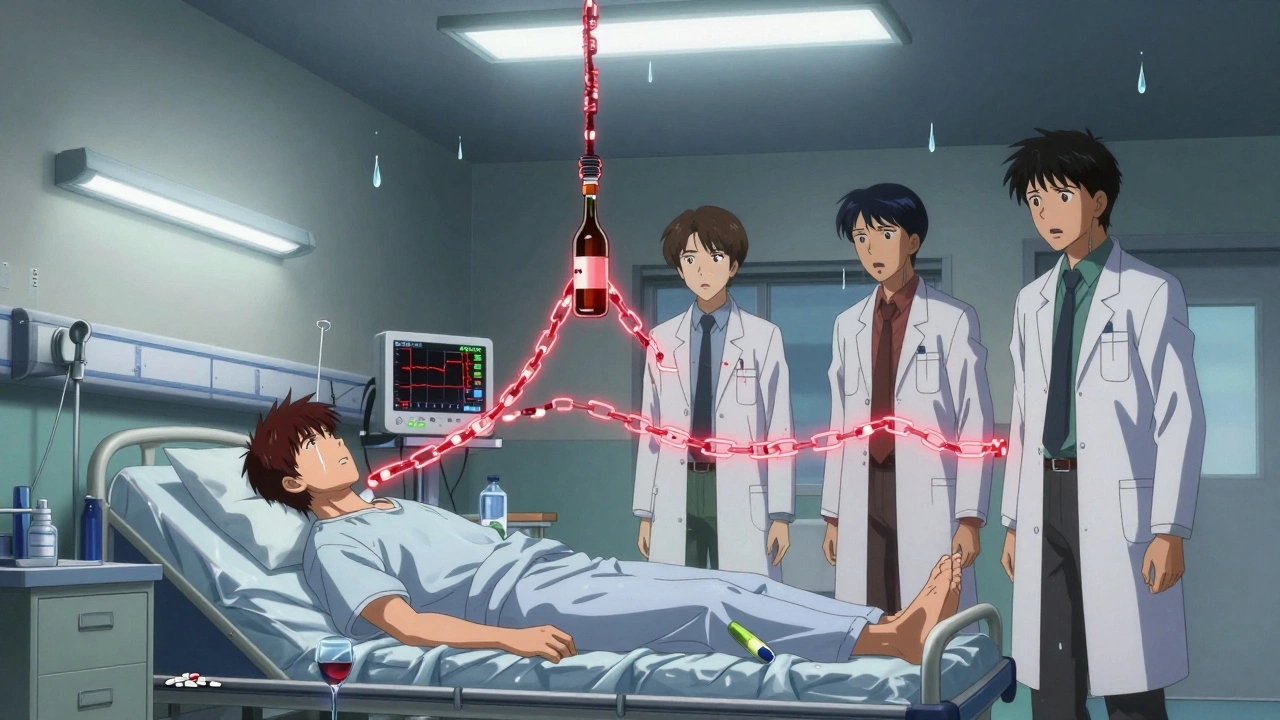
When alcohol and opioids mix, they hit the same receptors in the brainstem-the part that controls breathing. The result? Slowed, shallow breaths. Then, pauses in breathing. Then, no breathing at all.Unlike with opioids alone, where you might feel nauseous or pass out before stopping breathing, alcohol masks the warning signs. You might feel more relaxed, less in pain, even euphoric. That’s the trap. You don’t feel like you’re in danger. But your body is shutting down.
Post-mortem studies show that alcohol lowers the amount of opioid needed to cause death. Someone who could safely take 40mg of oxycodone alone might die from just 20mg if they’ve had even one drink. The threshold isn’t just lower-it’s unpredictable.
What Doctors Are Doing About It
Healthcare providers are now required to screen for alcohol use before prescribing opioids. If a patient has an alcohol use disorder, doctors are advised to avoid opioids entirely-or use extreme caution. Some clinics now use breathalyzers before dispensing medication.The FDA now requires opioid manufacturers to include clear warnings about alcohol in all patient education materials. This rule took full effect at the end of 2023. But warnings alone aren’t enough. Many patients don’t read them. Others assume it’s just a precaution, not a rule.
Doctors are also being trained to recognize early signs of respiratory depression. A 2023 study from the University of Pittsburgh found that reduced heart rate variability-a subtle change in the timing between heartbeats-can predict an alcohol-opioid overdose 30 minutes before breathing stops. This could lead to wearable monitors that alert users or caregivers before it’s too late.
What You Can Do
If you or someone you know takes opioids for pain, here’s what matters:- Never drink alcohol while taking opioids-not even one drink. There’s no safe amount.
- Ask your doctor or pharmacist: “Is it safe to have alcohol with this medication?” Don’t assume.
- If you’re on methadone or buprenorphine for addiction treatment, avoid alcohol completely. The risk of death is 4.6 times higher.
- Keep naloxone (Narcan) on hand. It can reverse an opioid overdose, even if alcohol is involved. Many pharmacies now offer it without a prescription.
- If you’re helping someone who uses both, learn the signs of overdose: slow or no breathing, blue lips or fingernails, unresponsiveness. Call 911 immediately. Don’t wait.
The CDC recommends that anyone using opioids-prescribed or not-should have naloxone nearby. In Massachusetts, 23% of naloxone reversals in 2022 involved alcohol. That means one in four people saved by naloxone were overdosing on a mix of alcohol and opioids.
Why This Problem Is Getting Worse
Despite warnings, the trend is still going up. The CDC projects alcohol-opioid deaths will rise by 7.2% each year through 2025 unless something changes. Why? Because the problem is invisible. People don’t think of alcohol as a drug. They don’t see it as dangerous when paired with medicine.Pharmaceutical companies are being held accountable. Purdue Pharma’s $6 billion settlement in 2023 included funding for alcohol screening programs for opioid patients. That’s a step forward. But real change happens one conversation at a time.
The Substance Abuse and Mental Health Services Administration (SAMHSA) launched the ‘Don’t Mix’ campaign in January 2023 with $15 million to raise awareness. Their goal? A 10% drop in co-involved overdoses by 2025. It’s ambitious. But it’s possible-if people start talking about it.
Alcohol and opioids don’t just increase risk. They create a silent, invisible killer. The body doesn’t warn you. The mind doesn’t realize it’s in danger. But the data doesn’t lie. Every year, tens of thousands of people die because they didn’t know-or didn’t believe-that one drink could be the last.
It’s Not About Willpower. It’s About Biology.
This isn’t about being irresponsible. It’s not about bad choices. It’s about how your body works. When two depressants meet, your brain loses control over breathing. No amount of willpower can override that. No amount of experience makes you immune. Even if you’ve mixed them before and lived, the next time could be the time it kills you.The safest choice isn’t to cut back. It’s to avoid the mix entirely. There is no safe level of alcohol when you’re on opioids. Not one sip. Not one glass. Not one night.
If you’re taking opioids, your body is already under stress. Alcohol doesn’t help. It doesn’t relax you. It doesn’t make the pain better. It just makes you more likely to die.
Jade Hovet
December 12, 2025 AT 08:23OMG this is so real 😭 I had a cousin who took oxycodone for back pain and had a glass of wine every night... she didn't even think it was a big deal. Then one morning she just... didn't wake up. Please everyone, just don't mix. One drink isn't worth it. 💔
nithin Kuntumadugu
December 13, 2025 AT 13:45Of course the FDA says don't mix... but who really controls the pharmaceutical industry? 🤔 I bet this whole thing is a ploy to push naloxone sales and keep people dependent on the system. Alcohol's been around for 10,000 years, opioids for centuries. Now suddenly it's a death sentence? Sounds like fearmongering to me. 🤷♂️
John Fred
December 13, 2025 AT 19:45As a pain management nurse, I see this daily. The biggest myth? 'I only have one glass.' Nope. Even 12oz of beer with 10mg oxycodone can drop your SpO2 into the 80s. We’ve got patients on buprenorphine who think 'moderation' is safe. Spoiler: it’s not. Your brainstem doesn’t do moderation. 🚨
Pro tip: If you're on opioids, swap wine for sparkling water. Your lungs will thank you. And yes, naloxone is a must-have. Keep it in your glovebox, your purse, your nightstand. It’s not morbid-it’s smart.
Harriet Wollaston
December 15, 2025 AT 14:44This hit me hard. My mom’s on hydrocodone after her hip surgery, and she always says, 'It’s just one glass to help me sleep.' I didn’t realize how dangerous it was until I read this. I’m going to talk to her gently-no guilt, just love. She deserves to be safe. 🤗
Also, thank you for mentioning naloxone. I just ordered two kits online. Better safe than sorry.
sharon soila
December 17, 2025 AT 12:41There is no such thing as safe mixing. Not because of willpower. Not because of morality. But because biology is not negotiable. Your brainstem does not negotiate. It does not care if you are 'responsible.' It does not care if you've done it before. When two depressants meet, the system fails. Period.
Choosing not to drink while on opioids isn't a sacrifice. It's a surrender to truth. And truth saves lives.
nina nakamura
December 18, 2025 AT 01:51Stop acting like this is a revelation. Everyone who’s ever taken painkillers knows alcohol is a bad idea. This article reads like a public service announcement written by a high school health teacher. You don’t need 107,000 deaths to figure out that mixing depressants is dangerous. Duh.
Also, why is everyone acting like alcohol is some innocent bystander? It’s a drug. A legal one, sure. But still a depressant. Get over yourselves.
Hamza Laassili
December 19, 2025 AT 00:15THIS IS WHY AMERICA IS FALLING APART!! They let you buy opioids like candy and then say 'oh btw don't drink' like we're all idiots!! We're not stupid-we're just trying to live!! My uncle took his meds and had a beer after work-HE HAD A JOB!! A FAMILY!! And now he's gone because some bureaucrat didn't warn him hard enough??
STOP BLAMING PEOPLE. START HOLDING PHARMA ACCOUNTABLE!!
Constantine Vigderman
December 19, 2025 AT 05:21Wait-so if I'm on buprenorphine and I have a sip of wine, am I literally playing Russian roulette? 🤯 I thought buprenorphine was 'safer'... but now I'm reading 30% of fatal cases had alcohol? That’s insane.
Also, the heart rate variability thing? That’s wild. So we could have wearables that warn us before we stop breathing? That’s sci-fi becoming real. I’m getting a Fitbit with pulse ox now. Anyone else?
Cole Newman
December 19, 2025 AT 15:38So you’re telling me if I take my pain meds and have a beer after work, I’m basically a walking corpse? Cool. So what’s the alternative? Suffer in silence? I’m not gonna give up my one beer after a 12-hour shift just because some doctor says so. I’ve been doing it for 5 years. I’m fine.
Webster Bull
December 20, 2025 AT 10:14One drink. One pill. One night. That’s all it takes.
It’s not about being strong.
It’s about being alive.
Bruno Janssen
December 20, 2025 AT 16:55I used to mix them. I don’t anymore. Not because I was scared. Not because I read an article. Because one night, I woke up on the floor. My wife was screaming. I couldn’t breathe. I didn’t remember falling. I just remember the silence.
I still take my meds. But I don’t touch alcohol. Ever.
It’s not worth the silence.