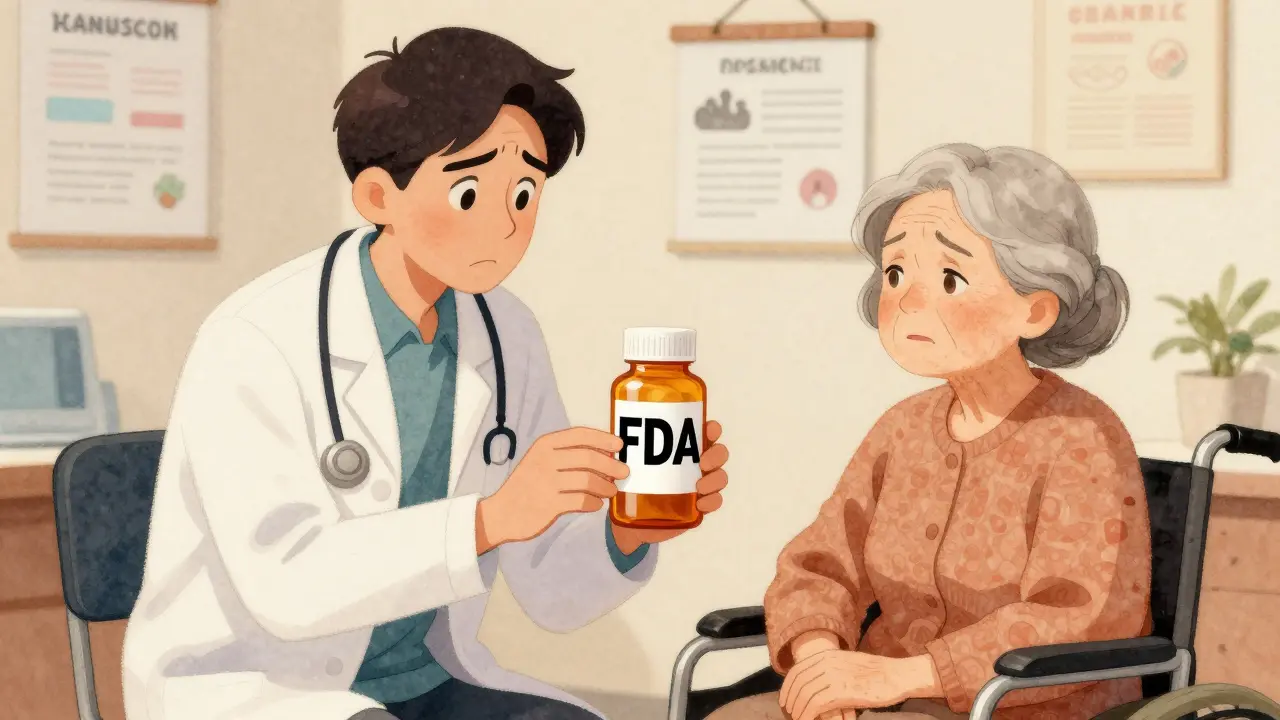
Did you know that antipsychotic medications, often prescribed to calm agitation in seniors with dementia, could actually increase their risk of stroke? This isn't a hypothetical danger-it's a well-documented risk backed by decades of research. Every year, thousands of older adults with dementia receive these drugs despite clear evidence of harm.
FDA The U.S. Food and Drug Administration is the federal agency responsible for protecting public health by regulating food, drugs, and medical devices issued a black box warning in 2005 for antipsychotic medications used in elderly patients with dementia. This warning came after analyzing 17 placebo-controlled trials. The data showed a 1.6 to 1.7 times higher risk of death in drug-treated patients compared to placebo. The most critical concern is the stroke risk associated with these medications. A 2012 American Heart Association study found that even brief exposure to antipsychotics increased stroke risk by 80%. This risk isn't limited to long-term use-it happens quickly.How Antipsychotics Increase Stroke Risk
Antipsychotic medications affect the body in ways that can trigger strokes. They often cause orthostatic hypotension-sudden drops in blood pressure when standing up-which increases fall risk and stroke likelihood. These drugs also contribute to metabolic syndrome, leading to weight gain, high blood sugar, and abnormal cholesterol levels. These factors together disrupt blood flow to the brain, raising stroke risk. Research from Johns Hopkins Bloomberg School of Public Health (2015) confirmed that antipsychotics interfere with neurotransmitter systems that regulate cerebral blood flow. This makes seniors with dementia especially vulnerable.
Typical vs. Atypical Antipsychotics: Which Is Riskier?
There are two main types of antipsychotics: typical (first-generation) and atypical (second-generation). Many assume atypical drugs like risperidone or quetiapine are safer, but studies show both carry significant risks. A 2023 Neurology A peer-reviewed medical journal publishing research on neurological disorders review of five observational studies found that long-term use of typical antipsychotics had higher cerebrovascular event risk than atypical agents. However, even atypical drugs increased stroke risk by 1.8 times in a large Veterans Affairs study. The American Journal of Epidemiology (2015) noted that stroke partially explains the higher mortality risk with typical antipsychotics, but both classes remain dangerous for seniors with dementia.
Why Guidelines Warn Against These Medications
The Beers Criteria A set of guidelines identifying potentially inappropriate medications for older adults published by the American Geriatrics Society explicitly advises against using antipsychotics for dementia-related behavioral symptoms. Their 2015 update states these drugs should never be first-line treatment due to increased mortality and stroke risk. This guidance is based on overwhelming evidence: a 2020 PMC study analyzing community-dwelling older veterans found antipsychotic use increased all-cause mortality in both dementia and non-dementia patients. The FDA's warning remains active today, and clinical guidelines worldwide emphasize avoiding these drugs whenever possible.
Non-Pharmacological Alternatives That Work
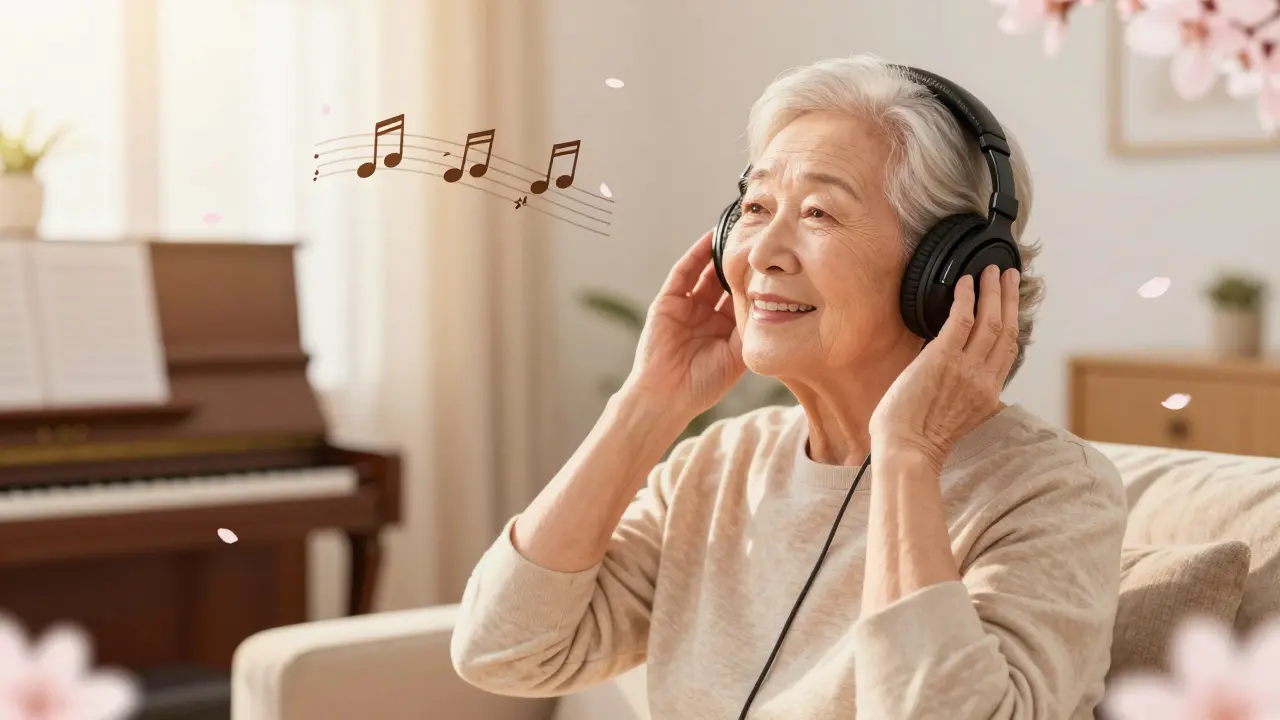
Experts agree: behavioral and psychological symptoms of dementia (BPSD) should be managed without medication first. Here are proven alternatives:
- Musical therapy - Studies show personalized music reduces agitation in 70% of dementia patients
- Structured daily routines - Consistent schedules for meals, walks, and activities cut confusion-related aggression
- Environmental adjustments - Reducing noise, using soft lighting, and removing clutter lowers stress
- Physical activity - Daily 20-minute walks improve mood and sleep without side effects
- Training for caregivers - Teaching family members how to respond to challenging behaviors decreases the need for medication
A 2021 Journal of the American Geriatrics Society A publication focused on improving health care for older adults trial found non-drug approaches were as effective as antipsychotics for managing aggression, with zero stroke risk. These methods work best when started early and tailored to individual needs.
What Caregivers Should Do Right Now
If your loved one is on antipsychotics for dementia symptoms, take these steps:
- Ask the doctor: "Is this medication absolutely necessary? Have we tried non-drug options first?"
- Request a medication review-many seniors take antipsychotics long after symptoms improve
- Monitor for side effects like dizziness, confusion, or unsteady walking
- Work with a dementia specialist to create a personalized non-pharmacological care plan
The American Heart Association stresses that antipsychotic therapy should only be considered "after alternative strategies have been fully investigated." For many families, switching to non-drug approaches means safer care and better quality of life.
Are all antipsychotics equally dangerous for seniors with dementia?
No, but both typical and atypical antipsychotics carry serious risks. Typical antipsychotics (like haloperidol) show higher stroke risk for long-term use, while atypicals (like risperidone) still increase stroke risk by 80% even with short-term use. A 2023 Neurology review found no safe class-both types are linked to higher cerebrovascular events in dementia patients. The key takeaway: no antipsychotic is safe for routine dementia symptom management.
Can antipsychotics ever be used safely in dementia care?
Only in rare, extreme cases where other treatments fail and the patient is at immediate risk of harming themselves or others. Even then, guidelines require strict monitoring and short-term use only. The American Geriatrics Society states antipsychotics should be used as a last resort for less than 12 weeks. Many nursing homes have reduced antipsychotic use by 50% through better non-drug strategies, proving safer options exist for most cases.
What are the most effective alternatives to antipsychotics?
Music therapy, structured routines, and environmental adjustments are the most evidence-based alternatives. A 2022 study in the Journal of Alzheimer's Disease A journal publishing research on Alzheimer's disease and related disorders found personalized music reduced agitation in 75% of dementia patients within two weeks. Physical activity programs cut aggressive behaviors by 40% in nursing home residents. Simple changes like using daylight lamps to regulate sleep cycles or removing mirrors that cause confusion also show strong results. These approaches work better than medication for most behavioral symptoms.
How common is antipsychotic use in dementia care despite the risks?
Alarmingly common. A 2024 analysis of U.S. nursing home data found 1 in 4 residents with dementia still receives antipsychotics, even though guidelines recommend avoiding them. In the UK, NHS data shows similar rates-17% of dementia patients in care homes are prescribed these drugs. This happens because families often feel pressured to use medication when behavioral symptoms worsen, and some doctors lack training in non-pharmacological approaches. But studies prove most agitation can be managed safely without drugs when caregivers receive proper support.
What should I do if my loved one is already on antipsychotics?
Schedule an immediate medication review with their doctor. Ask: "Can we reduce or stop this drug?" Many seniors can safely taper off antipsychotics under supervision. A 2020 Journal of Clinical Psychiatry A publication covering clinical research in psychiatry trial showed 60% of dementia patients stopped taking antipsychotics without worsening symptoms when given structured non-drug support. Never stop abruptly-work with a specialist to create a safe withdrawal plan. Also, request training on managing behaviors without medication through local dementia support groups.
Laissa Peixoto
February 6, 2026 AT 05:18It's important to consider the ethical implications of prescribing antipsychotics.
The trade-off between sedation and safety is a tough call.
Many families feel pressured to use these drugs when they see their loved ones agitated.
But the risks are real-stroke, death, and other complications.
Studies show even short-term use increases stroke risk by 80%.
The FDA's black box warning in 2005 was based on solid evidence.
Yet many doctors still prescribe them.
Why? Maybe because there's a lack of training in non-drug approaches.
Or maybe because it's easier to write a prescription than to implement behavioral strategies.
But the alternatives work.
Musical therapy, structured routines, environmental adjustments-these are proven.
A 2021 study in JAGS found non-drug approaches as effective as antipsychotics.
Caregivers need support to implement these.
It's not just a medical issue-it's a societal one.
Lana Younis
February 6, 2026 AT 12:35Hey everyone, just read this. The FDA warning is no joke.
But sometimes families feel pressured to use meds when they see their loved ones agitated.
Might need more education on alternatives.
Like music therapy works wonders for my grandma.
Spelling might be off lol.
Anyway, this is important stuff.
Samantha Beye
February 7, 2026 AT 14:44This is crucial info.
Rene Krikhaar
February 7, 2026 AT 20:15Ive seen so many cases where antipsychotics were overused.
Non drug options work better for most people.
Caregivers need support too
one hamzah
February 9, 2026 AT 00:43Wow! This is so important! 🌍 Music therapy is a game-changer.
Ive seen it help in India too.
Always look for alternatives first! 💡
Matthew Morales
February 9, 2026 AT 01:33This is so true! 😊 Many people don't know about the risks.
I think non drug stuff works way better.
Typos happen but yeah, we need to push for safer options!
Diana Phe
February 10, 2026 AT 03:33Big Pharma is pushing these drugs to make money.
Carl Crista
February 12, 2026 AT 00:31Antipsychotics are dangerous.
FDA is controlled by pharma.
They suppress alternative treatments.
Everyone knows this
Dr. Sara Harowitz
February 13, 2026 AT 01:33This article is correct.
However, many doctors ignore the guidelines.
Antipsychotics should never be used.
Period.
The evidence is clear.
We need to hold doctors accountable.
Joyce cuypers
February 14, 2026 AT 06:49Im a caregiver.
These meds can be dangerous.
But sometimes its hard to find alternatives.
We need more support for families.
Typos happen but this is important
Lisa Scott
February 14, 2026 AT 13:29Pharma profits.
Jennifer Aronson
February 14, 2026 AT 17:20The data presented is compelling.
Non pharmacological interventions should be prioritized.
However, implementation challenges exist in healthcare systems.
Kate Gile
February 15, 2026 AT 21:49This is critical information.
Families need to know the risks.
Lets advocate for better alternatives.
Small changes can make a big difference.