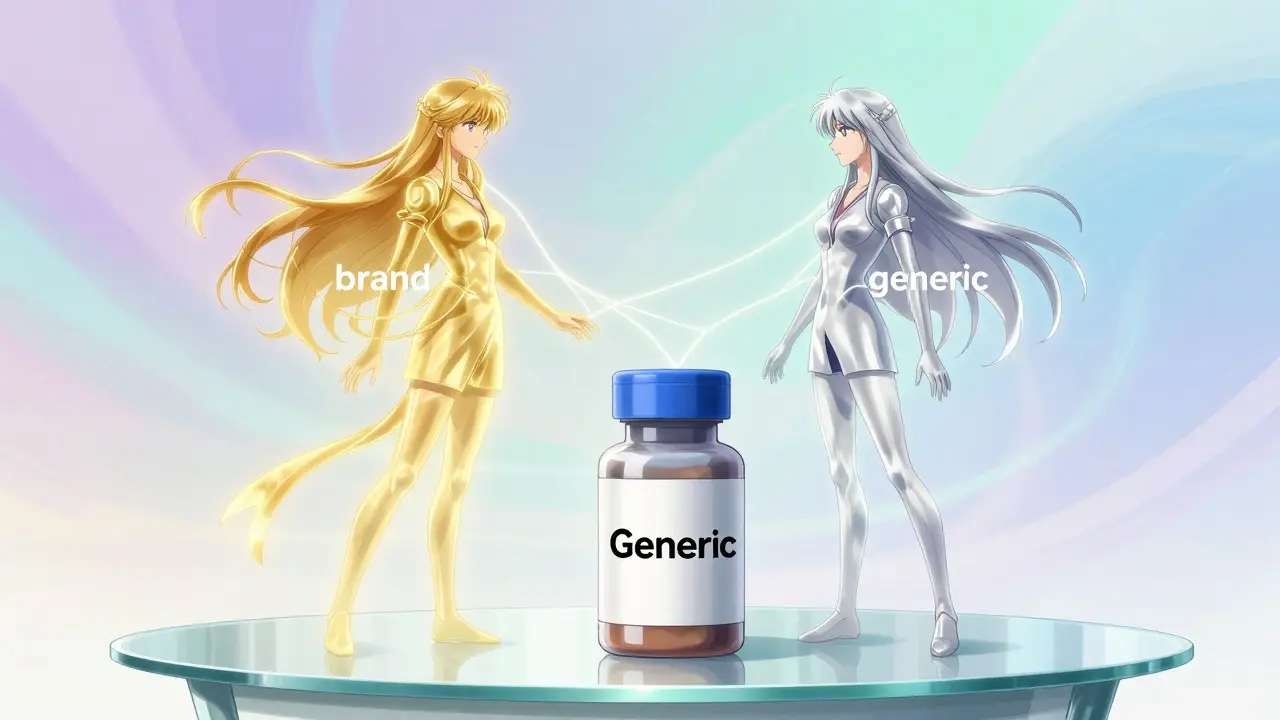
Imagine a blockbuster drug losing its patent protection. Traditionally, that moment triggers a flood of cheap copies from competitors, slashing prices and profits for the original maker. But there is a twist in this tale: the brand-name manufacturer might release their own copy, known as an authorized generic is a drug marketed by the brand-name manufacturer under a generic label rather than through traditional generic competitors who file Abbreviated New Drug Applications (ANDAs). This strategy allows companies to keep some revenue while blocking out third-party rivals. As we look toward the late 2020s, the role of these products is shifting. The market is no longer just about blocking competition; it’s about navigating new regulatory hurdles and changing patient expectations. Understanding where authorized generics are heading requires looking at recent data, regulatory moves, and the massive wave of patent expirations on the horizon.
The Current State of Authorized Generic Launches
To understand the future, we have to look at what has happened recently. Between 2010 and 2019, researchers from Health Affairs tracked 854 authorized generic launches. The peak year was 2014, showing how heavily brands relied on this tactic during that period. However, the trend has cooled down. A report from RAPS in June 2025 noted that the practice of delaying authorized generic launches has declined. Why? Because the strategy is getting harder to pull off effectively against a backdrop of tighter scrutiny and faster competitor entry.
Historically, brands timed these launches carefully. In three-fourths of cases between 2010 and 2019, authorized generics entered the market only after the first traditional generic competitor got approval. This timing helped avoid cannibalizing their own brand sales too early. In markets where generics were eligible for 180-day exclusivity, about 70 percent of authorized generics launched before or during that exclusivity window. This precise timing was designed to maximize competitive advantage against traditional generic entrants. Today, that playbook is evolving. Brands are less likely to hold back, partly because the financial benefit is shrinking as traditional generics become more aggressive and efficient.
Market Drivers: Patent Cliff and Growth Projections
The biggest driver for any generic strategy, including authorized ones, is the "patent cliff." According to DrugPatentWatch analysis, between 2025 and 2030, branded drugs generating between $217 billion and $236 billion in annual sales will lose market exclusivity. That is a massive amount of revenue at risk. For brand manufacturers, authorized generics offer a way to capture some of that value without fully surrendering the market to low-cost competitors.
The broader context is significant. Nova One Advisor projects the U.S. generic drugs market size will reach USD 196.90 billion by 2034, growing from USD 138.24 billion in 2024. This represents a compound annual growth rate (CAGR) of 3.6% from 2025 to 2034. Globally, the generic drug market is expected to grow from approximately $450-$500 billion in the mid-2020s to exceed $700-$800 billion by the early 2030s. This robust expansion means there will always be a need for strategies to manage the transition from branded to generic status. Authorized generics remain a key tool in that toolkit, even if their dominance is waning slightly in favor of other tactics.
Regulatory Shifts and the FDA Pilot Program
One of the most impactful changes on the horizon comes from the FDA. In October 2025, the agency announced a novel pilot program to prioritize ANDA reviews for generic drugs utilizing U.S.-based manufacturing and testing. This move aims to encourage investment in domestic drug production. For authorized generics, this creates a new incentive structure. If a brand manufacturer wants to launch an authorized generic, doing so with U.S.-sourced ingredients could lead to faster approval times. This could make domestic production more attractive for both traditional and authorized generics, potentially reshaping supply chains.
Regulatory scrutiny is also increasing. Policymakers are examining the impact of authorized generics on competition and pricing. A study in JAMA Health Forum (2025) estimated that policies promoting timely generic availability could save billions. Specifically, excess spending driven by extended market exclusivity reached $2.5 billion in commercial plans and $2.4 billion in Medicare within three years post-expiration for certain drugs. While authorized generics aren't always the sole cause of these delays, they contribute to the landscape that regulators are trying to fix. The pressure is on to ensure that these strategic moves don't stifle true competition or inflate costs for patients.
Therapeutic Areas and Product Types
Not all drugs are treated equally when it comes to authorized generics. Data shows that authorized generic launches are more prevalent for oral solid drug products, such as tablets and capsules. The percentage of total authorized generic launches for these forms is far higher than their overall proportion in the at-risk set. Why? It’s simpler. Obtaining ANDA approval for oral solids is generally easier and cheaper than for complex injectables or biologics. This makes them prime targets for brand manufacturers seeking to counter traditional generic competition quickly.
However, the future may bring complexity into the mix. As high-revenue monoclonal antibodies like ustekinumab and vedolizumab lose exclusivity starting in 2025, the focus is shifting toward biosimilars. There is a projected $25 billion opportunity for oncology and immunology biosimilars by 2029. While authorized generics for biologics are rarer due to the complexity of proving similarity, the strategic logic remains similar. Brands may explore ways to maintain presence in these high-value markets as biosimilar competition intensifies. The ease of entry for oral solids versus the difficulty for biologics creates two distinct strategic paths for manufacturers.
| Feature | Traditional Generic | Authorized Generic |
|---|---|---|
| Manufacturer | Third-party competitor | Original brand manufacturer |
| Approval Pathway | ANDA filing required | Leverages existing NDA, often faster |
| Pricing Strategy | Aggressive price cuts to gain share | Moderate discounts to block competitors |
| Market Impact | High volume, lower margins | Preserves brand equity, moderate volume |
| Regulatory Scrutiny | Standard review | Increasing focus on anti-competitive effects |

Economic Implications for Patients and Payers
At the end of the day, the cost falls on someone. The AAM's 2025 Savings Report, in partnership with the IQVIA Institute, reveals that generic and biosimilar medicines created $467 billion in savings in 2024 for patients and the U.S. healthcare system. Over the past decade, this contributed to $3.4 trillion in savings. Biosimilar medicines alone added $20.2 billion in savings in 2024. These numbers highlight the critical role generics play in keeping healthcare affordable. When authorized generics delay full competition, they can slow down these savings. However, they also provide a bridge, ensuring that patients still have access to a version of the drug at a reduced cost compared to the brand name, even if it’s not the lowest possible price.
The balance is delicate. Too much reliance on authorized generics can keep prices artificially high, benefiting manufacturers at the expense of payers. Too little, and the market might see abrupt shifts in supply or quality perception. The declining trend in delayed launches suggests that the market is self-correcting somewhat, with brands realizing that fighting every battle isn't worth the regulatory heat or the long-term reputational risk.
Future Scenarios and Strategic Adaptation
Where does this leave us for the next five years? Three scenarios stand out. First, continued decline in strategic delays, with brands launching authorized generics earlier or not at all, accepting lower margins but avoiding regulatory headaches. Second, a shift toward domestic manufacturing incentives, where the FDA pilot program drives brands to localize production, making authorized generics a vehicle for supply chain security rather than just market defense. Third, expansion into complex therapies, where authorized generics or similar strategies emerge for biologics as the science of biosimilarity matures.
For industry players, the key takeaway is adaptability. The old playbook of holding back authorized generics to squeeze maximum profit is fading. The new reality involves faster decision-making, closer attention to regulatory signals, and a greater focus on long-term market health. As the global generic drug CRO market grows from US$ 8.45 billion in 2024 to approximately US$ 11.73 billion by 2034, the infrastructure supporting these products is expanding. This means more options for manufacturers, but also more competition. The future of authorized generics is less about hiding behind a shield and more about playing an open, albeit strategic, game in a rapidly changing market.
What is the primary purpose of an authorized generic?
The primary purpose is to allow brand manufacturers to capture market share from traditional generic competitors while maintaining some revenue stream after patent expiration. It acts as a defensive strategy to prevent third-party generics from taking over the market completely.
How do authorized generics differ from traditional generics?
Traditional generics are made by independent companies that must file an Abbreviated New Drug Application (ANDA) to prove bioequivalence. Authorized generics are made by the original brand manufacturer and use the existing approval data, allowing them to enter the market faster and often at a higher price point than traditional generics.
Is the use of authorized generics declining?
Yes, specifically the practice of delaying their launch to maximize brand sales is declining. Reports from 2025 indicate that brands are becoming less aggressive with this tactic due to increased regulatory scrutiny and changing market dynamics.
How does the FDA pilot program affect authorized generics?
The FDA's October 2025 pilot program prioritizes ANDA reviews for drugs manufactured and tested in the U.S. This incentivizes brand manufacturers to consider domestic production for their authorized generics, potentially leading to faster approvals and a shift in supply chain strategies.
Which drug types are most commonly released as authorized generics?
Oral solid drug products, such as tablets and capsules, are the most common. This is because the approval process for these forms is relatively straightforward compared to complex injectables or biologics, making them easier and cheaper to convert to generic status.
Kathleen McGrath
August 22, 2026 AT 17:14Honestly, the shift toward domestic manufacturing via that FDA pilot program sounds like a win-win to me. If we can get faster approvals by keeping production local, it feels like a solid step forward for both supply chain security and patient access. It’s nice to see the industry adapting rather than just digging in their heels with old tactics.
Lemuel Gomez
August 22, 2026 AT 23:15I’ve been tracking this space for a while now; and frankly, the data on the decline of delayed launches is... quite telling. It suggests that the ROI on holding back authorized generics is simply not there anymore. The regulatory heat has made the risk/reward ratio unpalatable for most big pharma players.
Emmanuel Umana
August 24, 2026 AT 18:40The patent cliff numbers are staggering. $236 billion at risk is not just a business metric, it is a humanitarian challenge. How do we balance corporate strategy with global health equity?
Lilian Binda
August 26, 2026 AT 04:17let us be real here the whole authorized generic thing is just a way for big pharma to keep prices high and squeeze the poor. its so unfair that they get to play these games while patients suffer. the regulators need to step up and stop letting them hide behind legal loopholes. its a moral failure really
Fabian Saldana
August 27, 2026 AT 20:45It is indeed a pivotal moment for the pharmaceutical sector. The transition from defensive market strategies to proactive supply chain localization represents a significant evolution in industrial policy. We must remain optimistic about the long-term benefits of this structural shift.
Colin Finch
August 28, 2026 AT 16:59Ooh, the biosimilar angle is where things get truly wild! Imagine if we start seeing 'authorized' versions of those complex oncology drugs. It’s going to reshape the entire therapeutic landscape, folks. The complexity barrier is high, but the money is too big to ignore!
Betty Childers
August 30, 2026 AT 16:12I think the key takeaway here is just how fast the rules are changing. What worked in 2014 basically doesn't work now. Brands have to be way more agile or they're going to get left behind by the new wave of efficient generic competitors.
Amy Zalkin
August 31, 2026 AT 02:08lol the idea of 'blocking' competitors with your own cheap copy is kinda funny when you think about it. like putting a bandaid on a bullet hole. but yeah, oral solids are definitely the low-hanging fruit here. nobody wants to deal with the headache of proving similarity for injectables unless they absolutely have to.
Alex Brown
September 1, 2026 AT 06:26The narrative around authorized generics has shifted from a purely competitive tactic to a broader strategic instrument within the healthcare ecosystem. As we observe the interplay between regulatory incentives and market dynamics, it becomes evident that adaptability is no longer optional but imperative. The potential for domestic manufacturing to serve as a stabilizing force in global supply chains offers a compelling counterpoint to the traditional view of generics as mere cost-cutting mechanisms. Furthermore, the anticipated expansion into complex therapies suggests a maturation of the scientific frameworks required to support such innovations. This evolution promises not only economic efficiency but also enhanced accessibility for patients who rely on these critical medications. The balance between preserving brand equity and ensuring fair competition remains delicate, yet the trajectory points toward a more transparent and responsive market structure. Ultimately, the success of these strategies will depend on their ability to align with broader public health goals while maintaining commercial viability. It is a fascinating period of transition that warrants careful observation and thoughtful analysis. The implications for future drug development pipelines are profound and far-reaching.