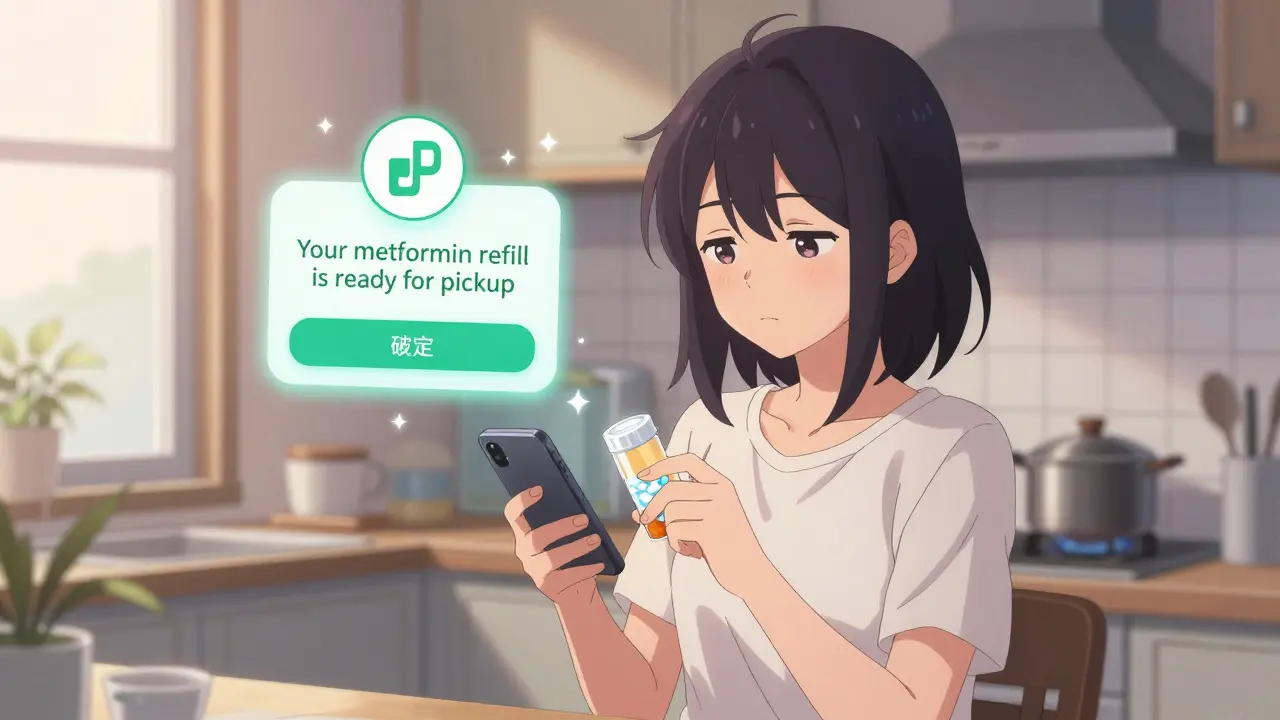
Running out of your blood pressure or cholesterol pill shouldn’t be a surprise. Yet for millions of people taking daily medications for chronic conditions, forgetting to refill is all too common. That’s where automated refills come in - a quiet revolution happening behind the scenes at online pharmacies and retail chains alike. No more calling in requests, no more panic when you’re down to your last tablet. The system just knows when to send your next batch of generic meds, usually about a week before you run out.
How Automated Refills Actually Work
It’s not magic. It’s software. When you sign up for an automated refill program, your pharmacy’s system tracks your prescription schedule based on your dosage and how often you take the medicine. If you’re on a 30-day supply of metformin, the system calculates when you’ll likely finish it - then automatically sends a refill request to your doctor for approval. Once approved, your pills are packed and shipped or held for pickup, often with a text or email alert saying, “Your refill is ready.” Most programs trigger refills between 5 and 7 days before your current supply runs out. That’s not random - it’s designed to give you time to pick up the meds without running dry. CVS, Walgreens, and Amazon Pharmacy all use this model. Even mail-order services like Express Scripts have automated systems built in. The goal? Remove the human error. Forgetting to refill isn’t laziness - it’s just life getting in the way.Why Generic Medicines Are Perfect for Automation
Generic drugs are the backbone of chronic care. They’re cheaper, just as effective, and taken long-term. Statins, blood thinners, diabetes pills, thyroid meds - most of these are available as generics. That makes them ideal candidates for automation. Why? Because they rarely change. Unlike antibiotics or painkillers, which are used briefly and often adjusted, generics for conditions like hypertension or high cholesterol stay the same for months or years. A 2016 study from the National Institutes of Health found that patients on automated refill programs had 7.2% higher adherence rates for statins, 6.8% higher for diabetes meds, and 3.9% higher for blood pressure drugs compared to those who had to request refills manually. That’s not a small difference - it’s the gap between staying healthy and ending up in the hospital.The Real Benefits: Less Stress, Fewer Missed Doses
People who use automated refills don’t just get their pills on time. They sleep better. They worry less. One user on Reddit said, “I have a memory like a sieve. Without auto-refill, I’d be out of pills every other month.” That’s the quiet win here - peace of mind. For older adults or those managing multiple medications, this feature is life-changing. A 2024 survey of Medicare Part D users showed that 73% of those enrolled in automated refill programs said they felt more in control of their health. Pharmacy staff notice it too. Automated systems cut down on the constant stream of “I need my refill!” calls by 37%, according to Clarity Ventures. That means pharmacists can spend more time answering real questions instead of chasing down refill requests.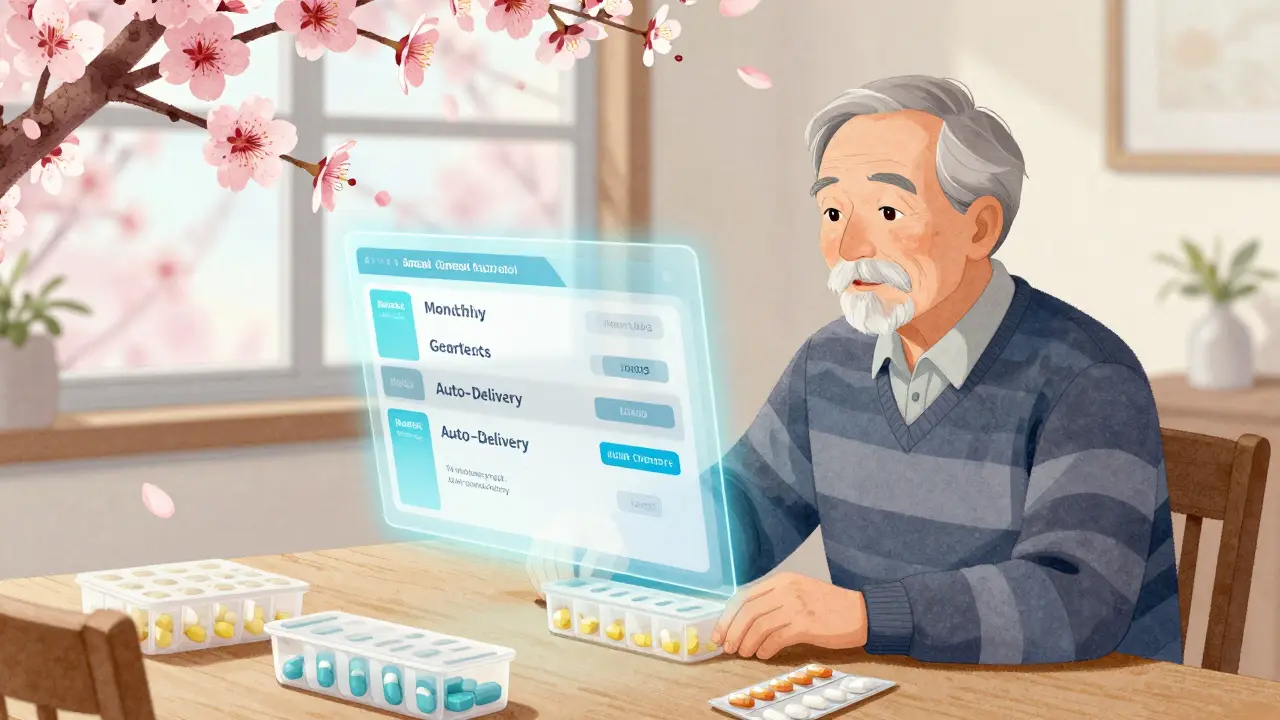
Where It Goes Wrong: Dosage Changes and Silent Errors
Here’s the catch: automation doesn’t think. It follows rules. If your doctor increases your dose from 240 mg to 360 mg of diltiazem, and you forget to tell your pharmacy, the system will keep sending you the old dose. That’s not hypothetical - Consumer Medication Safety documented at least 12 cases in 2024 where patients received incorrect dosages because their refill settings weren’t updated. The problem isn’t the technology. It’s the gap between systems. Your doctor updates your chart, but the pharmacy’s system doesn’t automatically sync. That’s why it’s critical to double-check your refill settings after any dosage change. Don’t assume it’s done. Call the pharmacy. Log into your portal. Confirm the dose matches what your doctor prescribed.Subscription Models Are Changing the Game
Amazon Pharmacy’s RxPass, launched in January 2023, took automation further. For $5 a month, Prime members in 45 states get access to 60 common generic medications - no copay, no refill requests. You just get them, automatically, every month. JAMA Network Open reported in 2025 that RxPass users refill their meds 18% more often than before. Why? Because cost is gone. The barrier isn’t remembering - it’s paying. This model flips the script. Instead of charging per refill, it charges a flat fee. That means pharmacies aren’t incentivized to push early refills just to make more money. Some PBMs (pharmacy benefit managers) have been criticized for triggering refills at 60 days on a 90-day script - generating extra revenue without real benefit to the patient. RxPass avoids that trap.What You Need to Do to Get Started
Signing up is easy, but it’s not automatic. You have to opt in. Most online pharmacies let you enroll through their app or website. You’ll need to:- Log into your pharmacy account
- Find the “Refill Settings” or “Auto-Renew” section
- Select which prescriptions you want to automate
- Choose how you want to be notified (text, email, or app alert)
- Confirm your consent - this is required by HIPAA
What to Watch Out For
Not all systems are equal. Independent pharmacies are less likely to offer automation - only 47% do, compared to 89% of national chains. That’s because the software costs around $18,500 to install per location. So if you’re using a small local pharmacy, you might not have this option. Also, watch for unexpected deliveries. About 31% of negative reviews on platforms like Trustpilot mention getting pills they didn’t expect. That usually happens when someone gets enrolled without realizing it. Always check your refill settings after signing up. If you don’t want auto-refills for a certain med, turn it off.The Future: Smarter, Not Just Faster
The next wave of automated refills won’t just remind you - it’ll learn from you. By 2026, two-thirds of pharmacy systems are expected to use AI to adjust refill timing based on your actual behavior. If you usually pick up your pills two days late, the system will start sending them earlier. If you skip refills every summer, it might nudge you with a different message. Integration is growing too. CVS now syncs refill data with Apple Health. Some telehealth platforms automatically trigger refills after a virtual visit. The goal is to make medication management invisible - not because we’re removing human care, but because we’re making it more efficient.Final Thought: Convenience Isn’t the Enemy - It’s the Fix
Some critics say automated refills reduce contact with pharmacists. That’s true - but only if you let it. The system doesn’t replace advice. It just removes the friction so you can actually get the medicine you need. And when you’re on a daily pill for life, that’s not a luxury. It’s survival. If you’re taking a generic medicine every day, ask your pharmacy: “Can I turn on auto-refills?” If they say no, find one that will. Your future self will thank you.Are automated refills safe for all medications?
Automated refills work best for long-term, stable medications like blood pressure pills, cholesterol drugs, or diabetes meds. They’re not ideal for medications that change often - like antibiotics, painkillers, or new prescriptions. Always check with your pharmacist before enrolling a drug that’s been recently adjusted or has a narrow safety window.
Can I turn off auto-refills anytime?
Yes. You can disable auto-refills for any prescription at any time through your pharmacy’s app, website, or by calling customer service. There’s no penalty, and you won’t lose access to the medication - you’ll just need to request refills manually going forward.
Do I need to give consent to use automated refills?
Yes. Federal law (HIPAA) requires your explicit permission before a pharmacy can automatically refill your prescriptions and send you reminders. You’ll see a checkbox or button asking you to confirm enrollment. Never skip this step - make sure you understand what you’re signing up for.
What if my dosage changes? Will the system update automatically?
No. Pharmacy systems don’t automatically detect changes made by your doctor. Even if your doctor updates your prescription in their system, the pharmacy’s refill schedule won’t change unless you or your doctor notify them. Always confirm your refill settings after any dosage adjustment - don’t assume it’s handled.
Are automated refills covered by insurance?
Yes - automated refills themselves are a service, not a product. Your insurance still covers the cost of the medication as usual. The auto-refill feature doesn’t add extra charges. In fact, many plans encourage it because it improves adherence, which helps them meet federal quality standards and avoid penalties.
How do I know if my pharmacy offers this?
Check your pharmacy’s website or app - look for “Auto-Renew,” “Refill Reminders,” or “Prescription Management.” National chains like CVS, Walgreens, and Amazon Pharmacy all offer it. Independent pharmacies may not. If you’re unsure, call and ask: “Do you have an automated refill program for chronic medications?”
Can I use automated refills with mail-order pharmacies?
Yes. Mail-order pharmacies like Express Scripts, Optum, and CVS Caremark all use automated refill systems - often even more reliably than retail locations. They’re designed for long-term prescriptions and send 90-day supplies automatically. Many patients prefer this because it reduces trips to the pharmacy.
What’s the difference between auto-refill and a 90-day supply?
A 90-day supply means you get three months of pills at once, usually at a lower copay. Auto-refill means the system automatically reorders your prescription when you’re running low - whether you’re on a 30-day or 90-day plan. You can have both: a 90-day supply with auto-refill turned on so it reorders after each 90-day cycle.
Lance Nickie
January 13, 2026 AT 23:43auto refill my blood pressure pills? bro i forgot i even take those till the bottle was empty. now i just get em every month like pizza.
Clay .Haeber
January 15, 2026 AT 00:23Oh wow, another Silicon Valley fantasy wrapped in a HIPAA compliance bow. Let me guess-next they’ll send your insulin with a ‘thanks for being a productive citizen’ pop-up. Automation doesn’t care if you’re dying, it just knows your script’s due. Real innovation? A doctor who remembers your name. Not a bot that sends pills like spam.
Nelly Oruko
January 15, 2026 AT 09:27It’s fascinating how we outsource memory to systems we don’t understand. We’ve turned survival into a subscription model-convenient, yes, but also deeply alienating. The fact that we need software to remind us to stay alive says more about our healthcare ecosystem than any stat ever could.
Angel Tiestos lopez
January 16, 2026 AT 15:41automated refills = my new bestie 🤖💊 i used to miss doses like i miss my ex’s texts. now i just get em. no stress. no guilt. just pills. life is good. 🙌
Scottie Baker
January 17, 2026 AT 01:40you people act like this is some miracle. my grandma got 12 pills delivered last month she didn't ask for. she had a panic attack. now she's scared of her own meds. this isn't convenience-it's corporate negligence with a nice UI.
Anny Kaettano
January 17, 2026 AT 06:12Adherence metrics are the holy grail in chronic care management-automated refills directly impact PDC (proportion of days covered) and reduce hospitalization rates via improved medication possession ratios. This isn’t just about convenience; it’s about closing the compliance gap that’s been killing patients for decades. Systems like RxPass are scalable, equity-forward interventions. We need to scale this, not critique it.
Kimberly Mitchell
January 18, 2026 AT 22:05Of course the system doesn’t update when your dose changes. Why would a corporation care if you overdose? They make money off the refill cycle. The real crime is that we’ve normalized being managed by algorithms instead of humans. And you’re applauding it.
Diana Campos Ortiz
January 20, 2026 AT 18:43i signed up for auto-refill after my dad ended up in the er because he forgot his beta blocker. it’s not perfect-but it’s the first thing that actually helped me feel like i wasn’t failing at being sick. thank you to whoever designed this. it’s quiet, but it saved us.
Jesse Ibarra
January 21, 2026 AT 07:48Let me get this straight-you’re proud of a system that sends you pills without asking if you’re alive? That’s not innovation. That’s dystopian laziness. And now you’re telling seniors to ‘just check your app’? My aunt can’t open her email. She needs a person. Not a notification. You’re not helping-you’re replacing care with convenience.
laura Drever
January 21, 2026 AT 20:44auto refill sounds great till you get 90 days of a drug you stopped taking 6 months ago. no one checks. no one cares. just another corporate checkbox. pharma loves this. patients? not so much.