
Chronic pain isn’t just a physical sensation-it’s a full-body experience that rewires how you think, feel, and move. If you’ve been living with pain for months or years, you’ve probably tried medications, physical therapy, or injections. But what if the key to relief isn’t just fixing the injury, but changing how your brain responds to it? That’s where CBT for chronic pain comes in.
What CBT for Chronic Pain Actually Does
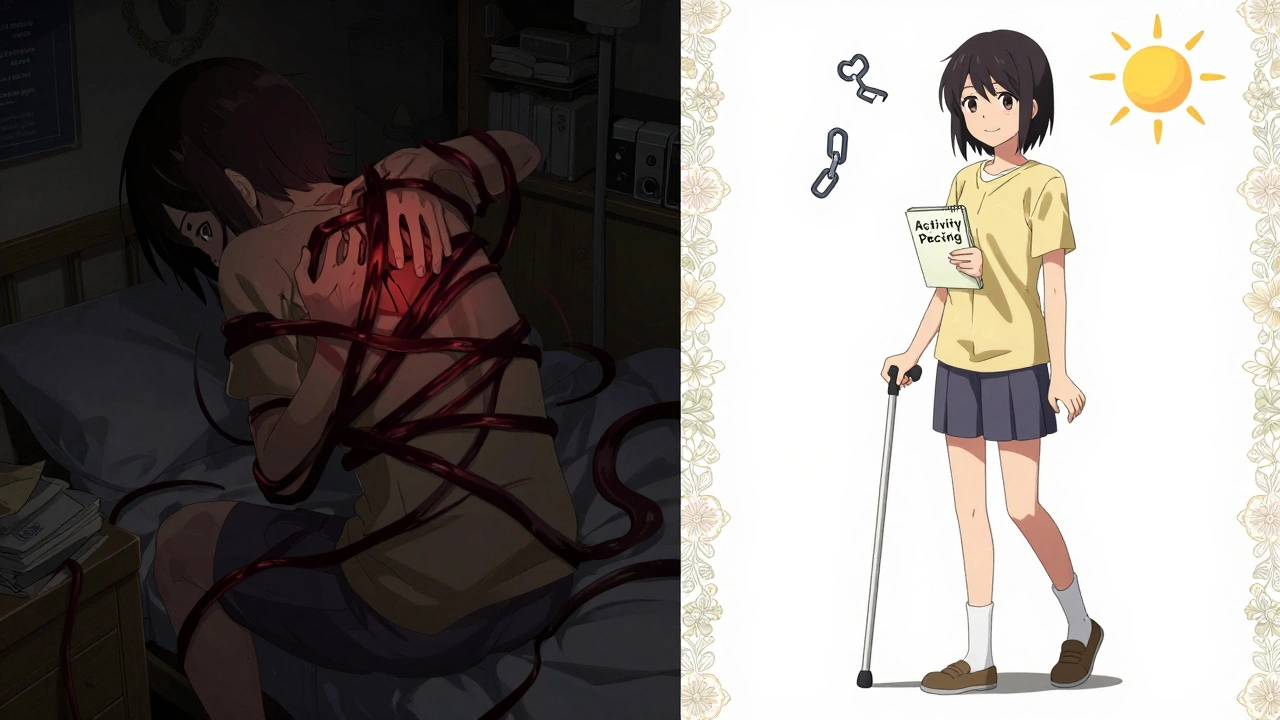
Cognitive Behavioral Therapy for chronic pain (CBT-CP) isn’t about telling you to "just think positive." It’s a structured, evidence-backed method that helps you break the cycle of pain, fear, and avoidance. Developed in the 1970s by pain psychologists like Dennis Turk and Robert Kerns, CBT-CP is built on one simple idea: your thoughts and behaviors influence how much pain you feel.When you hurt all the time, your brain starts to treat every movement as dangerous. You stop walking, lifting, or even stretching because you’re afraid it’ll make things worse. That’s called fear-avoidance. Over time, muscles weaken, joints stiffen, and your body becomes more sensitive to pain. CBT-CP interrupts this loop by teaching you how to reframe those thoughts and gradually return to activities without panic.
It doesn’t erase the pain. But it changes your relationship with it. Think of it like learning to drive in the rain-you don’t make the rain go away, but you learn how to handle it safely.
How CBT-CP Works: The Core Tools
Most CBT-CP programs run for 8 to 16 weekly sessions, either one-on-one or in groups. Each session builds on the last, using practical tools you can use every day:- Pain neuroscience education: You learn how pain signals work in the nervous system. Many people are shocked to find out that pain doesn’t always mean damage. Nerves can become overactive, like a faulty alarm system. Understanding this reduces fear.
- Activity pacing: Instead of doing everything on a good day and crashing for days after, you learn to break tasks into smaller chunks and spread them out. This prevents the boom-bust cycle that traps so many people with chronic pain.
- Cognitive restructuring: You identify thoughts like "I’ll never get better" or "This pain controls my life" and replace them with more balanced ones: "I’m having a hard day, but I’ve handled this before."
- Relaxation techniques: Deep breathing, progressive muscle relaxation, and mindfulness help calm the nervous system. When your body is tense, pain feels louder.
- Behavioral activation: You schedule small, meaningful activities-even if you don’t feel like it. Going for a short walk, calling a friend, or cooking a meal rebuilds your sense of control.
These aren’t abstract ideas. They’re skills. And like any skill, they get stronger with practice.
What the Research Says
A 2023 review of 13 studies involving over 1,600 people confirmed CBT-CP is the most studied psychological treatment for chronic pain. It doesn’t always reduce pain intensity-but it consistently improves other things that matter more in daily life:- Depression and anxiety: Large improvements. In 6 out of 8 studies, participants saw major drops in depressive symptoms.
- Function and quality of life: People report being able to do more-walking farther, sleeping better, returning to hobbies.
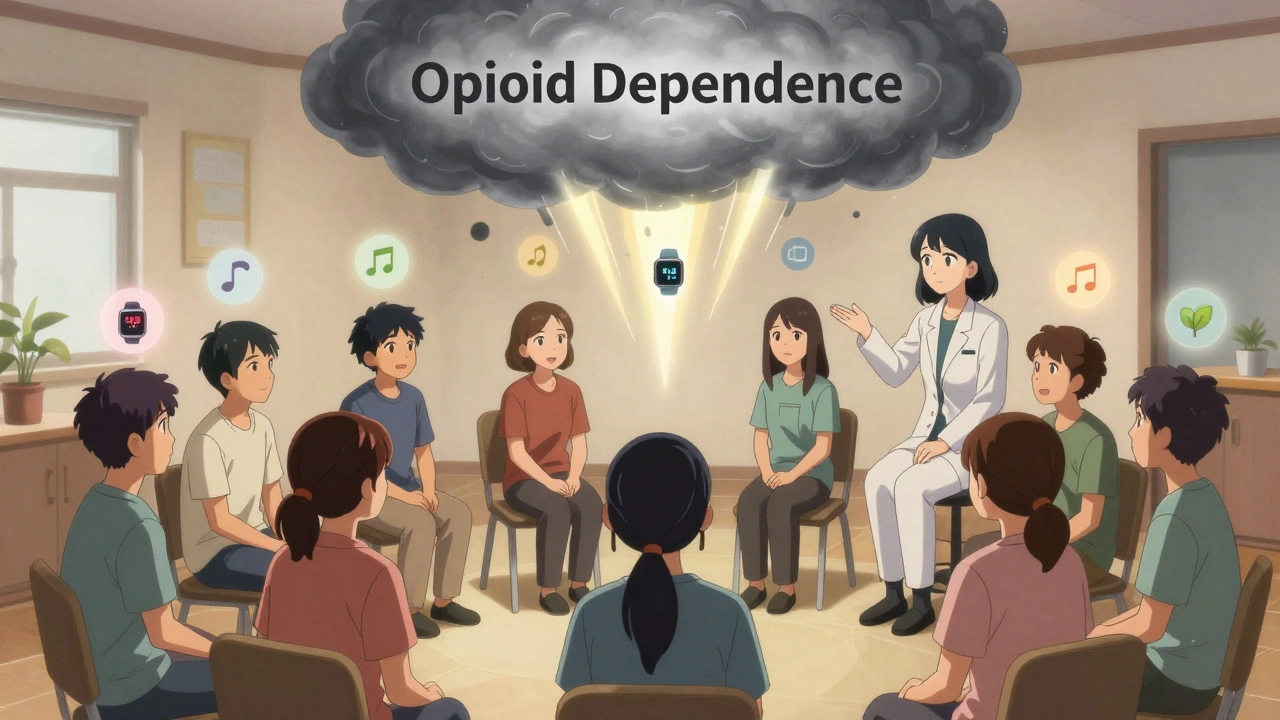
- Opioid use: In the 2024 STAMP trial, 36% of people in CBT-CP reduced their daily opioid use. Only 17% in standard care did.
For pain intensity itself? Results are mixed. Only about 25% of studies showed a clear drop in pain scores. That’s why experts like Dr. Beth Darnall from Stanford say CBT-CP shouldn’t be used alone for severe pain. It works best when paired with physical therapy, movement training, or medical care.
CBT-CP vs. Other Treatments
How does CBT-CP stack up against what else is out there?| Treatment | Effect on Pain Intensity | Effect on Function | Effect on Mood | Risks/Side Effects |
|---|---|---|---|---|
| CBT for Chronic Pain | Moderate to low | High | High | Low (requires effort) |
| Mindfulness-Based Therapy | Moderate | High | High | Low |
| Physical Therapy | Moderate | High | Low to moderate | Low (risk of flare-ups) |
| Opioid Medications | Moderate (short-term) | Low | Can worsen | High (addiction, tolerance, side effects) |
| Combined CBT + PT | High | Very High | High | Low |
The data is clear: CBT-CP doesn’t outperform everything-but it outperforms most when it comes to long-term well-being. And unlike pills, it doesn’t come with drowsiness, constipation, or addiction risk.
Who Benefits Most?
CBT-CP isn’t a one-size-fits-all fix. It works best for people with:- Chronic low back pain, fibromyalgia, or arthritis
- Depression or anxiety alongside pain
- Fear of movement or avoidance behaviors
- History of opioid use or desire to reduce medication
It’s less effective for pure nerve pain (like diabetic neuropathy) or for people who don’t believe pain can be influenced by thoughts. If you think CBT is "just in your head," you’re unlikely to stick with it.
Women make up 65% of CBT-CP participants, and those with college education are more likely to start. But that’s not because it doesn’t work for others-it’s because access is uneven. Many people never hear about it.
Real Stories: What Patients Say
In the STAMP trial, 78% of participants said CBT-CP helped them "regain control." One 45-year-old woman with chronic back pain said: "Learning to pace my activities stopped my boom-bust cycles. I didn’t realize I was punishing myself by pushing too hard on good days." On Reddit’s r/ChronicPain community, 62% of comments about CBT are positive. Common praises:- "I have tools I can use anytime, even when I’m in bed."
- "I cut my pain meds in half without getting worse."
- "I stopped feeling like a victim of my pain."
But there’s frustration too. Nearly 30% of negative comments say: "It didn’t fix my pain," or "It felt like they were blaming me for my pain." That’s a sign of poor delivery-not a flaw in the method. Good therapists don’t say "it’s all in your head." They say: "Your pain is real. Let’s work on how your brain is interpreting it."
Barriers to Getting CBT-CP
You might be thinking: "This sounds great, but how do I get it?" The biggest hurdles:- Therapist shortage: Few psychologists are trained in CBT-CP. The VA trains therapists with 40+ hours of specialized instruction, but most private practices don’t.
- Insurance coverage: Medicare only covers 10 sessions per year-yet most programs need 10 to 12. Commercial insurers vary: UnitedHealthcare covers 12, Aetna covers 8. Many won’t cover it at all.
- Doctor referrals: Only 44% of primary care providers routinely refer patients to CBT-CP. Many still think pain is purely physical.
- Patient skepticism: One in three people think CBT is "not for real pain." That’s why motivational interviewing is now part of many programs-to build trust before starting.
Telehealth has helped. Video-based CBT (vCBT) has been shown to work just as well as in-person sessions. If you live in a rural area or have mobility issues, this is a game-changer.
How to Start CBT-CP
If you’re ready to try it:- Ask your doctor for a referral to a psychologist trained in CBT for chronic pain. Look for credentials like "licensed clinical psychologist" with experience in pain management.
- Check if your insurance covers it. Call your provider and ask: "Do you cover Cognitive Behavioral Therapy for chronic pain? How many sessions are included?"
- Consider digital options. Apps like PainTrack, MyPainCoach, or the VA’s CBT-CP app have been clinically tested and are FDA-cleared.
- Look for programs tied to pain clinics or academic medical centers. They’re more likely to follow evidence-based protocols.
- Commit to at least 8 sessions. Studies show people who complete 80% or more of sessions have 2.3 times higher success rates.
Don’t expect miracles overnight. Progress is slow. But many people say the real win isn’t less pain-it’s less fear. Less isolation. More freedom.
The Future of CBT for Chronic Pain
The NIH is investing $14.2 million through 2026 to improve CBT-CP. New directions include:- Personalized CBT: Matching therapy components to your pain type, mood, and behavior patterns.
- Wearable integration: Using smartwatches to track activity and send reminders to pace yourself.
- Brief CBT: Testing 4- to 6-session versions that work for people who can’t commit to 12 weeks.
- Value-based payment: Health systems are starting to pay more for outcomes like reduced opioid use and improved function-not just visits.
By 2030, experts predict CBT-CP use will triple. As more people move away from pills and toward whole-person care, this therapy will become a standard part of pain treatment-not a last resort.
Is CBT for chronic pain just about thinking happy thoughts?
No. CBT doesn’t ask you to ignore pain or pretend everything’s fine. It helps you recognize unhelpful thoughts like "I’ll never get better" and replace them with more accurate, manageable ones like "I’m having a tough day, but I’ve handled this before." It also teaches practical skills-like pacing and relaxation-that reduce the body’s stress response to pain.
Will CBT make my pain go away completely?
Not always. CBT-CP rarely eliminates pain entirely. But it often reduces how much pain controls your life. Many people report being able to return to work, walk longer distances, or sleep better-even if the pain is still there. The goal isn’t to remove pain, but to reduce its impact.
Can I do CBT for chronic pain online?
Yes. Video-based CBT (vCBT) has been proven just as effective as in-person sessions. The VA and several academic centers offer structured online programs. Apps like MyPainCoach and PainTrack are clinically tested and can be used as standalone tools or to supplement therapy.
How long does it take to see results from CBT for chronic pain?
Most people start noticing changes in mood, sleep, or activity levels after 4 to 6 sessions. Improvements in pain-related fear and avoidance often show up early. Changes in pain intensity take longer and vary by person. Full benefits usually appear after completing 8 to 12 sessions, with lasting effects seen at 3- to 6-month follow-ups.
Is CBT for chronic pain covered by insurance?
It depends. Medicare covers up to 10 sessions per year. Commercial insurers vary: UnitedHealthcare covers 12, Aetna covers 8, and some don’t cover it at all. Medicaid coverage differs by state. Always call your insurance provider and ask specifically for "Cognitive Behavioral Therapy for chronic pain"-general mental health coverage may not include it.
Do I need to stop my pain medications to do CBT?
No. CBT-CP is designed to work alongside medications. In fact, many people use it to reduce their reliance on opioids. The STAMP trial showed that CBT participants were more likely to cut back on pain pills safely. Always talk to your doctor before changing any medication.
What if I don’t believe pain can be affected by my thoughts?
That’s common. Many people start CBT skeptical. Good therapists don’t push belief-they focus on behavior. You don’t have to believe pain is "all in your head" to benefit from pacing, relaxation, or activity scheduling. These are physical tools that change how your nervous system responds. You can test them out without committing to a philosophy.
Stephanie Fiero
December 5, 2025 AT 09:36I tried CBT for my fibro and it didn't fix my pain, but it made me stop hating myself for being weak. I still hurt, but now I don't feel like a failure when I can't do laundry. That's worth something.
Krishan Patel
December 6, 2025 AT 06:25Let me be clear: this is a capitalist scam dressed in neuroscience jargon. Pain is real. Your body is broken. No amount of "reframing thoughts" will heal a degenerated disc. They want you to believe you're the problem so they don't have to fix the system that failed you.
Laura Saye
December 6, 2025 AT 08:30There's a profound nuance here that gets lost in the noise. CBT-CP isn't about denying somatic reality-it's about modulating the autonomic dysregulation that amplifies nociceptive signals. When the sympathetic nervous system is chronically activated, pain perception becomes a feedback loop. The tools-pacing, mindfulness, cognitive restructuring-are neuroplasticity interventions. They don't erase the lesion; they recalibrate the alarm system. I've seen patients with 15-year chronic back pain reduce catastrophizing scores by 70% without a single opioid taper. The body remembers safety before it forgets threat.
sean whitfield
December 7, 2025 AT 22:52So let me get this straight. You're telling me I can pay someone to tell me to breathe and suddenly my spine won't collapse? Brilliant. Next they'll sell me a $200 app to remind me to not scream into my pillow at 3am. I'm just glad the medical industrial complex found a way to bill for placebo.
Juliet Morgan
December 8, 2025 AT 15:51My therapist said "your pain is real, but your fear of it doesn't have to be" and that changed everything. I started walking 5 minutes a day even when I wanted to cry. Now I hike on weekends. Not pain-free, but alive again. 🌿
Mark Curry
December 9, 2025 AT 17:45CBT helped me stop feeling like a burden. I used to cancel plans because I was scared of having a bad day. Now I say "I'm having a rough one, but I'm here." It's not magic. It's just… less lonely.
Ada Maklagina
December 10, 2025 AT 00:26My doctor refused to refer me. Said "it's not for real pain." So I found a telehealth program through a university study. 12 weeks. Paid $15. Changed my life. If you're reading this and they told you it's "all in your head"-they're wrong. It's in your nervous system. And it can learn.
Michael Dioso
December 11, 2025 AT 20:49Oh great. Another miracle cure for people too lazy to lift weights or quit sugar. Tell me again how thinking nice thoughts fixes a herniated disc? My pain is biological, not behavioral. You're just giving people false hope so insurance companies can save a buck.
Katie Allan
December 13, 2025 AT 15:57I’ve been in chronic pain for 18 years. I’ve tried everything. CBT didn’t take the pain away-but it gave me back my identity. I’m not just a patient anymore. I’m someone who knows how to rest without guilt, move without panic, and speak up without shame. That’s not therapy. That’s liberation.
James Moore
December 14, 2025 AT 07:06And yet, despite all this data, the VA, Medicare, and private insurers still treat CBT-CP as a fringe option-while they’ll pay for 100 opioid prescriptions a month. This isn’t about science. It’s about profit. Pharmaceutical companies don’t make money from breathing exercises. They make money from pills that keep you dependent, sedated, and silent. So they fund studies that downplay CBT. They train doctors to dismiss it. And they make sure you never hear about it unless you’re already desperate enough to Google it at 2 a.m.
Chris Brown
December 16, 2025 AT 02:28It's irresponsible to suggest that psychological interventions can substitute for structural medical care. Chronic pain is a biomechanical and neurochemical condition. To imply that thoughts can override physiology is not only unscientific-it's morally negligent. People are suffering. They need surgery, not affirmations.
aditya dixit
December 17, 2025 AT 20:54My brother had spinal fusion and still hurt. He tried CBT last year. Now he gardens, cooks, and plays with his kids. Pain’s still there-but it doesn’t own him anymore. I used to think it was all in his head. Turns out, it was just in his nervous system. Big difference.
Stephanie Bodde
December 18, 2025 AT 22:14Just started CBT. Day 3. Still crying sometimes. But today I walked to the mailbox without checking my back first. Small win. 💪