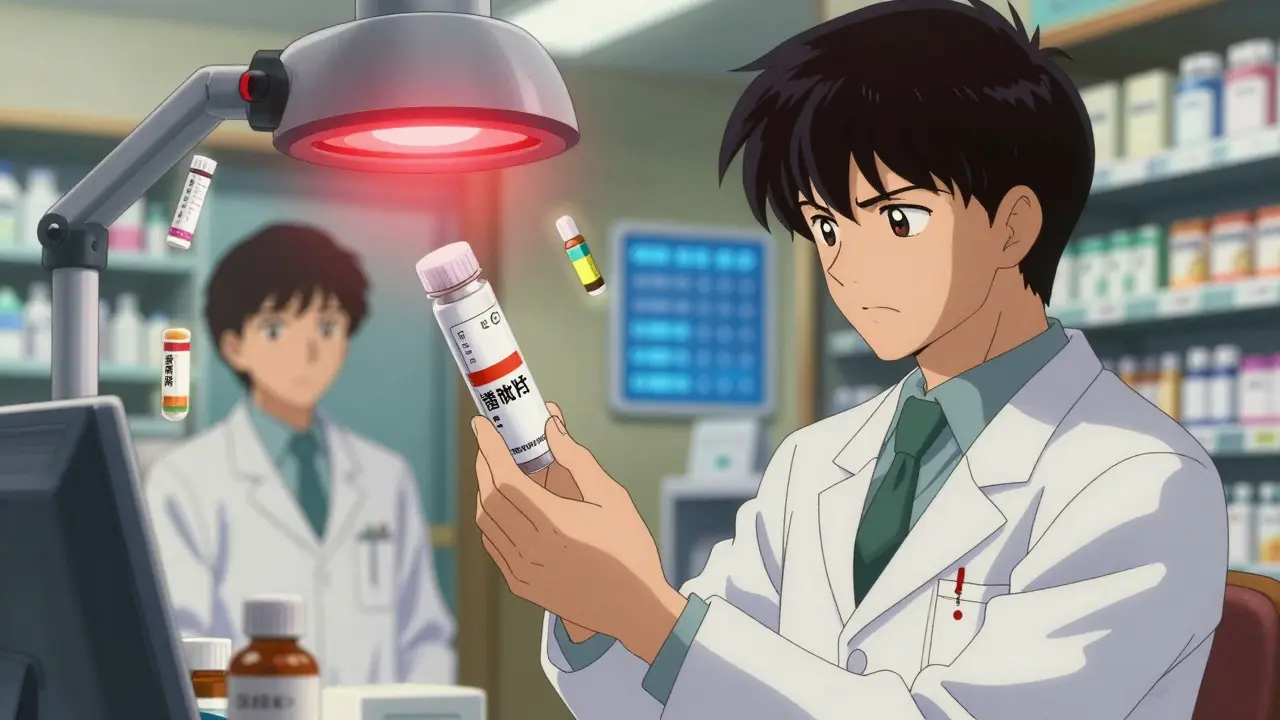
Every year, millions of people receive the wrong medication, the wrong dose, or a drug that shouldn't be taken with what they're already on. These aren't rare accidents - they're preventable mistakes happening in pharmacies across the world. In fact, a 2023 global review found that dispensing errors occur in about 1.6% of all prescriptions filled. That might sound small, but when you consider how many prescriptions are filled daily, that’s hundreds of thousands of patients at risk. And it’s not just about getting the wrong pill - it’s about getting the wrong strength, the wrong form, or a drug that could kill someone because of an unnoticed allergy.
What Are the Most Common Pharmacy Dispensing Errors?
Not all errors look the same. Some are easy to spot if you know what to look for. Others hide in plain sight. The most frequent mistakes fall into a few clear categories.
- Wrong medication - You ask for lisinopril and get losartan. Sounds similar? It happens more than you think. Sound-alike names like these cause nearly 22% of errors when prescriptions are called in.
- Wrong dosage - A patient needs 5 mg, but they get 10 mg. Dose miscalculations make up nearly 28% of all dispensing errors, especially with high-alert drugs like insulin or heparin.
- Wrong dosage form - A tablet is dispensed instead of a capsule, or an extended-release pill is given as immediate-release. This can change how the drug works in the body.
- Missing allergy check - One in four antibiotic errors happens because no one checked if the patient was allergic. That’s not a fluke - it’s a system failure.
- Expired or damaged stock - Medications stored improperly or not rotated properly can lose potency or even become harmful.
- Wrong duration - A 7-day course becomes a 30-day supply. This leads to overuse, side effects, or antibiotic resistance.
Anticoagulants, opioids, and antibiotics are the top three culprits in serious errors. NHS data from 2015 to 2020 shows anticoagulants were involved in 31% of high-risk cases. Why? Because the difference between a safe dose and a deadly one is tiny - and the consequences are immediate.
Why Do These Errors Keep Happening?
It’s easy to blame the pharmacist. But the real problem isn’t people - it’s pressure, process, and poor design.
Workload is the biggest driver. One study found that 37% of errors happen because pharmacists are rushed. They’re filling 150 prescriptions a day, answering phones, handling insurance calls, and dealing with patients all at once. Interruptions make it worse. If a pharmacist is interrupted three or more times while filling a prescription, their chance of making a mistake jumps by over 12%.
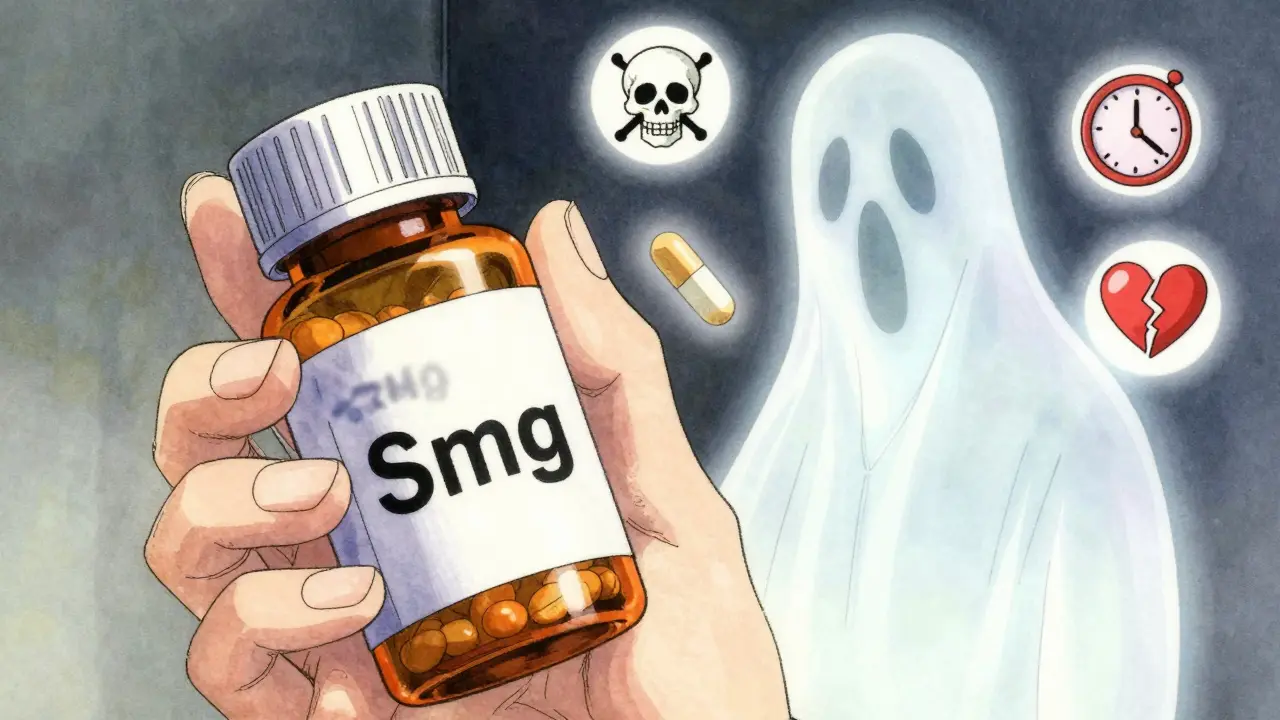
Then there’s handwriting. Even in 2026, 43% of errors still start with a scribbled prescription. A doctor writes “5 mg” - but is that a 5 or an S? Is it “Zoloft” or “Zyrtec”? Sound-alike drugs like these cause confusion even when typed.
And let’s not forget the missing information. Too often, the pharmacist doesn’t know about a patient’s kidney function, weight, or other medications. A 2023 report showed 18% of errors happened because lab values weren’t available. A patient on warfarin needs regular INR checks - but if those numbers aren’t in the system, the pharmacist is guessing.
How Can We Stop These Mistakes?
The good news? Most of these errors can be stopped with simple, proven systems. It’s not about working harder - it’s about working smarter.
Double-check high-risk drugs - For medications like insulin, heparin, or opioids, two trained staff members should verify the prescription before it leaves the counter. One hospital reported a 78% drop in errors after introducing this rule.
Use barcode scanning - Scanning the prescription, the drug, and the patient’s ID before dispensing cuts errors by nearly half. One study of 127 hospitals found barcode systems reduced wrong drug errors by 52% and wrong dose errors by 49%.
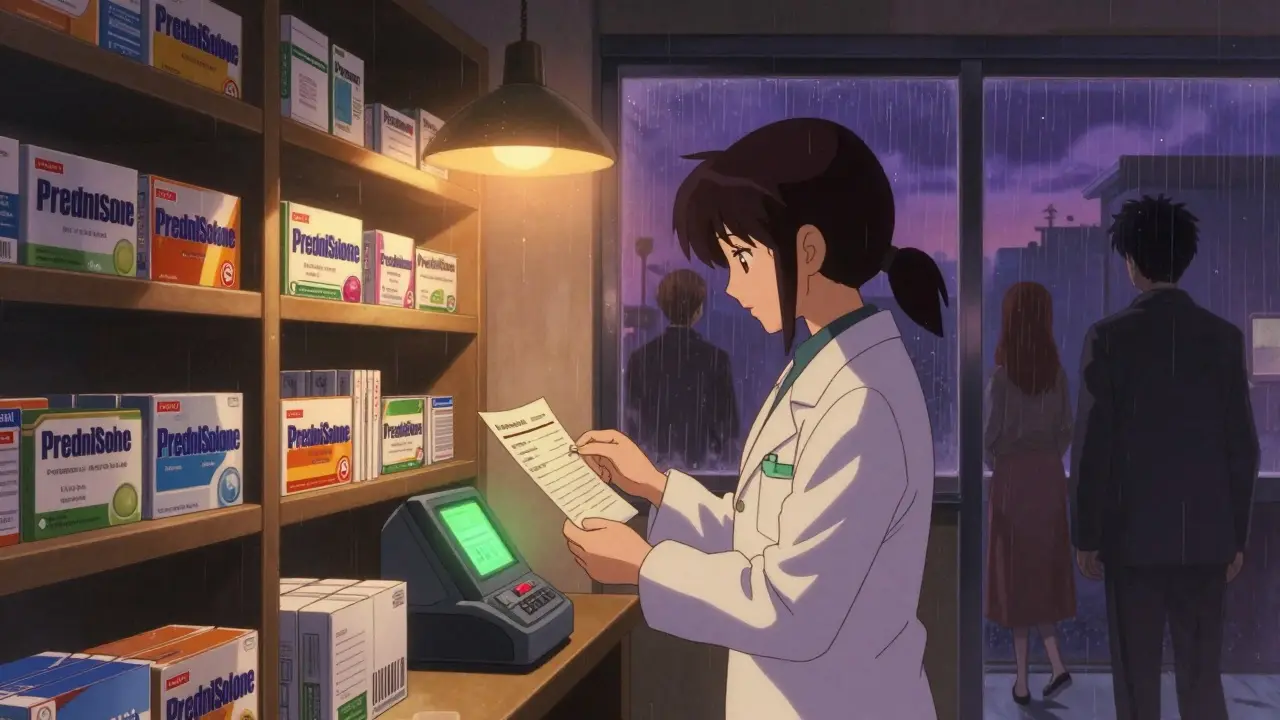
Adopt Tall Man lettering - This isn’t a fancy term - it’s just making similar drug names look different. Instead of “prednisone” and “prednisolone,” you write “PREDNISone” and “prednISolone.” This visual cue reduces confusion by over 56% in pharmacies that use it.
Implement electronic prescribing - Handwritten scripts are fading. Computerized provider order entry (CPOE) systems cut errors by 43%. But they’re not perfect. Some systems flood pharmacists with alerts, causing “alert fatigue.” One pharmacist told us they missed three critical warnings because the system popped up 20 alerts for every prescription. The fix? Smart alerts - only the ones that matter.
Standardize labeling - Clear labels with bold print, unit of measure, and expiration date reduce mistakes. One community pharmacy saw a 40% drop in wrong-strength errors just by changing their label design.
Technology Is Helping - But Not Everywhere
Robotic dispensing systems can cut errors by over 60%. AI tools that flag potential interactions before a prescription is filled are being tested in 34 hospitals - and they’re reducing mistakes by 53%. But these tools cost money. A single robotic system runs between $150,000 and $500,000. That’s out of reach for most small pharmacies.
And while big hospitals are adopting these tools, community pharmacies are still struggling. Only 39% of them have fully integrated electronic health records. Many still rely on paper files or outdated software. The cost, training, and time needed to switch systems are real barriers.
But even without fancy tech, simple changes make a difference. One pharmacy in Manchester started using a checklist for every high-alert medication. They didn’t buy new machines. They just made staff pause, read, and verify. Within a year, their error rate dropped by 38%.
What Patients Can Do
You don’t have to wait for the system to fix itself. You can protect yourself.
- Always ask: “Is this the right medication and dose for me?”
- Check the label against your prescription. Does the name, strength, and number of pills match?
- Ask about side effects. If the pharmacist says, “It’s just a pill,” push back. You deserve to know what you’re taking.
- Keep an updated list of all your medications - including supplements and over-the-counter drugs - and bring it to every appointment.
- If you notice a change in your pill’s color, shape, or size, ask. It might be a generic, but it might also be a mistake.
Patients who speak up reduce their risk. Studies show that when patients ask questions, pharmacists are twice as likely to catch their own mistakes.
What’s Next?
The global push for standardization is growing. By 2025, most health systems will use the same classification system for medication errors. That means better data, better learning, and fewer repeat mistakes.
But until then, the most powerful tool is still human vigilance - backed by smart systems. Pharmacists aren’t the enemy. The system is. And fixing it doesn’t require magic. It just requires consistency, clear processes, and the willingness to slow down long enough to get it right.
Because in pharmacy, a small mistake isn’t just a slip - it’s a life-changing event. And that’s why every check, every scan, every double-verification matters.
Namrata Goyal
March 23, 2026 AT 06:41Caroline Bonner
March 23, 2026 AT 21:58peter vencken
March 24, 2026 AT 05:00Chris Crosson
March 25, 2026 AT 10:52Linda Foster
March 26, 2026 AT 06:03Rama Rish
March 28, 2026 AT 00:20Chris Farley
March 29, 2026 AT 10:55Darlene Gomez
March 30, 2026 AT 12:07Katie Putbrese
March 30, 2026 AT 20:25Jacob Hessler
April 1, 2026 AT 09:16Amber Gray
April 3, 2026 AT 09:09Danielle Arnold
April 5, 2026 AT 06:25