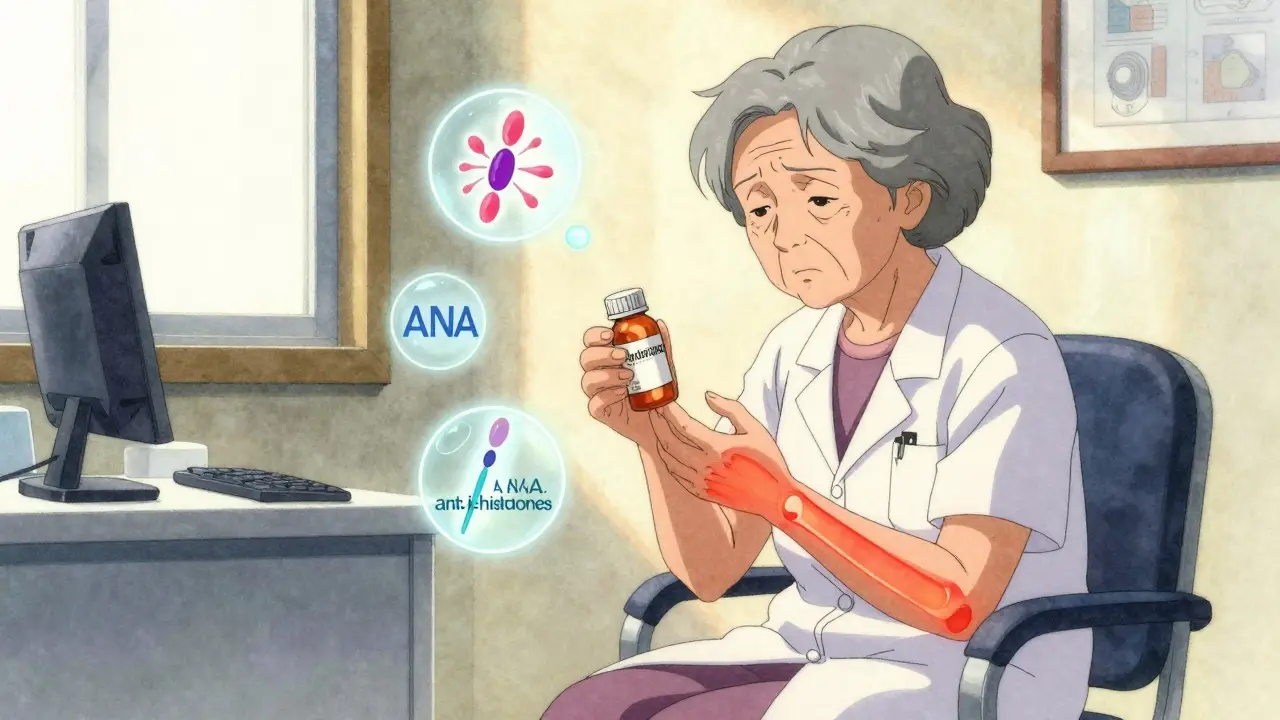
When you take a medication to manage a chronic condition, you expect relief-not a new disease. But for some people, common drugs can trigger something called drug-induced lupus (DIL). It’s not the same as systemic lupus erythematosus (SLE), the more well-known autoimmune disorder. DIL doesn’t usually damage your kidneys or brain, and it almost always goes away once you stop the medicine. The problem? Most doctors don’t think about it until it’s too late.
What Does Drug-Induced Lupus Actually Feel Like?
If you’ve been on certain medications for months or years and suddenly feel like you’ve been hit by a truck, pay attention. DIL doesn’t show up with a butterfly rash across your nose like classic lupus. Instead, it creeps in with fatigue that won’t lift, joints that ache like arthritis, and a low-grade fever that comes and goes. Muscle pain hits 75% to 85% of people with DIL. Joint swelling? That’s in 65% to 75%. You might notice you’re losing weight without trying, or you get winded climbing stairs because your lungs or heart lining are inflamed.
One of the biggest red flags? You’re over 50. Unlike SLE, which mostly hits women in their 20s and 30s, DIL doesn’t care about gender. It targets older adults. A 2023 study showed 70% to 80% of cases happen in people aged 50 and up. That’s why many patients get misdiagnosed-doctors assume it’s just aging, fibromyalgia, or chronic fatigue.
Which Medications Are the Biggest Culprits?
Not every drug causes this. Only a handful have been proven to trigger DIL. The top three are:
- Hydralazine (used for high blood pressure) - causes DIL in 5% to 10% of long-term users
- Procainamide (for irregular heartbeat) - up to 30% of people on it for over a year develop symptoms
- Minocycline (an antibiotic for acne or rosacea) - about 1% to 3% of users
Since 2015, newer drugs have joined the list. TNF-alpha inhibitors-used for rheumatoid arthritis, Crohn’s, and psoriasis-now account for 12% to 15% of new DIL cases. Even cancer drugs like pembrolizumab have been linked to lupus-like reactions in about 1.5% to 2% of patients.
Here’s the catch: it doesn’t happen right away. Most people develop symptoms after 3 to 6 months of taking the drug. But some cases show up after just 3 weeks-or as late as 2 years later. That’s why it’s so easy to miss.
How Do Doctors Confirm It’s DIL and Not Lupus?
There’s no single test for DIL. Diagnosis is a puzzle made of three pieces: your medication history, your blood results, and how you respond after stopping the drug.
First, your doctor will ask: “What are you taking? For how long?” This is the most important clue. If you’ve been on hydralazine for 18 months and now have joint pain, that’s a huge red flag.
Then comes blood testing. Over 95% of people with DIL test positive for antinuclear antibodies (ANA). But here’s the key difference from SLE: 75% to 90% of DIL patients have anti-histone antibodies. In regular lupus, only half that number test positive for them. Meanwhile, anti-dsDNA antibodies-which are common in SLE-are found in fewer than 10% of DIL cases.
Your ESR (erythrocyte sedimentation rate) is often elevated, showing inflammation. CRP levels might be slightly high too. But your kidneys? Usually fine. Your lungs? Maybe mildly affected. Your brain? Almost never. That’s the opposite of SLE, where organ damage is common.

What Happens When You Stop the Drug?
This is the good news: DIL is reversible. In 80% to 90% of cases, symptoms start fading within weeks of stopping the medication. Most people feel significantly better in 4 weeks. By 12 weeks, 95% are on the mend.
One patient on Reddit shared: “I stopped minocycline after 14 months. My swollen hands went down in 10 days. My energy came back in 3 weeks.”
But not everyone bounces back instantly. About 20% of patients need extra help:
- NSAIDs (like ibuprofen) for joint pain and fever - helps 60% to 70%
- Low-dose prednisone (5-10 mg daily) for moderate symptoms - works in 85% to 90% of cases
- Immunosuppressants (azathioprine or methotrexate) - only if symptoms drag on past 3 months
Important: Never stop a medication on your own. If you’re on hydralazine for high blood pressure, your doctor needs to switch you to something else-like an ACE inhibitor or calcium channel blocker-before you quit. Same goes for procainamide. Stopping without a plan can be dangerous.
Why Do Some People Get It and Others Don’t?
It’s not random. Genetics play a big role. If you’re a “slow acetylator,” your body processes certain drugs like hydralazine too slowly. That lets the drug build up and trigger an immune reaction. Research shows slow acetylators have a 4.7-fold higher risk of DIL from hydralazine.
Another genetic marker? HLA-DR4. People with this gene are 3.2 times more likely to develop DIL. That’s why some European guidelines now recommend testing for NAT2 and HLA-DR4 before prescribing hydralazine to high-risk patients.
And it’s not just about the drug. It’s about how long you’ve been on it, your age, your genes, and whether you’re taking other meds that might interact. That’s why two people on the same drug-one gets DIL, the other doesn’t.

What Happens If It’s Misdiagnosed?
Up to 25% of DIL cases are mistaken for SLE. That’s dangerous. If you’re told you have lupus and start long-term immunosuppressants like mycophenolate or cyclophosphamide, you’re exposing yourself to serious side effects-increased infection risk, liver damage, even cancer-when you don’t need them.
One patient told her rheumatologist she’d been on hydralazine for 2 years. He dismissed it. She spent 10 months on high-dose steroids before someone finally connected the dots. “I lost 20 pounds. I couldn’t walk. I thought I was dying,” she said. It took 6 specialist visits to get the right diagnosis.
That’s why experts say: “If you’re over 50, on a high-risk drug, and have lupus-like symptoms-assume it’s DIL until proven otherwise.”
Is DIL Getting More Common?
Yes. As more people take multiple medications into older age, and as biologic drugs become standard for autoimmune diseases, DIL cases are rising. In the U.S., we see about 15 to 20 new cases per 100,000 people each year. That number could rise 15% to 20% by 2030.
Why? Because we’re prescribing more TNF inhibitors, more immune checkpoint drugs for cancer, and more antibiotics like minocycline for long-term skin conditions. We’re also living longer. And with more drugs and more years on them, the risk adds up.
But there’s hope. New diagnostic guidelines from the American College of Rheumatology (2023) now include medication timelines and antibody patterns specifically for DIL. Research is also looking at microRNA blood tests to predict who’s at risk before symptoms even start.
What Should You Do If You’re Worried?
If you’ve been on any of these drugs for over 3 months and have unexplained fatigue, joint pain, fever, or chest discomfort:
- Write down every medication you’ve taken in the last 2 years-including over-the-counter and supplements.
- Ask your doctor to test for ANA and anti-histone antibodies.
- Request an ESR and CRP blood test.
- Discuss whether your current medication could be the cause.
- Do NOT stop taking anything without medical supervision.
Most importantly: if your symptoms improve after switching medications, that’s your answer. DIL doesn’t lie. It disappears when you remove the trigger.
Can drug-induced lupus turn into regular lupus?
No. Drug-induced lupus (DIL) is not a precursor to systemic lupus erythematosus (SLE). They are separate conditions with different causes. DIL is triggered by specific medications and resolves after stopping the drug. SLE is a chronic autoimmune disease with genetic and environmental triggers that persist regardless of medication changes. Once DIL symptoms fade, the risk of developing SLE later is no higher than in the general population.
How long does it take to recover from drug-induced lupus?
Most people start feeling better within 2 to 4 weeks after stopping the offending medication. About 80% of patients see major improvement in 4 weeks, and 95% fully recover within 12 weeks. In rare cases where symptoms linger, low-dose steroids or NSAIDs may be used for a few more weeks. Full recovery is expected in nearly all cases.
Is drug-induced lupus dangerous?
DIL is generally less dangerous than systemic lupus. It rarely affects major organs like the kidneys or brain, which are commonly damaged in SLE. The main risks come from misdiagnosis-being treated for SLE with strong immunosuppressants when you don’t need them. Once the drug is stopped and the diagnosis is correct, DIL is one of the most treatable autoimmune conditions.
Can you get drug-induced lupus from over-the-counter drugs?
There is no strong evidence that common over-the-counter medications like ibuprofen, acetaminophen, or antihistamines cause DIL. The drugs linked to DIL are prescription-only, such as hydralazine, procainamide, minocycline, and TNF-alpha inhibitors. However, always inform your doctor about all medications and supplements you take-even those bought without a prescription.
Are there any long-term effects after recovering from DIL?
Most people recover completely with no lasting effects. Once the drug is stopped and symptoms resolve, there’s no evidence of permanent organ damage or increased risk of future autoimmune disease. However, you should avoid re-exposure to the medication that caused DIL, as restarting it almost always brings symptoms back-sometimes faster and worse than before.
Prateek Nalwaya
February 16, 2026 AT 03:38Man, this post hit different. I’ve been on minocycline for my rosacea for nearly two years, and yeah-I’ve been exhausted, my knees feel like they’re full of sand, and I thought it was just ‘getting old.’ Turns out, I’m a slow acetylator according to my genetic test last year. No one ever asked. I’m lucky I stumbled on this thread. If you’re over 50 and on long-term meds, don’t just shrug off fatigue. Ask for anti-histone antibodies. It’s not that hard.
Agnes Miller
February 16, 2026 AT 09:33thanks for sharing this. i had no idea hydralazine could do this. i’m on it for bp and have had joint pain for months. gonna ask my doc about the antibody test. also-can someone explain what slow acetylator means? i googled it but got lost in the science jargon.
Oliver Calvert
February 16, 2026 AT 18:03Anti-histone antibodies are the golden ticket here. ANA alone is useless-it’s positive in like 30% of healthy people over 60. But if you’re on hydralazine and anti-histone positive? That’s DIL. End of story. ESR and CRP help confirm inflammation but don’t differentiate. Only the antibody combo does. And yes stop the drug. Not later. Now. But under supervision. Don’t be dumb.
Kancharla Pavan
February 17, 2026 AT 20:06You people are too trusting of doctors. They’re trained to treat symptoms, not think. I’ve seen this exact scenario three times in my family. One cousin got misdiagnosed with lupus, put on cyclophosphamide, lost her hair, got pneumonia, and nearly died. All because her rheumatologist didn’t ask about her blood pressure meds. Your body isn’t a machine you plug drugs into. It’s a living system. And if you’re on minocycline for acne? You’re not ‘treating’ anything-you’re just making your immune system angry for no reason. Stop the drug. Your skin will survive. Your life won’t.
PRITAM BIJAPUR
February 19, 2026 AT 10:37There’s something deeply poetic about how our bodies whisper before they scream. We’re told to ‘take the pill’ like it’s a magic key-but our cells remember. They hold the record. Anti-histone antibodies? That’s not just a lab result. That’s your immune system saying, ‘I’ve been here before. I know this song.’ And when you stop the drug? It’s not just recovery-it’s a homecoming. The body didn’t betray you. The system did. We treat meds like harmless tools, but they’re like keys that fit only certain locks. And sometimes, the lock is yours. 🌿🫶
Dennis Santarinala
February 19, 2026 AT 17:41This is so important. I’m 58 and on hydralazine for 8 years. My knees have been aching for over a year. I thought it was arthritis. I didn’t even know this was a thing. I’m gonna book an appointment tomorrow. Thank you for writing this. I feel less alone already. 💙
Haley DeWitt
February 20, 2026 AT 00:58OMG I’m so glad I read this. My mom’s on procainamide and has had constant fatigue and low-grade fever for 18 months. We thought it was ‘old age’ or stress. She’s gonna get tested next week. I’m printing this out for her doctor. THANK YOU for making this so clear!! 😭🙏
John Haberstroh
February 20, 2026 AT 18:48Minocycline for acne? Bro. You’re 22. You don’t need it. Your skin will heal. Your immune system won’t. I know someone who got DIL from 14 months of minocycline. She had to stop cold turkey, started on prednisone, and still has weird joint twinges two years later. Don’t treat acne like it’s a fashion flaw. It’s not worth your health. Also-why are we still prescribing this like it’s 2005?
Brenda K. Wolfgram Moore
February 21, 2026 AT 11:49Let’s be real-most doctors don’t care. They’re paid to prescribe, not to investigate. I’ve been on TNF inhibitors for psoriasis. My doctor laughed when I mentioned lupus-like symptoms. Said ‘you’re too young for this.’ I’m 51. I had to go to a second rheumatologist, then a third, before anyone tested for anti-histone. Now I’m off the drug. Symptoms gone in 3 weeks. But I lost 6 months of my life because no one wanted to look beyond the obvious. This needs to be taught in med school. Not optional.
Linda Franchock
February 22, 2026 AT 04:24So let me get this straight-we’re giving people life-altering drugs for acne and high blood pressure, and the only safety check is ‘if you feel weird, maybe stop?’ Brilliant. Next up: prescribing lithium for hangovers. At least DIL is reversible. But how many people never get diagnosed? How many die because they were told it’s ‘just fibromyalgia’? We’re not fixing healthcare. We’re just throwing more drugs at it and hoping the body doesn’t scream too loud.
Geoff Forbes
February 22, 2026 AT 22:17Wow. So the solution is just stop the drug? No wonder the U.S. healthcare system is broken. People need structure. Accountability. Not ‘oh just quit your meds and see what happens.’ This is why we need more regulation. Not less. You can’t just let patients self-diagnose based on Reddit. This is dangerous. Someone’s gonna die because they stopped hydralazine without a replacement. And then we’ll have another lawsuit.
Jonathan Ruth
February 22, 2026 AT 22:38Why are we even talking about this? It’s a tiny percentage. 1% of minocycline users? 5% of hydralazine? That’s not an epidemic. That’s a statistical blip. Meanwhile, 100 million people are on statins and no one’s screaming about liver damage. Or the fact that 40% of Americans are on antidepressants. This is just fearmongering. Stop making people paranoid about every pill they take. You want to live longer? Stop Googling symptoms. Take your meds. Trust your doctor. Or don’t. But don’t blame the system because you’re too lazy to read the pamphlet.
Philip Blankenship
February 24, 2026 AT 03:20I’ve been on hydralazine for 12 years. No symptoms. My brother? Took it for 18 months and had full-blown joint pain, fever, weight loss. We’re identical twins. Same genes. Same diet. Same everything. He’s a slow acetylator. I’m not. That’s it. It’s not about the drug. It’s about your body’s fingerprint. I got lucky. But now I tell everyone I know on this med to get tested. It’s cheap. It’s easy. It’s life-changing. If you’re over 50 and on meds longer than 6 months? Get the test. It’s not paranoia. It’s peace of mind.