When Medications Fail, Surgery Becomes a Real Option
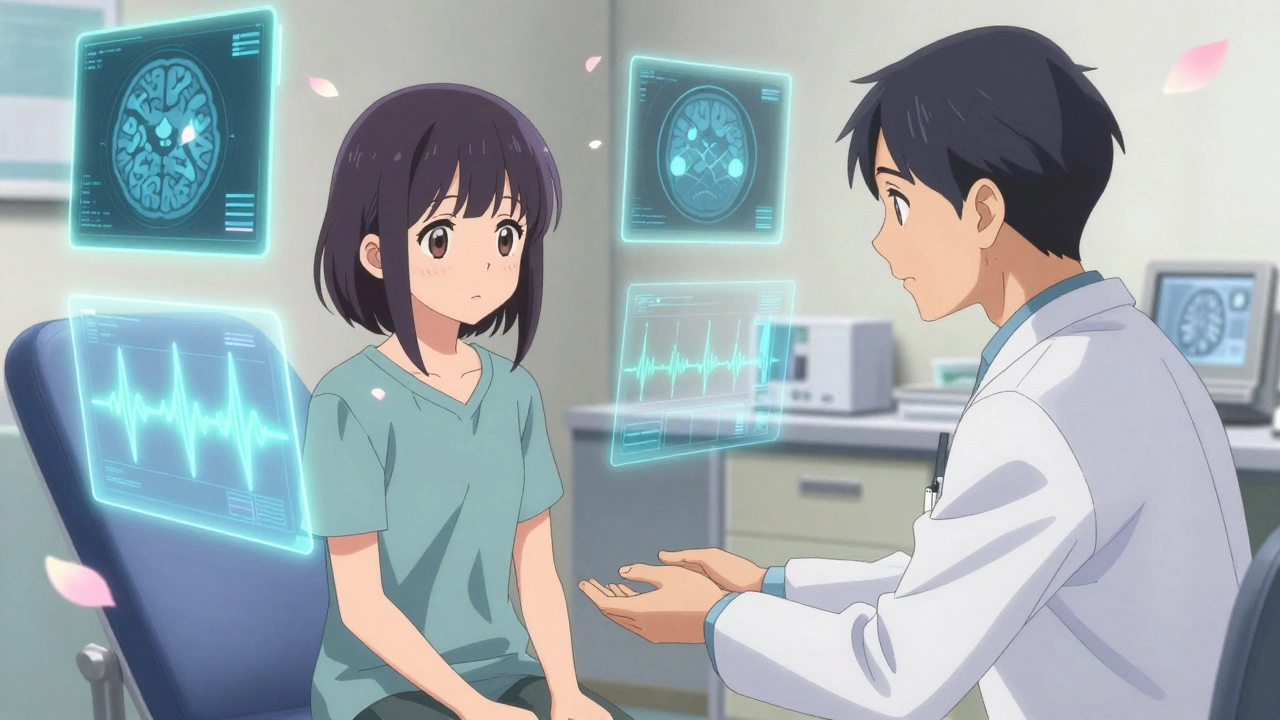
If you’ve tried two or more anti-seizure medications and still have seizures every week-or even every day-you’re not alone, and you’re not out of options. About 1 in 3 people with epilepsy don’t respond to drugs. For these individuals, epilepsy surgery isn’t a last resort anymore-it’s a proven, life-changing step that should be considered as soon as drug resistance is confirmed. Waiting years to explore surgery means losing valuable time that could have been spent seizure-free.
Who Is a Candidate for Epilepsy Surgery?
Not everyone with epilepsy can have surgery. The key is finding where seizures start and whether that area can be safely removed or disconnected. Candidates typically meet three criteria:
- You’ve tried at least two appropriate anti-seizure medications without success, and your seizures are disabling-meaning they interfere with driving, working, school, or daily life.
- Your seizures originate from a specific, identifiable part of the brain, often seen on MRI as a lesion like hippocampal sclerosis, a tumor, or scar tissue.
- You and your family understand the risks and benefits, and you’re willing to go through a detailed evaluation process.
Children are evaluated differently. If a child has infantile spasms, tuberous sclerosis, or Rasmussen’s encephalitis, surgery may be recommended even after just one failed medication. The goal isn’t just to stop seizures-it’s to protect brain development.
What disqualifies someone? Generalized epilepsy-where seizures start everywhere at once-usually isn’t helped by removing brain tissue. If doctors can’t pinpoint a single seizure focus after weeks of testing, surgery is unlikely to help.
The Evaluation Process: What to Expect Before Surgery
Getting approved for surgery isn’t a quick appointment. It’s a multi-week, multi-disciplinary assessment done at a Level 4 epilepsy center. These centers have specialized teams: epileptologists, neurosurgeons, neuropsychologists, and nurses trained in epilepsy care.
Here’s what the process usually includes:
- Video-EEG monitoring: You’re admitted to a unit with cameras and EEG electrodes to record your typical seizures. This helps doctors see exactly where in the brain they start. Most patients stay 5 to 7 days.
- High-resolution MRI: A 3 Tesla scanner takes 1mm slices of your brain to find subtle abnormalities like scarring or small tumors that standard scans miss.
- FDG-PET scan: This shows areas of the brain with low metabolism-often the seizure focus-by tracking glucose use.
- Neuropsychological testing: Memory, language, and thinking skills are tested before surgery to establish a baseline and predict risks.
- Intracranial EEG (if needed): For unclear cases, electrodes are placed directly on the brain surface to map seizures with extreme precision.
Insurance often denies the first request. About 42% of initial authorizations get rejected. But if you appeal-with help from your center’s patient navigator-you have a 78% chance of approval. Keep records of every seizure, medication, and side effect. A detailed diary makes your case stronger.
Types of Epilepsy Surgery and What They Do
There’s no one-size-fits-all surgery. The type depends on where seizures start.
- Temporal lobectomy: The most common procedure. Removes the front part of the temporal lobe, often where hippocampal sclerosis occurs. About 65-70% of patients become seizure-free two years after surgery.
- Focal resection: Removes a small area in the frontal, parietal, or occipital lobe. Success depends on how clearly the seizure zone is defined. Around 60% achieve seizure freedom.
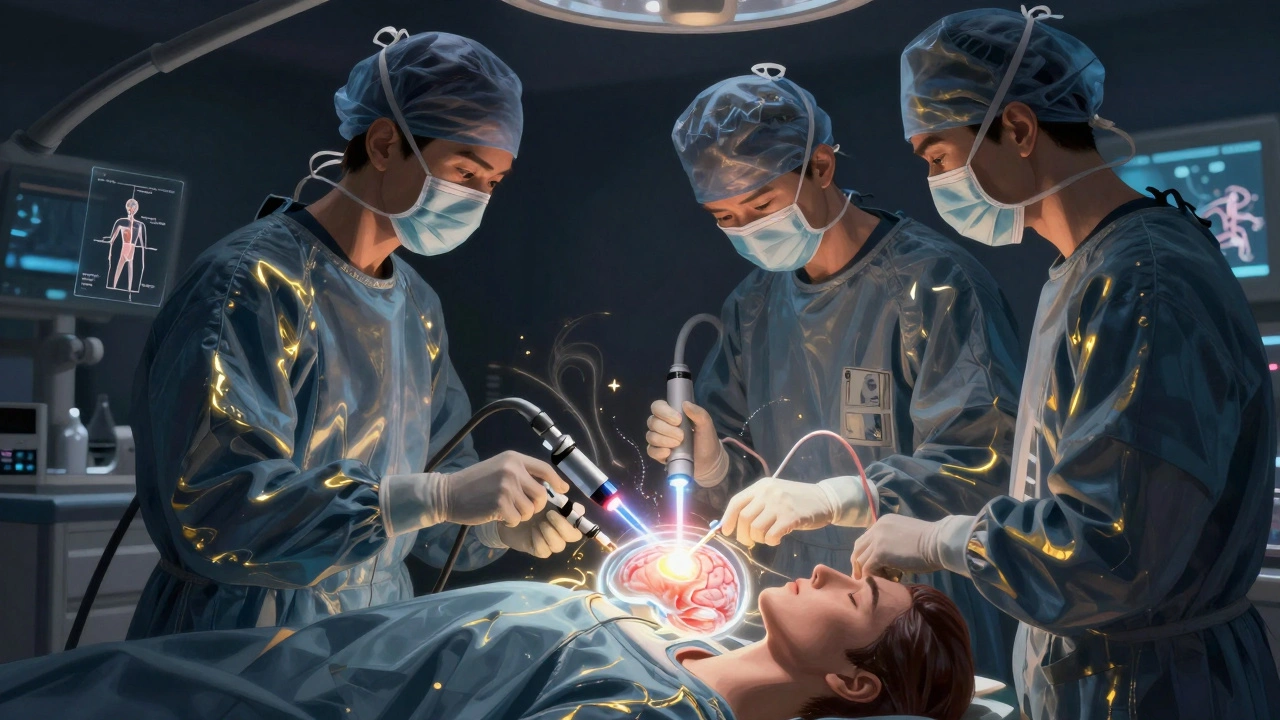
- Laser interstitial thermal therapy (LITT): A minimally invasive option. A laser probe is inserted through a tiny hole in the skull to heat and destroy the seizure focus. Recovery is faster, with fewer complications. About 55% are seizure-free after one year.
- Corpus callosotomy: Cuts the band connecting the brain’s two halves. Used for severe drop attacks, not to stop all seizures but to prevent dangerous falls.
- Neurostimulation devices: Like RNS or VNS. These don’t remove tissue-they deliver electrical pulses to interrupt seizures. They’re often used when resection isn’t possible.
For kids with conditions like hemispheric syndromes, a hemispherectomy-removing or disconnecting half the brain-can be life-changing. Young brains adapt well, and many regain near-normal function.
What Are the Risks?
Any brain surgery carries risk. But modern techniques have made these procedures safer than ever.
For a temporal lobectomy:
- 1-2% risk of permanent weakness, vision loss, or language problems
- 5-10% risk of temporary swelling, infection, or mood changes
- Up to 15% report short-term memory issues, especially if the dominant hemisphere is operated on
With LITT, risks drop to about 2-3% for serious complications. Most side effects improve over weeks or months.
One of the biggest fears is losing memory or speech. That’s why neuropsychological testing is critical. If you’re a right-handed person with seizures starting in your left temporal lobe, your language center is likely intact. Surgeons use brain mapping to avoid damaging it.
There’s also a small risk of sudden unexpected death in epilepsy (SUDEP)-about 1 in 1,000 people with epilepsy die this way each year. Surgery reduces that risk significantly if seizures stop.
What Results Can You Expect?
Success isn’t always complete freedom. But even partial improvement can mean the world.
- 60-80% of people with temporal lobe epilepsy become seizure-free after surgery.
- Another 15-20% have a 90% reduction in seizures-going from daily to once a month or less.
- Only 5% of people who stay on meds will ever be seizure-free without surgery.
Long-term data shows most people who are seizure-free at two years stay that way. A 2023 study found that 70% remained seizure-free after 10 years.
Quality of life improves dramatically. In one study, 79% of patients regained the ability to drive. Many return to work, go back to school, or stop relying on caregivers. One patient said, “I went from 15-20 seizures a day to zero. I got my license back at 42.”
But it’s not perfect. About 15-20% of people who go through full evaluation aren’t eligible for surgery because their seizures can’t be localized. Others may still have seizures but fewer. Some experience memory issues that don’t fully resolve.
Why So Few People Get Surgery
Here’s the hard truth: an estimated 300,000 Americans with drug-resistant epilepsy could benefit from surgery. But only about 5,000 surgeries are done each year. That’s less than 2%.
Why? Three big reasons:
- Doctors don’t refer early enough. Many wait until patients have tried four or five meds. Guidelines say refer after two failed drugs.
- Fear. Half of patients who are referred decline evaluation because they’re terrified of brain surgery.
- Access. Only 60 centers in the U.S. are certified as Level 4. Most are in big cities. Rural patients often don’t even know surgery is an option.
There’s also a myth that surgery is risky and ineffective. But data shows it’s more effective than adding a third or fourth drug. And the risks are lower than many people think.
What Comes After Surgery?
Surgery isn’t the end-it’s a new beginning. Most people stay on at least one anti-seizure medication for a year or two after surgery. Doctors slowly reduce doses only if seizures stay gone.
Follow-up includes:
- Regular EEGs and MRI scans
- Neuropsychological checkups
- Monitoring for mood changes or memory issues
Many patients report feeling more confident, less anxious, and more in control of their lives. One mother said, “My son had 50 seizures a day before surgery. Now he’s in high school, plays soccer, and sleeps through the night.”
What’s Next for Epilepsy Surgery?
Technology is making surgery more precise and less invasive. LITT is growing fast. Researchers are testing robotic guidance and AI-assisted mapping to find seizure zones faster.
The International League Against Epilepsy is pushing for global referral rates to hit 5% by 2025. That means training more doctors, expanding access, and changing the mindset that surgery is a last resort.
Cost-wise, surgery pays for itself. A 2023 analysis found that every successful surgery saves society $1.2 million over 10 years-through fewer hospital visits, less lost work, and reduced caregiver burden.
Final Thoughts: Don’t Wait Until It’s Too Late
If you or someone you love has been living with uncontrolled seizures, don’t accept it as normal. You don’t have to wait five years. You don’t have to try every drug under the sun. If two medications haven’t worked, it’s time to ask: Is surgery an option?
The sooner you get evaluated, the better your chances. Your brain can recover. Your life can change. And the tools to make that happen are already here.
Eddie Bennett
December 12, 2025 AT 08:01Sylvia Frenzel
December 13, 2025 AT 02:56Paul Dixon
December 14, 2025 AT 02:34Vivian Amadi
December 14, 2025 AT 16:38Jimmy Kärnfeldt
December 16, 2025 AT 09:54Ariel Nichole
December 16, 2025 AT 17:47john damon
December 17, 2025 AT 07:58matthew dendle
December 18, 2025 AT 14:14Monica Evan
December 20, 2025 AT 04:24Taylor Dressler
December 20, 2025 AT 18:21Aidan Stacey
December 21, 2025 AT 00:23Jean Claude de La Ronde
December 22, 2025 AT 18:34Jim Irish
December 22, 2025 AT 21:29