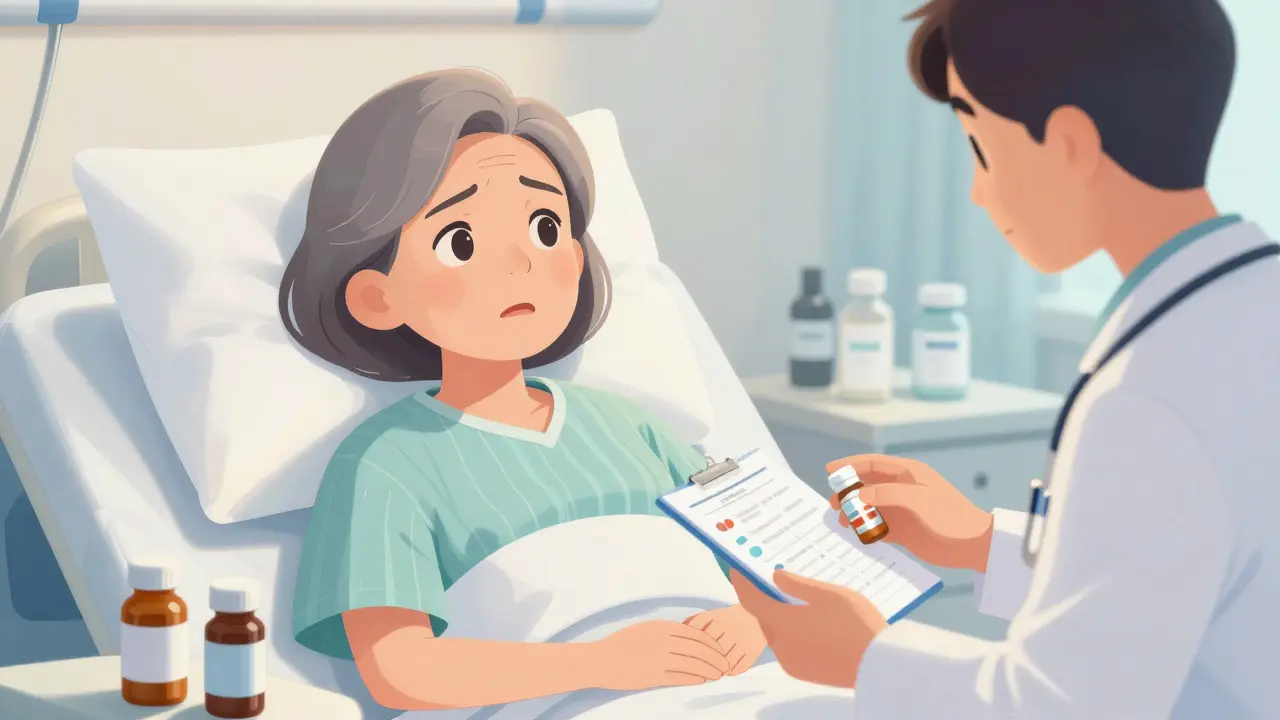
Beers Criteria Medication Checker
Check Medication Safety for Seniors
Enter a medication name to check if it's potentially inappropriate for older adults according to the American Geriatrics Society's Beers Criteria.
geriatric medication safety isn't just a buzzword-it's the practice of ensuring older adults get the right drugs at the right doses without dangerous side effects. Every day, 3,000 seniors in the U.S. end up in the hospital because of medication problems. That's not a statistic-it's a crisis affecting real people and healthcare systems. With seniors taking an average of 4-5 medications daily, the risks pile up fast. But there's hope. Tools like the Beers Criteriaa set of guidelines developed by the American Geriatrics Society to identify medications that may be inappropriate for older adults and the AGS Alternatives Lista resource providing evidence-based non-pharmacologic and pharmacologic alternatives to unsafe medications are changing how we handle meds for seniors.
What Makes Medication Safety Critical for Seniors?
Older adults face unique challenges. Their bodies process drugs differently due to age-related changes in liver and kidney function. This means standard doses can become too strong or linger too long. The polypharmacytaking multiple medications simultaneously problem makes things worse. Seniors on four or more medications are 91% more likely to experience adverse drug events (ADEs), according to JAMA Network Open (2025). ADEs aren't just uncomfortable-they can mean falls, confusion, kidney failure, or even death. For example, combining a diuretic with tramadol can cause dangerous sodium imbalances, leading to hospitalization. This isn't rare. One in three hospital admissions for adults 65+ relates to medication problems, as reported by the American Pharmacists Association in 2024.
The Beers Criteria: A Lifesaving Tool
First published in 1991, the Beers Criteriaa set of guidelines developed by the American Geriatrics Society to identify medications that may be inappropriate for older adults has evolved into the gold standard for geriatric medication safety. The 2023 update lists 139 medications or classes that pose risks. For instance, the opioid meperidine is flagged because it can cause confusion and seizures in seniors. Common NSAIDs like indomethacin and ketorolac are also on the list due to stomach bleeding and kidney damage risks. Tramadol was added in 2023 because of its link to hyponatremia and SIADH, especially when taken with diuretics or antidepressants. Doctors now must monitor sodium levels closely when prescribing it. Even aspirin for primary heart disease prevention is now cautioned for those over 70, as bleeding risks outweigh benefits for many. These updates are based on real-world data. A 2025 JAMA Network Open review found that seniors taking just one potentially inappropriate medication (PIM) from the Beers list had a 26% higher chance of an ADE.
AGS Alternatives List: Solving the "What Now?" Problem
When doctors identify a risky medication, they often struggle to find safe replacements. That's where the AGS Alternatives Lista resource providing evidence-based non-pharmacologic and pharmacologic alternatives to unsafe medications comes in. Released in July 2025, this companion resource offers 47 evidence-based alternatives across 12 medication categories. For anxiety, it suggests non-drug options like cognitive behavioral therapy or relaxation techniques instead of benzodiazepines. For pain management, it recommends physical therapy or acetaminophen over NSAIDs. A 2023 survey of 1,200 primary care physicians found 68% struggled to find safe alternatives when deprescribing PIMs. The Alternatives List directly addresses this gap. It's not just theory-Mayo Clinic pharmacists used it to reduce benzodiazepine prescriptions by 32% in six months, without worsening patient outcomes.
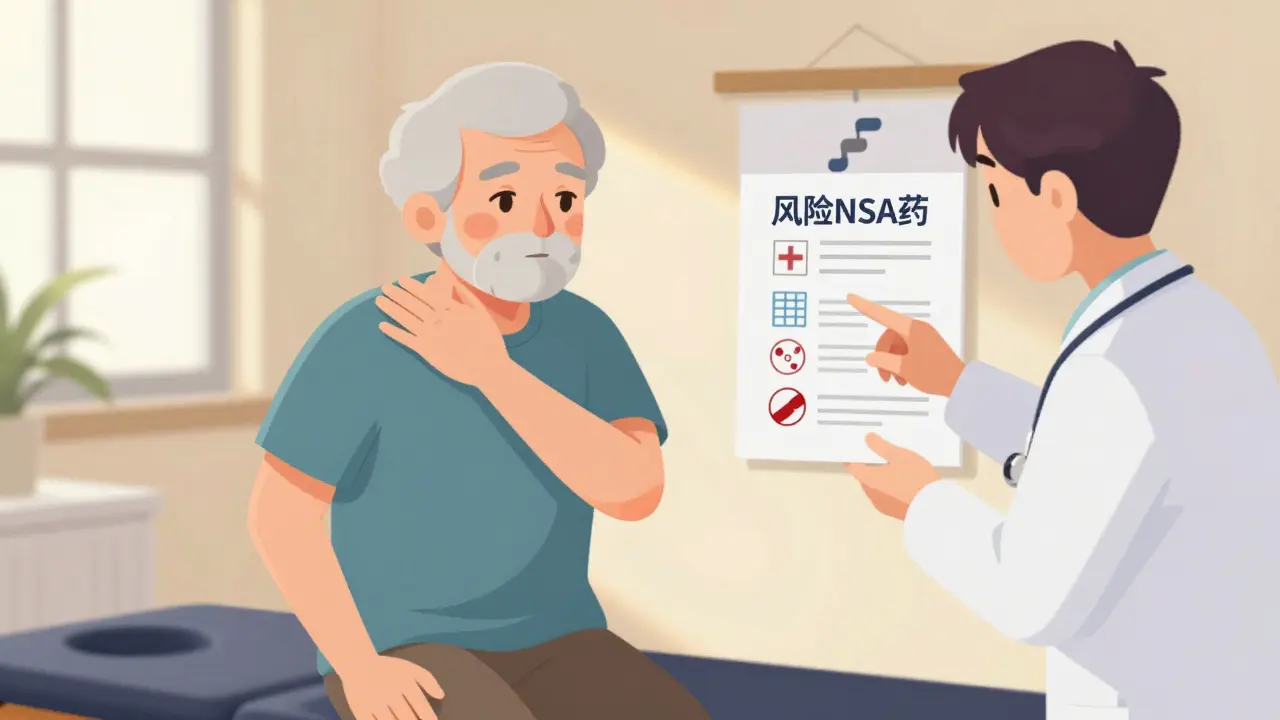
CMS Measure 238: Holding Hospitals Accountable
The Centers for Medicare & Medicaid Services (CMS) Measure 238 tracks how often older patients get two high-risk medications from the same class. This includes benzodiazepines, anticholinergics, and NSAIDs. Why? Taking two drugs from the same class doubles the risk of falls, confusion, and kidney damage. For example, prescribing both a long-acting and short-acting benzodiazepine for insomnia increases fall risk by 50%. Hospitals now must report this data, pushing them to improve medication management. A 2025 study in JAMA Network Open showed that hospitals using CMS Measure 238 data reduced high-risk medication combinations by 28% in one year. But it's not just about counting doses-it's about understanding why. A patient on warfarin for atrial fibrillation isn't at risk, but a senior on two different NSAIDs for arthritis pain is. This precision matters.
Real-World Challenges: Alert Fatigue and System Gaps
Implementing these guidelines isn't always smooth. A 2025 Medscape survey of 850 emergency physicians found 41% faced alert fatigue from EHR systems. For example, Epic's Beers Criteria alerts might fire for every patient over 65, even when a medication is appropriate-like warfarin for atrial fibrillation. This leads to doctors overriding alerts 65% of the time. Dr. Lisa Chen from ACEP Geriatric ED shared on Facebook: "The alerts fire for every patient over 65, even when clinically appropriate-leading to override rates of 65%." Rural hospitals face even bigger hurdles. Only 31% of rural EDs have full geriatric medication safety programs, according to the NRHA 2025 Access Report. Without specialized staff, they struggle to interpret complex guidelines. A 2024 survey by the American Hospital Association found 63% of hospitals cited EHR integration complexities as a major barrier. Solutions include customizing alert thresholds and giving pharmacists override authority.

Success Stories: How Teams Are Winning
Despite challenges, hospitals are making progress. Mayo Clinic Rochester's emergency department reduced potentially inappropriate medications (PIMs) by 38% in six months by adding clinical pharmacists to their team. They spent 12 weeks retraining staff and redesigning workflows. Similarly, the University of Alabama at Birmingham cut 30-day readmissions by 22% through pharmacist-led medication reconciliation. These programs share a common thread: multidisciplinary teamwork. A 2025 JAMA Network Open meta-analysis found that ED-based programs with clinical pharmacists and geriatricians achieved a 37.2% reduction in PIMs-compared to 22.1% with standalone computerized alerts. At the Mayo Clinic, pharmacists now review all senior patients' medications before discharge, catching issues like duplicate prescriptions or dangerous combinations. This hands-on approach works because it's personalized. They don't just follow rules-they ask, "Is this drug really needed for this patient?"
Practical Steps for Healthcare Providers
How can your team start improving geriatric medication safety? First, build a multidisciplinary team. Include clinical pharmacists and geriatricians-studies show this reduces PIMs by 37.2%. Second, customize EHR alerts to avoid unnecessary warnings. For example, set thresholds so alerts only trigger for high-risk combinations like two benzodiazepines, not for appropriate medications like warfarin. Third, use the GEDC Toolkit's "Deprescribing Conversation Scripts" to talk to patients about stopping unnecessary meds. These scripts help explain why a drug might be risky and what safer alternatives exist. Finally, track progress with CMS Measure 238 data. Knowing your hospital's numbers keeps everyone focused. The American Pharmacists Association recommends allocating 0.5 full-time equivalent clinical pharmacists per 20,000 annual ED visits. This investment pays off: hospitals with dedicated pharmacists see 34.7% fewer ADEs compared to 18.3% without pharmacist involvement.
What's Next for Geriatric Medication Safety?
CMS plans to expand Measure 238 in 2026 to include monitoring deprescribing events. Ten new medications, including gabapentinoids and proton pump inhibitors, will join the high-risk list. The AGS is also developing "Beers Criteria Digital Integration Standards" for 2026 to reduce alert fatigue through AI-driven clinical context awareness. With the senior population growing to 74 million by 2030, these changes are critical. Without intervention, medication-related problems could cost $528.4 billion annually by 2030. The most promising solution? Integrated care models that follow seniors from emergency rooms to primary care. Johns Hopkins' 2025 roadmap prioritizes "seamless medication management" across care settings. This means pharmacists coordinating with doctors during hospital discharge and primary care visits. Real-world examples show this works: a pilot program in Michigan cut ADE-related readmissions by 29% by having pharmacists follow up with seniors within 48 hours of discharge.
What are the top three dangerous medications for seniors?
Benzodiazepines (like lorazepam), NSAIDs (like indomethacin), and anticholinergics (like diphenhydramine). Benzodiazepines increase fall risk by 50% and confusion. NSAIDs cause stomach bleeding and kidney damage. Anticholinergics lead to memory issues and urinary problems. These three account for 42% of all ADE-related hospitalizations in seniors, according to JAMA Network Open (2025).
How does polypharmacy increase risks?
Taking multiple medications raises the chance of dangerous interactions. For example, combining a diuretic with tramadol can cause severe sodium imbalances. Seniors on four or more medications are 91% more likely to have an adverse drug event (ADE), and each additional drug adds 15% more risk. A 2025 study found that seniors taking seven or more medications had a 37% higher chance of hospitalization due to ADEs compared to those on two or fewer.
Can non-pharmacological options replace risky meds?
Absolutely. The AGS Alternatives List includes over 38% non-drug options. For anxiety, cognitive behavioral therapy reduces symptoms as effectively as benzodiazepines without side effects. For chronic pain, physical therapy or heat therapy works better than NSAIDs for many seniors. A 2025 Mayo Clinic study showed that replacing benzodiazepines with sleep hygiene education reduced falls by 41% in nursing home residents. These alternatives aren't just safer-they often work better long-term.
How can families help prevent medication errors?
Keep a complete list of all medications, including supplements and OTC drugs. Ask doctors: "Is this medication still necessary?" and "Are there safer alternatives?" Ensure all doctors know about every medication the patient takes. During hospital visits, bring the list and ask pharmacists to review it. A 2024 survey found families who actively participated in medication reviews reduced ADEs by 33% for their seniors.
What's the difference between Beers Criteria and STOPP/START?
Beers Criteria focus on identifying potentially inappropriate medications (PIMs) to avoid. STOPP/START also checks for missed appropriate medications. For example, STOPP might flag a blood thinner when it's not needed, while START would check if a senior with osteoporosis is on a bone-strengthening drug. A 2025 JAMA Network Open review found combining both tools reduced PIMs by 45% compared to using Beers alone. This holistic approach ensures seniors get what they need while avoiding what harms them.
Albert Lua
February 5, 2026 AT 02:09Global adoption of Beers Criteria and AGS Alternatives List could standardize care. Japan's healthcare system has seen a 20% reduction in ADEs after implementing similar protocols. This shows the importance of cross-border knowledge sharing.
Diana Phe
February 5, 2026 AT 11:06The FDA is hiding the truth about drug risks. Big Pharma controls the Beers Criteria. This is a scam to push dangerous medications on seniors.
Andre Shaw
February 5, 2026 AT 12:09I've seen this before. The Beers Criteria are outdated. Real doctors don't follow them. They're just bureaucratic nonsense. Trust me, I know what I'm talking about.
Cullen Bausman
February 5, 2026 AT 12:47Of course the FDA is in cahoots with Big Pharma. This is why America needs to take back control. We shouldn't be following foreign guidelines.
Dr. Sara Harowitz
February 5, 2026 AT 23:42This is unacceptable! The current guidelines are woefully inadequate! We must implement stricter regulations immediately to prevent further harm to our elderly population!
Kieran Griffiths
February 6, 2026 AT 17:48Involving clinical pharmacists in care teams reduces errors significantly. It's a simple step that makes a big difference. Let's prioritize this.
Tehya Wilson
February 7, 2026 AT 22:46International collaboration on medication safety protocols is essential. Japan's approach demonstrates significant improvements in elderly care outcomes.
anjar maike
February 8, 2026 AT 06:46This is important 🌟 Let's push for safer meds 💊
Bella Cullen
February 10, 2026 AT 01:50Too much info.
Arjun Paul
February 11, 2026 AT 01:49The guidelines are not sufficient. More needs to be done to protect seniors.
divya shetty
February 11, 2026 AT 12:57Everyone should be following these guidelines strictly. It's not optional for patient safety.
Nancy Maneely
February 12, 2026 AT 03:18this is a total disaster for seniors! we need to act now before more people die! 😭
Phoebe Norman
February 13, 2026 AT 11:07The polypharmacy issue is critical. Seniors on multiple meds face increased ADEs. The Beers Criteria should be mandatory. We need better monitoring.