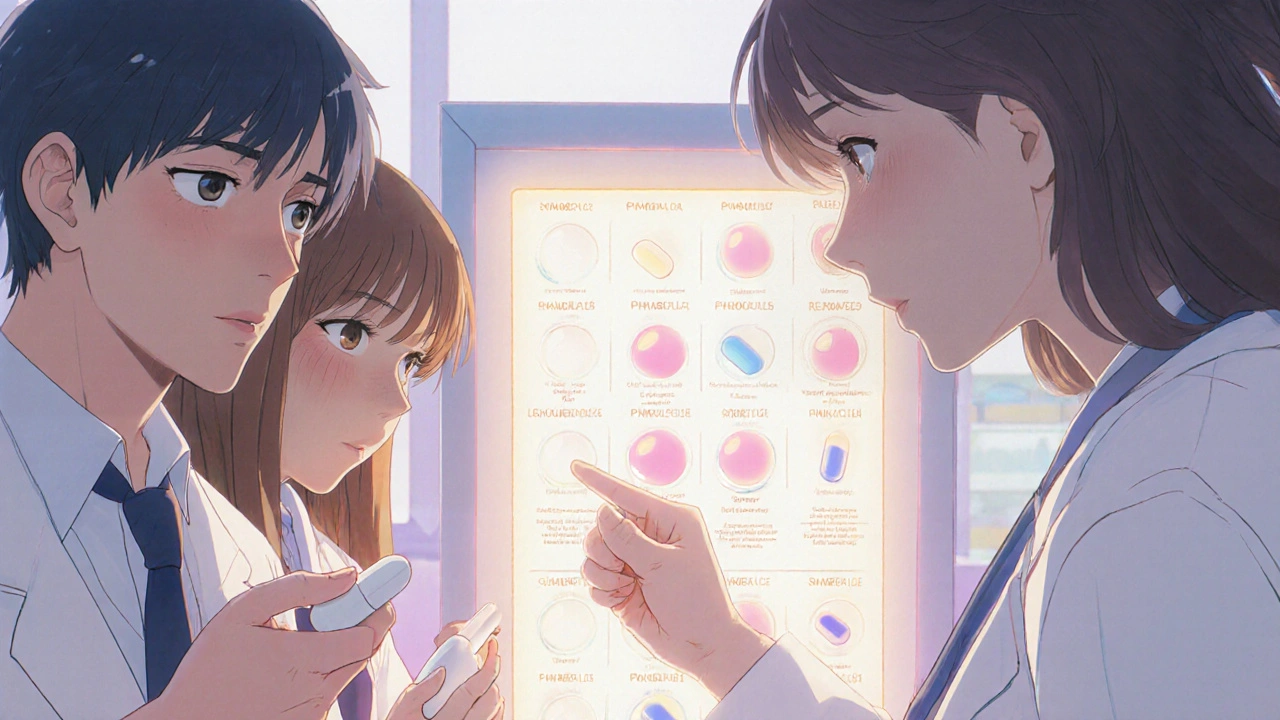
Every year, millions of people in the U.S. and across the world switch from brand-name drugs to generics to save money. It’s a smart move-generics are just as safe and effective. But here’s the problem: many patients don’t understand that. When their pill changes color, shape, or size, they think it’s a different medicine. Some stop taking it. Others take too much. Some end up in the emergency room.
Why Generics Look Different (And Why That’s a Problem)
Generic drugs contain the exact same active ingredient as their brand-name counterparts. A generic metformin tablet works the same way as Glucophage. A generic atorvastatin does the same job as Lipitor. The law requires it. But here’s where things get messy: generics can look completely different. One manufacturer makes a white oval pill. Another makes a pink round one. A third makes a blue capsule. The packaging changes. The label wording changes. Even the imprint code on the pill can be different. For someone with high health literacy, this isn’t a big deal. But for the 80 million American adults with basic or below-basic health literacy skills, it’s a minefield. They don’t know what "active ingredient" means. They don’t know that inactive ingredients-like dyes or fillers-don’t affect how the drug works. They only know: "This pill doesn’t look like my last one. Did they give me the wrong thing?" A 2016 study found that 42% of patients couldn’t tell that generics are therapeutically equal to brand-name drugs. That number hasn’t improved much since. And it’s not just confusion-it’s fear. A 2018 study showed that 68% of patients worried generics wouldn’t work as well, compared to just 22% who felt the same about brand-name drugs.The Real Cost of Confusion
This isn’t just about feeling unsure. It’s about real harm. Between 2015 and 2020, over 1,200 medication errors were reported due to patients mixing up different versions of the same generic drug. One man with high blood pressure switched from one generic lisinopril to another-and didn’t recognize the new blue tablet. He skipped his dose for a week. His blood pressure spiked. He had a stroke. Older adults are especially at risk. A JAMA Internal Medicine study found that when patients got a visually different generic version of their cardiovascular medication, adherence dropped by 23%. Another study in the Journal of the American Geriatrics Society found that 52% of older adults admitted to throwing away pills that looked unfamiliar-what they call "pill dumping." One patient on PatientsLikeMe wrote: "My metformin changed from white oval to pink round. I didn’t take it for three days. I thought it was a different medicine. I ended up in the ER with high blood sugar." It’s not just patients. Pharmacists report seeing two or three patients a week who refuse generics because they "don’t look right." Doctors hear it in every appointment: "Why did they give me this? It’s not the same."Why Brand-Name Drugs Have an Unfair Advantage
Brand-name drugs spend millions on TV ads. They have consistent packaging. Patients recognize the logo. They remember the color. They trust the name. Generics don’t get that. They’re not advertised directly to consumers. They’re sold quietly through pharmacies. No one tells patients: "This new blue pill is the same as your old white one." This creates a trust gap. People think if it’s cheaper, it must be worse. They don’t realize that the FDA requires generics to meet the same strict standards as brand-name drugs-same purity, same strength, same performance. And here’s the kicker: the FDA itself admits that only 37% of generic drug manufacturers use plain language in their patient leaflets. Most still use medical jargon like "pharmacokinetic bioequivalence" or "therapeutic equivalence." That’s not helpful. It’s confusing.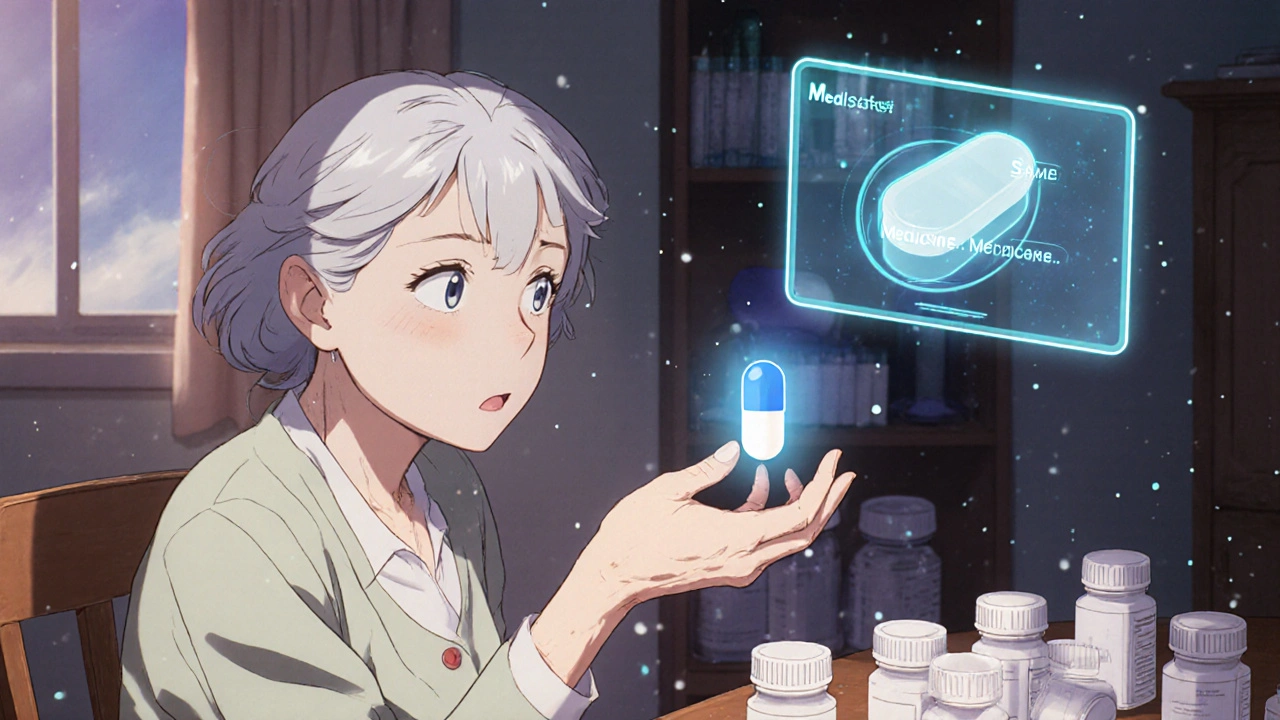
What Works: Real Solutions That Are Making a Difference
The good news? We know what helps. The "Ask Me 3" program trains doctors, nurses, and pharmacists to ask patients three simple questions: What is my main problem? What do I need to do? Why is it important? When this was rolled out in 1,200 clinics, medication errors tied to generic confusion dropped by 31%. The "Brown Bag" review asks patients to bring all their pills-bottles, boxes, even the ones in the drawer-to their appointment. Pharmacists and doctors then lay them out together and explain what each one is, why it’s there, and whether any are generics. A Johns Hopkins study showed this cut medication discrepancies by 44%. Digital tools are stepping in too. The Medisafe app lets users take a picture of their pill. Its AI recognizes the shape, color, and imprint, then tells them: "This is a generic version of your brand-name drug. Same active ingredient. Same effect." In a clinical trial, this improved understanding by 37%. The CDC’s Universal Precautions approach-used in 92% of federally funded health centers-requires staff to explain generic substitutions using plain language: "This is the same medicine, just made by a different company. It works the same way. The only difference is the color and the price." And it’s working. One multi-site evaluation found this simple shift reduced patient confusion by 52%.What’s Changing on a Bigger Scale
It’s not just clinics and apps. Big changes are happening at the policy level. The FDA’s 2023 draft guidance proposes color-coding generic drugs by therapeutic class. For example, all blood pressure generics could be blue. All diabetes generics could be green. This is already working in Australia-errors dropped by 33% after they introduced it. The European Union made standardized packaging mandatory under its Falsified Medicines Directive. In Germany and France, medication errors from generic confusion fell by 19%. The WHO’s 2023 Global Health Literacy Action Plan now lists generic standardization as a top priority. Pilot programs in 15 low- and middle-income countries showed a 41% improvement in correct medication use when pills looked consistent. And in the U.S., 38 states have introduced bills since 2022 requiring pharmacists to assess a patient’s understanding before substituting a generic. That’s a big step.
What You Can Do Right Now
If you or someone you care about takes generic medications, here’s what to do:- Ask your pharmacist: "Is this the same medicine as before? What’s the active ingredient?"
- Check the pill: Look at the imprint code (letters/numbers on the pill). Use a free app like Medscape or Epocrates to look it up.
- Keep a list: Write down the name, color, shape, and dose of every pill you take. Bring it to every appointment.
- Don’t assume: If it looks different, don’t assume it’s wrong. Ask.
- Speak up: If you’re confused, say so. You’re not being difficult-you’re protecting your health.
It’s Not About Intelligence. It’s About Design.
This isn’t about patients being "uneducated." It’s about systems being poorly designed. We wouldn’t expect someone to recognize a new car model just because the color changed. We wouldn’t expect someone to know a new phone is the same model just because the logo moved. Why do we expect people to know a pill is the same medicine when everything about it looks different? The answer is simple: we shouldn’t. Health literacy isn’t just about teaching people. It’s about making the system easier to understand. When we standardize pill appearance, use plain language on labels, and train providers to explain generics clearly-we don’t just reduce errors. We restore trust. We save lives.What’s Next?
The next big step? Making visual consistency the norm-not the exception. The FDA’s proposed color-coding system could be a game-changer. If implemented nationwide, it could cut generic-related medication errors by more than half. Pharmaceutical companies are already testing AI tools that help patients identify pills by photo. These aren’t sci-fi ideas-they’re being used now. But change takes time. Until then, the best tool you have is your voice. Ask questions. Demand clear answers. Don’t let a change in pill color stop you from taking your medicine. Your health doesn’t care what the pill looks like. It only cares that you take it.Are generic medications really as effective as brand-name drugs?
Yes. The FDA requires generic drugs to have the same active ingredient, strength, dosage form, and route of administration as the brand-name version. They must also meet the same strict standards for purity, stability, and performance. Studies show generics work just as well. The only differences are in inactive ingredients (like dyes or fillers) and appearance-things that don’t affect how the drug works in your body.
Why do generic pills look different every time I refill my prescription?
Different manufacturers make the same generic drug, and each one uses its own color, shape, and imprint to distinguish their version. There’s no national standard for how generics must look, so your pharmacy might get pills from Company A one month and Company B the next. This change in appearance is normal-but it can confuse patients who think they’ve been given the wrong medicine.
What should I do if my generic medication looks different?
Don’t stop taking it. Don’t assume it’s wrong. Call your pharmacist and ask: "Is this the same medicine as before?" They can check the active ingredient and confirm it’s still the same drug. You can also use a pill identifier app or website to match the color, shape, and imprint code. If you’re still unsure, ask your doctor to write "Dispense as written" on the prescription to prevent substitution.
Can low health literacy lead to dangerous medication errors with generics?
Yes. Research shows patients with low health literacy are 2.5 times more likely to take the wrong dose when medication labels are complex. Confusion over changing pill appearance has led to missed doses, overdoses, and hospital visits. One study found 52% of older adults threw away unfamiliar generic pills-some of which were life-saving. This isn’t just a misunderstanding-it’s a safety risk.
Is there anything being done to fix this problem?
Yes. The FDA is proposing color-coding for generic drugs by therapeutic class-like making all blood pressure generics blue. The European Union already requires standardized packaging, and errors dropped by 19%. Apps like Medisafe now let you photograph your pill to confirm it’s the right generic. Health centers using plain-language training have cut patient confusion by over 50%. These are proven solutions-and they’re spreading.
Edward Batchelder
November 27, 2025 AT 04:49This is exactly why we need plain language in healthcare. I’ve seen older relatives throw out pills because they looked different. No one told them it was the same drug. It’s not their fault. It’s the system’s failure. We design interfaces for phones, cars, apps-we make them intuitive. Why is medicine still stuck in the 1980s? We can fix this. We just need to care enough to try.
Gayle Jenkins
November 28, 2025 AT 09:23My mom used to panic every time her blood pressure pill changed color. I started printing out little cards with the pill’s shape, color, and imprint code. She keeps them in her wallet. Now she just shows them to the pharmacist. No more ER visits. It’s stupidly simple. Why isn’t this standard practice everywhere?
Kaleigh Scroger
November 28, 2025 AT 15:15People don’t realize how much the packaging and appearance affect adherence. I worked in a pharmacy for six years and saw it every day. Older patients especially. They don’t trust what they don’t recognize. And pharmacists are stretched so thin we don’t have time to explain. The FDA’s color-coding idea? Long overdue. Australia’s been doing it for years. Why are we still debating this? It’s not rocket science. It’s basic human psychology.
Aishwarya Sivaraj
November 30, 2025 AT 11:22in india we have this problem too but worse because many people cant even read the label. the pills are in different colors and shapes and no one tells them its the same. my aunt stopped taking her diabetes medicine for months because the pill changed from white to yellow. she thought it was poison. we had to take her to the hospital. its not about literacy its about design. if the pill looks like candy why would anyone trust it?
Allison Turner
December 1, 2025 AT 18:07Of course generics are fine. But people are dumb. They see a different pill and freak out. You can’t fix stupid. Just give them the brand name and stop pretending this is a systemic issue. It’s just people being irrational.
reshmi mahi
December 3, 2025 AT 06:48USA still thinks generics are ‘inferior’? 😂 Meanwhile, India exports 40% of the world’s generics and no one here panics when the pill color changes. We know the science. You just need to stop treating patients like children. 🤦♀️
Elizabeth Choi
December 4, 2025 AT 11:28Let’s be real. The real problem isn’t pill appearance. It’s that pharmaceutical companies profit from confusion. Brand-name drugs make billions. Generics? Pennies. So who’s pushing for change? No one. The FDA’s ‘draft guidance’ is just PR. Real change requires money. And money talks. Until then, this is theater.
Darrel Smith
December 5, 2025 AT 02:24I’ve been on meds for 15 years and I’ve never had a problem. People just need to read the label. Stop blaming the system. If you can’t tell the difference between a white oval and a blue capsule, maybe you shouldn’t be managing your own meds. My grandfather took 14 pills a day and never missed one. He read the names. He knew what they did. You don’t need an app. You need discipline.
Sam HardcastleJIV
December 6, 2025 AT 09:44One must ask whether the entire edifice of pharmaceutical regulation has been predicated upon an implicit assumption of patient rationality-an assumption demonstrably false. The very notion that a patient ought to discern therapeutic equivalence through visual inspection of an inert tablet is not merely flawed; it is epistemologically absurd. The pharmaceutical industry, in its current form, is a monument to institutionalized ignorance, where the patient is expected to perform the labor of pharmacological literacy without the tools, language, or support to do so. The color-coding proposal, while superficially pragmatic, is a Band-Aid on a severed artery. We require not reform, but revolution: a redefinition of the patient as an agent, not a passive recipient of opaque, visually arbitrary substances. Until then, we are not treating disease-we are administering confusion.
laura lauraa
December 6, 2025 AT 12:26Wow. Just... wow. I can’t believe you’re all acting like this is some new problem. I’ve been a nurse for 22 years. This has been happening since generics hit the market. And you know what? The people who suffer the most? The ones with no insurance. The ones who can’t afford to ask questions. The ones who don’t have someone to explain it to them. And you’re sitting here arguing about whether it’s ‘stupidity’ or ‘design.’ It’s both. And it’s killing people. Stop being so damn polite. This is a public health emergency. And if you’re not screaming about it, you’re part of the problem.