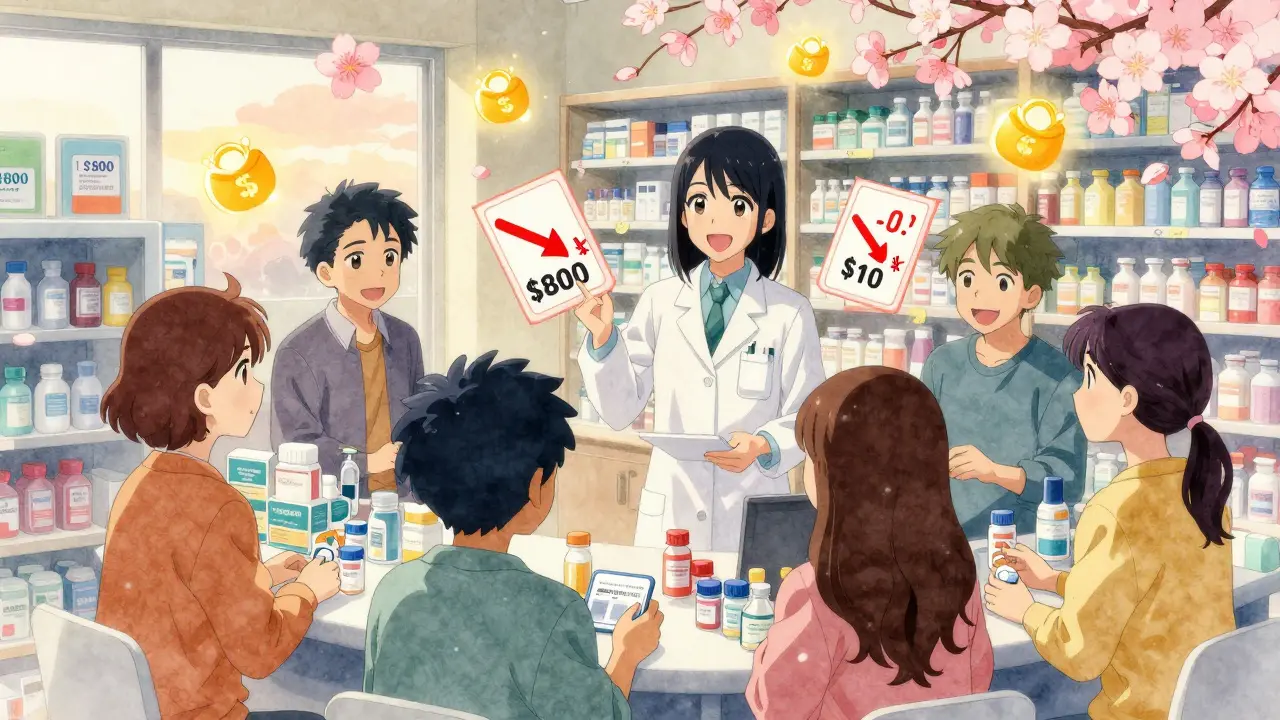
Every year, Americans fill over 3.9 billion prescriptions for generic medications. That’s nine out of every ten prescriptions written. And yet, these generics make up just 12% of total drug spending. The math is simple: if 90% of pills are generic, but they cost a fraction of brand-name drugs, the savings add up fast. In 2024 alone, generic and biosimilar drugs saved the U.S. healthcare system $467 billion. Over the last decade, that number hit $3.4 trillion. This isn’t just a small discount-it’s the single biggest force holding down the cost of care in America.
How Generics Cut Costs So Deeply
Generics aren’t cheaper because they’re lower quality. They’re cheaper because they don’t need to recoup billions in research and marketing costs. Once a brand-name drug’s patent expires, other companies can make the exact same medicine. The FDA requires them to prove they work the same way, deliver the same dose, and have the same side effects. That’s it. No expensive clinical trials. No celebrity ads. No sales reps knocking on doctors’ doors.
Take lisinopril, a blood pressure pill. The brand version, Zestril, used to cost over $100 a month. Today, the generic version costs less than $4 for a 30-day supply at most pharmacies. Same active ingredient. Same effectiveness. Same side effects. But the price dropped by 96%. That’s not magic. That’s competition.
The same pattern repeats across dozens of common medications. Metformin for diabetes. Atorvastatin for cholesterol. Levothyroxine for thyroid issues. These are the drugs millions of people take every day. In 2023, the top 10 most-prescribed generics saved patients and insurers $89.5 billion. The top 10 by total savings? They saved $127 billion. That’s more than the entire annual budget of the CDC.
Biosimilars Are the Next Big Wave
Generics changed the game for small-molecule drugs. But biologics-complex drugs made from living cells-were harder to copy. Until biosimilars came along. These aren’t exact copies, but they’re close enough to work the same way and be approved by the FDA. They’ve been saving money since the first one, Avastin biosimilar, hit the market in 2015.
In 2024, biosimilars saved $20.2 billion in just one year. Since 2015, they’ve saved $56.2 billion total. That’s more than the entire budget of the National Institutes of Health in a single year. And it’s accelerating. Drugs like Humira, Enbrel, and Remicade-all used for arthritis, Crohn’s, and psoriasis-now have multiple biosimilar options. Before, one company controlled the market and charged $7,000 a month. Now, prices have dropped by 40% to 70% in many cases.
One patient in Texas switched from brand Humira to a biosimilar and went from paying $1,200 a month out of pocket to $350. That’s $10,000 saved a year. That’s the difference between keeping your treatment or dropping it.
Why the U.S. Saves More Than Any Other Country
The U.S. fills 90% of prescriptions with generics. Most European countries? Around 60% to 80%. Why? Because the U.S. system was built to push generics early. The 1984 Hatch-Waxman Act created a fast-track approval process for generics and gave the first company to file a challenge 180 days of exclusivity. That created a race to the bottom-and prices plummeted.
States like California have gone even further. Their Generic Drug Discount Program requires pharmacists to substitute generics unless the doctor says no. Result? 98% of prescriptions filled are generic. In Texas, where substitution is optional, it’s 87%. The difference? Billions in savings.
But the U.S. isn’t perfect. Even with all these savings, Americans still pay more for both brand and generic drugs than any other developed country. Why? Because the system is broken in other places. PBMs (Pharmacy Benefit Managers) often push higher-cost brands because they get bigger rebates. Insurance plans sometimes make patients jump through hoops to get a generic-prior authorization, step therapy, formulary restrictions. In 2023, prior authorization requirements for generics increased by 47% across the country, according to the American Medical Association.
Big Pharma’s Tactics to Block Savings
Generics threaten profits. So, brand-name companies fight back. One common trick? Patent thickets. Instead of one patent, they file dozens-on packaging, dosing schedules, delivery methods. Even if the main patent expires, these smaller ones keep generics off the market for years.
A 2024 study in JAMA Health Forum found that just four drugs, protected by patent thickets, cost the system over $3.5 billion in lost savings over two years. Another tactic? Pay-for-delay. A brand company pays a generic maker to delay launching its cheaper version. In 2023, Blue Cross Blue Shield estimated these deals cost the system $12 billion a year. $3 billion of that came from federal programs like Medicare and Medicaid.
Then there’s product hopping. A company slightly changes a drug-say, from a pill to a capsule-and gets a new patent. Then they stop making the old version. Patients are forced to switch, even if the old one worked fine. The Congressional Budget Office says ending product hopping could save $1.1 billion over ten years.
Who’s Really Saving Money?
It’s not just patients. In 2024, generics saved Medicare $142 billion. Medicaid saved $62.1 billion. Private insurers saved hundreds of billions more. Without generics, premiums would be higher. Deductibles would be steeper. Copays would be unaffordable for millions.
One patient on Reddit shared how her generic version of a diabetes drug cost $10 a month. The brand? $800. She didn’t just save money-she kept her treatment. She didn’t have to choose between insulin and groceries.
But not everyone feels the benefit. A Drugs.com survey of 15,328 reviews showed 87% of users praised the cost of generics. But only 63% said they felt the generic worked as well as the brand. Some people report subtle differences-taste, side effects, how fast it kicks in. That’s often because of inactive ingredients, not the active drug. For most people, it doesn’t matter. For a few, it does.
What’s Next? More Generics, More Challenges
The FDA approved 1,145 new generics in 2024. That’s up 7.3% from the year before. Specialty generics-like complex injectables and inhalers-are growing fast. These used to be too hard to copy. Now, they’re being made. And they’re saving billions. One new generic for a lung inhaler saved $1.2 billion in its first year.
But threats are growing. Drug shortages hit 287 generic medications in December 2024. Many are made overseas, and supply chains are fragile. Manufacturing is also consolidating. Ten companies now control 63% of the generic market. That’s up from 51% in 2015. Fewer competitors mean less pressure to lower prices.
Legislation like S.1041, the Affordable Prescriptions for Patients Act, could fix some of this. It targets patent abuse and pay-for-delay deals. The Congressional Budget Office says it could save $7.2 billion a year. If passed, it would unlock billions more in savings.
What This Means for You
If you’re on a chronic medication, ask your doctor or pharmacist: Is there a generic? If you’re on Medicare or Medicaid, check your formulary. Some plans still push brand drugs even when generics exist. If your copay is high, call your pharmacy. Sometimes, paying cash for a generic is cheaper than using insurance.
Generics aren’t perfect. But they’re the reason millions of people can afford their medicine. They’re why insulin, blood pressure pills, and cholesterol drugs aren’t out of reach. They’ve saved trillions. And they’re still saving more-every day.
Are generic drugs really as effective as brand-name drugs?
Yes. The FDA requires generic drugs to have the same active ingredient, strength, dosage form, and route of administration as the brand-name version. They must also meet the same strict standards for purity, stability, and performance. Studies show generics work just as well in the vast majority of cases. A few patients may notice minor differences in side effects or how quickly the drug kicks in-usually due to inactive ingredients like fillers or coatings-but the therapeutic effect is identical.
Why do some insurance plans prefer brand-name drugs over generics?
Some insurance plans, especially those managed by Pharmacy Benefit Managers (PBMs), receive rebates from drugmakers when they favor brand-name drugs-even when cheaper generics are available. These rebates can be large, so PBMs may design formularies to steer patients toward higher-cost drugs, even if it increases out-of-pocket costs for patients. This is called "rebate-driven formulary design." It’s not illegal, but it undermines the savings generics are meant to provide.
How much can I save by switching to a generic drug?
On average, patients save 80% to 85% by switching to a generic. For example, a brand-name statin might cost $300 a month, while the generic version costs $10. In 2024, patients who switched to generics saved an average of $147 per medication each month, according to a survey of 500 patients by Managed Healthcare Executive. For chronic conditions, that adds up to over $1,700 saved per year.
What’s the difference between a generic and a biosimilar?
Generics are exact copies of small-molecule drugs made from chemicals. Biosimilars are highly similar versions of complex biologic drugs made from living cells-like proteins or antibodies. Because biologics are more complex, biosimilars aren’t identical, but they’re proven to work the same way with no clinically meaningful differences. Biosimilars take longer to develop and cost more to produce, so their price discounts are smaller than generics-typically 15% to 35%-but still substantial for expensive drugs like Humira or Enbrel.
Why are generic drug shortages happening?
Many generic drugs are manufactured overseas, especially in India and China. Supply chain disruptions, quality control issues, or factory shutdowns can cause shortages. Also, because generics have thin profit margins, some manufacturers stop making low-margin drugs if they’re not profitable enough. In December 2024, the FDA listed 287 generic medications as in shortage, including common antibiotics, blood pressure meds, and injectables. This threatens access to affordable care.
Can I ask my doctor to prescribe a generic drug?
Absolutely. You have the right to ask. Many doctors automatically prescribe generics, but if yours doesn’t, ask: "Is there a generic version of this?" If there is, and it’s appropriate for your condition, they’ll almost always agree. You can also ask your pharmacist to substitute a generic unless the prescription says "dispense as written" or "no substitution."
Sarah Triphahn
January 15, 2026 AT 15:43Generics are the only reason I’m still alive. My insulin used to cost $800 a month. Now it’s $12. I don’t care if it’s branded or not - it keeps me breathing. Stop acting like it’s a moral dilemma.
Also, PBMs are the real villains. They get paid to make your copay higher. That’s not capitalism. That’s theft.
Allison Deming
January 17, 2026 AT 05:43It is deeply concerning, and frankly, morally indefensible, that the American healthcare system has come to rely so heavily on the commodification of life-saving pharmaceuticals - and yet, we celebrate the fact that people can afford their medications only because they’ve been stripped of all branding, marketing, and perceived value.
Do we not see the irony? We have turned medicine into a commodity, and then praised ourselves for being frugal. Where is the dignity in that? Where is the innovation? Where is the respect for the science that made these drugs possible in the first place?
It is not enough to simply lower the price - we must elevate the system that allows such a profound imbalance to exist.
Susie Deer
January 18, 2026 AT 04:57USA wins again. Other countries pay more for the same drugs. We got the system right. No handouts. No socialism. Just competition and American grit. Generic drugs? That’s capitalism working. Stop crying about big pharma. They got what they deserved.
And if you can’t afford $4 for lisinopril you got bigger problems than medicine.
Alvin Bregman
January 19, 2026 AT 22:55man i just switched my blood pressure med to generic last year and wow i was shocked how much cheaper it was
like i thought it was gonna be some weak version but nope same pills same results
still takes like 2 weeks to kick in tho lol
also why do pharmacies make you pay cash sometimes even when you have insurance
its so confusing
but yeah generics are the real MVPs
shiv singh
January 20, 2026 AT 09:48Let me tell you something. In India, we don’t even have access to generics like this. We pay 10x more for the same pills because of greedy middlemen and corrupt distributors.
You Americans think you’re saving money? You’re just getting the scraps while the real drug makers laugh all the way to the bank.
And don’t even get me started on how your PBMs are robbing you blind. You think you’re winning? You’re being played. Hard.
Dylan Livingston
January 21, 2026 AT 21:13Oh wow, look at us - we’re so clever, we found a way to make medicine cheaper by removing all the artistry from it.
How poetic. We’ve turned the miracle of modern pharmacology into a Walmart private-label product.
And now we pat ourselves on the back for not being bankrupt? How noble.
Meanwhile, the people who invented these drugs? Forgotten. The researchers? Underpaid. The patients who actually need the brand version because their body reacts to the fillers? Ignored.
What a triumph of efficiency over humanity.
Andrew Freeman
January 22, 2026 AT 02:11nah man generics are just a scam
my cousin took the generic zoloft and said he felt like a zombie for 3 weeks
brand worked fine
also why do they always use different colors
looks like candy
and why does the generic one always taste weird
im not buying it
also i heard the FDA just lets them in without testing
not true? maybe
but i still dont trust em
Rosalee Vanness
January 23, 2026 AT 12:03Let me tell you something beautiful - this is what happens when you let competition breathe.
When a drug’s patent expires and ten companies jump in to make the same thing - suddenly, $300 becomes $12. Not because someone lowered their price out of kindness. Because someone else undercut them. And then someone undercut them again.
This is the quiet revolution no one talks about. No protest signs. No viral TikToks. Just pharmacists filling bottles at 7 a.m. while patients cry because they can finally afford to live.
And yes - some people notice differences in the fillers. Maybe the coating’s thicker. Maybe it dissolves slower. But the medicine? The active ingredient? Identical.
That’s not a compromise. That’s science. That’s justice. That’s the system working the way it was meant to.
Don’t let the noise from big pharma or the elitists who think medicine should be a luxury drown out the quiet triumph of millions who are still here because they didn’t have to choose between insulin and rent.
This isn’t perfect. But it’s the closest thing to fairness we’ve got.
And if you’re still skeptical - try switching. Just once. See how your wallet feels. See how your breath feels.
You might be surprised.