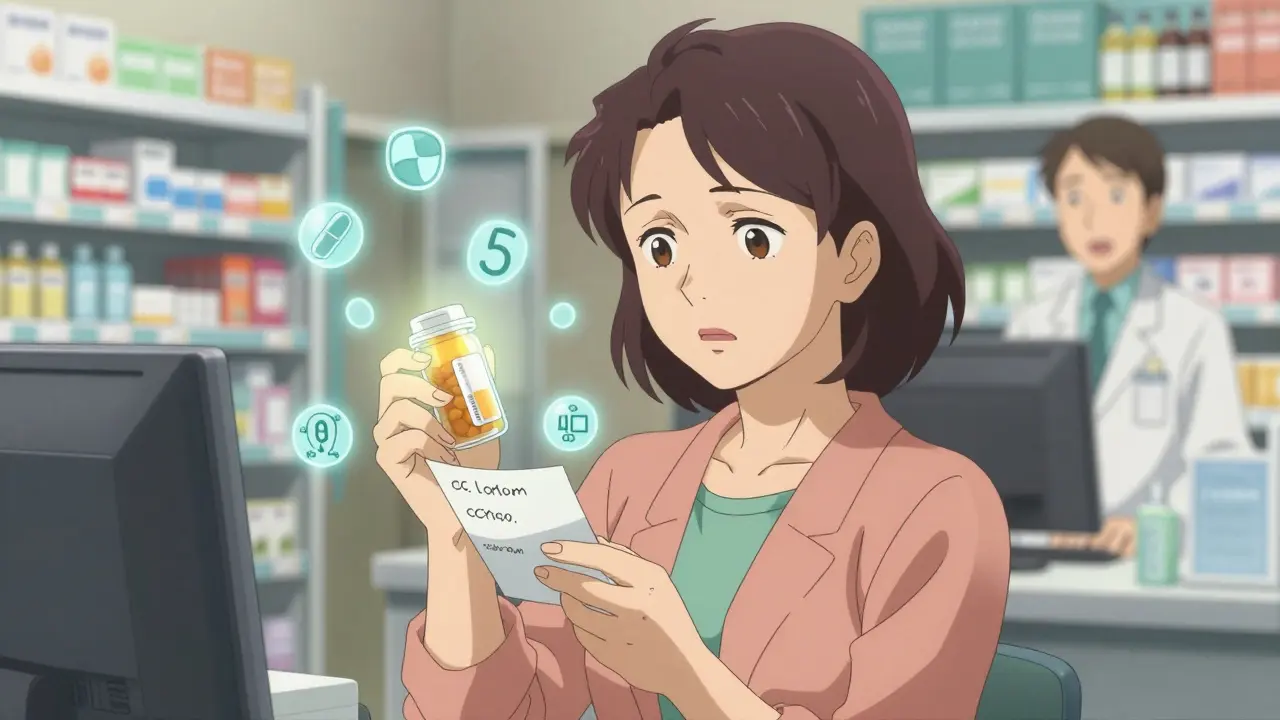
Every year, over a million people in the U.S. get the wrong medicine because of a simple mistake at the pharmacy. It could be the wrong dose, the wrong drug, or even someone else’s prescription. Most of these errors are caught before they hurt anyone - if you take 30 seconds to check your medication bag before walking out. This isn’t about trusting the pharmacist. It’s about adding your own safety net. You’re the last line of defense.
Why This Check Matters More Than You Think
Pharmacists are trained professionals, but they’re human. They’re juggling dozens of prescriptions at once. Labels can be misprinted. Similar-sounding drugs like hydroxyzine and hydralazine get mixed up. Dosage errors happen when a pharmacist writes "5" instead of "50 mg." A 2024 study in JAMA Internal Medicine found that 87% of these mistakes are caught only when patients double-check their own meds. That’s not luck. That’s a system that works - if you use it.The 7-Point Medication Bag Audit
You don’t need a medical degree. You just need to ask yourself these seven questions before you leave the counter.- Is this medicine for me? Look at the name on the label. Not your nickname. Not your spouse’s name. Your full legal name, exactly as it appears on your ID. A 2024 audit by the National Community Pharmacists Association found that 12.7% of errors involved the wrong patient - often because names like "Mary Smith" and "Marie Smith" look alike on a printout.
- Is this the right drug? Compare the name on the bottle to what your doctor told you. Use both the brand name and the generic. If your doctor prescribed "Lisinopril," but the bottle says "Zestril," that’s fine - they’re the same. But if it says "Lisinopril-HCTZ" and you weren’t told about the water pill, stop. Look-alike drugs like clonazepam and clonidine are common mix-ups. The FDA tracks over 1,800 incidents yearly from these errors.
- Is the dose correct? Check the number and the unit. Is it 5 mg or 50 mg? 10 mL or 100 mL? A single decimal point mistake can be deadly. In 2023, the Institute for Safe Medication Practices reported that 32% of serious errors involved wrong strength. If the label says "Take 2 tablets," but the bottle says "5 mg per tablet," and your script was for 10 mg total - that’s a match. If not, ask.
- Is the quantity right? Count the pills. If your script says "30 tablets," but there are 60, something’s off. The Centers for Medicare & Medicaid Services found that 8.3% of errors involve too many or too few pills. Don’t assume the pharmacist counted correctly. Just look.
- Is the expiration date okay? For chronic meds like blood pressure or diabetes drugs, the expiration should be at least six months away. Medications lose potency over time. The U.S. Pharmacopeia says some drugs degrade faster than others. If the bottle says "EXP 03/25" and it’s December 2025, that’s not safe. Ask for a new bottle.
- Does it look right? Compare the pill to what you’re used to. Color? Shape? Lettering? If your usual blue oval pill is now a white round one, even if the name matches, ask. The FDA’s Drugs@FDA database has images of every approved pill. Many pharmacies have printed reference cards. If you’re unsure, take a photo and compare later.
- Do the instructions make sense? "Take one by mouth daily" - fine. "Take one every 4 hours as needed for pain" - okay. But if it says "Take one every 4 hours for 30 days," that’s not right. That’s 225 pills. Your doctor didn’t mean that. The American Pharmacists Association found 14.2% of errors are wrong directions. If it doesn’t match what your doctor told you, say so.
What If You Can’t Read the Label?
If your vision is poor, or the print is tiny, you’re not alone. Nearly 63% of seniors who experience serious medication errors have trouble reading labels. Pharmacies in the U.S. are required to offer help. Ask for a magnifying card - most Walgreens and CVS locations now have them behind the counter. Ask for a large-print label. Some pharmacies will even read the label aloud to you. If you’re still unsure, don’t leave. Call your doctor’s office. They can confirm the details.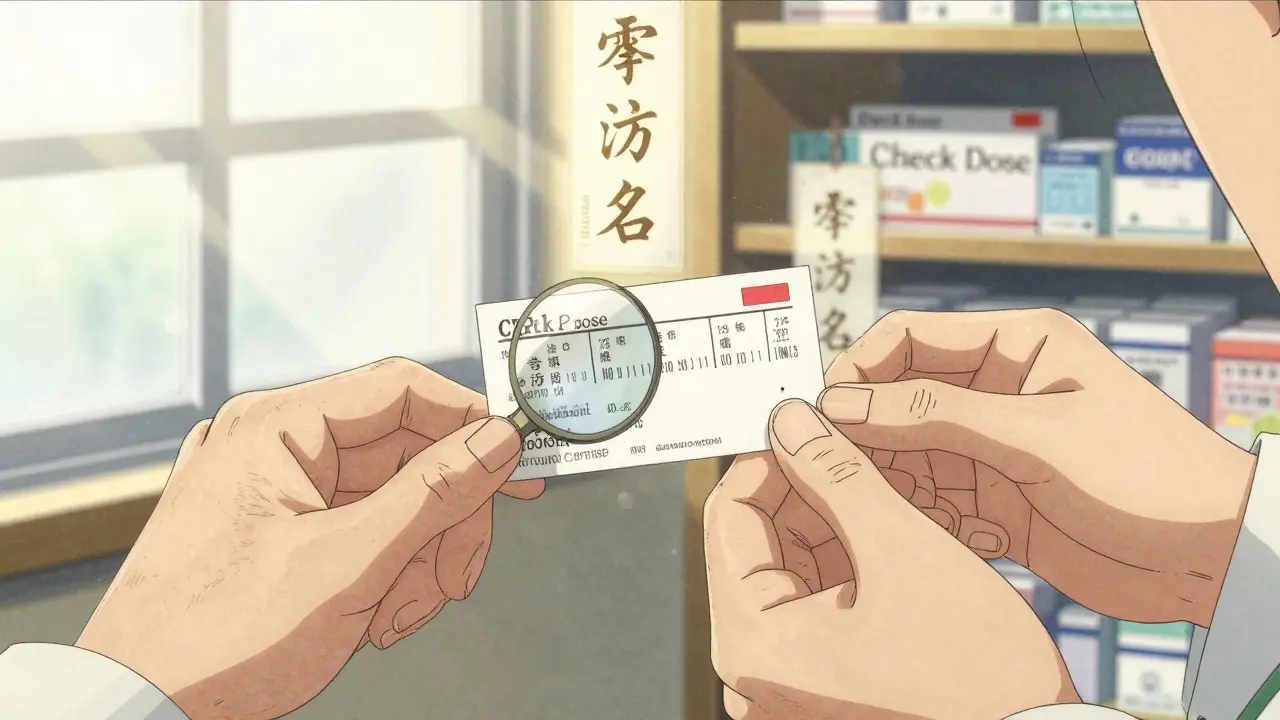
What About Apps and Technology?
There are apps like MedSafe and the FDA’s MedCheck that let you scan the barcode on your pill bottle. They check the National Drug Code against your prescription. These work 98.7% of the time. But here’s the catch: 42% of people over 65 don’t use smartphones for this kind of thing. And apps can’t tell you if the pill looks wrong or if the instructions sound off. They’re great tools, but they don’t replace your eyes and your brain.What to Do If You Find a Mistake
If you catch something wrong - even if you’re not 100% sure - stop. Don’t take the medicine. Don’t leave the pharmacy. Say, "I think there might be an error. Can we double-check?" Most pharmacists will thank you. In fact, pharmacies that encourage this kind of verification see 28% higher safety scores on government ratings. If the pharmacist dismisses you, ask to speak to the manager. You have the right to a safe medication. And you’re not being difficult - you’re being smart.Real Stories, Real Results
One mother in Pennsylvania caught a fatal error in January 2025. Her child’s antibiotic label said "5 mL," but the bottle was labeled "50 mg/5 mL." The pharmacist had written "give 5" - without the units. She noticed because she remembered the dose from the doctor’s note. That one check saved her child from a dangerous overdose. Another man in Florida nearly took his wife’s blood thinner, warfarin, instead of his own. He only caught it because he checked the strength: 5 mg instead of 1 mg. He asked the pharmacist. They fixed it before he left. On the flip side, a Reddit user in March 2025 described how he skipped the check and took the wrong dose of a heart medication. He ended up in the ER. He said: "I thought I knew what I was taking. I didn’t check. I won’t make that mistake again."
Gray Dedoiko
December 25, 2025 AT 07:11I used to skip this step until my grandma almost got the wrong blood thinner. Now I check every single time-even if it’s the same pill I’ve taken for 10 years. Turns out, pharmacies switch generic brands all the time and the pills look totally different. I keep a photo of my usual pill on my phone now. Just a second of your time could save you a trip to the ER.
Also, if you’re over 65 and can’t read the label? Ask for large print. They’re legally required to help. No shame in it.
Ademola Madehin
December 25, 2025 AT 23:52Y’all act like this is some revolutionary tip. My cousin died because she didn’t check her meds. Now every time I pick up a script, I scream at the pharmacist like a lunatic. They don’t like me. Good. Let them remember me. I’m the guy who shows up with a printed checklist and a red pen. You think you’re safe? You’re not. Not until you treat every pharmacy like a snake pit.
Rosemary O'Shea
December 27, 2025 AT 11:49How quaint. You’re treating a systemic failure of pharmaceutical oversight as if it’s a personal responsibility issue. The fact that we need to perform a 7-point audit just to avoid being poisoned speaks volumes about the collapse of professional accountability. I don’t trust pharmacists. I don’t trust doctors. I don’t trust labels. I trust nothing. And frankly, I’m not surprised. Capitalism turned healthcare into a lottery.
Ajay Sangani
December 29, 2025 AT 01:07you know what i find weird? no one talks about how the labels are printed by machines that sometimes smudge the ink or flip numbers. i once got a bottle that said 50mg but the actual pill was 5mg. i only noticed because the cap had a tiny smudge on the 0. it looked like a 9. i thought i was going crazy. then i checked the bottle again. it was 50. but the pill was small. i asked. they apologized. said the printer glitched. that’s not a glitch. that’s a hazard.
we need barcode scans on the bottle, not just the box. and maybe a voice assistant option. i’m not techy but i’d use it if it spoke to me.
CHETAN MANDLECHA
December 29, 2025 AT 19:44As a pharmacist’s son raised in a pharmacy, I’ve seen both sides. The staff are stretched thin. But the real problem isn’t the pharmacist-it’s the system. Scripts come in electronically, sometimes from different states, sometimes with unclear handwriting even in digital form. I’ve watched my dad correct 3 errors in 10 minutes last week. He didn’t get praised. He got a thank-you and a shift change.
So yes, check your meds. But also, if you catch a mistake, say thank you. The people behind the counter are doing their best under impossible conditions. A little grace goes further than a rant.
Adarsh Dubey
December 31, 2025 AT 04:40Great post. I’ve been doing this check since my dad had a bad reaction to a mix-up with his cholesterol med. It’s become automatic for me-like checking if I locked the door. I even teach it to my elderly neighbors. One of them told me she used to be embarrassed to ask questions at the pharmacy. Now she brings her grandson along. He reads the label out loud. She says it’s the first time she’s ever felt safe getting meds.
Small actions. Big impact.
Sidra Khan
January 1, 2026 AT 23:21Why are we still using paper labels in 2025? This is ridiculous. Why not just have a QR code that auto-loads your prescription details on your phone? Why are we relying on people to read tiny fonts? Why isn’t this mandatory? Why isn’t the FDA forcing all pharmacies to use standardized digital labels with voice output? Why are we still having this conversation?
Also, I’m pretty sure the CDC doesn’t give out laminated cards. I checked. They don’t. So who’s lying?
Charles Barry
January 2, 2026 AT 21:40Let’s be real. This whole checklist is a distraction. The real issue? The FDA approves drugs based on corporate data. Pharmacies are owned by private equity firms that cut staff to maximize profit. The pharmacist you’re checking with? He’s working 12-hour shifts, has zero training on drug look-alikes, and is being monitored for speed, not safety. You think your 30-second check fixes that? No. It just makes you feel better while the system burns.
Stop blaming the patient. Start burning the whole structure down.
Jeffrey Frye
January 4, 2026 AT 18:17im not saying this is bad advice but like… how many people actually do this? like, really? i mean, i saw a guy at cvs yesterday just grab his bag and walk out while the pharmacist was still ringing up his coffee. he had 7 different prescriptions. 7. and he didn’t even look at the bottle. he was on his phone. this is a country that can’t even get people to wear seatbelts. we’re asking them to be pharmacists now?
also… did anyone else notice the post says the CDC gives out cards? i looked. they dont. so now i’m wondering if the whole thing is fake.
Bartholomew Henry Allen
January 5, 2026 AT 00:39This is exactly why America is falling apart. We’ve turned personal responsibility into a checklist. The pharmacist is a professional. If he makes a mistake, he should be held accountable. Not the patient. Not the grandmother. Not the 72-year-old with shaky hands. The system failed. The system should fix itself. Not the citizen.
And if you’re too lazy to read a label, maybe you shouldn’t be taking pills at all.
Gray Dedoiko
January 5, 2026 AT 22:35Bartholomew, I get your point. But here’s the thing: the system doesn’t hold pharmacists accountable after the fact. There’s no penalty for a mistake unless someone dies. And by then, it’s too late. The patient is the only one who can act in the moment. That’s not a failure of personal responsibility-it’s a failure of regulation. I’m not asking people to be pharmacists. I’m asking them to be human.
And if you think a 30-second check is too much, you’ve never had to explain to your kid why their grandma didn’t come home.