
When you’re on a fixed income and taking medications every day, an unexpected rise in your prescription cost can be more than inconvenient-it can be dangerous. That’s why knowing how to check drug coverage tiers and staying on top of formulary changes isn’t just smart-it’s essential. Every year, Medicare Part D plans and many private insurers update their lists of covered drugs. Some medications move to higher tiers, meaning you pay more. Others get dropped entirely. And if you don’t catch it before your next refill, you could be stuck with a bill five times higher than usual.
What Is a Drug Formulary and Why Does It Matter?
A drug formulary is simply the list of medications your insurance plan covers. It’s not just a catalog-it’s organized into tiers, and each tier has a different price you pay. The goal is to encourage the use of lower-cost drugs, but the system can be confusing. For example, a medication you’ve been taking for years might suddenly jump from Tier 1 to Tier 4, and your monthly cost goes from $12 to $75 overnight. All Medicare Part D plans must cover at least two drugs in each therapeutic category, but that doesn’t mean they cover the same ones. One plan might list your blood pressure pill in Tier 1 (lowest cost), while another puts it in Tier 3 (higher cost). The difference? It could be $100 a month in your pocket. Formularies change often. According to CMS data from 2023, about 17% of formulary updates involve moving a drug to a higher tier-usually because a cheaper generic became available. That sounds good, right? But if your doctor prescribed the brand-name version for a reason, and you can’t switch, you’ll have to fight for an exception or pay more.Understanding the Tier System: 3, 4, or 5 Tiers?
Not all plans use the same structure. Most fall into one of three common models:- 3-Tier: Generic drugs (Tier 1), brand-name drugs (Tier 2), and specialty drugs (Tier 3).
- 4-Tier: Preferred generics (Tier 1), non-preferred generics and some brands (Tier 2), high-cost brand-name drugs (Tier 3), and specialty medications (Tier 4).
- 5-Tier: Preferred generics (Tier 1), non-preferred generics (Tier 2), preferred brands (Tier 3), non-preferred brands (Tier 4), and specialty drugs (Tier 5).
How to Check Your Drug’s Current Tier
You don’t need to guess. Every Medicare Part D plan and most private insurers offer a free online tool to look up your medications. Here’s how to use it:- Go to your plan’s website. Look for links like “Drug List,” “Formulary,” or “Find a Drug.”
- Enter the full name of your medication. Use the brand name if you’re unsure-the generic might be listed separately.
- Check the tier number and cost. You’ll see your copayment (fixed fee) or coinsurance (percentage of cost).
- Look for notes like “Prior Authorization Required” or “Step Therapy.” These mean you need approval before the plan will cover it.
What to Do If Your Drug Is Moved to a Higher Tier
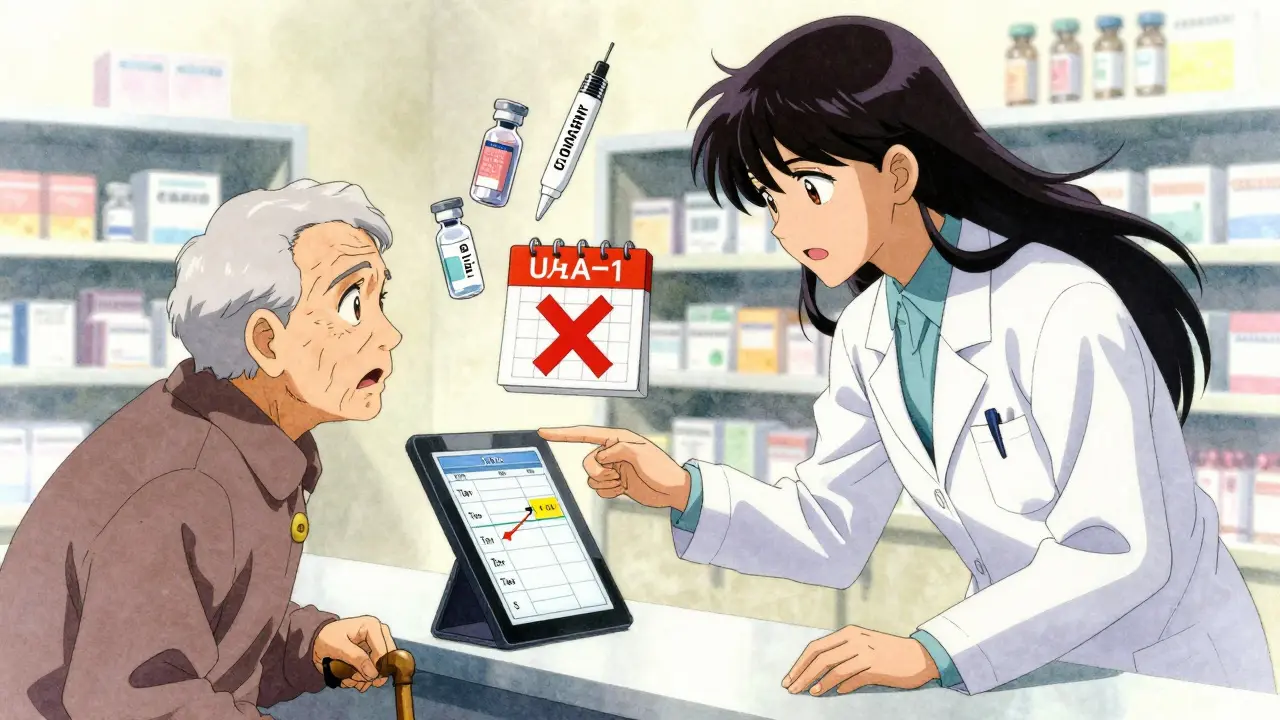
If your medication suddenly costs more, you have options. Don’t just pay it and move on. First, ask your pharmacist. They have access to real-time formulary data and can often suggest a similar drug in a lower tier. For instance, if your brand-name statin was moved to Tier 4, your pharmacist might recommend a generic alternative like simvastatin that’s still effective and cheaper. Second, talk to your doctor. They can submit a formulary exception request. This means asking your plan to cover your current drug despite the tier change. You’ll need to explain why switching isn’t safe or effective-for example, if you had side effects with other drugs or if your condition is unstable. In 2022, over 1.2 million exception requests were filed by Medicare beneficiaries. Approval rates ranged from 55% to 82%, depending on the plan and how strong the medical justification was. If your doctor writes a clear letter and you’ve tried alternatives, your chances are good. Third, check if you qualify for a transition supply. If your drug is being removed from the formulary, most plans must give you at least a 30-day supply while you and your doctor figure out a plan B. Use that time wisely.Watch Out for These Common Traps
Many seniors get caught off guard by these hidden issues:- New year, new plan: When you switch plans during Open Enrollment, your new plan’s formulary might not cover your current meds at all. Always check before you enroll.
- GLP-1 drugs: Medications like Wegovy and Ozempic, once covered in lower tiers, are now often placed in Tier 5. If you’re taking them for diabetes or weight loss, expect a big price jump.
- Over-the-counter switches: Some plans stop covering drugs that are now available without a prescription. If your plan no longer covers omeprazole (Prilosec), you’ll need to pay full price unless you get a generic alternative.
- Missing the notice: Plans mail formulary updates, but if you moved or your mail gets lost, you won’t know. Check online every three months.

Where to Get Help
You don’t have to do this alone. Here are free resources:- Medicare.gov: Use their Plan Finder tool to compare formularies across plans. You can even enter your exact medications to see which plan covers them best.
- SHIP (State Health Insurance Assistance Program): These free, local counselors help seniors navigate Medicare. In 2022, they provided over 1.7 million formulary consultations. Find yours at shiptacenter.org.
- Your pharmacist: They’re trained to spot formulary changes and can often call your plan on your behalf.
- Customer service: Every Medicare Part D plan must have 24/7 phone support. Call and ask: “Is my medication on the formulary this month? What tier is it in?”
What’s Coming in 2025 and Beyond
The system is changing. CMS is testing a simplified 4-tier model for 2025 to reduce confusion. More plans are also using AI tools to predict which drugs will move tiers next year, so you’ll see alerts earlier. But the biggest risk? Specialty drugs. By 2026, over half of the top-selling medications will be specialty drugs-expensive, complex, and often placed in the highest tier. If you’re on insulin, rheumatoid arthritis meds, or cancer treatments, this matters. The bottom line: formularies aren’t static. They change. And if you don’t check, you’ll pay more. Stay proactive. Check your drug list every quarter. Talk to your pharmacist. Ask for exceptions when needed. Your health-and your wallet-depend on it.How often do drug formularies change?
Most Medicare Part D plans update their formularies once a year on January 1st. But changes can happen anytime during the year-for example, if a new generic becomes available, a drug is recalled, or safety concerns arise. Plans must notify you in writing at least 60 days before a change affects drugs you’re taking, unless it’s due to a safety issue. Always check your plan’s website monthly, especially before refilling prescriptions.
Can I still get my medication if it’s not on the formulary?
Yes, but you’ll likely pay more. You can ask your doctor to file a formulary exception request. This is a formal appeal asking your plan to cover your drug even though it’s not on the list. You’ll need to provide medical reasons why switching isn’t safe or effective. Approval rates vary, but if your doctor supports it, you have a good chance. You can also pay out of pocket or ask about patient assistance programs.
What’s the difference between a copay and coinsurance?
A copay is a fixed amount you pay each time you fill a prescription-like $10 or $45. Coinsurance is a percentage of the drug’s total cost. For example, if your drug costs $300 and your coinsurance is 25%, you pay $75. Tier 1 and Tier 2 drugs usually have copays. Tier 4 and Tier 5 drugs often use coinsurance, which can be much higher and harder to predict.
Why does my drug cost more on one plan than another?
Each insurance plan negotiates its own prices with drug manufacturers and decides where to place drugs in their tiers. One plan might have a deal with the maker of your medication and list it in Tier 1. Another plan might not have that deal and put it in Tier 3. Even the same drug can have different tiers across plans. That’s why comparing formularies before choosing a plan is so important.
Do I need to check my formulary every year?
Yes. Even if you’re happy with your plan, your medications might not be. Every year, dozens of drugs are added, removed, or moved to higher tiers. If you take even one medication regularly, you should check your formulary before Open Enrollment (October to December) and again in January. Don’t assume your plan stayed the same.
Kal Lambert
March 17, 2026 AT 15:35Melissa Starks
March 18, 2026 AT 15:26Linda Olsson
March 20, 2026 AT 14:49Shameer Ahammad
March 22, 2026 AT 05:41Lauren Volpi
March 23, 2026 AT 11:47Melissa Stansbury
March 25, 2026 AT 04:16Manish Singh
March 25, 2026 AT 16:12Ayan Khan
March 26, 2026 AT 15:11Alexander Pitt
March 27, 2026 AT 15:59Emily Hager
March 28, 2026 AT 20:58Nilesh Khedekar
March 30, 2026 AT 04:19Robin Hall
March 31, 2026 AT 13:56