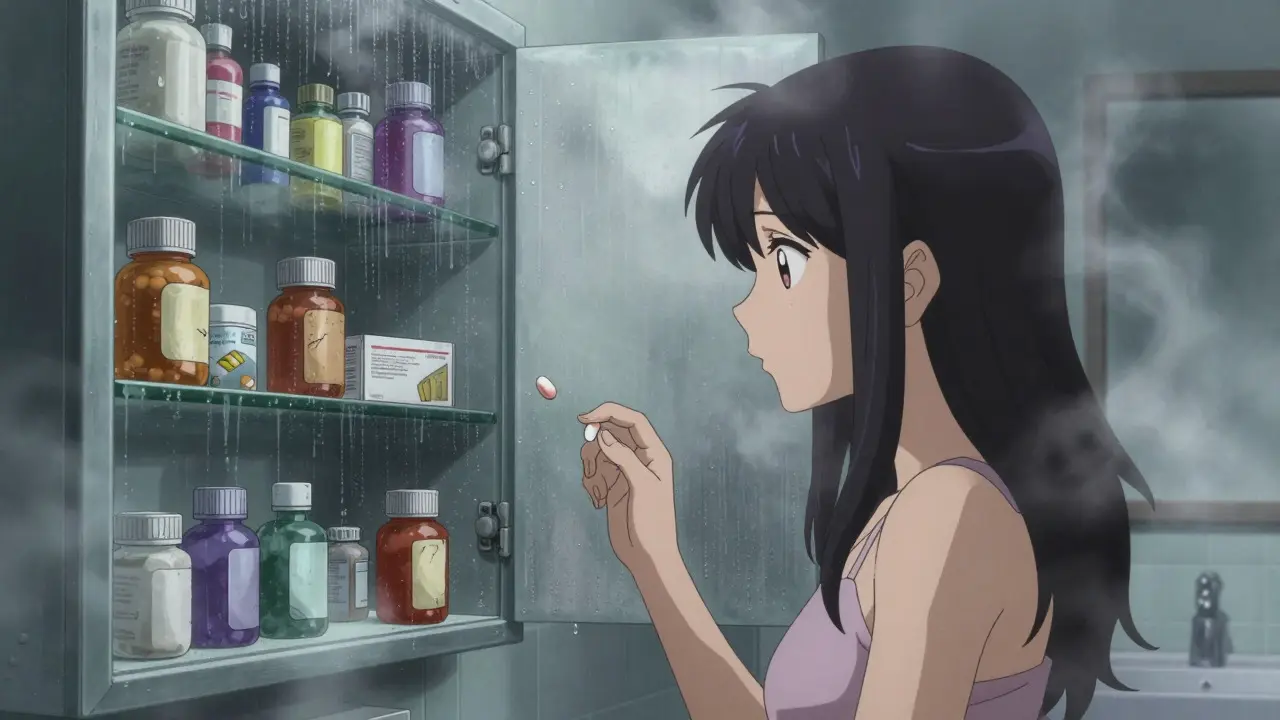
Imagine you’ve just picked up a new prescription or bought an over-the-counter painkiller. You toss it into your bathroom cabinet next to the toothpaste and forget about it until you need it. Sounds normal, right? But what if that simple habit is slowly turning your medicine into something less effective-or even harmful?
Storage instructions on medication labels aren’t just fine print for fun. They are critical safety data. According to the U.S. Food and Drug Administration (FDA), improper storage can lead to reduced effectiveness, increased toxicity, or physical changes in the product. In fact, storage-related issues contributed to 1.2% of all medication errors reported to the FDA’s MedWatch program between 2020 and 2022. That number likely underrepresents the real problem, as most people never realize their meds have gone bad.
If you want to get the full benefit from your drugs and stay safe, you need to know exactly where to look on the label and what those terms actually mean. Let’s break down how to read these instructions so you don’t have to guess.
Where to Find Storage Information on Your Label
The first step is knowing where to look. The location depends on whether you’re holding a prescription bottle or an over-the-counter (OTC) box.
For Over-the-Counter (OTC) medications, which include common pain relievers like ibuprofen or antacids, the FDA mandates a standardized "Drug Facts" label. You will find storage details under the section titled "Other information." This section sits below active ingredients, uses, warnings, and directions. It usually answers direct questions like "Should it be refrigerated?" or "Does it need to be stored in a cool, dry place?"
For Prescription medications, which require a doctor's order, the layout varies slightly by pharmacy but follows federal guidelines. Look for a section labeled "Storage Instructions," "How Supplied," or "Storage and Handling." This area often includes specific handling conditions, such as "protect from light" or "store in refrigerator." If you can’t find it on the main sticker, check the patient package insert-the folded paper inside the box-for detailed environmental requirements.
Decoding Common Storage Terms
Labels use specific language that might sound vague at first glance. Here is what those phrases really mean in practical terms:
- Controlled Room Temperature: This does not mean "anywhere in your house." The United States Pharmacopeia defines this strictly as 20°C to 25°C (68°F to 77°F). Keep meds away from radiators, windows, or stoves.
- Refrigerate: This means storing between 2°C to 8°C (36°F to 46°F). Crucially, store these items in the main body of the fridge, not the door. The door fluctuates too much every time you open it.
- Protect from Light: Many drugs degrade when exposed to UV rays. Keep them in their original opaque bottles or boxes rather than transferring them to clear pill organizers unless instructed otherwise.
- Avoid Humidity / Store in Dry Place: Moisture is a major enemy of pills. This is why bathrooms are terrible places for medicine cabinets.
- Do Not Freeze: Some liquid antibiotics or insulin vials become useless if they freeze. Freezing can cause crystallization that ruins the chemical structure.
Why Proper Storage Matters More Than You Think
You might think, "It’s just a headache pill; it’ll be fine." But chemistry doesn’t care about your assumptions. Improper storage can change a medication’s potency or create harmful byproducts.
Take acetaminophen-containing products, for example. Northwest Family Clinics warns that degradation over time due to heat or moisture could potentially create toxic compounds. Liquid antibiotics lose their effectiveness rapidly if left out of the fridge. Insulin, a protein-based hormone, denatures at high temperatures, meaning it simply stops working. Nitroglycerin tablets, used for heart conditions, degrade quickly when exposed to heat or moisture, leaving patients without emergency relief when they need it most.
The consequences aren’t always immediate poisonings. Often, it’s subtle failure. You take the dose, but it doesn’t work because the active ingredient has broken down. Then you might double the dose, leading to overdose risks. Or you might assume the condition is worsening when it’s just the med that failed.
Common Mistakes People Make with Medicine Storage
A survey by Express Scripts found that 68% of users occasionally store medications in suboptimal conditions. Here are the biggest culprits:
- The Bathroom Cabinet Trap: About 42% of people store meds here. Showers create steam and humidity. The temperature swings wildly between hot showers and cold nights. Pills absorb moisture, swell, and crumble. Liquids breed bacteria.
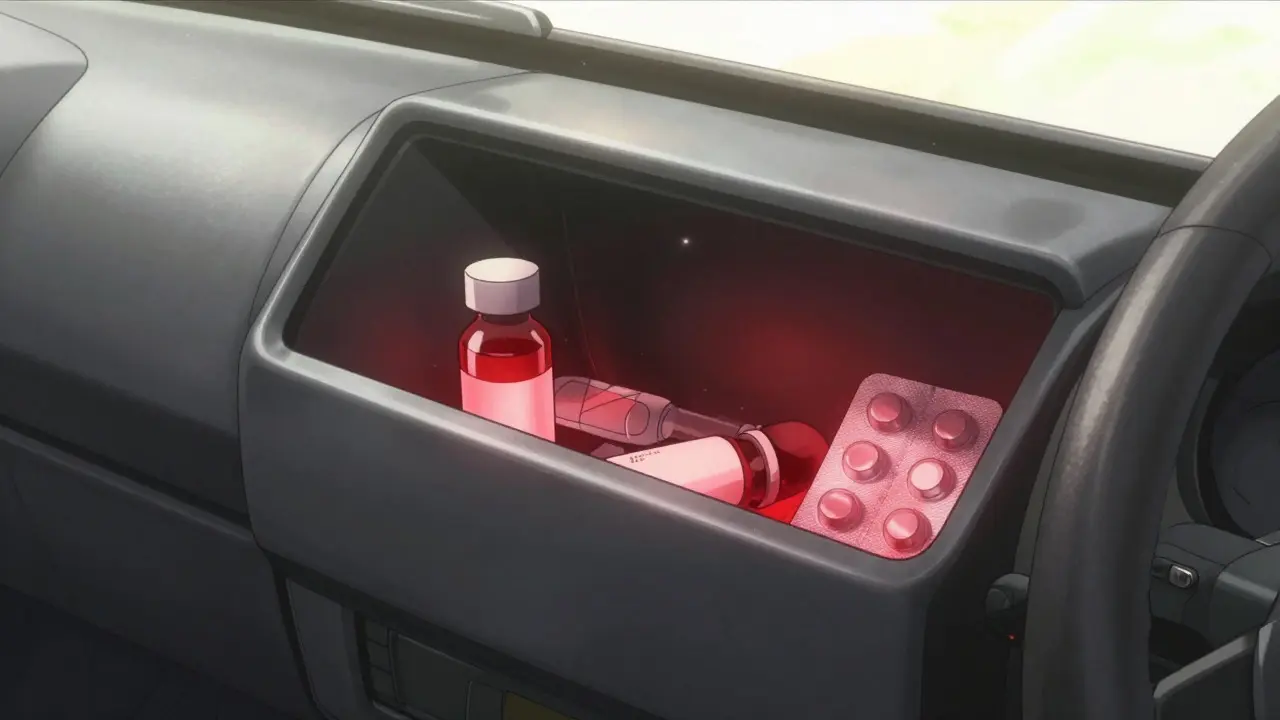
- The Car Glove Compartment: On a day that feels like 90°F (32°C), the inside of a parked car can hit 140°F (60°C) within 30 minutes. This cooks your medication. Never leave drugs in a vehicle for extended periods.
- Improper Refrigeration: Putting meds in the freezer instead of the fridge, or placing them against the back wall where they might freeze, is common. Also, opening the fridge door repeatedly causes temperature spikes that affect sensitive biologics.
- Ignoring "After Opening" Dates: Many eye drops, inhalers, or reconstituted antibiotics have a short shelf life once opened-often just 10 to 14 days. The expiration date on the bottle refers to the unopened product.
Special Cases: Travel and Kids
Life isn’t static, so neither is your storage routine. When traveling, especially across climate zones, standard rules change. The FDA recommends using insulated containers with cooling packs for temperature-sensitive meds. Don’t rely on airport security to keep your insulin cold; bring a cooler bag.
For parents, pediatric medications often have different stability profiles than adult versions. The American Academy of Pediatrics advises verifying storage requirements for each child-specific formulation. Some liquid suspensions must be shaken well before use and kept refrigerated after mixing. Always write the date you mixed or opened the medicine on the bottle with a marker.
Best Practices for Home Storage
To ensure your medications remain safe and effective, follow these expert-backed tips:
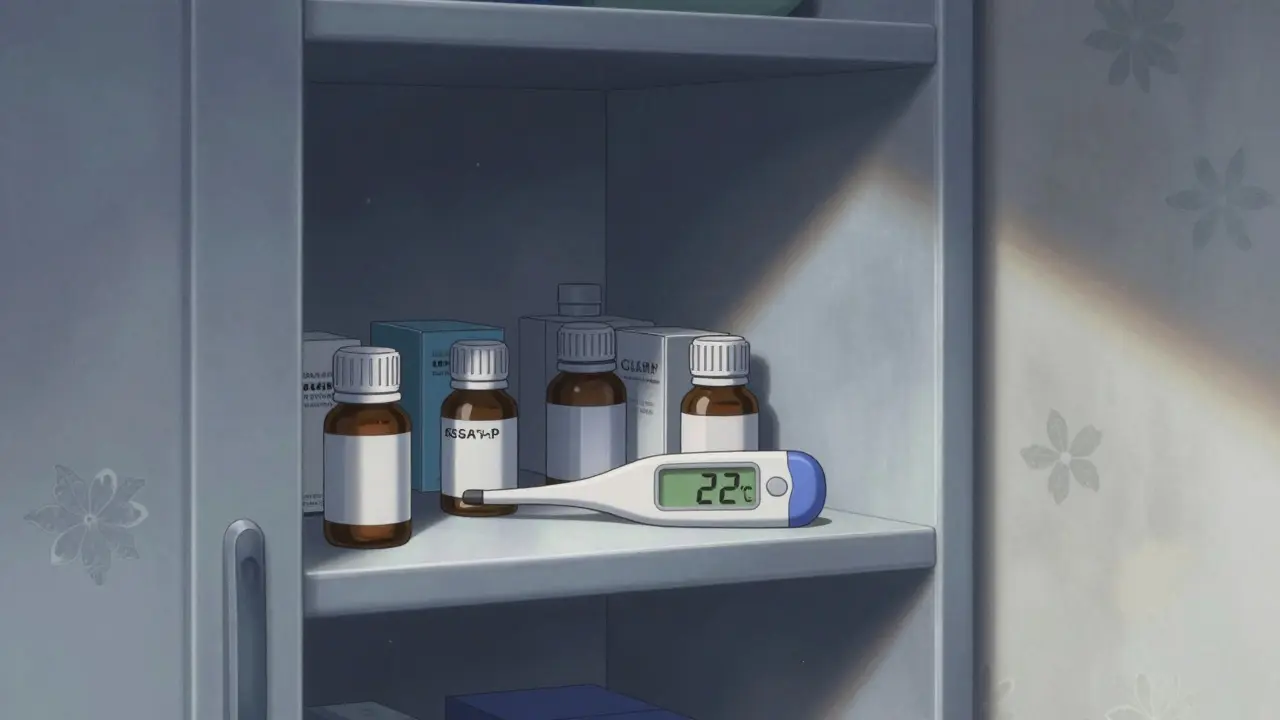
- Choose the Right Spot: A bedroom closet or a kitchen cupboard away from the sink and stove is ideal. It should be cool, dry, and dark.
- Use Original Packaging: Keep meds in their original containers. These are designed to protect against light and moisture. Transfer only if necessary, and use amber glass bottles if possible.
- Monitor Temperature: If you have expensive or critical meds like insulin, consider a small thermometer in your storage area. Aim for consistent room temperature.
- Separate Conflicting Needs: If you have both refrigerated and room-temp meds, create distinct zones. Use compartmentalized containers with temperature indicators if needed.
- Ask Your Pharmacist: If instructions seem contradictory or unclear, ask. Pharmacists are trained to explain specific guidance based on your home environment. Dr. Sarah Thompson, a medication safety specialist, emphasizes that asking for clarification prevents costly mistakes.
When to Dispose of Medications
Knowing how to store meds is half the battle; knowing when to throw them away is the other. Expired medications shouldn’t automatically go in the trash or sink. Many communities have drug take-back programs. Check local pharmacies or law enforcement agencies for collection sites. For household disposal, mix unwanted pills with unpalatable substances like coffee grounds or cat litter in a sealed bag before trashing, unless the label says otherwise. Flushing is reserved for highly dangerous drugs specifically listed by the FDA to prevent accidental ingestion.
Is it okay to store medicines in the bathroom?
No, it is generally not recommended. Bathrooms experience high humidity from showers and significant temperature fluctuations. These conditions can degrade pills, causing them to lose potency or break down into harmful compounds. Store medications in a cool, dry place like a bedroom closet instead.
What does "room temperature" mean for medication?
The United States Pharmacopeia defines controlled room temperature as 20°C to 25°C (68°F to 77°F). Avoid storing meds near heat sources like ovens, radiators, or in direct sunlight, as these areas exceed this range.
Can I freeze my medication if it says refrigerate?
Usually, no. Unless the label explicitly says "freeze," freezing can damage the chemical structure of many liquids and biologics, rendering them ineffective. Store refrigerated items in the main compartment of the fridge, not the door, to avoid temperature swings.
How do I know if my medication has gone bad?
Look for physical changes: discoloration, crumbling pills, strange odors, or cloudiness in liquids. However, some degradation is invisible. If you suspect improper storage or past expiration, consult your pharmacist before taking it.
Where can I find storage instructions on an OTC label?
On over-the-counter medications, look for the "Drug Facts" panel. Storage information is typically located in the "Other information" section, which appears after active ingredients, uses, warnings, and directions.
Should I transfer pills to a weekly organizer?
Only if the medication is stable at room temperature and protected from light and moisture. Blister packs and opaque bottles offer better protection. Clear plastic organizers expose pills to air and light, which can speed up degradation. Ask your pharmacist if your specific meds are suitable for transfer.
How long do reconstituted antibiotics last?
Most reconstituted oral antibiotics expire within 10 to 14 days when refrigerated. Always write the date you mixed them on the bottle. Unopened powder forms may last 2-3 years, but once water is added, the clock starts ticking fast.
Is it safe to leave medicine in my car for a quick trip?
Brief trips are usually fine, but avoid leaving meds in the glove compartment or trunk for extended periods. Interior car temperatures can exceed 140°F (60°C) on warm days, which can ruin temperature-sensitive drugs like insulin or nitroglycerin.
What should I do if I’m unsure about storage instructions?
Always ask your pharmacist. They can provide specific guidance based on your home environment and the medication’s properties. Don’t guess; proper storage ensures the drug remains effective and safe.
Do smart packaging technologies help with storage?
Yes, emerging technologies like QR codes linking to dynamic storage info and embedded temperature sensors are being developed. While not yet standard, these tools aim to reduce errors by providing real-time feedback on whether a medication has been compromised during storage.