Why Expired Pediatric Medications Are Dangerous
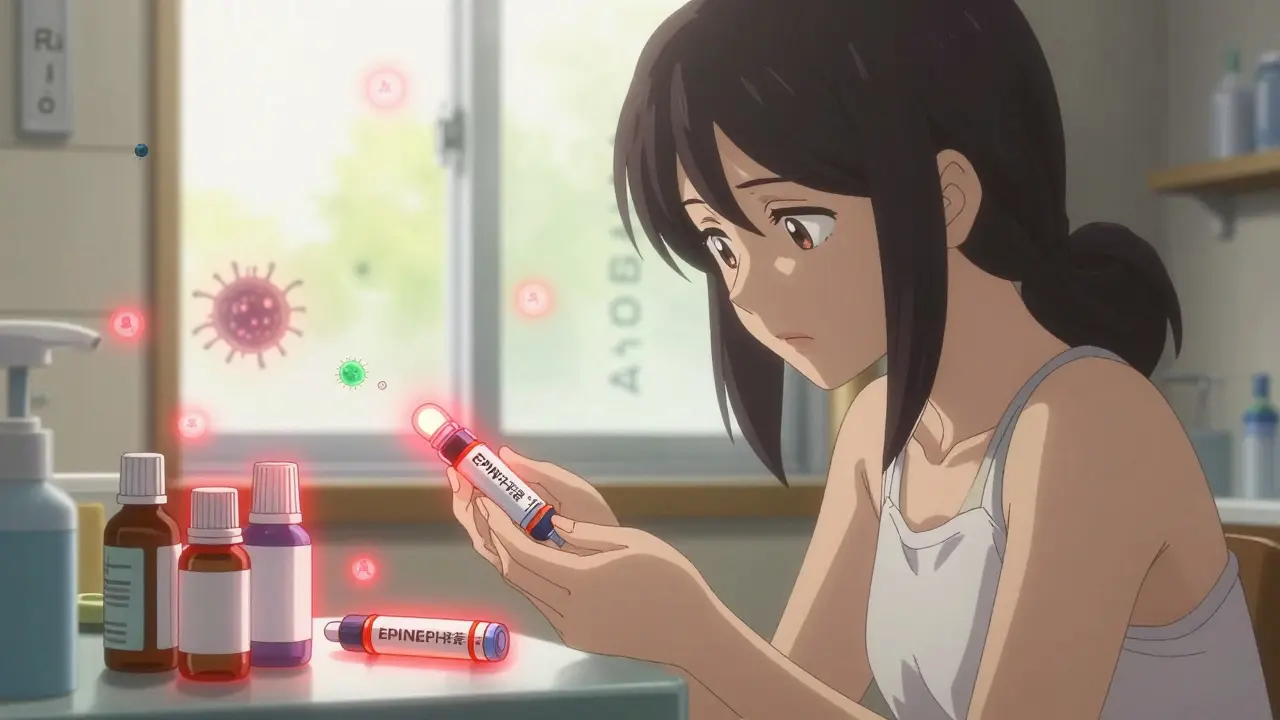
Giving a child medicine past its expiration date isn’t just risky-it’s potentially life-threatening. Unlike adults, children’s bodies process drugs differently. Their organs are still developing, making them far more sensitive to changes in drug strength or chemical breakdown. The FDA warns that expired pediatric medications can lose effectiveness, degrade into harmful substances, or even grow bacteria. Liquid antibiotics, for example, can become unsafe just 14 days after opening, even if the bottle says it’s good for another year. Insulin, epinephrine auto-injectors, and nitroglycerin are especially dangerous when expired. A child relying on an epinephrine shot during an allergic reaction could get only 65% of the needed dose if it’s six months past expiration. That’s not a weaker dose-it’s a failed rescue.
Many parents think expired medicine is just less effective. That’s a dangerous myth. A 2023 survey found 20% of parents believed it was safe to give expired children’s medicine within a month of the date. Another 14% thought it was fine up to three months past expiration. But the truth? Expired children’s antihistamines can cause hyperactivity instead of drowsiness. Expired benzocaine teething gels have caused methemoglobinemia-a rare but deadly blood condition-in over 120 children between 2018 and 2022. And tetracycline antibiotics, when expired, can permanently stain teeth and stunt bone growth in kids.
What Medications Are Most Risky When Expired?
Not all expired medicines are created equal. Some become useless. Others turn toxic. For children, these are the most dangerous:
- Liquid antibiotics: Lose potency within 14 days of opening. Can grow harmful bacteria. Johns Hopkins found 33% of samples tested after 14 days were contaminated.
- Insulin: Degrades at 1.5% per month after expiration. A child with diabetes could go into diabetic ketoacidosis if the dose is too low.
- Epinephrine auto-injectors: Only 65% effective six months past expiration. This is the difference between life and death during anaphylaxis.
- Nitroglycerin: Loses half its strength in just three months. Used for heart conditions-ineffective doses can trigger cardiac events.
- Tetracycline antibiotics: Can cause permanent tooth discoloration and reduced bone growth in children when expired. The FDA specifically flags these.
- Benzocaine teething gels: Linked to 127 cases of methemoglobinemia in children since 2018. The FDA banned their use in kids under 2 in 2011-but many parents still keep them.
Even common OTC drugs like children’s Tylenol or ibuprofen aren’t safe past expiration. Heat and humidity destroy their potency faster. If stored above 86°F (30°C) for 30 days, acetaminophen suspensions lose 22% of their strength. That means a 10 mL dose meant to be 160 mg might only deliver 125 mg-too little to help, but still enough to mask symptoms and delay real treatment.
How to Store Pediatric Medications Properly
Even before a medicine expires, poor storage can ruin it. Most parents don’t realize that the bathroom cabinet is one of the worst places to keep meds. Heat and moisture from showers and sinks break down pills and liquids faster. The American Academy of Pediatrics says all medications-prescription, OTC, vitamins, even topical creams-should be stored above 5 feet, in a locked cabinet. Why? Because 78% of poisonings happen when meds are within a child’s reach.
Child-resistant caps sound safe, but they’re not. Consumer Product Safety Commission tests show 62% of kids aged 4-5 can open them in under a minute. That’s why locking the cabinet matters more than the cap. Only 22% of households actually lock their medicine cabinets, despite studies showing it cuts poisoning risk by 76%.
Keep medicines in their original bottles. Only 58% of parents do this. Why? Because they transfer pills into pill organizers or plastic bags. That’s a problem. Without the label, you can’t tell what it is, when it expires, or how much to give. And if a child finds it, you can’t call poison control with accurate info.
Check expiration dates monthly for liquids and every three months for pills. Poison Control data shows 82% of pediatric medication incidents happen within 24 hours of giving the drug. If you don’t check, you won’t know you’re giving something expired.
How to Dispose of Expired Pediatric Medications Safely
Never flush meds unless they’re on the FDA’s flush list. Only 15 drugs qualify, mostly powerful opioids. Flushing others pollutes waterways-the USGS found 82 pharmaceuticals in 80% of U.S. water sources. Don’t toss them in the trash either, unless you follow the right steps.
The safest way? Use a drug take-back program. The DEA runs over 16,700 permanent drop-off sites at pharmacies and hospitals. You can also find events during National Prescription Drug Take Back Day, held twice a year. In October 2023 alone, these events collected over a million pounds of expired meds.
If a take-back site isn’t nearby, here’s how to dispose safely at home:
- Remove the medicine from its original container.
- Scratch out all personal info on the label-name, address, prescription number. The CDC says 97% of parents skip this step.
- Mix pills or liquid with something unappetizing: used coffee grounds, cat litter, or dirt.
- Put the mixture in a sealed plastic bag or container.
- Throw it in the household trash.
For liquid antibiotics or syrups, pour them into absorbent material like cat litter before sealing. This prevents accidental ingestion by pets or toddlers who might dig through the trash.
Controlled substances like ADHD meds or opioids should never be disposed of this way. Always use a take-back program. If you can’t, ask your pharmacist for guidance.
Why Most Parents Get It Wrong
It’s not that parents are careless. They’re misinformed. A 2023 survey found 44% of parents thought expired children’s Tylenol was just weaker-not dangerous. Reddit threads are full of stories like: “I gave my kid last year’s ear drops because it was all I had.”
Another problem? Grandparents’ homes. The CDC found 62% of kids who ingested expired meds did so at a grandparent’s house. Why? Older adults often keep old meds “just in case.” But kids don’t care about good intentions. They’re curious, fast, and strong enough to open child-resistant caps.
Even healthcare providers aren’t always helping. Only 31% of pediatricians discuss disposal at well-child visits, even though doing so increases proper disposal rates by 63%. Parents need to be reminded-not assumed to know.
And here’s the kicker: 62% of parents are more careful with prescription meds than OTC ones. But expired children’s cold syrup is just as risky as expired antibiotics. Both can cause overdose, allergic reactions, or delayed treatment.
What’s Changing to Keep Kids Safer
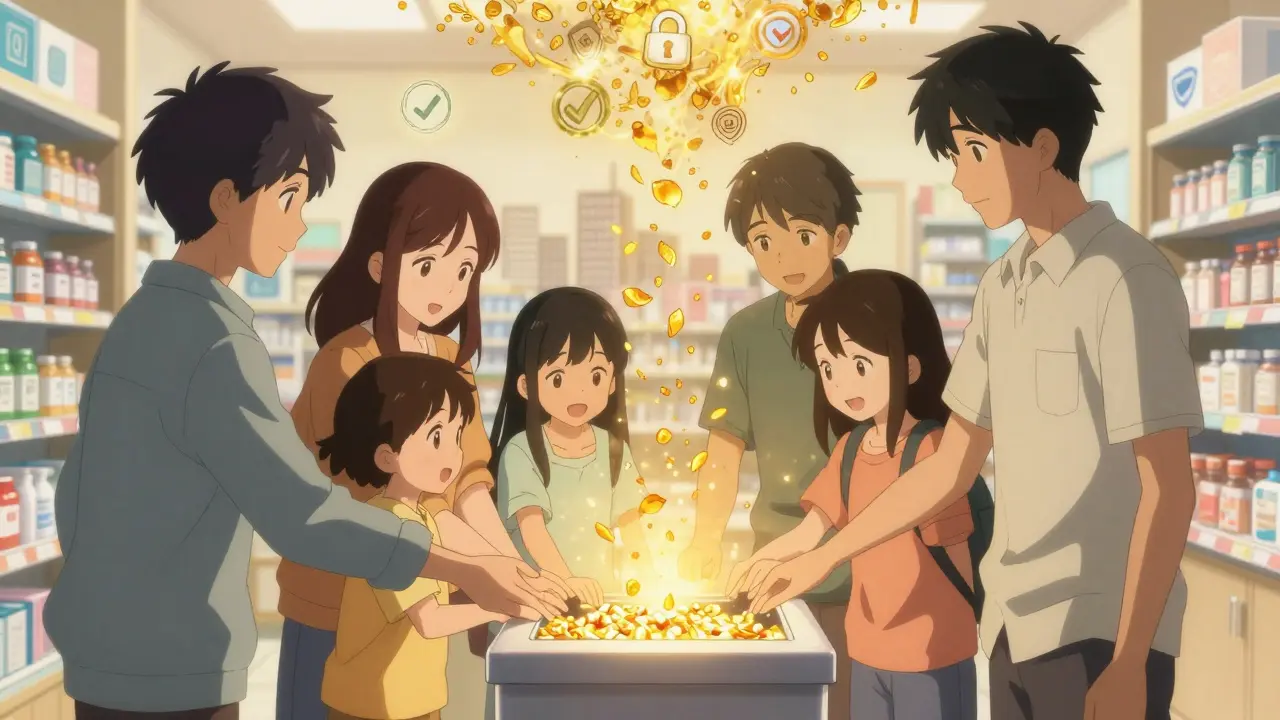
Things are improving, slowly. The FDA and CDC are pushing harder. Since 2022, Walgreens and CVS have added over 12,400 permanent disposal kiosks. In areas with these kiosks, expired pediatric medication disposal jumped 47%. The CDC’s MedEd program has trained over 18,500 healthcare workers to talk to parents about safe storage and disposal.
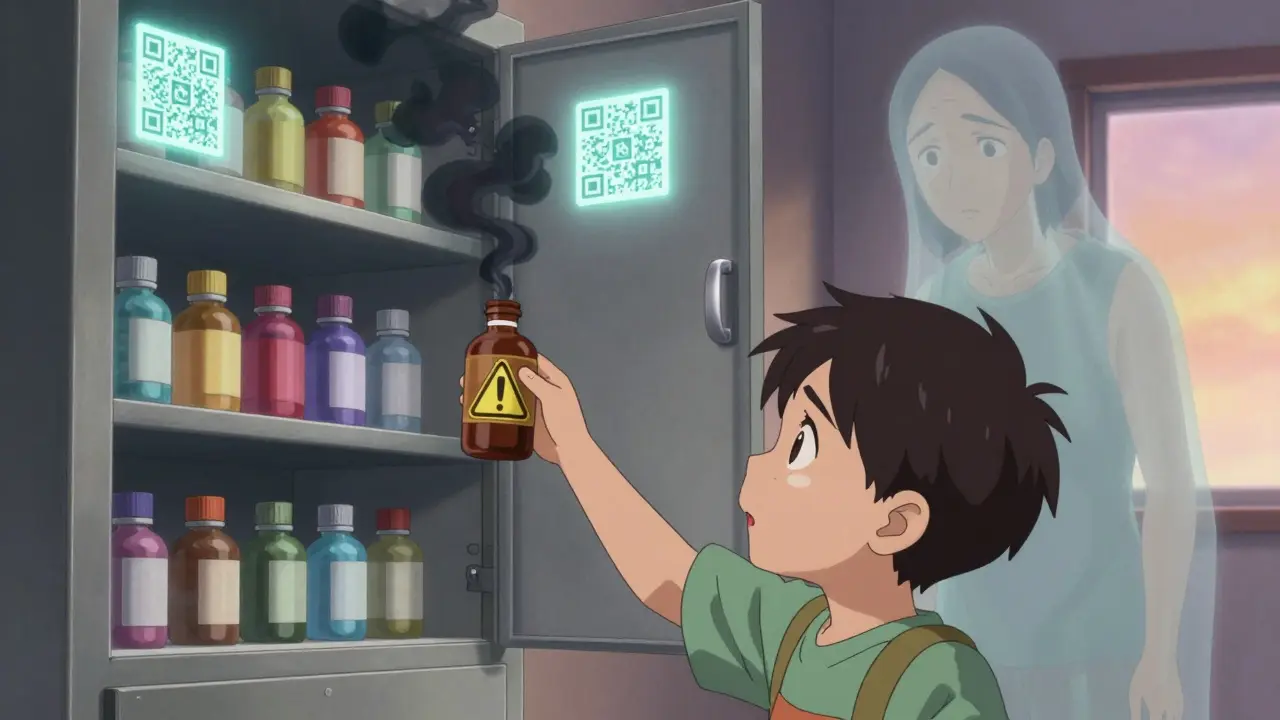
New tech is helping too. Some pharmacies now put QR codes on pediatric prescriptions. Scan it, and you get disposal instructions. Smart medicine cabinets with expiration alerts are hitting the market-projected to be a $4.7 billion industry by 2026.
The American Academy of Pediatrics now partners with Safe Kids Worldwide to certify childcare centers on safe med storage. Over 2,300 centers have earned the certification. And federal lawmakers are working on H.R. 2883, a bill to standardize disposal rules across all 50 states.
The goal? Reduce pediatric medication poisonings by 75% by 2030. Right now, only 28% of expired pediatric meds are properly disposed of. That’s far too low.
What You Can Do Today
Don’t wait for a law or a campaign. Act now.
- Go to your medicine cabinet. Pull out every children’s medication-prescription, OTC, vitamins, creams.
- Check every expiration date. Toss anything expired, even if it looks fine.
- Find your nearest drug take-back location. Use the DEA’s locator tool (search “DEA take-back locations”).
- Lock your cabinet. Put it out of reach. Even if you think your child can’t open it, they can.
- Teach caregivers: grandparents, babysitters, family friends. Show them where you store meds and how to dispose of them.
- Make it a habit: Check meds every month for liquids, every quarter for pills.
One expired bottle in the cabinet could be one emergency visit away. You don’t need to be perfect. You just need to be careful. Your child’s life depends on it.
Can I still give my child expired children’s Tylenol if it’s only a week past the date?
No. Even a week past expiration, children’s liquid Tylenol can lose potency and may not relieve fever or pain as expected. More importantly, degraded ingredients could form harmful compounds. The FDA advises against using any expired medicine for children. If your child needs relief, get a new bottle.
Is it safe to flush expired children’s medicine down the toilet?
Only if it’s on the FDA’s flush list-which includes only 15 powerful opioids like fentanyl patches and oxycodone. Flushing other medications pollutes water supplies and harms aquatic life. For children’s meds like antibiotics, cough syrup, or ibuprofen, never flush. Use a take-back program or dispose of them in the trash after mixing with coffee grounds or cat litter.
What should I do if my child accidentally swallows an expired medication?
Call Poison Control immediately at 1-800-222-1222. Do not wait for symptoms. Even if the medicine seems harmless, expired drugs can act unpredictably. Have the bottle ready-note the name, dose, and time ingested. If your child is having trouble breathing, is unconscious, or seizing, call 911 right away.
Why can’t I just keep expired meds “just in case”?
Because “just in case” often turns into “accidentally given.” Kids are curious, fast, and strong enough to open child-resistant caps. Over 60,000 children under 5 end up in emergency rooms each year from medication poisonings. Most cases involve meds found in homes-often from grandparents’ cabinets or forgotten bottles. Keeping expired meds increases risk without adding safety.
Are there free ways to dispose of expired pediatric meds?
Yes. The DEA’s National Prescription Drug Take Back Day events are free and open to everyone. Permanent drop-off bins are also free at most pharmacies and hospitals. You don’t need insurance or ID. Just bring the expired meds in their original containers. Many local police stations also offer disposal bins. Check your city or county website for locations.