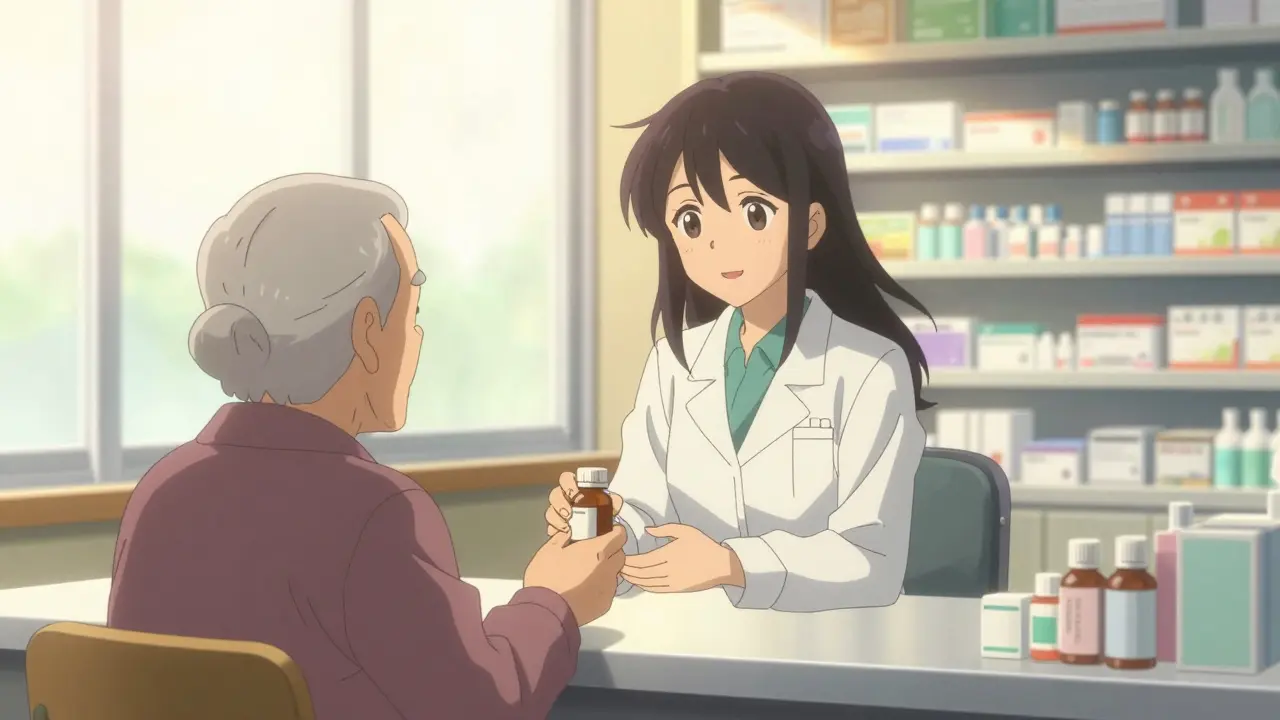
Imagine handing a patient their prescription, only to realize seconds later that the bottle contains the wrong strength of blood thinner. It’s a nightmare scenario for every pharmacist. But here is the good news: you likely have the most powerful tool to prevent this right in your hands. It isn’t a fancy barcode scanner or an AI algorithm. It is patient counseling.
Think of counseling not just as a legal requirement from OBRA '90, but as the final safety net. Data from Pharmacy Times shows that approximately 83% of dispensing errors are caught during these conversations. That makes it by far the most effective strategy we have. If you treat counseling as a checkbox exercise, you’re missing its true value. When done correctly, it transforms the patient from a passive recipient into an active partner in their own safety.
Why Counseling Beats Technology
We often rely on technology to keep us safe. Barcode scanners are great, catching about 53% of errors according to a 2022 study in the Journal of the American Pharmacists Association. Pharmacist double-checks identify another 67%. But human interaction catches the most mistakes-up to 83%. Why? Because machines check if the label matches the system. Humans check if the medicine matches the patient’s reality.
A machine doesn’t know that Mrs. Jones usually takes her insulin at breakfast, not lunch. It doesn’t notice that Mr. Smith looks confused when he reads the directions. As Dr. Michael Cohen, President of Institute for Safe Medication Practices (ISMP), puts it, patient counseling creates a "human firewall." No software can replace the nuance of a conversation where a patient says, "Wait, this pill looks different than what I had before."
| Method | Error Detection Rate | Cost Per Prescription | Key Limitation |
|---|---|---|---|
| Barcode Scanning | 53% | $1.35 | Cannot verify patient understanding |
| Pharmacist Double-Check | 67% | $2.10 | Time-intensive; prone to fatigue |
| Patient Counseling | 83% | $0.87 | Requires patient engagement |
The cost-effectiveness is also undeniable. The National Community Pharmacists Association (NCPA) found that counseling costs roughly $0.87 per prescription, making it the cheapest way to catch errors. For independent pharmacies with tight margins, this isn’t just about safety-it’s about survival.
The 4-Step Verification Framework
You don’t need to be a psychologist to catch errors. You just need a structure. The American Pharmacists Association (APhA) recommends a specific framework that turns vague chats into targeted checks. Here is how to apply it in under three minutes:
- Confirm Identity and Purpose: Start by asking, "What condition is this medication for?" This seems simple, but it catches immediate mismatches. If a patient says it’s for their back pain, but you dispensed an antibiotic, you’ve stopped an error before it leaves the counter.
- Verify Administration Instructions: Don’t just tell them how to take it. Ask them to show you. Use the "teach-back" method. Research shows this increases error detection by 68%. If they say they’ll take it twice a day but the script says once daily, you’ve just saved them from toxicity.
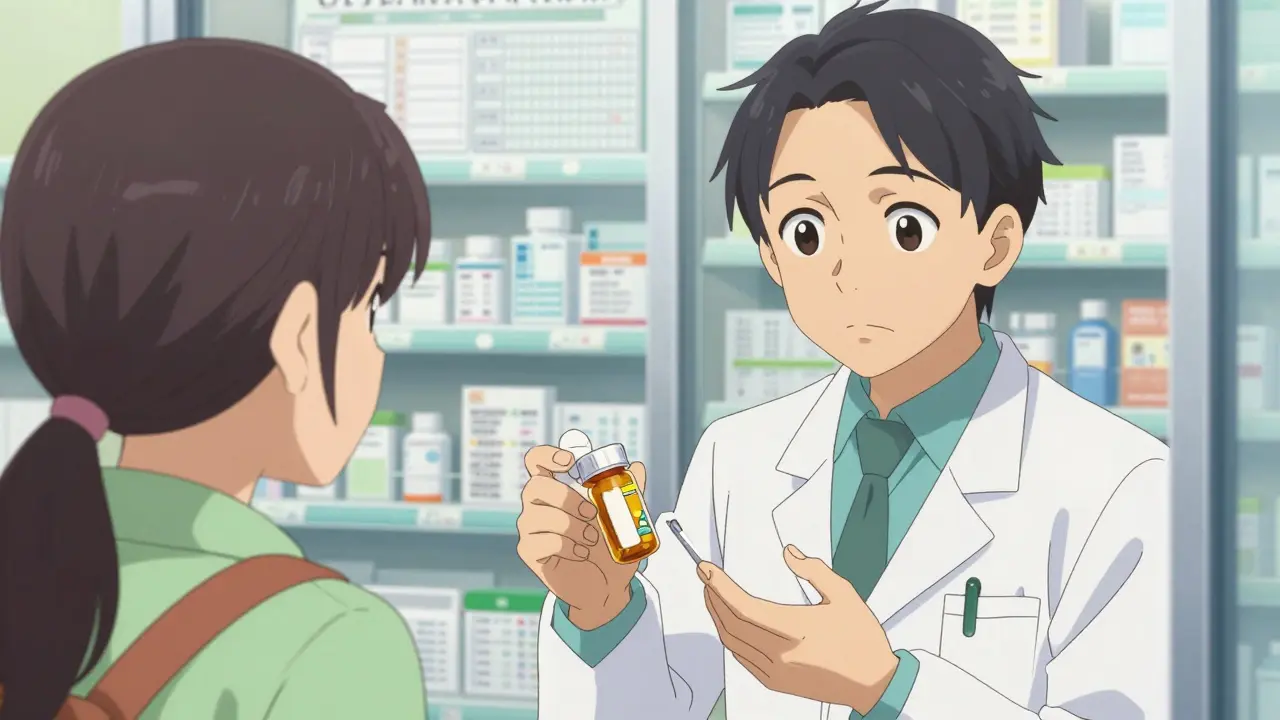
- Cross-Check Physical Appearance: Show the bottle. Ask, "Does this look like what you’ve taken before?" The National Patient Safety Foundation notes that reviewing physical appearance catches 29% of look-alike drug errors. This is critical for high-alert meds like opioids or insulin.
- Review Interactions and Allergies: Briefly ask about other meds they’re taking. A quick question like, "Are you still on your warfarin?" can flag dangerous interactions that automated systems might miss if the record is outdated.
This process takes about 2 minutes and 40 seconds. It sounds long, but studies show that each additional 30 seconds of counseling reduces error rates by nearly 13%. The investment pays off instantly.
Mastering the Questions That Matter
How you ask matters more than what you ask. Many pharmacists fall into the trap of using closed questions. "Is this for your blood pressure?" invites a simple "yes," even if the patient is unsure. Instead, use open-ended questions. "What do you understand this medication is for?" forces the patient to retrieve information from memory, revealing gaps in understanding or discrepancies in the order.
According to Pharmacy Times, open-ended questions identify 3.2 times more errors than closed ones. It’s a small shift in language, but it changes the dynamic. You aren’t lecturing; you’re verifying.
Consider the case of a patient starting a new statin. A closed question might go: "Take this at night, okay?" An open approach: "Can you walk me through when you plan to take this tonight?" The second version reveals if the patient actually has a routine for nighttime medication or if they’ll forget it entirely.
Overcoming Real-World Barriers
I get it. The line is moving fast. Corporate metrics are screaming at you to hit productivity targets. Reddit threads in r/pharmacy are full of technicians complaining about being discouraged from "slowing down the line." But here is the hard truth: rushing kills safety.
Data from the University of Arizona College of Pharmacy shows that when pharmacists handle more than 14 prescriptions per hour, error detection during counseling drops from 83% to 41%. That is a massive drop in safety for the sake of speed.
So, how do you manage time? First, prioritize high-risk patients. The American Society of Consultant Pharmacists (ASCP) advises focusing extra attention on patients over 65, those with low health literacy, and anyone starting high-alert medications. These groups account for the majority of serious harms.
Second, leverage your team. In 42 states, pharmacy technicians can perform preliminary counseling steps. Having a tech verify identity and basic purpose frees up the pharmacist to focus on complex therapeutic checks. This division of labor can increase effective counseling time by 37% without adding headcount.

Documentation Is Your Shield
If you didn’t document it, did you do it? In the eyes of liability insurers, the answer is no. Documentation is critical. Pharmacies using the National Association of Boards of Pharmacy (NABP) 2022 Counseling Documentation Standards saw a 44% reduction in liability claims related to undetected errors.
You don’t need to write a novel. A brief note in the patient’s profile stating "Counseled on purpose, dose, and appearance; patient confirmed understanding" is sufficient. It proves you engaged in the verification process. With CMS now tying 8.5% of Medicare Part D reimbursement to documented counseling quality, this paperwork also protects your revenue.
When Counseling Isn’t Enough
Let’s be realistic. Counseling has limits. About 18.7% of patients decline counseling. They might be in a hurry, embarrassed, or simply unaware of the option. In these cases, you lose that 83% safety net. This is why internal verification systems-like barcode scanning and double-checks-are still essential. As Dr. Jerry Fahrni warns, counseling should be the final net, not the only net.
Also, counseling is less effective for routine refills. Patients on stable regimens may not notice subtle changes. For these cases, rely more heavily on automated alerts and technician verification. Save your deep-dive counseling for new prescriptions, where error detection rates soar to 91%.
How much time should I spend on patient counseling to catch errors?
Research suggests a minimum of 2.3 minutes per patient. Specifically, breaking it down into identity verification (27 seconds), purpose confirmation (43 seconds), appearance/administration check (52 seconds), and interaction review (38 seconds) totals about 2 minutes and 40 seconds. Every additional 30 seconds beyond this baseline reduces error rates by approximately 12.7%.
What is the most effective question to ask during counseling?
Use open-ended questions rather than closed ones. Instead of asking "Is this for your blood pressure?", ask "What do you understand this medication is for?" Open-ended questions force patients to recall information, revealing misunderstandings or discrepancies 3.2 times more effectively than yes/no questions.
Does patient counseling really save money for pharmacies?
Yes. According to the National Community Pharmacists Association, counseling costs about $0.87 per prescription, which is cheaper than barcode verification ($1.35) or pharmacist double-checking ($2.10). Additionally, structured counseling protocols can reduce malpractice insurance premiums by up to 19% due to fewer error-related claims.
Who benefits most from thorough patient counseling?
High-risk populations benefit most. This includes patients over 65 (where dosing errors are 3.7 times more likely to cause harm), patients with low health literacy, and those starting new high-alert medications like opioids or insulin. New prescriptions also see the highest error detection rates at 91%.
What should I do if a patient declines counseling?
If a patient declines, you must rely on robust internal verification systems like barcode scanning and pharmacist double-checks, as counseling is your final safety net. Document that counseling was offered but declined. For future visits, try to build rapport earlier so they feel comfortable engaging during the next pickup.
At the end of the day, patient counseling is about connection. It’s about looking someone in the eye and ensuring they leave with the right medicine and the confidence to use it safely. It’s the one thing no robot can do. Make it count.