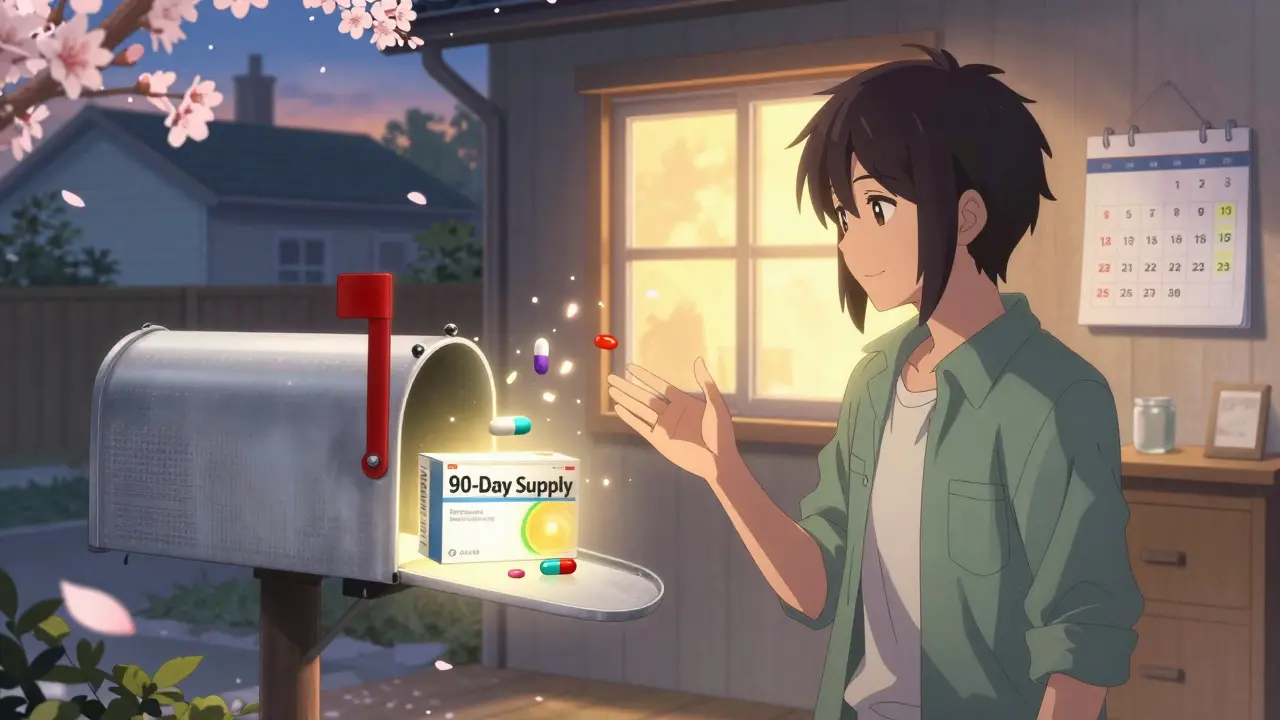
Running out of your blood pressure pills because you couldn’t get to the pharmacy? Or maybe you’re tired of juggling three different refill dates every month? You’re not alone. Millions of people in the U.S. use pharmacy delivery and mail-order services to make taking their meds easier-and more consistent. And it’s not just about convenience. For people with chronic conditions like diabetes, high cholesterol, or arthritis, using mail-order can literally mean the difference between staying healthy and ending up in the hospital.
What Is Mail-Order Pharmacy, Really?
Mail-order pharmacy isn’t some futuristic idea. It’s a real, regulated system where your prescription meds are filled by a licensed pharmacy and shipped straight to your door. Most services give you a 90-day supply instead of the usual 30-day refill. That means fewer trips, fewer co-pays, and fewer chances to forget.
Here’s how it works: You sign up through your health plan or a mail-order pharmacy like Express Scripts, CVS Caremark, or Patient Direct Pharmacy. You transfer your existing prescriptions, and then you get your meds delivered-usually in 3 to 5 days. Some even offer next-day delivery if you’re running low. No waiting in line. No arguing with the pharmacy counter staff about insurance. Just your meds, delivered in secure, temperature-controlled packaging.
And the numbers don’t lie. Patients using mail-order for chronic conditions have an 82% adherence rate. That’s compared to just 52% for those who pick up 30-day supplies at retail pharmacies. Why? Because when your meds show up automatically, you’re far less likely to skip a dose.
Who Benefits Most From Mail-Order?
If you take meds every day for a long-term condition, mail-order is made for you. Think:
- Diabetes (insulin, metformin)
- High blood pressure (lisinopril, amlodipine)
- High cholesterol (atorvastatin, simvastatin)
- Thyroid medication (levothyroxine)
- Antidepressants or anti-anxiety meds
These are the kinds of drugs where missing even a few doses can cause big problems. A study by Blue Cross NC found that people on mail-order were 30% less likely to have emergency room visits because their condition got out of control.
It’s also a game-changer for people with mobility issues, chronic pain, or those living in rural areas where the nearest pharmacy is 30 miles away. One Reddit user with multiple sclerosis said mail-order was “life-changing” because they no longer had to struggle to get to the pharmacy just to refill their disease-modifying drugs.
How to Get Started
Getting set up is simpler than you think. Here’s what you need to do:
- Check your insurance. Most health plans-including Medicare Part D, employer plans, and Medicaid-include mail-order as a covered benefit. No extra cost. Just look at your plan documents or call your insurer.
- Transfer your prescriptions. You can do this online, over the phone, or even have your current pharmacy send them. It usually takes 3-5 business days. Don’t wait until you’re out of meds.
- Set up your account. Most mail-order pharmacies have a website or app. You’ll need your insurance info, mailing address, and a way to pay (copay, HSA, or cash).
- Order your first 90-day supply. Many services let you order refills automatically, so you don’t have to remember.
Pro tip: Order your refill at least 10 days before you run out. Even with next-day shipping, delays happen. And if you’re on multiple meds, ask if they can synchronize delivery so everything arrives on the same day. About 68% of mail-order pharmacies now offer this.
Cost Savings You Can’t Ignore
Mail-order isn’t just easier-it’s cheaper. A 90-day supply typically costs 25-35% less than three separate 30-day fills. For someone on a $150/month medication, that’s $500-$700 saved per year.
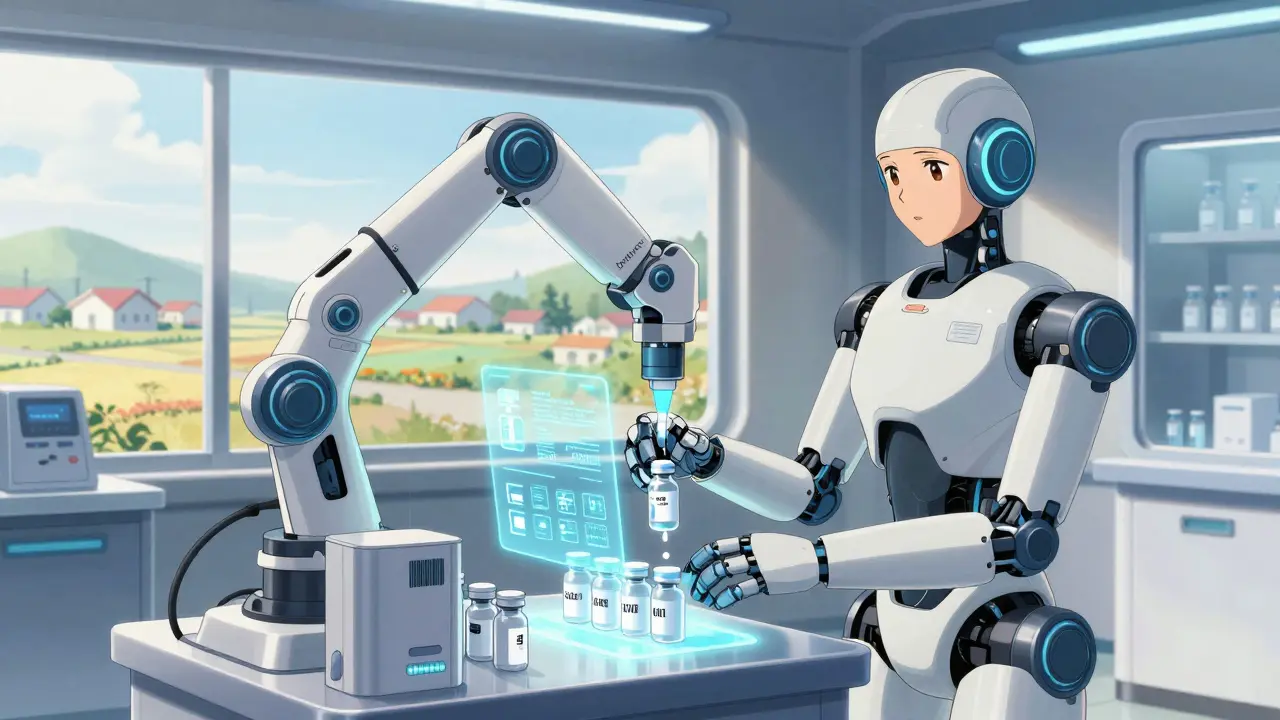
Here’s why: Mail-order pharmacies fill thousands of prescriptions a day using robotic systems and automated checks. That cuts labor costs and reduces errors. They also buy meds in bulk and negotiate better prices with drug makers. The result? You pay less.
For example, Birdi Pharmacy (used by the University of Michigan) charges the equivalent of just two copays for a 90-day supply. That’s a big win if your copay is $15-$30 per 30-day fill.
What Mail-Order Can’t Do
Mail-order is great-but it’s not for everything.
- No controlled substances. Opioids, benzodiazepines, and other scheduled drugs can’t be mailed. You still need to pick those up in person.
- No acute meds. If you need an antibiotic for an infection, a steroid for a flare-up, or a painkiller after surgery-go to your local pharmacy. 87% of doctors say these need to be picked up right away.
- No immediate changes. If your dose changes, or you have a reaction, it’s harder to adjust quickly with mail-order. Keep one retail pharmacy on file for these situations.
Also, about 1.2% of shipments get lost or damaged. It’s rare, but it happens. That’s why keeping a small backup supply (like 7 days’ worth) at home is smart.
Delivery, Safety, and Support
You might worry about your meds getting ruined in transit. But mail-order pharmacies use special packaging with ice packs and insulated liners for temperature-sensitive drugs like insulin or biologics. They also follow strict HIPAA rules to protect your health data.
And if you have questions? Most services offer 24/7 access to pharmacists. You can call, chat, or email. Some even send reminders when your refill is due. One survey found 97% of users saved time compared to going to a retail pharmacy.
Accuracy is another big plus. Mail-order pharmacies have 23 times fewer dispensing errors than retail pharmacies. Why? Robotic arms, barcode scans, and double-check systems. No one’s rushing through 10 refills while a kid screams in line.
What to Watch Out For
It’s not perfect. Here are the real issues people face:
- Delivery delays. 8.3% of users report packages taking longer than promised. Always order early.
- Hard to change prescriptions. If your doctor changes your dose or adds a new med, it can take days to update your mail-order order. Keep a backup pharmacy handy.
- Insurance confusion. Some plans require you to use their preferred mail-order pharmacy. If you don’t, you might pay full price.
One common complaint? Not knowing where your meds are in the process. Most services now offer tracking links and text alerts-so make sure you sign up for them.
The Bigger Picture: Why This Matters
The mail-order pharmacy market is growing fast. It was worth $102.7 billion in 2022 and is projected to hit $189.3 billion by 2028. Why? Because it works.
For employers: 85% of Fortune 500 companies now offer mail-order because it reduces absenteeism and healthcare costs.
For Medicare beneficiaries: 42% use it. For people with chronic illness: 38% do.
And it’s not just about pills. New tech is adding AI that predicts when you’re likely to skip a dose and sends you a nudge. Some services now bundle mail-order with telehealth visits-so you can talk to a doctor and get your prescription mailed all in one go.
Even drone delivery is being tested in rural areas. UPS and CVS are piloting it in North Carolina to get meds to people who live far from pharmacies.
Final Advice
If you take daily meds for a chronic condition, give mail-order a try. It’s safe, reliable, and often cheaper. But don’t cut ties with your local pharmacist completely. Keep them as your backup for new prescriptions, urgent changes, or if you need advice on side effects.
Start by calling your insurance company and asking: “Do you cover mail-order pharmacy? Which one?” Then transfer your prescriptions. Order your first 90-day supply early. Set up alerts. And don’t forget-this isn’t just about convenience. It’s about staying healthy, one pill at a time.
Buddy Nataatmadja
March 17, 2026 AT 01:44Been using mail-order for my blood pressure meds for like 3 years now. Honestly? Life changed. No more rushing to the pharmacy at 7pm because I forgot to refill. I get my 90-day supply in a neat little box with ice packs even in July. No drama. No attitude from the counter guy. Just meds. Simple.
Also saved like $600 a year. My wallet thanks me.
PS: Always order 10 days early. Trust me.
mir yasir
March 18, 2026 AT 02:57While the logistical advantages of mail-order pharmacy are undeniable, one must not overlook the epistemological implications of outsourcing pharmaceutical stewardship to corporate logistics entities. The commodification of health maintenance, though convenient, subtly erodes the physician-patient-pharmacist triad that has historically underpinned therapeutic integrity.
One might argue that the reduction in dispensing errors is statistically significant - yet, the human element of contextual care is irreplaceable. A robot cannot discern whether a patient’s non-adherence stems from financial strain, depression, or cultural mistrust.
Stephanie Paluch
March 19, 2026 AT 09:37OMG YES I’M SO GLAD THIS WAS POSTED 😭 I’ve been on insulin for 8 years and I used to cry in the pharmacy line because I was too tired to stand. Mail-order? Game. Changer.
They even send me little notes sometimes like ‘Hope you’re having a good week!’ 💌 I feel seen. Also, my box always arrives with a little chocolate. Who does that??
My cat even knows when the mail truck comes. He sits by the door like a little guard.
10/10 would recommend. Even if you’re not sick, just try it once. You’ll be shocked how much less stress you feel.
tynece roberts
March 19, 2026 AT 19:57so like i started using mail order after my knee surgery and honestly i was skeptical but now i cant go back
its not just about the money though its like… i dont have to think about it anymore
like i used to forget my meds all the time or just not feel like driving 20 mins to the pharmacy after work
now it just shows up and im like oh cool meds again
also i saved like 300 this year and i bought a new pair of shoes
my mom still thinks its sketchy though and says ‘what if they lose it’
i told her its way safer than the pharmacy where they once gave me my neighbor’s blood pressure pills
she still doesnt get it
but i dont care anymore lol
Hugh Breen
March 21, 2026 AT 03:43THIS IS THE FUTURE. 🚀
Imagine a world where your meds arrive like your Amazon Prime order. No more waiting. No more stress. No more ‘I forgot’ moments.
And the accuracy? 23x fewer errors?! That’s not just convenient - that’s revolutionary.
Also, the drone delivery pilot in NC? YES. My cousin lives in Appalachia. She gets her biologics via drone. She cried. We all cried.
This isn’t just healthcare. It’s dignity. It’s autonomy. It’s freedom.
Let’s fund this. Let’s expand it. Let’s make it universal.
❤️🧡💛💚💙💜
Byron Boror
March 21, 2026 AT 06:29Mail-order? You mean letting Big Pharma ship your pills through private corporations while the government watches? No thanks. I’ll take my 30-day trips to the local pharmacy any day. At least there, I know the pharmacist by name. Here? I’m just a barcode.
And what about the 1.2% that get lost? You think your insulin just vanishes into thin air? Nah - it gets sold on the black market.
And drones? Next they’ll be using AI to decide if you ‘deserve’ your meds.
Stop selling out.
Lorna Brown
March 22, 2026 AT 05:47It’s interesting how convenience is often framed as a moral imperative. We’re told mail-order is ‘better’ - but better for whom? The patient? The insurer? The corporation?
There’s value in routine - the act of going to the pharmacy, speaking with the pharmacist, noticing how your body reacts over time. That’s not just logistics. It’s ritual.
And yet… I’ve seen people die because they missed a dose. So maybe convenience is the lesser evil.
I’m conflicted.
Kelsey Vonk
March 22, 2026 AT 09:59I’ve been using mail-order for my antidepressants and honestly, it’s helped me feel less alone.
Not because of the meds themselves - but because the pharmacy sends a little card sometimes. Just says ‘We’re rooting for you.’
It’s small. But I keep them in a box on my nightstand.
I think people forget how much emotional weight comes with taking meds every day.
Mail-order doesn’t fix everything. But it doesn’t make you feel like a burden, either.
Thank you for sharing this.
Emma Nicolls
March 23, 2026 AT 23:14i just started using mail order last month and i didnt even know it was this easy
my insurance covered it and the app was super simple
i was worried about the delivery but it came in 2 days with a little cooler pack and everything
also they texted me when it was out for delivery
my grandma used to say ‘you dont need fancy stuff to be healthy’
but this is just… nice
no more running out on weekends
also i saved like 400 this quarter
spent it on tacos
worth it
Jimmy V
March 24, 2026 AT 15:38Mail-order isn’t magic - it’s smart business. And we should be thrilled.
Robotic arms. Barcode scans. Bulk pricing. No human error. No rude clerks. No 20-minute waits.
People who say ‘but I like going to the pharmacy’ - you’re romanticizing inefficiency.
Also - 82% adherence rate? That’s not a feature. That’s a public health win.
Stop acting like convenience is a betrayal. It’s evolution.
Richard Harris
March 26, 2026 AT 11:06Interesting piece. I’ve been using mail-order for my statins since 2020. Never had a problem. One time the box was slightly dented - but the meds were fine. They sent a replacement and a $10 gift card. Polite. Efficient.
I do miss the chat with the pharmacist sometimes - but I call them now. They’re happy to talk. Really.
Also - the 90-day supply means I only have to think about refills twice a year. That’s peace of mind.
Kandace Bennett
March 27, 2026 AT 06:16Ugh. Of course mail-order is ‘better.’ Because it’s corporate. Because it’s cheaper. Because it’s designed to keep you compliant so you don’t cost them money.
And don’t get me started on the drones. You think they’re helping rural folks? Nah. They’re cutting jobs. And the AI? It’s gonna start denying refills based on ‘adherence scores.’
It’s not convenience. It’s control.
Also - why are we celebrating a system that makes us dependent on delivery? We used to be able to walk to the store.
Progress? Or just another way to monetize your health?
Ali Hughey
March 27, 2026 AT 17:42THIS IS A GOVERNMENT PLOT.
Mail-order? Drones? 90-day supplies? Who controls the database? Who tracks your medication history? Who owns the data?
They’re building a digital health ledger. One day, your insurance will deny your insulin because ‘your AI profile says you’re low-risk.’
And what about the 1.2% lost packages? Where do they go? Into the black market? Into the hands of foreign actors?
Also - why are they using ‘temperature-controlled packaging’? Are they hiding something?
Remember when they said vaccines were safe? Now they’re pushing this. It’s the same playbook.
Don’t trust the system.
Keep your pills. Keep your freedom.
🚨
Alex MC
March 28, 2026 AT 20:32Worth noting: Mail-order pharmacy isn’t perfect - but it’s one of the few healthcare innovations that actually works at scale.
It reduces ER visits. Lowers costs. Improves outcomes.
And yes - there are hiccups. Delays. Insurance confusion.
But those are fixable problems. Not reasons to reject the system.
My dad’s on 7 meds. He used to miss 2-3 doses a week. Now? He gets everything on the same day. He says he feels ‘in control’ again.
That’s what matters.