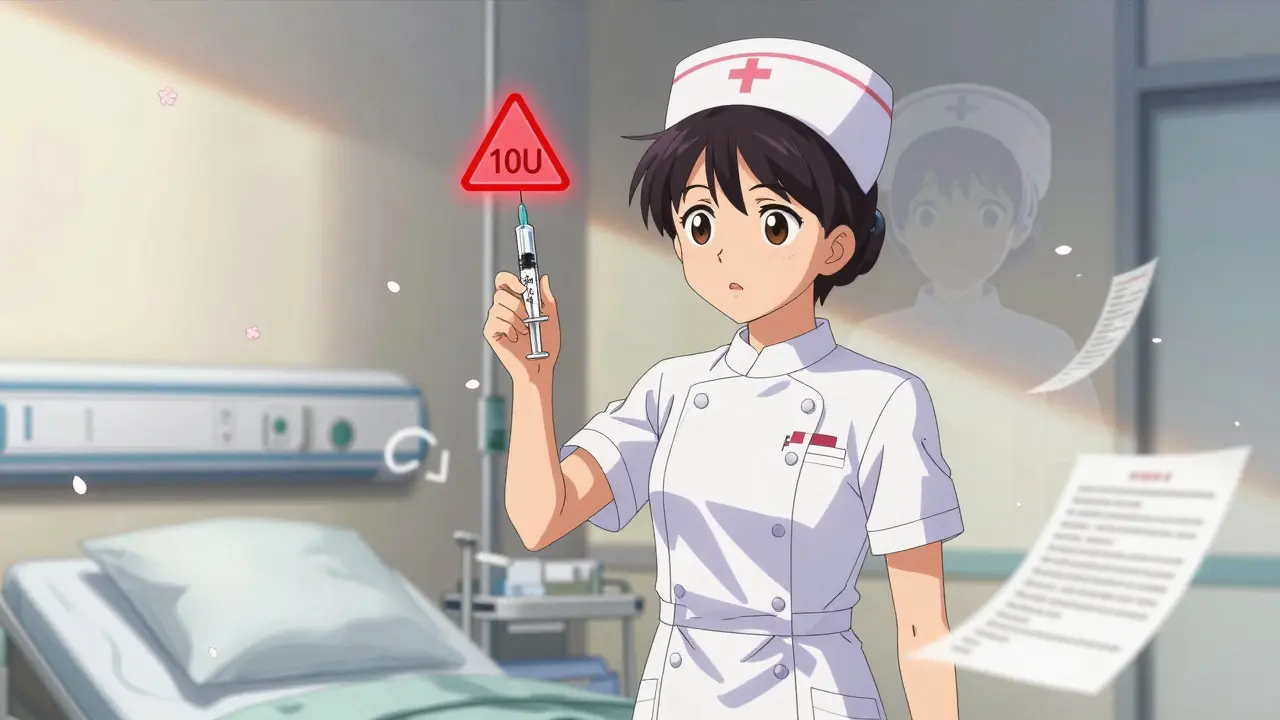
Getting a medication dose wrong isn’t just a mistake-it can kill. A nurse meant to give 1.0 unit of insulin but wrote ‘10U’. A pharmacist missed the decimal. A doctor changed the dose at 2 a.m. and forgot to tell the night shift. These aren’t hypotheticals. In 2022, over 1,200 reported incidents of incorrect dose changes led to nearly 300 patients being harmed. The good news? Most of these errors are preventable. The key isn’t working harder-it’s working smarter.
Why Dose Changes Are the Most Dangerous Moment in Medication Use
Every time a patient’s dose changes, the risk of error spikes. Why? Because it’s a transition point. The system isn’t designed for change-it’s built for consistency. A stable dose of warfarin? Easy to track. A new dose of insulin after a hospital discharge? That’s where things fall apart. High-alert medications like insulin, heparin, opioids, and IV potassium are especially risky. A 10-fold error in insulin? That’s not a typo. That’s a trip to the ER-or worse. The Institute for Safe Medication Practices (ISMP) lists 19 drugs that demand extra scrutiny. But it’s not just about the drug. It’s about the patient. Kidney function drops? A standard dose becomes toxic. Weight changes in a child? A ‘safe’ adult dose could be lethal. Dose changes demand precision, not assumptions.The 3-Step Verification Process That Actually Works
There’s no magic tool that fixes everything. But there is a proven three-step method used by top hospitals to cut errors in half. It’s simple, but it requires discipline.- Independent calculation - Two qualified staff members calculate the dose separately, without talking. One does the math. The other does it again. No peeking. For pediatric doses, that means calculating to 0.1 mg/kg. For warfarin, it means checking the latest INR before approving the change. This step takes 2-3 minutes. It’s not optional.
- Context check - Does the patient’s condition support this dose? Are they dehydrated? Did they just start a new antibiotic that interacts with their blood thinner? Is their creatinine clearance down? This step adds 1-2 minutes. It’s where human judgment beats a computer. A barcode won’t know the patient hasn’t eaten in 24 hours. A nurse will.
- Bedside verification with barcode scanning - Before the medication leaves the hand, scan the patient’s wristband. Scan the drug. The system should match the order. If it doesn’t beep, stop. Don’t override it. This final step takes 30-60 seconds. It’s your last line of defense.
Barcode Scanning Alone Won’t Save You
You’ve seen the machines. The scanners. The beeps. It’s easy to think technology has solved the problem. It hasn’t. Barcode medication administration (BCMA) systems prevent 86% of wrong-drug or wrong-dose errors-but they miss the big ones. They won’t catch a dose that’s technically correct but clinically wrong. A nurse scans a 10-unit insulin vial. The barcode says ‘10 units’. The system approves. But the order was for 1.0 unit. The decimal was missing. The barcode didn’t care. Only a person did. They also don’t detect wrong-patient errors. A nurse scans the wrong wristband. The system says ‘match’. The patient gets the wrong meds. Happens more than you think. And alert fatigue? Real. Nurses report seeing 15-20 alerts per shift. Most are false. After a while, they start ignoring them. A 2022 study found nurses only responded to 15% of BCMA alerts during 12-hour shifts. Technology helps-but it’s not a replacement for human verification. It’s a tool to support it.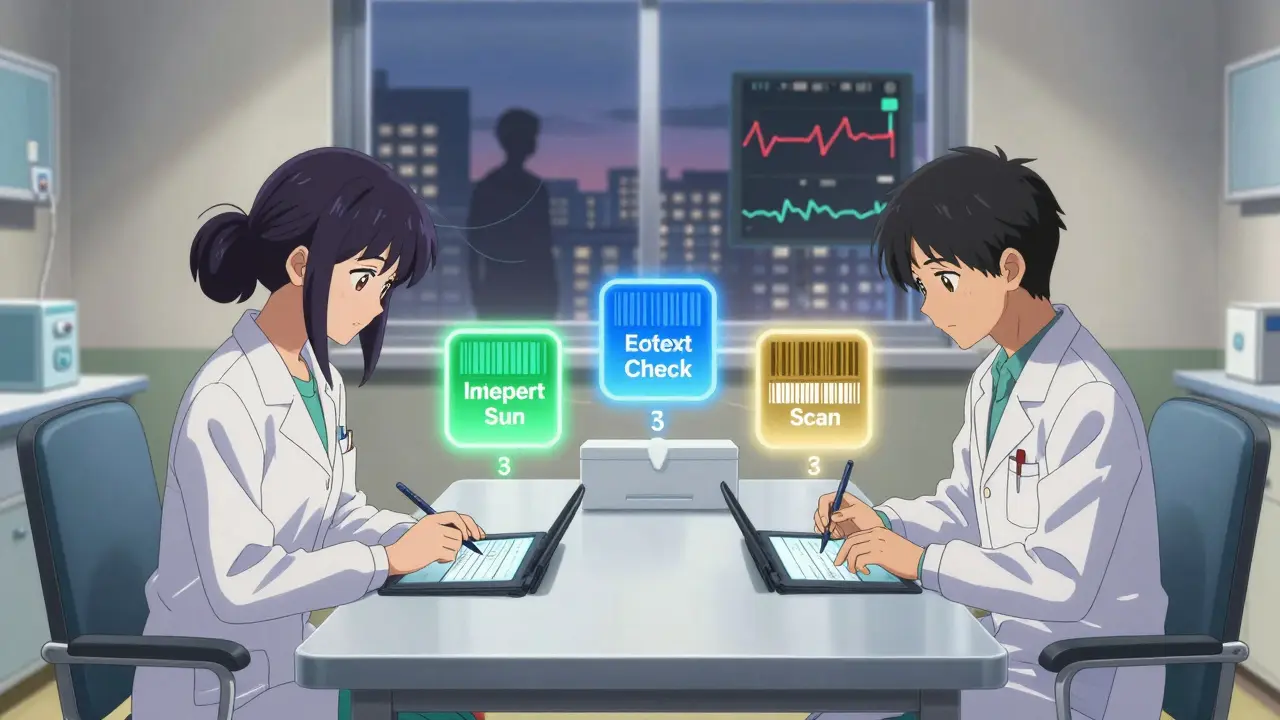
Double Checks: When They Help, When They Hurt
Independent double checks are the gold standard. But only when used right. Studies show they catch 33% of dosing errors and up to 100% of wrong-vial errors in sepsis simulations. That’s powerful. But here’s the catch: if you do them for everything, they stop working. The ISMP says it plainly: Don’t use double checks for all high-alert meds, all patients, or all tasks. Why? Because when it becomes routine, people go through the motions. They talk while checking. They sign off without looking. They trust the other person. That’s when errors slip through. The smart approach? Target them. Use double checks only for the highest-risk situations:- Insulin (especially IV or sliding scale)
- Heparin infusions
- Opioid boluses
- Chemotherapy doses
- Any dose change in ICU or pediatric units
Communication Breakdowns Are the Silent Killer
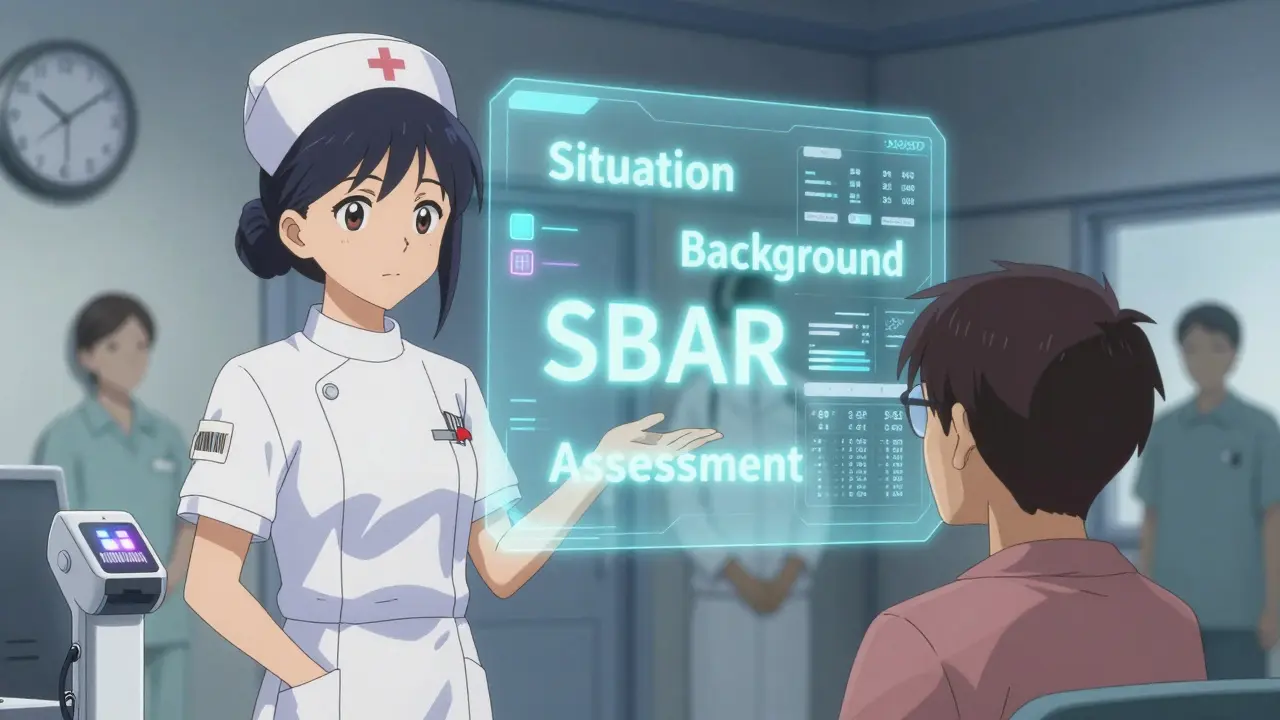
The Joint Commission found that 65% of serious medication errors stem from poor communication during dose changes. Not the math. Not the machine. The handoff. A doctor writes a new order. The pharmacist dispenses it. The nurse administers it. But no one tells the night nurse. Or the charge nurse. Or the patient’s family. Or the discharge planner. The dose changes, but the story doesn’t travel. The fix? Structured communication. SBAR isn’t just a buzzword-it’s a lifeline.- Situation: ‘Mr. Jones, 72, just had his warfarin dose increased from 5 mg to 7 mg.’
- Background: ‘INR was 2.1 yesterday. Doctor wants to get it to 2.5 for atrial fibrillation.’
- Assessment: ‘He’s on amiodarone, which increases warfarin effect. Watch for bleeding.’
- Recommendation: ‘Check INR in 24 hours. Hold next dose if INR > 3.0.’
What Happens When Verification Fails
One nurse on AllNurses.com shared a near-miss: ‘I almost gave 10 units of insulin instead of 1 unit because the order said ‘10U’ but meant ‘1.0U’. The double check caught it.’ Another pharmacist reported: ‘Our barcode system didn’t flag a 10-fold error. The concentration was right. The dose was wrong. Only a human noticed.’ These aren’t rare. ECRI’s 2023 Top 10 Hazards list ranked ‘inadequate verification of dose changes’ as number three. And the worst part? Most failures happen during shift changes-between 6 and 8 a.m. and p.m. That’s when fatigue hits, handoffs are rushed, and systems are bypassed. A 2022 American Nurses Association survey found 73% of nurses skipped verification steps due to time pressure. And when they did, medication errors jumped by 22%. This isn’t about blame. It’s about design. If the system makes it easy to cut corners, people will. The solution isn’t more rules. It’s better workflows.What’s Changing in 2026
The rules are tightening. As of January 1, 2024, The Joint Commission requires all hospitals to have reliable processes for verifying high-risk dose changes. CMS now penalizes hospitals with over 0.5% dose verification error rates. New tools are coming. Epic’s DoseRange Advisor uses AI to flag inappropriate doses before they’re ordered-cutting errors by 52% in a 12-hospital trial. Mayo Clinic’s voice recognition system lets nurses verify doses by speaking aloud, cutting documentation time by 65%. But the biggest shift? From universal double checks to risk-based verification. You don’t need to check everything. You need to check what matters. The future isn’t more technology. It’s smarter technology-designed around how humans actually work. As the 2023 NASEM report said: ‘Verification protocols must be designed around human factors to be sustainable.’How to Start Getting It Right Today
You don’t need a million-dollar system. You need three things:- Stop doing double checks for everything. Save them for insulin, heparin, opioids, and pediatric doses.
- Use SBAR for every dose change handoff. Even if it’s just a quick verbal summary. Say it out loud.
- Never override a barcode alert. If it doesn’t scan, stop. Ask why.
What’s the most common cause of dose verification errors?
The most common cause is miscommunication during handoffs, especially between shifts. A doctor changes a dose, but the change isn’t clearly passed to the next team. Studies show 65% of serious medication errors trace back to poor communication, not technical mistakes.
Do barcode scanners prevent all dosing errors?
No. Barcode systems prevent 86% of wrong-drug or wrong-dose errors, but they miss critical issues like incorrect decimal points (e.g., 10U vs. 1.0U), wrong-patient scans, or doses that are technically correct but clinically unsafe. Human verification is still essential.
Which medications need the strictest verification?
High-alert medications like insulin, heparin, IV opioids, potassium chloride, and chemotherapy drugs require the most scrutiny. The Institute for Safe Medication Practices lists 19 such drugs. Pediatric doses and narrow therapeutic index drugs like warfarin also demand extra checks due to small safety margins.
Is a double check always necessary?
No. Independent double checks are most effective when used selectively-for high-risk medications or vulnerable patients. Using them universally leads to complacency. The ISMP recommends targeting them only where the risk is highest, not applying them to every dose change.
How can I improve verification during busy shifts?
Protect dedicated ‘safety time’-15 to 20 minutes per shift-for verification tasks. Use structured communication like SBAR to speed up handoffs. Limit double checks to only the highest-risk meds. And never override a barcode alert. Small, focused changes reduce errors without adding stress.
What’s the role of AI in dose verification?
AI tools like Epic’s DoseRange Advisor analyze patient data to flag potentially dangerous doses before they’re ordered-reducing inappropriate changes by over 50%. These tools don’t replace humans-they help prioritize where human attention is most needed, especially during high-volume or overnight shifts.
Cheryl Griffith
January 17, 2026 AT 16:29Just had a near-miss last week with insulin. Order said 10U, nurse thought it was 10 units. We caught it because the med tech paused and asked, 'Wait, why's he on 10 units if he's been on 1.0 for months?' No scanner beeped. No alert. Just a second of human hesitation. That's the real safety net.
Stephen Tulloch
January 17, 2026 AT 16:47Lmao you guys are still talking about double checks like they're some sacred ritual? 😂 I work in a Canadian ER-we use AI flags, barcode scans, and SBAR. If your system needs a human to do math twice, you're already behind. The future isn't two nurses squinting at paper-it's an AI that knows the patient's renal function, diet, meds, and sleep cycle before the order even hits the screen. Stop glorifying manual labor.
Nick Cole
January 18, 2026 AT 07:01Stephen, you're missing the point. AI doesn't replace the nurse who notices the patient hasn't eaten in 36 hours. It doesn't know that Mrs. Li's daughter just moved her into a new apartment with no fridge. Tech helps, but it doesn't *feel* the system breaking. I've seen barcode scanners approve a 50mg morphine dose because the system didn't know the patient was opioid-naive. Only the nurse did.
Nicholas Gabriel
January 19, 2026 AT 21:24Let’s be real: the biggest problem isn’t the tools-it’s the culture. Nurses are stretched so thin that ‘verification’ becomes a checkbox. I’ve seen people scan the wrong wristband, say ‘oh, close enough,’ and move on. We need to stop treating safety as a process and start treating it as a value. If you’re rushing through a barcode alert because you’re behind, you’re not just risking a patient-you’re betraying your oath. And yes, I’m talking to you, hospital admins who cut staffing to hit quarterly targets.
SBAR isn’t paperwork-it’s a lifeline. Say it out loud. Even if it’s just: ‘Dose changed. INR up. Watch for bleeding.’ That’s not a formality. That’s how people stay alive.
And for the love of God, stop using ‘U’ for units. Use ‘units.’ Always. Every. Single. Time. I’ve lost count of how many times I’ve had to call a doctor because someone wrote ‘5U’ and meant ‘0.5U.’ It’s 2025. We have autocorrect. Use it.
Riya Katyal
January 19, 2026 AT 21:47Oh wow, so the solution to 300+ patient harms is… *talking*? Groundbreaking. I bet if we just taught nurses to say ‘please’ and ‘thank you’ during handoffs, we’d eliminate all medical errors. 🙃 Maybe next you’ll tell us to hug our patients more.
Henry Ip
January 20, 2026 AT 11:50Love this breakdown. Real talk: the 3-step process works because it’s simple, not because it’s fancy. No need for new apps or fancy AI. Just slow down. Two minds. One question: ‘Does this make sense for *this* person?’ And then-scan. Don’t override. Ever.
And if your manager says ‘we don’t have time for this’-show them the 37% error drop at Johns Hopkins. Then ask them how many lives that equals.
Ryan Hutchison
January 20, 2026 AT 22:31Y’all are overcomplicating this. In America, we don’t need fancy SBAR or AI. We need accountability. If a nurse screws up, fire them. If a doctor writes ‘10U’, suspend their license. Simple. No more ‘human factors’ nonsense. We’re not a daycare. We’re a high-stakes system. You want safety? Train harder. Punish harder. That’s how we win.
Samyak Shertok
January 20, 2026 AT 23:03What if the real problem isn’t the dose… but the fact that we’ve turned healthcare into a factory? We’re not healing people-we’re processing units. The barcode scanner doesn’t care if you’re dying. The AI doesn’t know your name. The double check is just another cog in a machine that’s already broken. Maybe the answer isn’t better verification… but a system that doesn’t need verification because it doesn’t treat humans like variables.
…or maybe we’re just scared to admit that medicine is as much art as science. And art can’t be standardized.
Corey Sawchuk
January 22, 2026 AT 12:48Been doing this for 18 years. The only thing that’s changed? More alerts, less time. But I still do the two-step. Still ask the ‘why’. Still scan. Still stop when it doesn’t beep. Not because I’m told to. Because I’ve seen what happens when you don’t. No drama. No quotes. Just done.