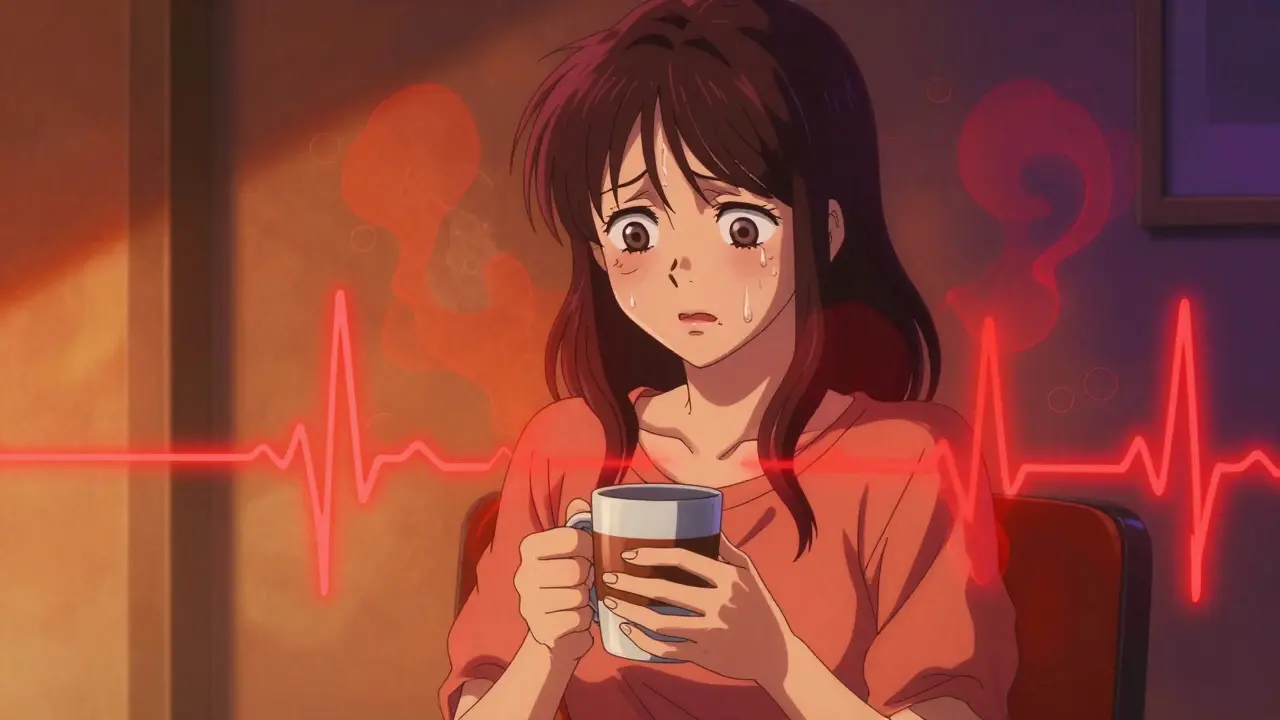
Your body isn't broken-it's just overwhelmed. When thyrotoxicosis hits, adrenaline surges even when you're sitting still. You sweat in air conditioning, tremble while holding coffee, and panic at your own pulse. Beta-blockers aren't cures, but they're your emergency brake. This guide cuts through medical jargon to show exactly how they work, when they're risky, and how long you'll need them.
What's Actually Happening Inside Your Body
Thyroid hormones control your metabolism like cruise control on a car. In hyperthyroidism, your foot's stuck on the accelerator. Up to
. Your cells burn energy faster than a campfire consumes wood. Result? Weight loss despite eating normally, heat intolerance that makes summer unbearable, and anxiety that feels disproportionate to your stress.Cause Frequency Graves' disease 60-80% of cases Toxic multinodular goiter 15-20%
How Beta-Blockers Hit Emergency Symptoms Hard
Beta-blockers block adrenaline's effects on your heart and nerves. Non-selective versions like propranolol work two ways: slowing your pulse AND reducing T4 conversion to potent T3. Within hours of your first dose, palpitations quiet down. Tremors fade. Unlike antithyroid drugs that take weeks to lower hormone levels, these give relief by day one.
Real patient scenario: Sarah, 42, came in shaking during pregnancy. Her doctor prescribed propranolol 20mg four times daily. By week two, she could hold utensils steady. Blood tests remained abnormal until methimazole kicked in at month three-but beta-blockers saved her from weekly ER visits.
Picking Your Beta-Blocker: Not One Size Fits All
| Medication | Dose Range | Key Advantage | Caution Notes |
|---|---|---|---|
| Propranolol | 10-480mg/day | Blocks T4→T3 conversion | Avoid in severe asthma |
| Nadolol | 40-160mg/day | Once-daily dosing | Long half-life complicates emergencies |
| Esmolol IV | 50-100μg/kg/min | Instant ICU control | Requires hospital setting |
Cardiologists prefer nadolol for stable patients wanting fewer pills. Esmolol dominates thyroid storm protocols where minutes matter. Remember: these don't fix the root cause-you'll still need radioactive iodine or antithyroid meds eventually.

Dosing Like a Pro: When Less Isn't Enough
- Start low: 10-20mg propranolol every six hours
- Titrate upward based on heart rate target (under 80 bpm)
- In severe cases, push to 120-240mg/day under monitoring
- If symptoms persist after maximum dose, suspect incomplete therapy
Dr. Ross's team found most patients stabilize on moderate doses. But elderly patients with heart failure sometimes need careful balance-too much slows their hearts dangerously. Always track your resting pulse; if it drops below 50, report immediately.
Combining Beta-Blockers With Long-Term Solutions
You're not done when symptoms ease. Methimazole shuts down thyroid hormone production works alongside beta-blockers. Timeline matters: discontinue antithyroid drugs 3 days before radioactive iodine therapy to avoid rebound hormone spikes. Continue beta-blockers until labs normalize-often 3-6 months post-RAI.

When Beta-Blockers Become Dangerous
- Severe asthma: triggers bronchospasm in 15% of patients
- Second-degree heart block: risk of cardiac arrest
- Decompensated heart failure: worsens pump function
Alternatives exist. Verapamil (calcium channel blocker) controls heart rate without lung issues. But unlike beta-blockers, it doesn't halt T4 conversion. If you've been told "no beta-blockers," ask specifically why-sometimes low-dose cardioselective options work.
Monitoring Milestones Nobody Tells You About
Thyroid function tests check your recovery path happen at 6-week intervals initially. Don't stop beta-blockers abruptly-rebound hypertension can occur. Taper slowly over 1-2 weeks once euthyroid. Key warning signs: persistent rapid pulse despite normal TSH means either inadequate dosing or coexisting anxiety disorders requiring separate treatment.
Can beta-blockers cure hyperthyroidism?
No-they mask symptoms while definitive treatments address hormone overproduction. Stopping them too early risks thyrotoxic crisis.
How long do I stay on beta-blockers?
Typically 4-8 weeks during initial therapy, or 3-6 months post-radioiodine treatment until hormone levels fully normalize.
Will beta-blockers help my weight gain back?
Only indirectly. As thyroid function improves, metabolic rate stabilizes. Weight changes depend on overall hormonal balance restoration, not beta-blocker use alone.
Can pregnant women use beta-blockers?
Yes, propranolol crosses placenta safely for symptom control. Doses require close obstetric/endocrine coordination throughout pregnancy.
Why did my doctor switch from propranolol to atenolol?
Atenolol is more selective for heart receptors. Switches usually occur due to mild asthma history where non-selective beta-blockers pose breathing risks.
Beta-blocker management for hyperthyroidism works best when integrated into comprehensive care plans. Monitor your pulse like a dashboard gauge, never skip follow-ups, and understand that symptom relief doesn't mean complete healing. True recovery takes patience, precise dosing, and partnership between you and your healthcare team.
Beccy Smart
April 1, 2026 AT 13:38This article is boring. 😴 Medicine is scary. 🏥 Beta blockers stop heart racing. ❤️🔥 Taking pills might not be the best route sometimes. 🌿 Sometimes doctors overreact to everything. Just eat good food instead. 🥗 Maybe try yoga too. 🧘♀️ It is all mental anyway. 💭 Ignore the scary tables above. 🙄 They sound made up. Just trust your gut feeling. 🦁 Stay positive vibes only. ✨
Victor Ortiz
April 3, 2026 AT 07:17You clearly missed the point of the mechanism explanation. Most people think it is just a calm down pill which is wrong. You are ignoring the T4 conversion inhibition part completely. The pharmacokinetics matter here. Non-selective agents block beta receptors universally. It is obvious you did not read the section on nadolol. Your understanding of thyroid storm protocols is lacking. We need precision not vague generalizations about symptoms. People ignore the half-life data frequently without reason. It is frustrating to see such basic misunderstandings in public forums.
Amber Armstrong
April 4, 2026 AT 11:49I went through exactly this phase years ago with Graves disease diagnosis.
It felt like my heart was going to explode out of my chest constantly.
Every little movement made me sweat profusely even indoors.
My hands shook so bad I could barely hold a spoon while eating dinner.
Taking propranolol changed my life overnight almost immediately.
I remember walking into the office shaking and leaving steady after meds kicked in.
People forget how terrifying the palpitations really feel at night.
Sleep becomes impossible when your pulse is racing past ninety beats per minute easily.
Anxiety makes everything worse because you know something feels medically wrong inside.
Doctors explained the adrenaline surge but living it is a totally different story entirely.
You realize very quickly that symptom management is vital before cure takes effect.
Waiting months for hormone levels to drop is extremely nerve wracking honestly speaking.
Those emergency brake medications truly save lives during the waiting period.
Without beta-blockers many patients would end up in ICU unnecessarily often times.
Gratitude towards medical staff remains high throughout the whole recovery timeline process.
Never underestimate how much physical relief simple medication provides daily usage.
It is amazing what stabilizing heart rate does for overall mental health stability too.
Please listen to your healthcare team when they suggest starting these treatments soon.
Christopher Curcio
April 5, 2026 AT 05:53Hemodynamic stability relies heavily on sympathetic nervous system modulation via adrenergic antagonists.
Propranolol exhibits non-selective blockade characteristics across beta-one and beta-two subtypes effectively.
Peripheral vascular resistance decreases while cardiac output remains relatively controlled under therapeutic dosages.
Metabolic clearance rates vary significantly between hepatic CYP2D6 polymorphism genotypes individually.
Therapeutic drug monitoring ensures optimal plasma concentration levels without toxicity onset risks.
Bradycardia precautions apply strictly to patients with pre-existing conduction abnormalities present.
Rebound hypertension phenomena occur upon abrupt discontinuation protocols therefore tapering schedules required.
Clinical endpoints focus primarily on sinus rhythm restoration alongside metabolic parameter normalization processes.
Jonathan Sanders
April 5, 2026 AT 23:56Oh great another medical blog pretending to know human biology perfectly well.
Like we did not already know adrenaline feels awful when released excessively.
Sure beta blockers work fine but let's pretend they fix the actual root cause magically.
Everyone acts scared of thyroid storms as if it happens every single day realistically.
Probably half the internet exaggerates their own panic attacks into medical emergencies now.
Take a pill breathe deeply and maybe stop doom scrolling about symptoms online.
Nobody writes guides to tell you to stay alive unless they get clicks.
Thanks for the summary though I guess I am learning new things today.
Debbie Fradin
April 6, 2026 AT 19:01Stop acting like this is some mysterious secret nobody ever told anyone before reading.
If you are having heart palpitations you need a doctor not reddit advice columns.
Reading tables on google does not replace actual diagnostic blood work results properly.
Stop asking everyone here for validation on your health anxiety issues publicly.
Some people actually suffer real conditions while others just want sympathy farming points.
Your emotional draining posts about medicine dosage are exhausting to scroll through repeatedly.
Figure out what you want and stop demanding everyone else fixes your confusion levels.
Get tested properly instead of guessing based on vague internet articles written by bots.
Rick Jackson
April 7, 2026 AT 00:14I appreciate the breakdown regarding metabolic rate stabilization timelines.
Adryan Brown
April 7, 2026 AT 16:23We all come to this forum seeking answers about our health concerns and feelings.
It is important to remain calm and supportive whenever someone shares their medical struggles openly.
Many readers might feel overwhelmed by technical details presented in dense paragraphs above originally.
Perhaps summarizing the key takeaways helps everyone understand the treatment pathway better collectively.
Listening to each other builds trust within this community space we share together daily.
Health journeys vary wildly between individuals depending on genetics and lifestyle factors too.
Patience remains essential since thyroid regulation takes weeks rather than hours generally speaking.
Compassion for those suffering through severe hyperthyroid symptoms shows true character strength.
We should encourage professional guidance rather than attempting self-medication experimentation alone.
Collective wisdom supports safe decisions when combined with expert medical advice provided officially.
emma ruth rodriguez
April 9, 2026 AT 08:48This publication provides an insightful overview of clinical management strategies!
The distinction between symptomatic relief versus curative intervention is paramount!
Beta-adrenergic blocking agents serve as a bridge therapy indeed!
However; contraindications including bronchospastic asthma must be acknowledged fully!
Dosage titration requires careful physician oversight absolutely!
Monitoring parameters should include regular echocardiographic assessments occasionally!
Thank you for sharing this educational resource with us!
Charles Rogers
April 9, 2026 AT 21:33People keep misunderstanding why we cannot simply stop these drugs abruptly.
Abrupt cessation causes dangerous rebound effects on cardiovascular systems immediately.
Ignoring safety warnings leads to hospital visits which is stupid.
You think taking a pill once solves chronic hormonal imbalances permanently?
Reality checks are necessary for those spreading dangerous misconceptions online freely.
Education matters far more than anecdotal evidence shared in comments sections here typically.
sanatan kaushik
April 10, 2026 AT 09:36Listen to me clearly.
Big hospitals push big pills.
You take medicine.
Heart slows down.
Stop worrying.
Trust science not fear.
If you stop meds you die maybe.
Do what doc says.
Life is hard.
Just live.
Jonathan Alexander
April 11, 2026 AT 04:09The sheer terror involved in waiting for labs to clear remains unrealized by casual readers.
Imagine lying awake sweating bullets because your pulse will not settle down tonight.
This topic carries immense emotional weight for families facing diagnosis news suddenly.
Silence on this front suggests neglect of genuine patient suffering experiences globally.
We need deeper empathy beyond medical jargon walls constructed by experts.