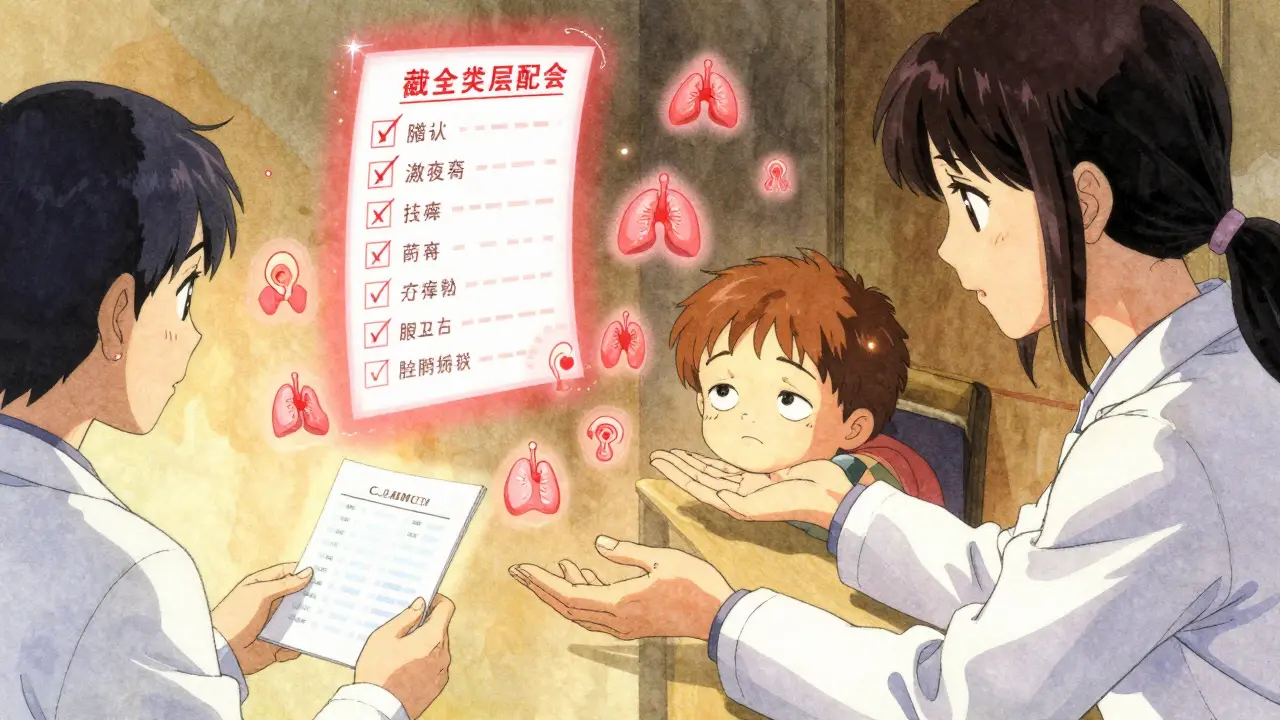
How many ear infections is too many? What if your child gets pneumonia twice in one year? Or thrush that won’t go away after turning one? These aren’t just bad luck-they could be your body screaming that something deeper is wrong. Recurrent infections are one of the most common reasons parents and doctors worry, but most of the time, they’re normal. The problem? When they’re not.
When Recurrent Infections Aren’t Just Bad Luck
Healthy kids get sick. A lot. It’s normal for a preschooler to have six to twelve colds, ear infections, or sinus infections in a year. Their immune system is still learning. But when infections start piling up in a pattern that doesn’t fit, that’s when you need to look closer. This isn’t about being a germ magnet-it’s about whether the body can mount a real defense.
The red flags aren’t vague. They’re specific numbers, specific types, and specific failures. The immunodeficiency red flags recognized by major medical groups include:
- Four or more ear infections in 12 months
- Two or more serious sinus infections in 12 months
- Two or more pneumonias in 12 months
- Deep skin or organ abscesses that keep coming back
- Persistent oral thrush after age one
- Infections that don’t improve after two months of antibiotics
- Needing IV antibiotics to clear infections
- Two or more deep-seated infections like septicemia or meningitis
- Failing to grow or gain weight despite eating well
- A family history of early deaths from infection or known immune disorders
These aren’t opinions. They’re based on data from thousands of patients tracked over decades. A child with three ear infections and a cold every month? Probably fine. A child with four ear infections, two pneumonia episodes, thrush that won’t clear, and no tonsils? That’s a different story.
What Doctors Look For Beyond Infections
It’s not just how often someone gets sick-it’s what kind of sickness, and what the body looks like when it’s not sick.
During a physical exam, doctors check for clues hidden in plain sight:
- Absent or tiny tonsils and lymph nodes-this happens in 78% of babies with severe combined immunodeficiency (SCID)
- Unusual skin changes, like red, spider-like blood vessels (telangiectasias), which are seen in 95% of children with ataxia-telangiectasia
- Oral thrush lasting past age one-a sign with 89% specificity for antibody deficiency
- Growth falling below the 5th percentile, even if the child eats enough
These aren’t random findings. They’re biological signatures. SCID, for example, is a medical emergency. Babies born with it can’t fight off even harmless germs. If diagnosed before 3.5 months of age, survival jumps to 94%. After that, it drops to 69%. That’s not a small difference-it’s life or death.
The Basic Workup: Blood Tests That Reveal Hidden Weakness
If red flags show up, the next step isn’t more antibiotics. It’s a simple blood test panel that can point to the problem.
The first test is a complete blood count (CBC) with manual differential. In children over one year, a lymphocyte count below 1,500 cells/μL raises concern. In infants under one, anything below 3,000 cells/μL is a warning. Lymphocytes are the soldiers of your immune system. If there aren’t enough, something’s broken.
Then come the immunoglobulins: IgG, IgA, IgM. These are the antibodies your body makes to fight infection. But they’re not the same at every age.
- At 3 months: Normal IgG is around 243 mg/dL
- At 6 months: Rises to 558 mg/dL
- By age 5: Reaches adult levels-700 to 1,600 mg/dL
If a 7-year-old has an IgG of 420 mg/dL, that might look normal on a generic lab report. But it’s dangerously low for their age. That’s why age-adjusted ranges matter. One pediatrician in Ohio told of three kids misdiagnosed as having chronic bronchitis because their IgG was just above the adult cutoff-but way below what a child their age should have.
Low IgG alone isn’t enough. You also need to check if the body can make new antibodies when challenged. That’s where vaccine testing comes in. After giving tetanus or pneumococcal vaccines, doctors wait 4 to 6 weeks and check antibody levels again. A protective response to tetanus is at least 0.1 IU/mL. For pneumococcus, it’s 1.3 μg/mL. If the body doesn’t respond, you’re dealing with a functional antibody deficiency-not just low numbers.
For a diagnosis of Common Variable Immunodeficiency (CVID), the gold standard is: IgG below 400 mg/dL, plus low IgA or IgM, plus poor response to vaccines. Without all three, it’s not CVID. And that’s critical-because many people with low IgG don’t have CVID at all.

What Else Could Be Going On? (And Why It Matters)
Here’s the hard truth: up to 30% of patients labeled with CVID actually have something else. It’s not their immune system that’s broken-it’s something else causing the antibodies to drop.
Common mimics include:
- Chronic sinus disease from structural problems (like deviated septum or polyps)-accounts for 31% of cases
- Cystic fibrosis-responsible for 12% of recurrent pneumonia cases
- Foreign bodies in the airway-found in 18% of kids with unexplained pneumonia
- Autoimmune diseases like lupus or rheumatoid arthritis
- Medications like long-term steroids or chemotherapy
- Cancer, especially lymphoma
That’s why doctors don’t jump to immunoglobulin replacement right away. A 2020 study in the Annals of Internal Medicine found that 22% of patients got IVIG (antibody infusions) without proof they needed it. That’s expensive, invasive, and unnecessary. You don’t treat the number-you treat the cause.
One case from the UK involved a 10-year-old with four pneumonia episodes and low IgG. After months of treatment, a CT scan revealed a small piece of peanut lodged in the right bronchus. Once removed, infections stopped. No immunoglobulin needed.
When Genetic Testing Comes In
For kids with severe or unusual infections-like fungal infections in the lungs, or infections from organisms that don’t normally hurt healthy people-genetic testing can be a game-changer.
In 2023, the FDA approved a new gene panel called StrataID Immune that checks 484 immune-related genes. It finds the root cause in 35% of suspected cases, compared to just 18% with older methods. This isn’t for everyone. But for a child with recurrent sepsis, chronic diarrhea, or unusual skin rashes, it can end a years-long diagnostic odyssey.
Experts predict that within five years, whole exome sequencing will be the first test for suspected immunodeficiencies in developed countries. Right now, the average time from first symptoms to diagnosis is 112 days when using a structured pathway. Without it? Over a year and a half.

What You Can Do If You’re Concerned
If you’re seeing a pattern of infections that don’t fit the norm, keep a log. Write down:
- How many infections in the last year
- What kind (ear, sinus, lung, skin, etc.)
- How long they lasted
- Whether IV antibiotics were needed
- Any unusual symptoms (thrush, rashes, poor growth)
- Family history of early deaths, autoimmune disease, or immune problems
Take it to your doctor. Ask: “Could this be an immune problem?” Don’t accept “It’s just kids getting sick.” Push for a CBC and immunoglobulin levels. If those are low or borderline, ask about vaccine response testing.
Organizations like the Jeffrey Modell Foundation have a simple 10-warning-signs checklist that’s been translated into 86 languages. Print it. Use it. It’s helped cut diagnosis time from 9 years to under 3 in large studies.
What Happens If It’s Confirmed?
Most immunodeficiencies aren’t curable-but they’re manageable. Antibody replacement with IVIG or subcutaneous infusions can prevent infections. Antibiotics may be used preventively. For some, like SCID, a bone marrow transplant can be curative if done early.
The goal isn’t to live without ever getting sick. It’s to stop the cycle of damage. Repeated pneumonia scars the lungs. Chronic sinus infections can lead to permanent hearing loss. Untreated thrush can spread to the esophagus. Every infection is a chance for something worse to happen.
Early detection doesn’t just save lives-it saves lungs, ears, and quality of life. The sooner you act, the better the outcome.
How many ear infections are too many for a child?
Four or more ear infections in a 12-month period is a red flag for possible immunodeficiency. Healthy children may have up to six to eight infections a year, but four or more that require antibiotics or lead to hearing issues should prompt evaluation. This threshold is part of the diagnostic criteria used by the American Academy of Allergy, Asthma & Immunology and the European Society for Immunodeficiencies.
Can low IgG mean I have an immune disorder?
Not necessarily. IgG levels vary by age, and many children have low levels temporarily due to normal development. What matters is whether the level is below the age-adjusted normal range and whether the body can make new antibodies after vaccination. A single low IgG without poor vaccine response or other symptoms usually doesn’t mean an immune disorder.
Is thrush after age one always a sign of immunodeficiency?
Not always, but it’s a strong indicator. Oral thrush that persists after age one has 89% specificity for antibody deficiency disorders like Common Variable Immunodeficiency. While it can happen in healthy kids on antibiotics or with poor hygiene, persistent thrush should trigger an immune workup, especially if combined with other red flags like recurrent pneumonia or slow growth.
Do I need genetic testing if I have recurrent infections?
Not everyone. Genetic testing is typically reserved for patients with severe, unusual, or early-onset infections-like pneumonia from fungi, sepsis from rare bacteria, or infections that don’t respond to standard treatment. It’s also recommended if there’s a family history of immune disorders or if basic blood tests show clear abnormalities. For most people with recurrent colds or ear infections, it’s not needed.
Can adults develop immunodeficiency too?
Yes. Common Variable Immunodeficiency (CVID) is often diagnosed in adults between ages 20 and 40. Symptoms include repeated sinus and lung infections, chronic diarrhea, and autoimmune conditions. Many adults go years undiagnosed because doctors assume their infections are due to smoking, allergies, or stress. If you’ve had multiple pneumonia episodes, unexplained weight loss, or persistent infections since your 20s, an immune workup is warranted.
What if my doctor says my IgG is normal but I still get sick?
Ask for age-adjusted reference ranges. Many labs report adult norms, but children’s levels are lower and rise gradually. A 6-year-old with IgG of 450 mg/dL might be perfectly normal for their age-but if the doctor compares it to an adult range (700+), they’ll miss the problem. Also, ask about vaccine response testing. You can have normal IgG levels but still be unable to make new antibodies after infection or vaccination. That’s the real test of immune function.
Lori Anne Franklin
December 27, 2025 AT 12:20my kid had 3 ear infections last year and i was just like ‘oh wow, she’s a germ magnet’… then i read this and realized maybe we should’ve pushed harder. thanks for laying this out so clearly.
Prasanthi Kontemukkala
December 28, 2025 AT 19:22I’m from India and we don’t have easy access to immunoglobulin tests here. But I’ve seen kids with thrush past age 1 and no one thinks twice. This post made me realize we’re missing so much because we don’t have the tools-or the awareness.
Bryan Woods
December 29, 2025 AT 22:15As a pediatrician, I’ve seen too many cases where low IgG was dismissed because it was ‘close enough’ to adult norms. Age-adjusted ranges aren’t optional-they’re essential. This post nails it.
Ryan Cheng
December 30, 2025 AT 23:07Just had a mom come in last week with a 5-year-old who’d had 4 pneumonias and thrush since 18 months. IgG was 410. Lab said ‘normal.’ I pushed for vaccine response testing. Turned out she couldn’t make antibodies to pneumococcus. We started IVIG. No more infections in 6 months. This isn’t theoretical-it’s life-changing.
wendy parrales fong
December 31, 2025 AT 09:50It’s wild how we normalize suffering in kids. ‘Oh, he just gets sick a lot’-like it’s just part of growing up. But what if it’s not luck? What if it’s a silent alarm? This post feels like a flashlight in a dark room.
Jeanette Jeffrey
January 2, 2026 AT 09:29Everyone’s panicking over ‘red flags’ like it’s a horror movie. Most kids get sick. You’re just scared of normal. Antibodies go up and down. Stop pathologizing childhood. You’re creating anxious parents and wasting healthcare dollars.
Shreyash Gupta
January 3, 2026 AT 22:23bro… i had 7 ear infections as a kid. never got tested. now i’m 32 and fine. maybe the ‘red flags’ are just… kids being kids? 🤷♂️
Angela Spagnolo
January 4, 2026 AT 18:00I’m a nurse… and I’ve seen so many kids misdiagnosed with ‘chronic bronchitis’ when it was actually CVID. The IgG levels were ‘normal’ because they used adult ranges. Please, please, please ask for age-adjusted labs. It’s not hard. It’s just overlooked.
Sarah Holmes
January 5, 2026 AT 04:12While I appreciate the clinical detail, I must emphasize that the over-medicalization of childhood illness is a dangerous trend. You are pathologizing normal immune development. The psychological burden placed on parents by such articles far outweighs the marginal benefit of early detection in the vast majority of cases. This is not medicine-it is fear marketing dressed in white coats.
carissa projo
January 7, 2026 AT 01:08My daughter had thrush past 18 months, two pneumonias, and barely gained weight. We were told ‘she’s just small.’ Then we found out her IgG was half what it should’ve been. She’s on IVIG now and finally smiles at the playground. This isn’t about being ‘overprotective’-it’s about listening to your gut when the system won’t. Thank you for writing this. I wish I’d seen it sooner.
Matthew Ingersoll
January 8, 2026 AT 13:16My brother died of undiagnosed SCID at 8 months in 1987. We didn’t have newborn screening then. Now we do. That’s progress. This post isn’t alarmist-it’s a bridge between the past and the future. Don’t let the cynics silence the hope.