
Switching from a brand-name drug to a generic version can save you hundreds of dollars a year. But sometimes, people say the generic doesn’t feel the same. They might feel more nauseous, sleep worse, or notice their symptoms creeping back. It’s not all in their head. The difference isn’t in the active ingredient - that’s the same. It’s in what’s not supposed to do anything: the inactive ingredients.
What Are Inactive Ingredients, Really?
Inactive ingredients - also called excipients - are the non-medical parts of a pill or capsule. They don’t treat your condition. But they’re essential. Think of them like the packaging, glue, and coating on a toy. Without them, the medicine wouldn’t hold together, wouldn’t dissolve properly, or might taste awful.
Common ones include:
- Fillers like lactose or microcrystalline cellulose - they give the pill its size and shape.
- Binders like povidone or hydroxypropyl methylcellulose - they hold everything together.
- Disintegrants like croscarmellose sodium - they help the pill break apart in your stomach.
- Coatings like hydroxypropyl methylcellulose - they make pills easier to swallow or control how fast the drug releases.
- Preservatives and dyes like sodium benzoate or FD&C Yellow No. 5 - they keep the medicine stable and help you tell pills apart.
The FDA requires all these ingredients to be safe. But “safe for most people” doesn’t mean “safe for everyone.”
Why Does the Generic Feel Different?
Generic drugs must have the same active ingredient, strength, and bioequivalence as the brand name. That means your body absorbs it at nearly the same rate and amount. The FDA allows a 20% variation in absorption - but in reality, most generics are within 4% of the brand.
So why do some people notice a difference?
It’s the inactive ingredients. A generic made by one company might use lactose as a filler. Another might use corn starch. One might use a red dye; another uses none. For most people, this doesn’t matter. But for those with sensitivities, it can.
Take lactose. About 36% of Americans have trouble digesting it. If your brand-name pill used corn starch and your generic switched to lactose, you might get bloating, gas, or diarrhea - not because the medicine isn’t working, but because your gut doesn’t like the filler.
Or consider dyes. Some people report headaches or rashes after switching to a generic with FD&C Yellow No. 5. Others say their anxiety meds made them feel “off” after a switch - and it turned out the new version had a different coating that changed how fast the drug released.
Studies back this up. A 2021 analysis of 2,000 switches found that 94.7% of people had no noticeable difference. But 4.3% reported minor side effects, and 1% had to switch back because the generic didn’t work for them - not because the drug failed, but because their body reacted to something else in the pill.

Who’s Most at Risk?
Not everyone needs to worry. But some groups are more likely to notice changes:
- People with allergies - to dyes, sulfites, or aspartame (found in some chewable tablets).
- People with intolerances - like lactose intolerance or gluten sensitivity (though gluten is rare in meds, it’s not impossible).
- People on narrow-therapeutic-index drugs - where the difference between a good dose and a harmful one is tiny. These include:
- Levothyroxine (for thyroid)
- Warfarin (blood thinner)
- Digoxin (for heart failure)
- People on psychiatric meds - like antidepressants or antipsychotics. Small changes in how fast the drug hits your bloodstream can affect mood, sleep, or anxiety.
One patient on Reddit shared: “I switched from brand Synthroid to generic and my TSH jumped from 2.1 to 7.8. I felt exhausted, gained weight, and couldn’t think straight. Switched back - TSH dropped to normal in 3 weeks.”
That’s not rare. Doctors at UMass Memorial Health found that less than 0.5% of switches for these high-risk drugs caused clinical issues - but when it happens, it matters a lot.
What You Can Do
You don’t have to avoid generics. They’re safe, effective, and save billions every year. But here’s how to protect yourself:
- Check the ingredient list. Every prescription bottle lists inactive ingredients. Look for things like “lactose monohydrate,” “FD&C Red No. 40,” or “sodium benzoate.” If you know you’re sensitive to something, ask your pharmacist to check if the generic contains it.
- Ask for the same generic manufacturer. Generic pills from the same company will have the same inactive ingredients. If you felt fine on one brand of generic, stick with it. Pharmacists can often order the same one.
- Try authorized generics. These are made by the original brand company but sold under a generic label. They’re identical in every way - active and inactive ingredients - and often cost less than the brand name. They make up about 15% of the generic market.
- Keep a symptom diary. For 2 to 4 weeks after switching, write down how you feel: sleep, energy, mood, digestion, pain levels. If something changes, you’ll have proof to show your doctor.
- Don’t assume it’s “all in your head.” If you feel different, say so. Your pharmacist can check the formulation. Your doctor can test blood levels (especially for thyroid or blood thinners).
Why This Matters Now
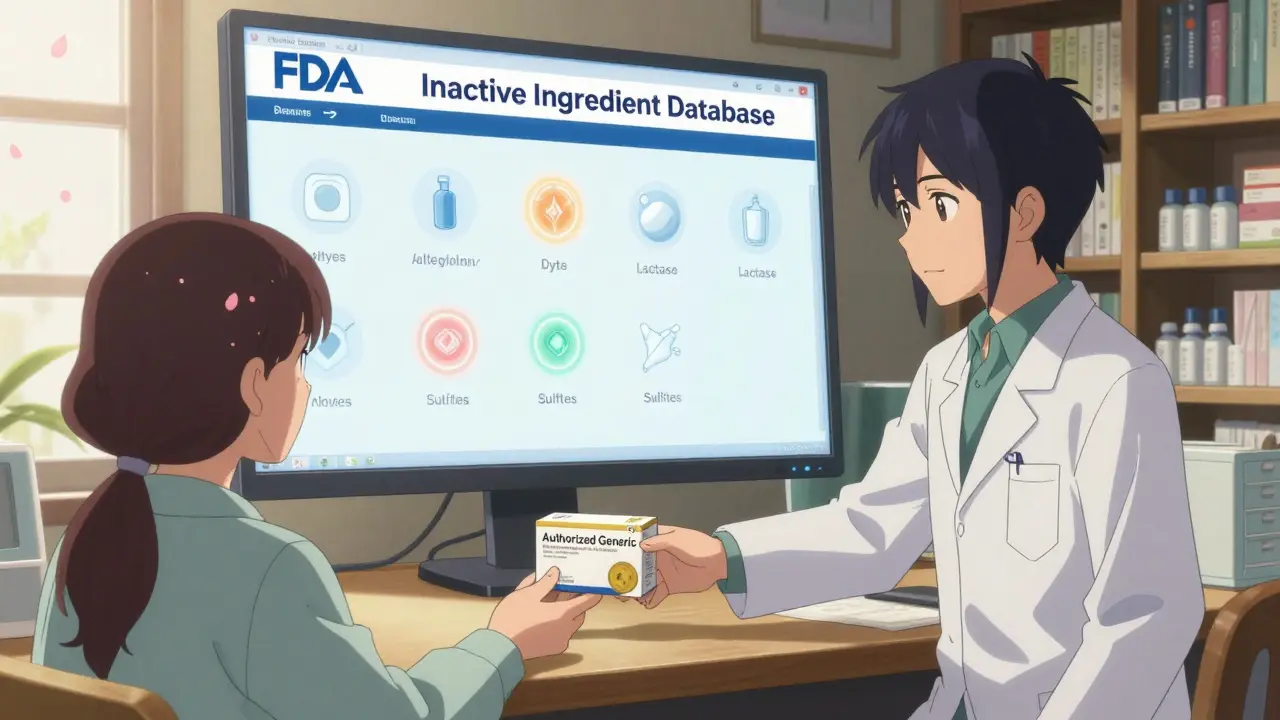
The FDA is paying more attention to inactive ingredients. In 2023, new guidance required stricter testing for generics of high-risk drugs like levothyroxine. The agency is also expanding its Inactive Ingredient Database - coming in early 2024 - so you’ll be able to look up exactly what’s in every approved drug.
Pharmaceutical companies are starting to respond too. More are offering “clean label” generics - no artificial dyes, no lactose, no sulfites. By 2025, about 70% of generic manufacturers plan to offer allergen-free versions of common meds.
And in the UK, where generics make up over 85% of prescriptions, the NHS is pushing for clearer labeling on prescriptions to help patients with sensitivities.
Bottom Line
Generics are not inferior. For 9 out of 10 people, they work just as well and cost a fraction. But for the 1 in 10 who react to fillers, dyes, or coatings, the difference is real - and fixable.
Don’t stop taking your meds because you think the generic isn’t working. Talk to your pharmacist. Ask for the ingredient list. Consider switching back to the same generic you used before. Or ask about an authorized generic. Most of the time, a small change - not a return to the brand name - is all you need.
Your health isn’t just about the active ingredient. Sometimes, it’s about what’s hiding in the background.
Why do some people say generic medications don’t work as well?
They usually work just as well. When people say they don’t, it’s often because of differences in inactive ingredients - like fillers or coatings - that affect how the drug is absorbed or how their body reacts. For example, switching from a lactose-free brand to a lactose-containing generic can cause bloating or diarrhea in sensitive people. The medicine still works, but the side effects make it feel like it doesn’t.
Are generic drugs less safe than brand-name drugs?
No. Generic drugs must meet the same FDA standards for safety, strength, purity, and quality as brand-name drugs. The active ingredient is identical. The only differences are in inactive ingredients, which are also required to be safe. The FDA approves over 900 new generics every year, and they’re used by millions daily without issue.
Can I ask my pharmacist for a specific generic brand?
Yes. Pharmacists can often order a specific generic manufacturer if you’ve had a good experience with it before. Just ask: “Can you fill this with the same generic I used last time?” or “Is there a version without lactose?” Many pharmacies keep a list of preferred generics for patients with sensitivities.
What should I do if I think my generic is causing side effects?
Don’t stop taking it without talking to your doctor. Write down your symptoms and when they started. Bring your pill bottle to your pharmacist - they can check the inactive ingredients. If needed, your doctor can order a blood test (for thyroid, blood thinners, etc.) to see if the drug levels are off. Often, switching to a different generic or an authorized generic solves the problem.
Are there generic drugs without dyes or lactose?
Yes. More manufacturers are offering “clean label” generics with no artificial dyes, no lactose, and no common allergens. Ask your pharmacist if they have an allergen-free version of your medication. Some are already available for common drugs like levothyroxine, sertraline, and lisinopril. The FDA’s new database in 2024 will make it easier to find them.
Is it worth paying more for the brand-name drug?
Only if you’ve tried generics and had a bad reaction - and no other generic works for you. For most people, the cost savings are huge. A brand-name statin might cost $370/month; the generic costs $4. If you feel fine on a generic, stick with it. If you don’t, work with your doctor and pharmacist to find a version that does.
John O'Brien
January 27, 2026 AT 12:49I switched to generic levothyroxine and my TSH went from 1.8 to 8.3 in two weeks. I felt like a zombie. My doctor laughed until I showed him the pill bottle - brand had no lactose, generic had 50mg of the stuff. Now I get the same manufacturer every time. Don’t let them gaslight you - it’s not in your head.
Kegan Powell
January 27, 2026 AT 23:54man i used to think this was all placebo until my anxiety meds started making me feel like i was drowning in slow motion 🤯 turns out the new generic had a different coating that slowed absorption. switched back to the old one and boom - peace returned. sometimes the magic isn't in the molecule, it's in the filler. 🙏
astrid cook
January 28, 2026 AT 03:31Oh wow so now we’re blaming the pills for our poor life choices? Maybe if you weren’t eating gluten and drinking 4 energy drinks a day you wouldn’t notice the difference. People are so fragile these days.
Andrew Clausen
January 28, 2026 AT 21:19The FDA’s 20% bioequivalence window is a regulatory loophole, not a safety standard. When you’re on warfarin, a 15% variation in absorption can cause hemorrhage or clotting. This isn’t about lactose intolerance - it’s about systemic failure in generic drug oversight. The FDA should mandate identical excipients for narrow-therapeutic-index drugs. Period.
Anjula Jyala
January 30, 2026 AT 01:26Excipients are pharmacologically inert by definition but can modulate pharmacokinetics via dissolution rate, gastric transit time, and first-pass metabolism. Lactose intolerance is irrelevant if the drug is sublingual. The real issue is bioequivalence variance in Cmax and AUC across manufacturing batches. You need HPLC validation data not anecdotal reports
Kirstin Santiago
January 30, 2026 AT 21:14Just wanted to say - if you’re feeling off after a switch, you’re not crazy. I was on sertraline and switched generics and started having panic attacks at 3am. Took me three months to figure out it was the dye. My pharmacist had a list of dye-free versions. It’s not common, but it’s real. Don’t suffer in silence - ask for the ingredient sheet. You’ve got a right to know what’s in your body.
Conor Flannelly
January 31, 2026 AT 00:15I’m from Ireland and we’ve been on generics for 20 years here. The NHS has a system where your pharmacist logs which generic you’re on - if you react, they auto-switch you back. No drama. No blame. Just science and care. Maybe the US needs something like that. Also - authorized generics are a godsend. They’re the brand, just cheaper. Ask for them.
Conor Murphy
January 31, 2026 AT 01:46My mom’s on digoxin. She switched generics and got dizzy, started seeing halos. We called the pharmacy - they said it was the same. But when we looked at the bottle, the new one had FD&C Red No. 40. She’s allergic. We got the same maker as before - she’s fine now. This stuff matters. Don’t let anyone tell you it’s just in your head.
Marian Gilan
January 31, 2026 AT 18:42they're putting microchips in the fillers to track you. the dye is laced with lithium to suppress emotions. the FDA knows. they don't care. you think this is about lactose? no. it's about control. your pills are listening. they're watching your thyroid levels. they're mapping your moods. you're not sick - you're being experimented on.
Desaundrea Morton-Pusey
February 1, 2026 AT 05:51Why are we even talking about this? Just take the brand. If you can't afford it, get on Medicaid. Stop whining about your pills.