When a man feels constantly tired, loses muscle mass, or notices his sex drive has vanished - and it’s not just stress or aging - he might be dealing with something deeper: male hypogonadism. This isn’t a rare condition. Around 4 to 5 million men in the U.S. have it, and for many, it’s overlooked because symptoms creep in slowly. By the time they notice something’s off, their testosterone levels have been dropping for years. The good news? It’s diagnosable. And treatable. But only if you know what to look for.
What Exactly Is Male Hypogonadism?
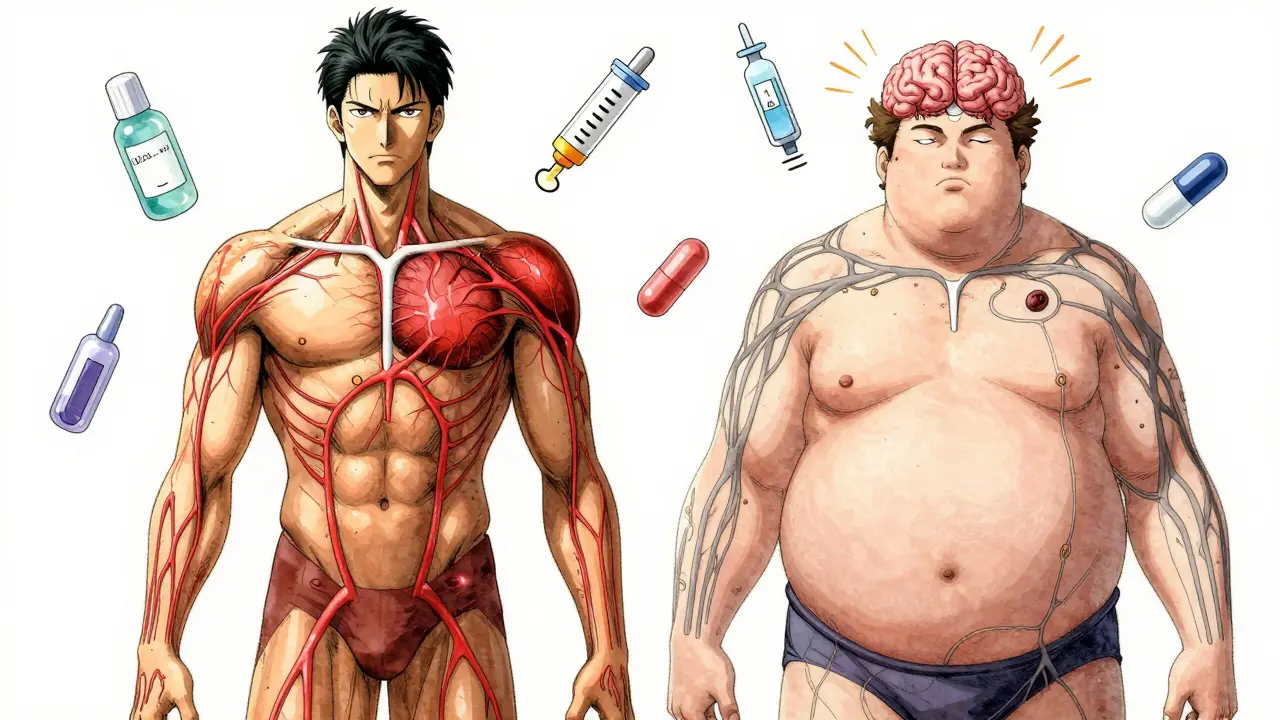
Male hypogonadism means your testes aren’t making enough testosterone. It’s not just about feeling sluggish. Testosterone affects your muscles, bones, mood, energy, sleep, and even your red blood cell count. There are two main types, and knowing which one you have changes everything about treatment.Primary hypogonadism comes from the testes themselves. Something’s broken down there - maybe due to genetics like Klinefelter syndrome, past mumps infection, or too much iron in the blood. In this case, your brain sends out more signals (LH and FSH hormones) trying to kickstart testosterone production, but the testes just don’t respond. Blood tests show high LH and FSH levels, but low testosterone.
Secondary hypogonadism is more common - making up 85-90% of cases. Here, the problem starts in the brain. The hypothalamus or pituitary gland isn’t sending the right signals to the testes. This often happens because of obesity, long-term opioid use, or a pituitary tumor. Your LH and FSH levels are low or normal, and so is testosterone. The fix? Sometimes it’s as simple as losing weight. Other times, you need hormone therapy.
What Are the Real Symptoms?
It’s easy to brush off low energy as getting older. But if you’re losing muscle without trying, gaining belly fat, and can’t get or keep an erection like you used to - it’s not normal. Here’s what real low testosterone looks like:- Reduced or absent morning erections - 78% of men with hypogonadism report this
- Libido drop - up to 85% of men notice less interest in sex
- Testicles smaller than 15 mL - measured with a simple tool called a Prader orchidometer
- Loss of lean muscle mass - 20-30% decrease over time
- Increased body fat - especially around the abdomen
- Low hemoglobin - leading to mild anemia (below 13.5 g/dL)
- Bone density loss - 33% of untreated men develop osteoporosis
- Mood changes - irritability, depression, lack of motivation
These aren’t vague feelings. They’re measurable. And they’re not always tied to age. A 40-year-old man with a BMI over 30 can have testosterone levels as low as a 70-year-old. That’s why testing matters - not just guessing.
How Is It Diagnosed?
You can’t diagnose low testosterone with a feeling. You need blood tests - and they have to be done right.The gold standard is two early morning blood draws (between 8 a.m. and 11 a.m.), because testosterone naturally peaks then. One test isn’t enough. Levels can fluctuate due to stress, illness, or sleep. The American Urological Association says low testosterone is below 300 ng/dL. But here’s the catch: some men feel fine at 280, while others are exhausted at 320. That’s why doctors look at symptoms too.
Testing also includes LH, FSH, prolactin, and hematocrit. Why? Because if LH and FSH are high, it’s a testicular problem. If they’re low, it’s brain-related. High prolactin? Could mean a pituitary tumor. High hematocrit? Could signal polycythemia - a red flag for testosterone therapy.
And don’t rely on cheap immunoassays. They give false positives 15-20% of the time. Mass spectrometry is the only accurate method. If your doctor skips this, ask why.
Treatment Options: What Works and What Doesn’t
If you’ve got confirmed low testosterone and real symptoms, testosterone replacement therapy (TRT) is the standard. But not all TRT is the same. Here’s how the main methods stack up:| Method | Dosing | Pros | Cons | Cost (Monthly) |
|---|---|---|---|---|
| Topical Gel | 5-10 g daily | Steady levels, non-invasive | Can transfer to others; skin irritation | $150-$300 |
| Injections | 200-400 mg every 2-4 weeks | Low cost, effective | Peaks and crashes; need injections | $30-$50 |
| Buccal Tablets | 30 mg twice daily | Steady release, no skin contact | Gum irritation, frequent dosing | $200-$400 |
| Subcutaneous Pellets | 150-450 mg every 3-6 months | No daily hassle, stable levels | Surgery required, $500-$1,000 per insertion | $150-$250 |
| Oral Capsules (Jatenzo) | Once daily with high-fat meal | No skin transfer, first oral option | Must be taken with fat; liver monitoring needed | $400-$600 |
For men with obesity-related hypogonadism, losing 10% of body weight can boost testosterone by 150-200 ng/dL. That’s often enough to avoid therapy altogether. Resistance training helps too - building muscle increases natural testosterone production.
But if you’ve got Klinefelter syndrome or a pituitary tumor? You’ll likely need lifelong TRT. There’s no cure - only management.
Risks and Controversies
Testosterone therapy isn’t risk-free. The FDA added a black box warning in 2015 after studies showed a 30% higher risk of heart attack in men over 65 during the first 90 days of treatment. That scared a lot of doctors. But newer research tells a different story.Dr. Abraham Morgentaler from Harvard found that properly treated men had a 30% lower death rate over time. Why? Because low testosterone is linked to heart disease, diabetes, and frailty. Fixing it might save your life.
But here’s the catch: TRT is dangerous if you have untreated prostate cancer, severe heart failure, or hematocrit above 50%. That’s why your doctor checks PSA and hematocrit every 3-6 months. Too many men get TRT without testing first - and that’s where things go wrong.
Side effects? Acne (35% of users), testicular shrinkage (25%), and polycythemia (15%) are common. Polycythemia means your blood gets too thick - you might need regular blood draws to thin it out. It’s not a reason to quit - it’s a reason to monitor.
What About the People Who Don’t Improve?
Here’s the uncomfortable truth: 30% of men on TRT report no improvement - even when their testosterone levels are normal. Why? Because their symptoms aren’t from low testosterone.Depression, sleep apnea, thyroid problems, or chronic stress can mimic hypogonadism. A man might feel tired and lose libido because he’s sleeping 4 hours a night - not because his testosterone is low. That’s why doctors now look at the whole picture. The Endocrine Society’s 2024 guidelines are shifting toward symptom-based treatment, not just numbers.
And then there’s the cost. Many men stop TRT after 2 years because it’s expensive. Gels and pellets aren’t covered well by insurance. Injections are cheap, but you need to give them yourself - and not everyone wants to. One survey showed 42% quit within two years due to burden or cost.
What’s Next for Treatment?
The future is personal. Researchers are testing SARMs - drugs that build muscle without suppressing natural testosterone. In trials, they improved muscle mass by 70% without the side effects of traditional TRT. They’re not approved yet, but they’re coming.And the TRAVERSE trial - tracking 5,000 men for 5 years - will finally tell us if TRT increases heart risks. Results are due in 2025. Until then, the best advice is simple: if you have symptoms and confirmed low levels, treatment can change your life. But don’t start it without testing. And don’t stop it without talking to your doctor.
When to See a Doctor
If you’re over 40 and notice:- Consistent low energy, even after good sleep
- Loss of muscle or unexplained weight gain
- Reduced sex drive or erectile problems
- Mood swings or depression with no clear cause
Ask for a testosterone test - done properly, in the morning, with mass spectrometry. Don’t accept a quick finger-prick or a random blood draw. And don’t let anyone push you into therapy without symptoms and two low readings.
Low testosterone isn’t a weakness. It’s a medical condition. And like any condition, it’s best managed with facts, not fear.
Betty Bomber
January 27, 2026 AT 18:08My dad went through this last year. Thought he was just getting old. Turned out his T was at 180. Started injections and now he’s gardening again, lifting weights, even took up dancing. Wild how one blood test changes everything.
Curtis Younker
January 29, 2026 AT 11:54Yo, I’ve been on TRT for 3 years now-gels at first, then switched to pellets. Life changed from ‘I need a nap after brushing my teeth’ to ‘I just ran 5K and felt alive.’ But here’s the kicker: I lost 40 lbs before starting, and my T went up 120 points on its own. So yeah, weight loss isn’t just a suggestion-it’s the first line of defense. Don’t skip the gym and the salad. Your testes will thank you.
Shawn Raja
January 30, 2026 AT 14:57So we’re treating low testosterone like it’s a glitch in the Matrix… but what if it’s just evolution saying ‘Hey, you’re 50, stop trying to be 25.’? I mean, men used to die by 50. Maybe this isn’t a disease. Maybe it’s a feature. Also, why does every article on this sound like a pharmaceutical ad? ‘Fix your manhood with this $400/month gel!’ Come on.
Ryan W
February 1, 2026 AT 10:24TRT is a scam. The FDA warning exists for a reason. Men are being manipulated into lifelong drug regimens because Big Pharma found a way to monetize aging. Testosterone isn’t a vitamin. It’s a hormone. Manipulating it without understanding the HPA axis is like tuning a Ferrari with a screwdriver. Also, your ‘mass spectrometry’ requirement? Most primary care docs don’t even know what that is. You’re not getting real care-you’re getting a sales pitch.
Henry Jenkins
February 2, 2026 AT 18:34Interesting how the article says ‘symptoms matter more than numbers’ but then lists exact percentages for everything-78% lack morning erections, 85% lose libido, 33% get osteoporosis. So which is it? Are we treating symptoms or lab values? I think the real issue is that medicine wants to reduce complex human experiences to numbers so it can bill insurance. But a man who’s tired, depressed, and shrinks his jeans isn’t a lab report. He’s a person. And he deserves to be heard before a needle goes in.
Napoleon Huere
February 4, 2026 AT 10:37What if testosterone isn’t the problem-but the solution to a problem we refuse to face? We live in a world where men are told to ‘man up’ while simultaneously being told their bodies are broken. We medicate fatigue instead of asking why we’re exhausted. We treat low libido instead of asking if we’ve lost connection-to our work, our partners, our purpose. Maybe the real hypogonadism isn’t hormonal. Maybe it’s spiritual.
Shweta Deshpande
February 4, 2026 AT 11:19As an Indian woman married to a man who went through this, I can say-this is one of the most important posts I’ve ever read. My husband thought he was failing as a man. He didn’t know it was medical. Once he got tested, he cried for an hour. Not because he was weak-but because he finally felt seen. Please, if you’re reading this and you’re a man feeling lost-go get your blood drawn. Don’t wait. Don’t be ashamed. It’s not weakness. It’s wisdom.
Aishah Bango
February 5, 2026 AT 20:00Why are we normalizing hormone therapy for men who can’t handle stress or bad sleep? This is just another way society lets men avoid accountability. If you’re lazy, eat junk, and sit all day, don’t blame your testes. Take responsibility. Fix your life. Then maybe your T will fix itself. Stop turning biology into an excuse.
Jessica Knuteson
February 7, 2026 AT 13:41TRT doesn’t fix depression. It masks it. And when the high fades, the void comes back louder. I’ve seen it. Men on testosterone become aggressive, then anxious, then addicted to the feeling. Then they’re on antidepressants. Then they’re on sleep meds. Then they’re gone. The system doesn’t care. It just keeps selling.
Robin Van Emous
February 8, 2026 AT 20:04I appreciate the science here. Really do. But I also think we need to talk about access. My cousin in rural Texas had to drive 200 miles to get a proper blood test. Insurance denied it twice. He gave up. That’s not a medical issue-it’s a justice issue. We talk about hormones like they’re a luxury. They’re not. They’re basic human biology. Everyone deserves to be checked. Not just the ones who can afford it.
Angie Thompson
February 9, 2026 AT 04:02OMG I’m so glad someone finally wrote this!! 🙌 My brother was diagnosed last year and now he’s back to coaching his kid’s soccer team and laughing again 😭 I cried when he told me he slept through the night for the first time in 10 years. Also-pellets are LIFE. No more sticky gel on your arm before date night 💪❤️
rasna saha
February 10, 2026 AT 03:57My husband started injections after his third failed sleep study. He thought it was sleep apnea-but his T was 210. Now he’s sleeping 7 hours, no CPAP. He says it’s like waking up from a 15-year nap. I just wish we’d known sooner. Don’t wait like we did. Test. Talk. Act.
James Nicoll
February 10, 2026 AT 08:15So the article says ‘don’t rely on immunoassays’-but most clinics use them because mass spec costs $150 per test. Who’s gonna pay for that? Insurance won’t cover it unless you’re over 65 and have three comorbidities. This isn’t medicine-it’s a privilege. And the real tragedy? The men who can’t afford it are the ones who need it most.
Uche Okoro
February 10, 2026 AT 20:13As a Nigerian physician, I can confirm: testosterone deficiency is grossly underdiagnosed in Africa. Men attribute fatigue to ‘spiritual attacks’ or ‘witchcraft.’ Clinics lack basic labs. When we do test, we find levels below 150 ng/dL in men as young as 35. No one talks about this. But it’s real. And it’s deadly. We need global awareness-not just American insurance debates.
Sally Dalton
February 10, 2026 AT 21:14Just wanted to say thank you for writing this. I showed it to my husband and he finally agreed to get tested. He’s been ‘just tired’ for years. I’ve been so worried. Now he’s got an appointment next week. I’m so proud of him 😊