DILI Risk Assessment Tool
Identify Potential Risk Factors
This tool helps you assess potential medication-related liver injury (DILI) risk based on your symptoms and medications.
Select Your Symptoms
Add Medications You're Taking
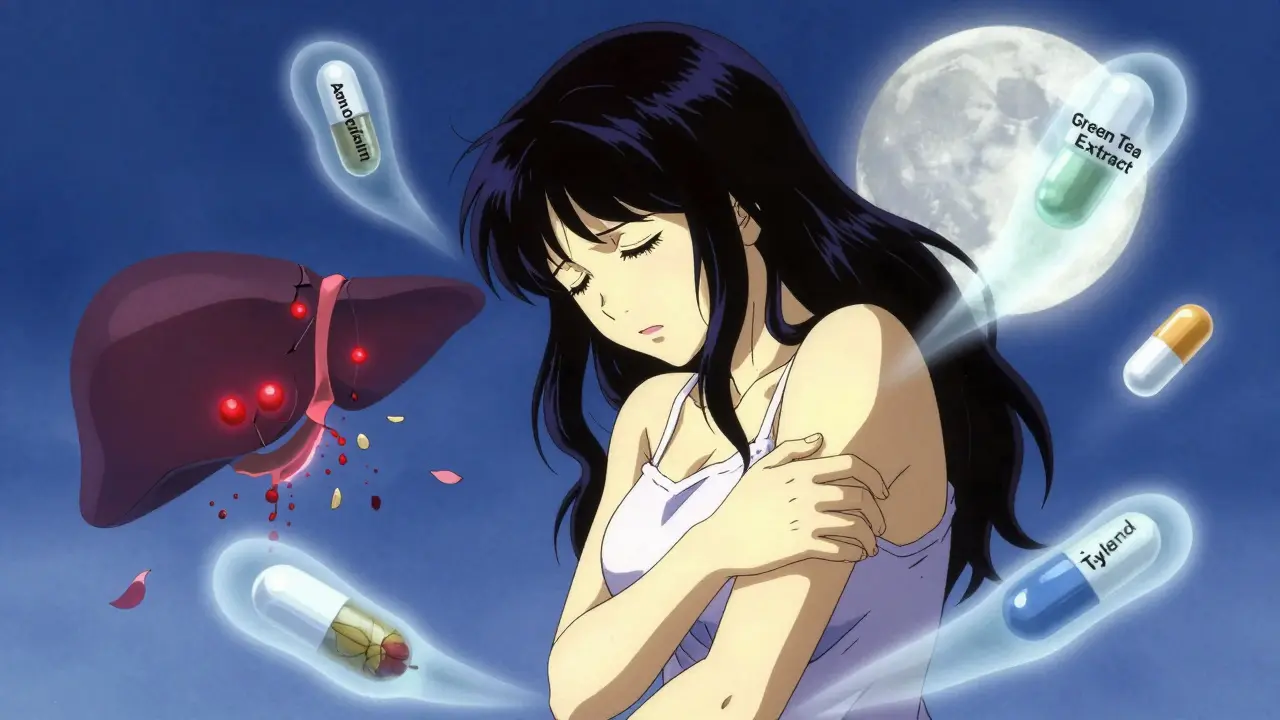
Every year, thousands of people end up in the hospital not because of a virus or bad food, but because of something they took to feel better. Prescription pills, over-the-counter painkillers, even natural supplements - any of these can quietly damage the liver. And most people don’t realize it until it’s too late.
What Exactly Is Medication-Related Liver Damage?
It’s called drug-induced liver injury, or DILI. This isn’t about alcohol or hepatitis. It’s when a medication - even one you’ve taken for years - starts attacking your liver. The liver doesn’t have pain nerves, so damage can build up without warning. By the time you feel sick, it might already be serious.
According to the Drug-Induced Liver Injury Network (DILIN), about 1 in 5,000 people in the U.S. will develop this kind of liver injury each year. Antibiotics like amoxicillin-clavulanate are the top offenders, followed by seizure meds, NSAIDs like ibuprofen, and surprisingly, herbal supplements. Green tea extract alone is linked to nearly 4 out of 10 supplement-related liver injuries in the UK.
What makes DILI so tricky is that it doesn’t look like one thing. One person might feel tired and itchy. Another might turn yellow. A third might just have nausea. There’s no single test that confirms it. Doctors have to rule out everything else - viruses, autoimmune disease, gallstones - before they can say, “This is probably the medicine.”
How Your Liver Reacts: The Three Patterns
Your liver doesn’t respond the same way to every drug. There are three main patterns doctors look for in blood tests:
- Hepatocellular injury: This means liver cells are dying. ALT levels spike above 1,000 IU/L - sometimes over 15 times normal. This is common with isoniazid (a TB drug) and acetaminophen overdose.
- Cholestatic injury: Bile flow gets blocked. Alkaline phosphatase and GGT rise sharply. This happens often with amoxicillin-clavulanate and birth control pills.
- Mixed pattern: Both cell damage and bile blockage happen together. It’s messy, but common with some antibiotics and herbal products.
These patterns help doctors guess which drug caused it. But timing matters just as much. Antibiotics usually cause problems within 1 to 8 weeks. Anticonvulsants take longer - around 6 weeks on average. Herbal supplements? They can hit you anytime - from a few days to a year after you start taking them.
The Red Flags: When to Act Immediately
Most people ignore early symptoms. They think fatigue is stress. They blame nausea on a stomach bug. But if you’ve started a new medication in the last 8 weeks and you have any of these, don’t wait:
- Yellow skin or eyes (jaundice) - this is your liver screaming for help.
- Dark urine - like cola, not tea.
- Pain under your right ribs - not just discomfort, but a constant, dull ache.
- Severe nausea or vomiting - especially if you can’t keep food down.
The American College of Gastroenterology says: if you have jaundice plus any two of those other symptoms, go to the ER. Don’t call your doctor tomorrow. Go now.
Acetaminophen (Tylenol) is the most dangerous because it moves fast. If you take too much - even just a few extra pills - your liver starts dying within hours. N-acetylcysteine, the antidote, works best if given within 8 hours. After that, every hour cuts your survival chances by 10%. The FDA recommends no more than 3,000 mg per day for healthy adults - and only 2,000 mg if you have any liver condition.
Why People Miss the Signs - And What Happens When They Do
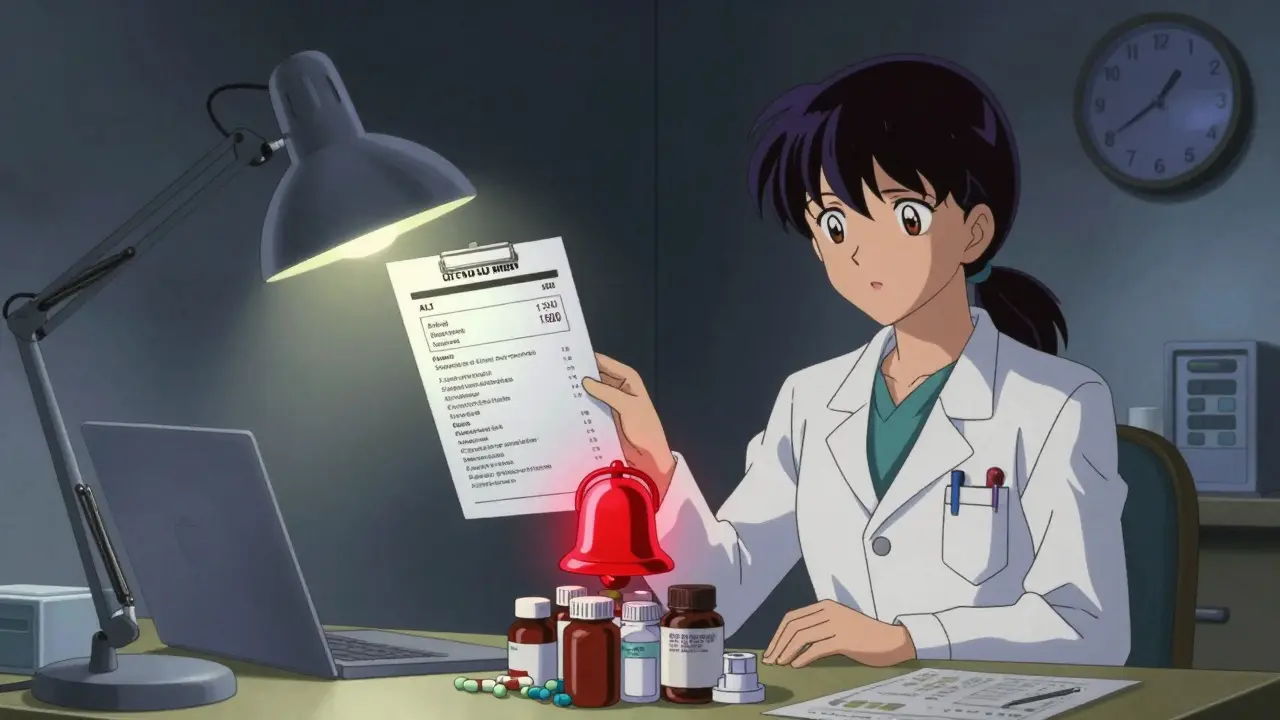
A 2023 survey by the American Liver Foundation found that nearly 7 out of 10 DILI patients were misdiagnosed at first. Doctors thought it was the flu. Or stress. Or food poisoning. One patient on Reddit said, “I had itching for two weeks on amoxicillin. My doctor said it was just an allergic reaction.” By the time his liver enzymes were 12 times normal, he was in the ICU.
Supplements are a huge blind spot. People think “natural” means safe. But the British Liver Trust reports that herbal products cause 20% of DILI cases in the UK. Kava, green tea extract, and weight-loss teas are especially risky. One man on Healthgrades took turmeric capsules for joint pain. His ALT level hit 1,500 - 30 times normal. His naturopath told him it was “detoxing.”
Alcohol makes things worse. Mixing even one drink with a hepatotoxic drug can triple or quadruple your risk. And many people don’t know their meds are risky. A 2023 study showed only 32% of patients connected their symptoms to medication without being told by a doctor.
Who’s at Highest Risk?
It’s not just the elderly or people with existing liver disease. Anyone can be affected. But some groups are more vulnerable:
- People taking multiple medications - especially antibiotics, antifungals, or antiseizure drugs
- Those using herbal supplements without telling their doctor
- Women - they’re more likely to develop cholestatic DILI
- People with the HLA-B*57:01 gene - this increases flucloxacillin liver damage risk by 80 times
- Those who drink alcohol while on meds like isoniazid or NSAIDs
Even statins - often blamed for liver issues - are rarely the real culprit. The European Association for the Study of the Liver says fewer than 1 in 10,000 users develop serious injury. But many doctors still order unnecessary liver tests because of outdated fears.
What You Can Do to Prevent It
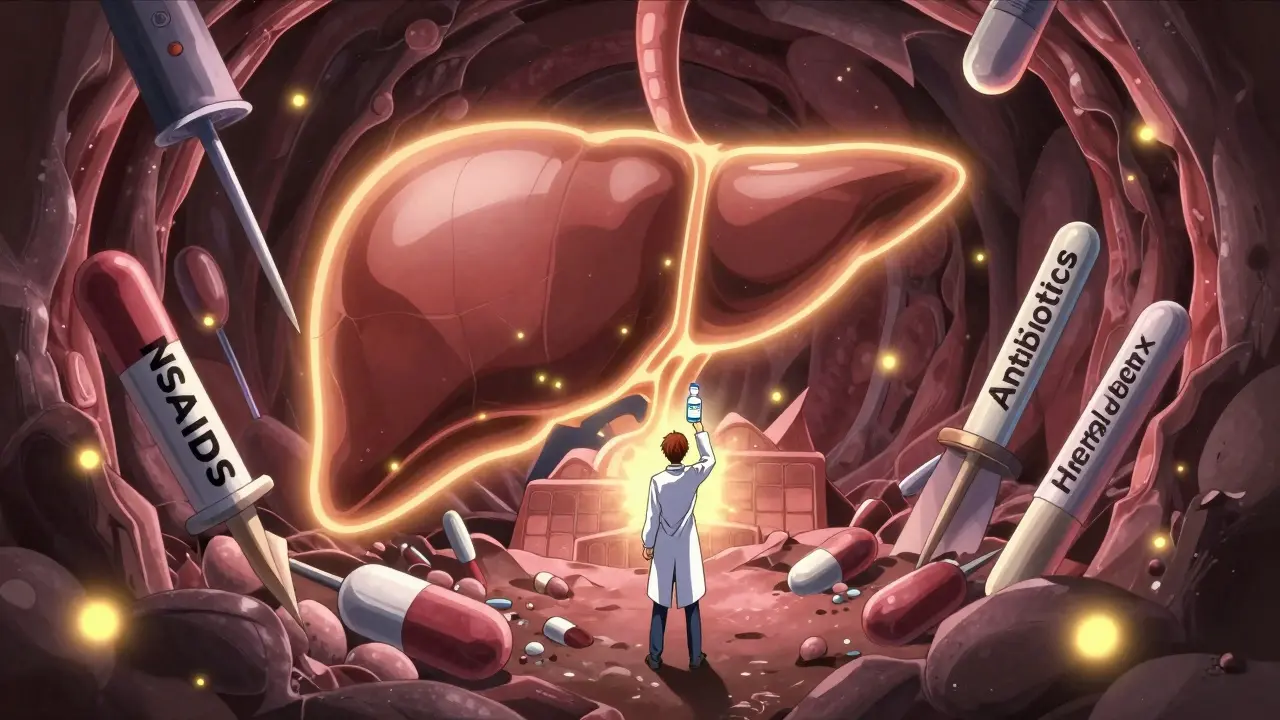
Prevention isn’t complicated. It’s about awareness and action:
- Keep a medication log. Write down every pill, supplement, and herb you take - including doses and start dates. Bring it to every appointment.
- Ask your doctor: “Can this hurt my liver?” Don’t assume they know. Only 42% of primary care doctors correctly identify high-risk drugs in tests.
- Never exceed acetaminophen limits. Check labels on cold meds - many contain hidden acetaminophen.
- Avoid alcohol with liver-risk meds. It’s not just a “maybe.” It’s a hard rule.
- Stop supplements cold if you feel off. No “detoxing” excuse. If you get jaundice or dark urine, stop everything and get tested.
For high-risk drugs like isoniazid, weekly blood tests for the first 3 months can catch problems early. Ten percent of users develop elevated enzymes - but if caught fast, the damage reverses.
The Future: New Tools and Growing Risks
There’s good news and bad news. The bad: DILI cases are rising. Between 2015 and 2022, the European Medicines Agency saw a 27% jump - mostly from unregulated supplements. By 2025, experts predict 24,000 new U.S. cases annually.
The good: New tools are emerging. The FDA approved a smartphone app called DILI-Alert that scans your meds against a database of 1,200 hepatotoxic compounds. It gives real-time risk alerts. AI systems in pilot studies have cut diagnosis time by 35%, potentially saving 1,200 lives a year.
Researchers are also testing microRNA-122, a blood biomarker that rises within hours of liver injury - way before ALT spikes. If approved, it could turn DILI from a silent killer into something we catch before it’s dangerous.
Final Takeaway: Your Liver Can’t Speak. You Have to Listen.
Medication-related liver damage doesn’t come with a warning siren. It whispers. Fatigue. Itchiness. A strange taste in your mouth. Dark pee. Then - boom - jaundice. By then, it’s often too late.
The truth? Most cases are preventable. You don’t need to avoid all meds. You just need to know the signs, track what you take, and act fast when something feels wrong. If you’ve started a new drug and your body feels off, don’t wait for it to get worse. Get your liver checked. Ask for ALT and alkaline phosphatase tests. Bring your supplement list. Push back if you’re dismissed.
Your liver doesn’t have a voice. But you do. Use it.
Can over-the-counter painkillers cause liver damage?
Yes. Acetaminophen (Tylenol) is the most common OTC drug linked to liver injury, especially when taken in excess or with alcohol. NSAIDs like ibuprofen and naproxen can also cause damage, though less often. The FDA recommends no more than 3,000 mg of acetaminophen per day for healthy adults - and only 2,000 mg if you have liver disease. Always check labels - many cold and flu meds contain hidden acetaminophen.
Are herbal supplements safe for the liver?
No - many are not. Green tea extract, kava, and weight-loss supplements like aloe vera and black cohosh have caused hundreds of liver injury cases. The British Liver Trust found herbal products cause 20% of DILI cases in the UK. Just because something is labeled “natural” doesn’t mean it’s safe. Always tell your doctor what supplements you’re taking - even if you think they’re harmless.
How long does it take for medication to damage the liver?
It varies. Antibiotics like amoxicillin-clavulanate usually cause injury within 1 to 8 weeks (average 15 days). Anticonvulsants take longer - around 6 weeks on average. Herbal supplements can cause damage anytime from a few days to over a year. Acetaminophen overdose is the exception - liver damage can begin within 24 hours and peak by 72 hours. Timing matters more than you think.
Can liver damage from medication be reversed?
Often, yes - if caught early. Stopping the offending drug is the most important step. For many people, liver enzymes return to normal within weeks. But if damage progresses to liver failure, a transplant may be needed. Studies show that 70% of severe DILI cases could be avoided with early detection. That’s why recognizing symptoms fast is critical.
Should I get my liver tested before starting a new medication?
Not always - but you should if you’re taking high-risk drugs like isoniazid, certain antibiotics, antiseizure meds, or if you have existing liver disease. For most people, baseline testing isn’t needed. But if you develop fatigue, itching, dark urine, or jaundice after starting a new drug, get tested immediately. Don’t wait for your next checkup.
What should I do if I think my medicine is hurting my liver?
Stop taking the medication immediately. Don’t wait for your doctor’s appointment. Call your provider or go to urgent care. Request blood tests for ALT, AST, alkaline phosphatase, and bilirubin. Bring your complete medication and supplement list. If you have jaundice plus any two of: dark urine, right upper pain, or vomiting - go to the ER. Time is critical.
Kim Hines
December 16, 2025 AT 16:42I started taking turmeric after my knee surgery and got really itchy for two weeks. My doctor shrugged it off as allergies. Turns out my ALT was through the roof. I didn't know supplements could do that. Now I never take anything without checking with my pharmacist.
Randolph Rickman
December 16, 2025 AT 20:55This is one of the most important posts I've read all year. Seriously. I work in urgent care and see this over and over - people come in with jaundice and swear they 'only took a few extra Tylenol' or 'a couple of those herbal energy pills.' The damage is often reversible if caught early, but most wait until they're vomiting and yellow. Please, if you're on anything new and feel off, get tested. Don't be the person who says 'I didn't think it was a big deal.' It is.
Cassandra Collins
December 17, 2025 AT 18:31They're hiding this on purpose. Big Pharma doesn't want you to know how many meds wreck your liver. That's why they push 'natural' supplements - they're not regulated, so they can profit off the damage. And don't get me started on the FDA. They're bought and paid for. They knew about green tea extract for years and did nothing. Wake up people.
Colleen Bigelow
December 18, 2025 AT 03:42Of course the government lets this happen. They'd rather you die quietly from liver failure than admit their drug approval system is a joke. And don't even get me started on how they let Chinese herbal junk flood our stores. I saw a guy on TikTok take 'weight loss tea' and end up in a coma. No one got charged. No one got punished. Just another American sacrificed for profit.
Billy Poling
December 19, 2025 AT 06:52While I appreciate the general intent of this article, I must respectfully point out that the statistical generalizations regarding the prevalence of drug-induced liver injury may be misleading in the absence of stratified data by age, comorbid conditions, and polypharmacy burden. The assertion that '1 in 5,000' individuals develop DILI annually is derived from passive surveillance systems that are notoriously underreported, particularly in outpatient populations where mild transaminitis is often dismissed as transient. Furthermore, the conflation of correlation with causation in supplement-related cases is problematic, as many patients concurrently consume alcohol, have underlying NAFLD, or have genetic polymorphisms that predispose them to hepatotoxicity, yet these confounders are rarely addressed in public discourse.
sue spark
December 19, 2025 AT 14:41I took amoxicillin for a sinus infection and got super itchy for days. I thought it was just a rash. Then I noticed my pee was dark. I didn't say anything until I turned yellow. By then I was in the ER. They said if I'd come in a day earlier I might've avoided the IV. Please listen to your body. Don't be like me.
Kitty Price
December 20, 2025 AT 00:46Thank you for writing this. I've been taking fish oil and ashwagandha for years. I never thought twice about it. Now I'm going to stop everything and get my liver checked. I'd rather be safe than sorry. 🙏
Mike Smith
December 20, 2025 AT 14:03For anyone reading this: you are not alone. Many of us have been through this silently. The key isn't fear - it's awareness. Keep a log. Ask your doctor. Stop anything that makes you feel off. And if you're unsure, get a simple blood test. It takes five minutes. It could save your life. You owe it to yourself to be proactive. Your liver doesn't complain - but you can speak for it.
Dylan Smith
December 22, 2025 AT 01:14Why do doctors still act like acetaminophen is harmless? I've seen ERs filled with people who took 8 extra pills because they 'didn't think it was that bad' - and now they're on transplant lists. It's not just Tylenol. It's every cold medicine, every sleep aid, every combo pack. Read the labels. The word 'acetaminophen' is tiny. The damage is huge. Someone needs to make the warnings bigger than the product name.
Elizabeth Bauman
December 22, 2025 AT 13:07As a former nurse, I can tell you this: the real danger isn't just the meds - it's the silence. People don't tell their doctors about supplements because they're afraid they'll be judged. But the truth? We've seen too many cases where someone took 'natural' weight loss tea and ended up in ICU. Your doctor needs to know everything. Even the 'harmless' stuff. Even the tea you drink every morning. Say it out loud. No shame. Your liver is counting on you.