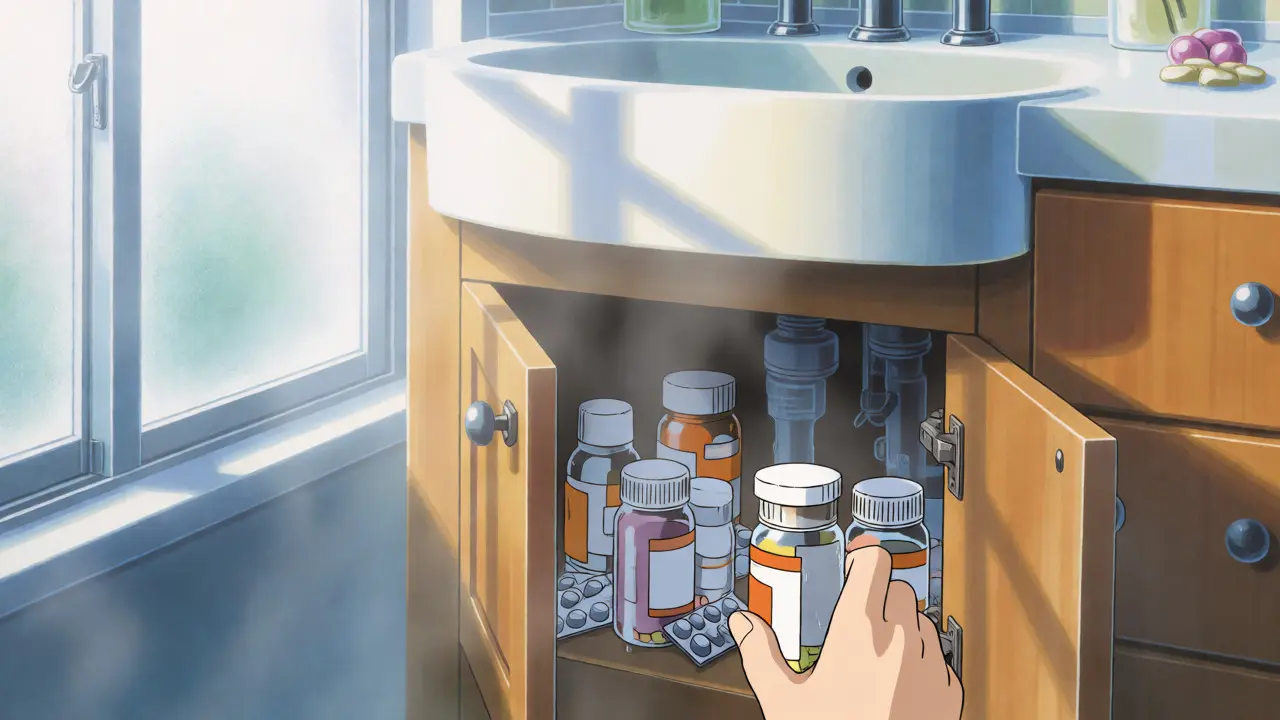
You probably have a drawer in your kitchen or bathroom that’s become a graveyard for half-used prescriptions. Maybe it’s the antibiotics you didn’t finish because you felt better too soon, or the painkillers left over after a dental procedure. It’s easy to toss them in the sink when you’re cleaning up, but doing so might be quietly poisoning our waterways. With regulations tightening globally, including the UK’s strict environmental standards and the US EPA’s Subpart P, how we handle these pills matters more than ever.
Medication storage is not just about keeping drugs out of reach of curious toddlers; it’s about preserving chemical integrity. Proper handling ensures that medications remain effective until their expiration date and prevents accidental ingestion by children or pets. Most common household medicines require a stable environment-typically between 20°C and 25°C (68°F-77°F). If you store your ibuprofen in a steamy bathroom cabinet, the humidity can break down the active ingredients before you even swallow the pill. That’s why the kitchen, away from the stove and sink, is often a better spot, provided it’s locked if you have small kids.
The Bathroom Cabinet Myth
We’ve all been there: you grab the paracetamol from under the sink while brushing your teeth. But is that actually safe? For most solid tablets and capsules, no. The fluctuating temperature and high humidity of a bathroom can degrade medication faster than you’d think. Moisture can cause tablets to crumble or change colour, signalling that they may have lost potency. While some liquids, like certain eye drops or insulin, need refrigeration (2°C-8°C), the vast majority of oral medications prefer a cool, dry place.
If you live in an older house with poor insulation, or if your bathroom lacks ventilation, consider moving your stock to a bedroom closet or a dedicated medicine box in the living area. Just remember: "cool" doesn't mean cold. Unless the label explicitly says "refrigerate," putting standard tablets in the fridge can introduce condensation every time you open the door, which is worse for stability than room temperature.
Decoding the Labels: What Actually Expires?
There’s a widespread misconception that expired medicine becomes toxic. In reality, most solid forms of medication simply lose effectiveness over time. They won’t likely hurt you, but they also won’t help you. If you’re treating a serious condition like heart disease or epilepsy, relying on degraded pills is risky. However, liquid medications are different. Antibiotic suspensions, for instance, have short shelf lives once mixed. Keeping them past their use-by date isn’t just ineffective; it can lead to bacterial growth within the bottle.
Always check the packaging for specific storage instructions. Some newer biologics and vaccines are highly sensitive to heat and light. If a package feels warm to the touch or looks discoloured, err on the side of caution and replace it. Your pharmacist is your best resource here-they can tell you exactly how long a specific formulation remains stable under home conditions.
Disposal: Why Flushing Is Usually Wrong
For decades, the advice was simple: flush unused meds down the toilet. This was done to prevent accidental ingestion, especially with opioids. But science has caught up. When you flush a tablet, it enters the sewage system. Water treatment plants aren’t designed to filter out complex pharmaceutical compounds. Consequently, traces of antidepressants, hormones, and painkillers end up in rivers and lakes, affecting aquatic life. In the US alone, the EPA estimates that improper disposal contributes to roughly 247 million pounds of pharmaceuticals entering waterways annually.
So, should you never flush anything? Not quite. The FDA maintains a specific "flush list" for medications that pose a high risk of fatal overdose if accidentally ingested by children or pets. These include certain strong opioids like fentanyl patches and morphine. If you have one of these and no immediate take-back option, flushing is safer than leaving it on the counter. For everything else, though, the toilet is off-limits.

The Best Way to Dispose at Home
If you don’t have access to a collection site, the FDA recommends a specific method for disposing of most non-controlled medications in the trash. It takes about five minutes per batch and significantly reduces environmental contamination compared to flushing.
- Mix: Take the medication out of its original container. Mix it with an unappealing substance like used coffee grounds, cat litter, or dirt. Do not crush tablets or capsules unless instructed; mixing them whole is usually sufficient.
- Seal: Place the mixture in a sealable plastic bag or a sturdy container with a lid. This prevents animals from digging through the trash and getting into the meds.
- Scrub: Scratch out or remove any personal information from the original prescription labels to protect your privacy.
- Toss: Throw the sealed bag/container in your regular household trash.
This method keeps the drugs contained until they reach a landfill, where they are less likely to leach directly into local water sources immediately. It’s a simple step that makes a tangible difference.
Take-Back Programs: The Gold Standard
While the trash method works, the absolute best way to dispose of medications is through a drug take-back program. These programs allow you to drop off unused or expired meds at designated locations, such as pharmacies, hospitals, or police stations. The DEA National Take Back Initiative has collected over 14 million pounds of medications since 2010, proving that people want to do the right thing when given an easy option.
In the UK, many community pharmacies offer take-back services, though availability varies. You should call ahead to confirm. For controlled substances (like codeine or tramadol), take-back is not just recommended; it’s often legally required to prevent diversion. Never put controlled substances in your household trash unless local regulations explicitly permit it and you’ve followed the mixing protocol strictly. Even then, take-back is preferred.
Special Cases: Patches and Liquids
Not all medications come in pills. Transdermal patches, like those for nicotine or pain management, retain significant amounts of active drug even after use. Used patches must be folded in half with the sticky sides together and disposed of carefully. Ideally, return them to a pharmacy for proper incineration. If you must throw them away, ensure they are folded securely so pets or children can’t peel them apart.
Liquid medications present another challenge. Pouring leftover syrup down the drain is generally discouraged due to volume and concentration issues. Instead, mix liquids with an absorbent material like kitty litter or sawdust in a sealed bag before trashing them. Aerosols, like inhalers, require special care. Do not puncture or incinerate them yourself; bring them to a hazardous waste facility or a pharmacy that accepts them.

Healthcare Facilities vs. Home Users
If you work in healthcare, the rules are stricter. Regulations like the EPA’s Subpart P prohibit healthcare facilities from sending hazardous pharmaceutical waste down the sewer. Facilities must segregate waste into hazardous and non-hazardous streams. Hazardous waste, which includes things like chemotherapy agents and certain antimicrobials, requires specialized incineration. Non-hazardous waste can sometimes go to landfills, but documentation is key. Healthcare providers must maintain destruction records for at least three years.
Confusion is common among staff. A study by the American Nurses Foundation found that 42% of nurses were unsure about proper disposal methods. Training is essential. Staff need to know which drugs are considered "hazardous" versus "non-hazardous" and understand that controlled substances have their own separate pathway involving witnessed destruction and specific logging.
Environmental Impact and Future Trends
The push for better disposal isn’t just bureaucratic red tape; it’s driven by ecological necessity. Pharmaceuticals are persistent pollutants. Studies have shown that fish exposed to low levels of antidepressants exhibit altered behaviour, becoming less cautious around predators. Hormonal contraceptives can affect the reproductive cycles of aquatic species. By using take-back programs or the trash-mix method, you reduce the load on our water systems.
Looking ahead, technology is improving disposal. Smart kiosks are being piloted in hospitals and pharmacies, allowing users to scan barcodes and route medications to the correct waste stream automatically. Additionally, there is growing pressure for "producer responsibility," where manufacturers fund the collection and disposal of their products. This could make take-back options more accessible and free for consumers in the near future.
| Method | Best For | Environmental Impact | Convenience |
|---|---|---|---|
| Take-Back Program | All medications, especially controlled substances | Lowest (incineration) | Medium (requires trip) |
| Trash (Mix Method) | Non-controlled, non-hazardous meds | Low-Medium (landfill) | High (at home) |
| Flushing | Only FDA-approved flush list items | High (water contamination) | High (instant) |
| Hazmat Facility | Aerosols, large quantities, hazardous waste | Lowest (specialized treatment) | Low (limited hours) |
Common Pitfalls to Avoid
Even well-meaning people make mistakes. One big error is assuming that "natural" supplements don’t count. Vitamins and herbal remedies still contain active compounds that can disrupt ecosystems if dumped in bulk. Another mistake is ignoring pet medications. Flea treatments and heartworm pills are potent drugs. Keep them stored separately from human meds to avoid dosing errors, and dispose of them via take-back if possible.
Also, don’t hoard. Many people keep old prescriptions "just in case." This leads to clutter and potential confusion. If a doctor hasn’t prescribed it recently, and it’s not part of your emergency kit, let it go. Regularly audit your medicine cabinet-twice a year is a good rule of thumb-to clear out expired items and update your inventory.
Can I put expired medication in the recycling bin?
No, you should never put medication in the recycling bin. Recycling facilities are not equipped to handle pharmaceutical residues, and the chemicals can contaminate entire batches of recyclables. Always dispose of medication in the trash (using the mix method) or through a take-back program.
Is it safe to store medication in the refrigerator?
Only if the label specifically says "Refrigerate." Most medications should be stored at room temperature. Putting non-refrigerated meds in the fridge can cause moisture buildup, which degrades the drug. Conversely, never freeze medication unless instructed, as freezing can alter its chemical structure.
What happens if I accidentally flush a non-flush-list medication?
Don’t panic. One-time accidental flushing won’t ruin the ecosystem. However, habitual flushing of non-approved meds contributes to water pollution. Make sure to switch to the trash-mix method or find a take-back location for future disposals.
How do I dispose of controlled substances like codeine?
Controlled substances should ideally be returned to a pharmacy or law enforcement take-back event. If you cannot access these options, follow the FDA’s trash-mix method strictly, ensuring the container is sealed tightly to prevent access by others. Check local laws, as some regions mandate take-back for controlled drugs.
Do I need to remove the cap before storing medication?
No, always keep the cap on tightly. Removing the cap exposes the medication to air and moisture, accelerating degradation. Ensure the child-resistant cap is fully engaged to maintain safety and stability.
Marshall Stephens
August 31, 2026 AT 12:49Great breakdown of the bathroom cabinet myth. I always assumed humidity was the enemy, but seeing the specific temperature ranges really clarifies why my ibuprofen used to crumble.
It’s reassuring to know that most expired meds just lose potency rather than turning toxic, though I’ll definitely be more careful with liquid antibiotics going forward.
Akeem Feiton
September 2, 2026 AT 07:31FINALLY someone admits what we’ve known for decades!! The EPA and these bloated bureaucracies have been pushing this "take back" nonsense to justify their budgets while ignoring REAL environmental killers like industrial runoff from our OWN factories!!!
We flush pills because WE want to, not because some suit in DC says so!!! My grandfather flushed everything and the fish were fine!!! This is just another way to control the American household and make us dependent on their little collection sites!!! Wake up people!!!
Kristina Rhodes
September 2, 2026 AT 07:43It is fascinating how our relationship with objects reflects our internal state. We hoard medication as a hedge against future vulnerability, yet the act of disposal becomes a moral dilemma about our impact on the unseen world.
Perhaps the true challenge isn't technical, but philosophical: are we willing to accept the impermanence of health and let go of the physical tokens of past illnesses? It’s a gentle reminder that stewardship extends beyond our own bodies to the ecosystems that sustain them. A lovely, if slightly melancholic, perspective on daily hygiene.
Crystal Torres
September 3, 2026 AT 14:48I found the section on controlled substances particularly informative. In my experience working in community health, the distinction between hazardous and non-hazardous waste is often blurred by staff confusion.
The statistic regarding nurses' uncertainty highlights a critical training gap. Do you believe standardized national guidelines would resolve this, or does local regulation inevitably create necessary variations?
Lolo Del
September 4, 2026 AT 13:21You’re missing the obvious here. If you buy generic meds, they degrade faster anyway due to cheaper binders. Store them in the fridge regardless of the label. Trust me, I’ve seen enough pharmacy counters to know the difference.
Also, never mix with coffee grounds. Coffee oils react with certain compounds. Use kitty litter only. Simple rule.
Stephen Horn
September 5, 2026 AT 22:20The assertion that water treatment plants cannot filter pharmaceuticals is a convenient narrative for those who wish to obscure the capabilities of modern reverse osmosis systems. One must consider the possibility that the push for take-back programs serves primarily to centralize data on consumer habits rather than purely ecological concerns.
Furthermore, the FDA's 'flush list' seems arbitrarily determined. Why is fentanyl singled out while other potent neurotoxins remain subject to landfill protocols? There is an underlying logic here that favors corporate liability management over genuine public health optimization. We should scrutinize the funding sources behind these recommendations.
Gurjit Singh
September 6, 2026 AT 18:48It is a matter of personal responsibility. In India, we do not have the luxury of such extensive take-back infrastructure, so we manage carefully at home. Flushing is indeed wrong for most items.
However, one must also consider the economic aspect. Discarding unused medication is a waste of money that could have been saved by better adherence to prescriptions. We should focus on finishing courses properly rather than worrying about disposal methods after the fact. Proper discipline prevents the problem at its source.
hareesh kumar
September 7, 2026 AT 21:07Wait a minute... are we sure the water treatment plants aren't actually filtering it perfectly well and the whole thing is a distraction?? Because i read somewhere that the chemicals break down naturally in sunlight and soil anyway so maybe the landfills are actually BETTER because the drugs get buried and don't circulate in the water table where the fish can taste them?? And also why did they mention UK standards first when the US has stricter laws sometimes?? It feels like they are trying to align us with European regulations which might be too cautious and thus expensive for normal people who just want to throw away a headache pill without driving 20 miles to a police station!! Also my neighbor threw his old insulin in the trash and nothing happened to his dog so maybe the warning labels are just for liability?? I feel like there is more to this story that they are not telling us about the actual chemical half-lives in different types of soil pH levels!!
Venkatesan V.K.
September 9, 2026 AT 04:14The article is competent but lacks depth regarding the specific chemical interactions in landfills. It assumes a uniform degradation process that simply does not exist across all drug classes. Furthermore, the emotional appeal to 'aquatic life' ignores the human cost of implementing these strict disposal protocols for low-income households who lack transportation to take-back sites. It is a privileged perspective.
Marc-David Mayer
September 10, 2026 AT 07:09This is such a helpful guide! 🌟 I learned so much today. Especially the part about not putting meds in the fridge unless labeled. I had no idea condensation was bad! 💧
Keep up the great work! You’re helping so many people stay safe and eco-friendly! 👏🌍💊
Stuart Lorne
September 11, 2026 AT 01:25look honestly this is basic stuff everyone knows except idiots who leave meds in the car. but whatever nice job summarizing wikipedia
also why is nobody talking about the cost of these take back programs who pays for it tax payers right so we already paid for the drug now we pay to remove it double dip scam imo
Anderson Miller
September 11, 2026 AT 15:44Look, I get it. We love rules. But let's be real. The idea that your single paracetamol tablet is ruining the ecosystem is... optimistic?
But hey, if mixing it with cat litter makes you feel like a good citizen, go for it. Just don't judge the guy who flushes his aspirin because he lives in an apartment with no trash chute. Life is hard. Rules are arbitrary. But sure, follow the guide. It won't hurt. Probably.
Kimberly Thomas
September 12, 2026 AT 10:39Your advice on storing meds in the kitchen away from the stove is risky. What if you have a gas leak or a fire? That’s worse than humidity.
And frankly, if you’re keeping meds until they expire, you’re probably not taking care of your health properly. Most people should see a doctor regularly instead of hoarding leftovers. Your entire premise relies on poor medical adherence.