Diphenhydramine Risk Assessment Tool
Your Risk Assessment
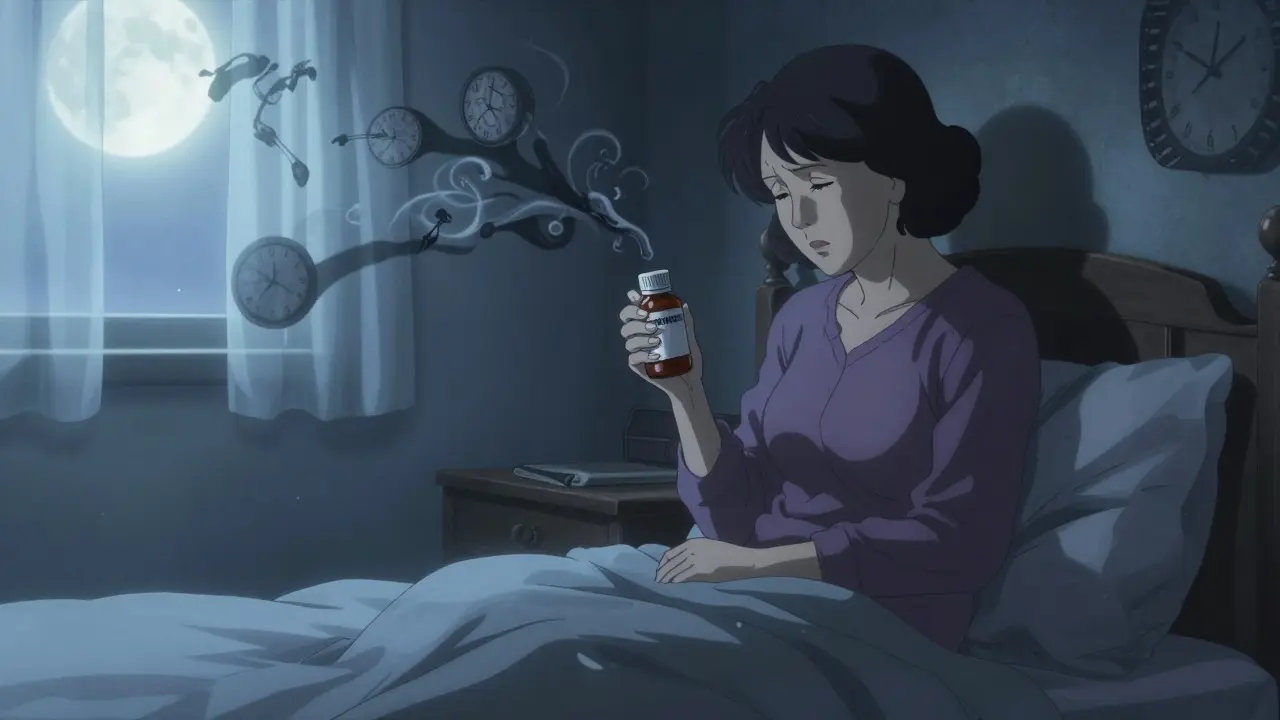
Millions of people reach for diphenhydramine every night-whether it’s Benadryl, Unisom, or ZzzQuil-thinking it’s a harmless way to fall asleep. It’s cheap, easy to find, and works fast. But here’s the truth: diphenhydramine isn’t a sleep solution. It’s a sedative with serious, long-term risks that most users never see coming.
How Diphenhydramine Actually Works (And Why It’s Not Sleep)
Diphenhydramine is an antihistamine, not a sleep drug. It was designed to fight allergies, not insomnia. When you take it, it blocks histamine in your brain-chemicals that keep you awake. That’s why you feel drowsy. But this isn’t natural sleep. Your brain isn’t cycling through restorative stages like deep sleep or REM. You’re just chemically knocked out.
That’s why you wake up feeling groggy. Diphenhydramine has a long half-life-up to 18 hours in older adults. That means it’s still in your system the next day. A 2021 study found 68% of users had impaired thinking, memory, and reaction time the morning after taking it. That’s worse than having a blood alcohol level of 0.10%-above the legal driving limit in every U.S. state.
The Hidden Dangers You’re Not Being Told
Most people think side effects mean a dry mouth or dizziness. Those are the mild ones. The real risks are quiet, slow, and dangerous.
- Increased dementia risk: A 2024 Johns Hopkins study tracking adults over 65 found that long-term use of diphenhydramine raised dementia risk by 54%. This isn’t speculation-it’s backed by seven years of data. Diphenhydramine is a strong anticholinergic, meaning it blocks acetylcholine, a brain chemical critical for memory and learning.
- Urinary problems: For men over 65 with prostate issues, diphenhydramine can cause sudden, painful urinary retention. One study found 8.2% of these users couldn’t urinate after taking it.
- Falls and accidents: Dizziness and next-day grogginess lead to falls. WebMD user reports show 43% of seniors on diphenhydramine had falls or accidents linked to drowsiness.
- Psychiatric reactions: The FDA now requires labels warning of hallucinations, confusion, and severe nervousness-especially in children and older adults. There were 127 reported seizure cases in kids under 12 between 2019 and 2023.
And here’s the kicker: it stops working. After just seven days of regular use, 68% of users say it doesn’t help anymore. That’s tolerance. Your body adapts. You take more. You get more side effects. It’s a trap.
Who’s Using It-and Why They Shouldn’t
Surprisingly, 19% of adults over 65 use diphenhydramine for sleep. That’s nearly one in five. Meanwhile, only 6% of adults under 35 use it. That’s backwards. The older you are, the more dangerous it is.
Why? Because older bodies process it slower. The half-life jumps from 4 hours in teens to 18 hours in seniors. That means the drug lingers, poisoning the brain with anticholinergic effects. The European Medicines Agency and the FDA both now recommend avoiding diphenhydramine in people over 65. Yet, it’s still on pharmacy shelves, marketed as a simple fix.
And it’s not just seniors. Young adults who use it regularly report next-day brain fog, poor focus at work, and trouble remembering things. It’s not a quick fix-it’s a slow decline.
What Actually Works for Sleep (Without the Risk)
If diphenhydramine isn’t the answer, what is? Here are real, science-backed alternatives.
Melatonin: The Gentle Reset
Melatonin isn’t a sedative. It’s your body’s natural sleep signal. Taking 1 to 5 mg about an hour before bed helps shift your internal clock. A 2023 meta-analysis showed it’s effective for sleep onset in 62% of users-with almost no next-day grogginess. It’s safe for short-term use, even in older adults. No dementia risk. No urinary issues. No impaired driving.
Cognitive Behavioral Therapy for Insomnia (CBT-I)
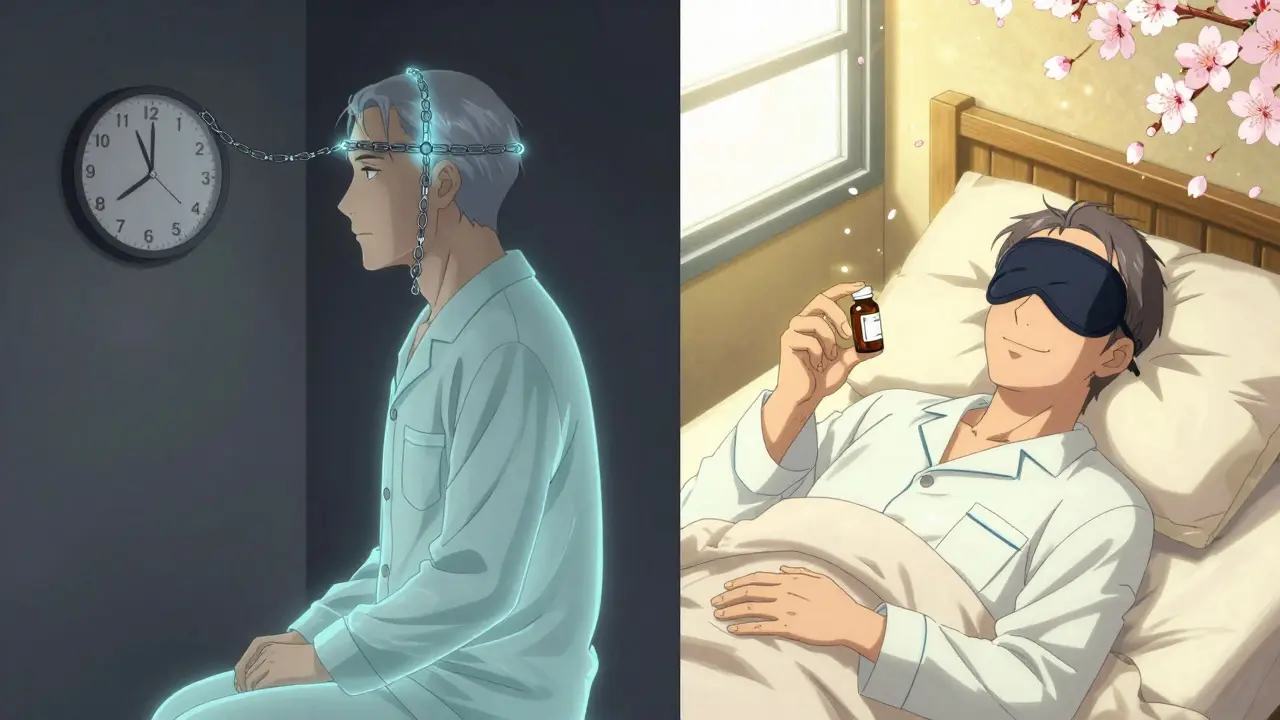
This is the gold standard. Not a pill. Not a supplement. A structured program that rewires how you think about sleep. It teaches you to break the cycle of lying awake, stressing about sleep, and then trying harder to force it. Studies show CBT-I works for 70-80% of people-and the results last for years. The American Academy of Sleep Medicine calls it the first-line treatment for chronic insomnia. And it’s covered by many insurance plans now.
Prescription Options (When Needed)
If melatonin and CBT-I don’t help, there are safer prescription choices. Zolpidem (Ambien) or zaleplon (Sonata) are short-acting and have lower risk of dependence than older sedatives. But they’re meant for short-term use-no more than a few weeks. Always under a doctor’s supervision.
Non-Drug Fixes That Actually Help
- Fix your light exposure: Get bright sunlight in the morning. Avoid screens 90 minutes before bed. Blue light kills melatonin production.
- Keep a consistent schedule: Go to bed and wake up at the same time-even on weekends.
- Lower your room temperature: The ideal sleep temperature is between 60-67°F. Your body needs to drop its core temperature to fall asleep.
- Limit caffeine after 2 p.m.: Even if you think you can sleep through it, caffeine blocks sleep pressure for up to 10 hours.
Why the Market Keeps Selling It
Diphenhydramine sleep aids made $275 million in the U.S. in 2023. That’s a lot of money. Companies don’t stop selling something just because it’s risky. They just add bigger warnings. The FDA required labels to say “may cause confusion and hallucinations.” But most people don’t read the fine print.
Meanwhile, melatonin sales jumped 22% in 2023. People are waking up to the truth: if something makes you feel like you’ve been hit by a truck the next day, it’s not sleep. It’s sedation.

What to Do Right Now
If you’re taking diphenhydramine for sleep:
- Stop using it after 14 days. The label says it’s only for occasional use. Most people ignore this. Don’t.
- Try melatonin. Start with 1 mg, 30 minutes before bed. If that doesn’t help, try 2-3 mg.
- See a sleep specialist. If you’ve had trouble sleeping for more than three weeks, you have insomnia. It’s treatable. And it’s not your fault.
- Track your sleep. Use a simple journal: bedtime, wake time, how you felt in the morning. Patterns will show up.
You don’t need a pill to sleep. You need a routine, a calm mind, and a body that knows it’s time to rest. Diphenhydramine might get you there fast-but it’s stealing something bigger: your brain’s health, your safety, your future.
Is diphenhydramine safe for seniors?
No. For adults over 65, diphenhydramine is considered unsafe by the FDA, European Medicines Agency, and the American Academy of Sleep Medicine. It significantly increases the risk of dementia, falls, confusion, urinary retention, and dangerous drug interactions. Safer alternatives like melatonin or CBT-I are strongly recommended instead.
How long does diphenhydramine stay in your system?
It varies by age. In young adults, it clears in about 6-8 hours. In people over 65, it can stay in the body for up to 18 hours. That’s why next-day drowsiness and impaired function are so common in older users. The drug doesn’t wear off cleanly-it lingers, affecting coordination, memory, and alertness the next day.
Can you become addicted to diphenhydramine for sleep?
Not in the classic sense like opioids or benzodiazepines. But you can develop tolerance quickly-within a week. That means you need more to get the same effect. Many users end up taking higher doses or combining it with alcohol or other sedatives, which increases overdose risk. It’s not addiction-it’s dependence built on diminishing returns.
Is melatonin better than diphenhydramine?
Yes, for most people. Melatonin helps regulate your sleep-wake cycle without sedating your brain. It has minimal side effects, no next-day grogginess, and no dementia risk. It’s not a magic pill, but it’s far safer and more natural than diphenhydramine. Studies show it works for sleep onset in over 60% of users.
What’s the best non-drug way to fix insomnia?
Cognitive Behavioral Therapy for Insomnia (CBT-I) is the most effective treatment, backed by decades of research. It teaches you to change the thoughts and behaviors that keep you awake. Unlike pills, its effects last for years. Many insurance plans cover it now, and online programs are just as effective as in-person sessions.
Final Thought: Sleep Isn’t a Problem to Fix-It’s a Habit to Restore
You don’t need a chemical to sleep. You need consistency, calm, and a little patience. Diphenhydramine gives you a shortcut-but shortcuts like this cost you more than you realize. Your brain remembers. Your body remembers. And over time, those costs show up as memory lapses, falls, confusion, or worse.
If you’re tired of being tired, don’t reach for the bottle. Reach for a routine. Talk to a doctor. Try melatonin. Try CBT-I. Your future self will thank you.
Jaden Green
February 2, 2026 AT 06:19Look, I get it-everyone’s jumping on the ‘diphenhydramine is evil’ bandwagon like it’s the latest TikTok trend. But let’s be real: if you’ve been sleeping poorly for years and this is the only thing that gets you through the night, who are we to judge? The science is scary, sure, but so is waking up at 3 a.m. every day for a decade. I’ve been on it for five years. I’m 62. I haven’t fallen once. I don’t have dementia. I just have a body that refuses to shut off without chemical help. Maybe the risks are real, but so is the relief. And for some of us, relief is worth the slow burn.
Also, CBT-I sounds great in theory, but try telling that to someone who’s been lying awake for 12 years while their partner snores like a chainsaw. You don’t just ‘rewire your brain’ when your nervous system has been fried by stress, shift work, and bad coffee.
So yeah, melatonin’s fine. But don’t act like it’s a miracle cure for everyone. It’s not. It’s just less toxic. And sometimes, that’s not enough.
Also, the FDA? They banned ephedrine and then let melatonin sit on shelves like candy. Priorities, people.
Angel Fitzpatrick
February 3, 2026 AT 20:52Let me tell you what they don’t want you to know: diphenhydramine was never meant for sleep. It was weaponized by Big Pharma after they realized anticholinergics could be repackaged as ‘over-the-counter solutions’ while quietly eroding the cognitive function of the elderly population. Why? Because if you’re confused, forgetful, and groggy, you’re less likely to question your prescriptions, your bills, your living situation. It’s not an accident. It’s a system.
And melatonin? That’s a Trojan horse. It’s synthetic, patented, and sold in 10mg doses that would make a lab rat throw up. The real solution? Darkness. Cold rooms. No screens. But who profits from that? No one. So they sell you pills wrapped in ‘natural’ branding. It’s the same playbook as cigarettes in the ‘50s. Wake up.
Also-have you noticed how every ‘sleep expert’ on YouTube has a merch store? Coincidence? I think not.
Nidhi Rajpara
February 4, 2026 AT 05:06Dear author, your article is exceptionally well-researched and meticulously structured. I appreciate the inclusion of peer-reviewed studies from Johns Hopkins and the FDA warnings. However, I must point out a minor grammatical inconsistency on page three: ‘You’re just chemically knocked out.’ should be ‘You are just chemically knocked out.’ for formal academic tone. Also, the term ‘brain fog’ is colloquial and lacks clinical precision-consider replacing it with ‘cognitive impairment’ or ‘executive dysfunction.’
Nonetheless, your call to action regarding CBT-I is commendable. I shall share this with my elderly patients in Mumbai, many of whom self-medicate with Unisom due to lack of access to specialists. Thank you for your diligence.
Chris & Kara Cutler
February 6, 2026 AT 02:51YES. THIS. 🙌 I was on Benadryl for 3 years. Woke up like a zombie. Then I tried 1mg melatonin + 10 min of sunlight in the morning. 3 days later-I slept like a baby. No grogginess. No panic. Just peace. 🌙✨ You don’t need drugs. You need rhythm. Start small. You got this!
Donna Macaranas
February 6, 2026 AT 18:16I’ve been reading this whole thing and I just… feel seen. I’m 58 and started taking ZzzQuil after my husband passed. Thought it was harmless. Turns out I was just numbing myself to grief and pretending it was sleep. I tried melatonin last month-didn’t work at first. But I kept going. Now I read in bed, turn off the lights at 10, and just… let go. No pills. No guilt. It’s not perfect, but it’s mine again. Thank you for saying this out loud.
Rachel Liew
February 8, 2026 AT 02:40my mom took this for years and never told anyone. she said it was the only thing that let her rest after her chemo. i didn’t know about the dementia risk until now. i’m taking her to a sleep doc next week. thank you for writing this. i think it could save lives.
Nicki Aries
February 8, 2026 AT 18:54Let me be the first to say this: if you’re still using diphenhydramine, you’re not lazy-you’re desperate. And the fact that a $275 million industry profits off your desperation is not just unethical-it’s criminal. The FDA’s warning labels are buried in 8-point font. The commercials show smiling grandparents dancing in their pajamas. Meanwhile, their grandchildren are cleaning up the cognitive wreckage.
And don’t even get me started on the ‘natural’ melatonin brands that contain unregulated fillers, synthetic additives, and sometimes even serotonin analogs. You think you’re being safe? You’re just playing Russian roulette with your hippocampus.
CBT-I is the answer. But only if you can afford it. Only if your insurance covers it. Only if you’re not working two jobs and living in a 95-degree apartment with no AC. So yes-melatonin helps. But the real fix? A society that doesn’t treat sleep like a luxury. That’s the revolution we need.
franklin hillary
February 9, 2026 AT 06:30Stop thinking of sleep as something you need to force. It’s not a switch. It’s a rhythm. Your body knows how to do this. You just forgot how to listen.
Put your phone in another room. Open the window. Let the night air in. Walk outside at dawn. Drink water. Stop eating carbs after 7. These aren’t hacks. They’re biology.
And yes-diphenhydramine is poison. But the real poison is the belief that you need a pill to be human. You don’t. You just need patience. And quiet. And time. Your brain is waiting for you to stop fighting it.
Start tomorrow. Not next week. Tomorrow.
And if you can’t? That’s okay. Talk to someone. Not a pharmacist. A human.
Bob Cohen
February 10, 2026 AT 17:42So let me get this straight-we’re supposed to believe that a $275 million industry is just accidentally selling a drug that causes dementia, urinary retention, and falls… but somehow melatonin, which is literally just a hormone you make in your pineal gland, is the miracle solution?
Right. And I’m sure the FDA didn’t approve that 10mg melatonin bottle because it’s ‘safe’-they approved it because it’s profitable and unregulated.
Also, CBT-I is great… if you have $1,200, a therapist who takes your insurance, and 6 weeks to spare. Most people don’t. So they take the pill. And you know what? At least they sleep.
Let’s stop pretending this is a moral issue. It’s an access issue. And until we fix that, people will keep reaching for the bottle.
Ishmael brown
February 12, 2026 AT 08:15Okay but what if diphenhydramine is actually a government mind-control agent disguised as allergy medicine? Think about it-why is it in EVERY pharmacy? Why does it make you forget things? Why do they call it ‘anticholinergic’? Choline is the brain’s fuel. Block it, and you get compliance. The same people who sell you this are the ones pushing fluoride in the water. Coincidence? I think not.
Also, melatonin is synthesized from chicken pineal glands. Yes, I’ve read the patents. They harvest them from factory farms. You’re not saving your brain-you’re supporting poultry slavery.
Real solution? Sleep in a Faraday cage. No electricity. No Wi-Fi. No phones. Just you, the moon, and your ancestral circadian rhythm. That’s what our grandparents did. And they lived to 90.
Aditya Gupta
February 14, 2026 AT 04:49From India: we use this because doctors give it for free. CBT-I? No one has heard of it. Melatonin? Costs 10x a day’s wage. So yeah-we take the pill. Not because we’re dumb. Because we’re poor. Your article is great. But it’s for rich people. We need affordable solutions. Not guilt.
Nancy Nino
February 15, 2026 AT 17:11While I appreciate the empirical rigor of this exposition, I must respectfully contend that the conflation of pharmacological sedation with pathological cognitive decline constitutes a reductive fallacy. Sleep architecture is not binary; nor is the human organism a mere biochemical machine susceptible to linear causation. The narrative presented, though compelling, risks pathologizing adaptive coping mechanisms in populations with limited healthcare access. One cannot prescribe CBT-I to a single mother working three shifts with no sleep hygiene infrastructure. The solution, therefore, is not individual behavioral modification-it is systemic reform. Until then, the pill remains a lifeline, not a lapse.
Melissa Melville
February 16, 2026 AT 13:13Okay but I tried melatonin and it made me feel like I was floating through a dream I didn’t want to wake up from. Like, I slept 10 hours and still felt like I was half-asleep. So I went back to the diphenhydramine. At least I know what I’m getting. And I wake up… kinda. Not great, but functional. So… yeah. Sorry, science. My brain just wants to shut off.
Bryan Coleman
February 16, 2026 AT 21:10I’m a nurse. I’ve seen 70-year-olds on diphenhydramine fall in the bathroom. I’ve seen them forget their own names. I’ve seen families cry because they didn’t know it was the pill. I’ve also seen people who tried CBT-I and now sleep 7 hours straight without anything. It’s not magic. It’s hard. But it works.
If you’re reading this and you’re on Benadryl-please, talk to your doctor. Not your pharmacist. Not your cousin. A real sleep specialist. You deserve better than this.
Sami Sahil
February 17, 2026 AT 07:20my cousin took this for 10 years. last year he got diagnosed with early dementia. doctor said it was likely the meds. now he does yoga and walks at 6am. sleeps like a baby. no pills. just routine. i’m doing the same. you can too. start small. one day at a time. 💪🌙
Jaden Green
February 18, 2026 AT 21:06Re: Bryan Coleman’s comment-thank you. That’s exactly what I needed to hear. I’ve been too scared to talk to my doctor because I felt ashamed. But you’re right-it’s not weakness. It’s a medical issue. I’m booking an appointment tomorrow. I think… I think I can do this without the pill.