
OIC Treatment Pathway Advisor
How long have you been experiencing constipation?
Select the option that best describes your situation:
I haven't started taking opioids yet, or I just started within the last few days
Occasional missed bowel movements, mild discomfort
Going 2-3 days between movements, noticeable straining
Frequent missed movements, significant discomfort, OTC meds not working
What treatments have you tried so far?
Select all that apply:
Are you currently experiencing these symptoms?
Select all that apply:
Important Safety Questions
Please answer honestly for accurate recommendations:
Including any diagnosed blockages or severe narrowing
Any surgical procedure involving your abdomen or intestines
Crohn's disease, ulcerative colitis, or similar conditions with active inflammation
Multiple episodes requiring medical intervention
If you are taking opioids for pain, there is a very high chance you will experience opioid-induced constipation (OIC). Unlike nausea or drowsiness, which often fade as your body adjusts to the medication, constipation does not go away on its own. In fact, it tends to get worse over time if left untreated. This condition affects up to 60% of patients using opioids for non-cancer pain and nearly everyone with cancer-related pain. It is not just an inconvenience; severe cases can lead to painful blockages, vomiting, and even hospitalization.
The good news is that OIC is highly manageable. You do not have to choose between pain relief and regular bowel movements. By understanding how opioids affect your gut and following a proactive treatment plan, you can maintain your quality of life while continuing necessary pain therapy. This guide covers everything from immediate prevention steps to advanced prescription options.
Why Opioids Cause Constipation
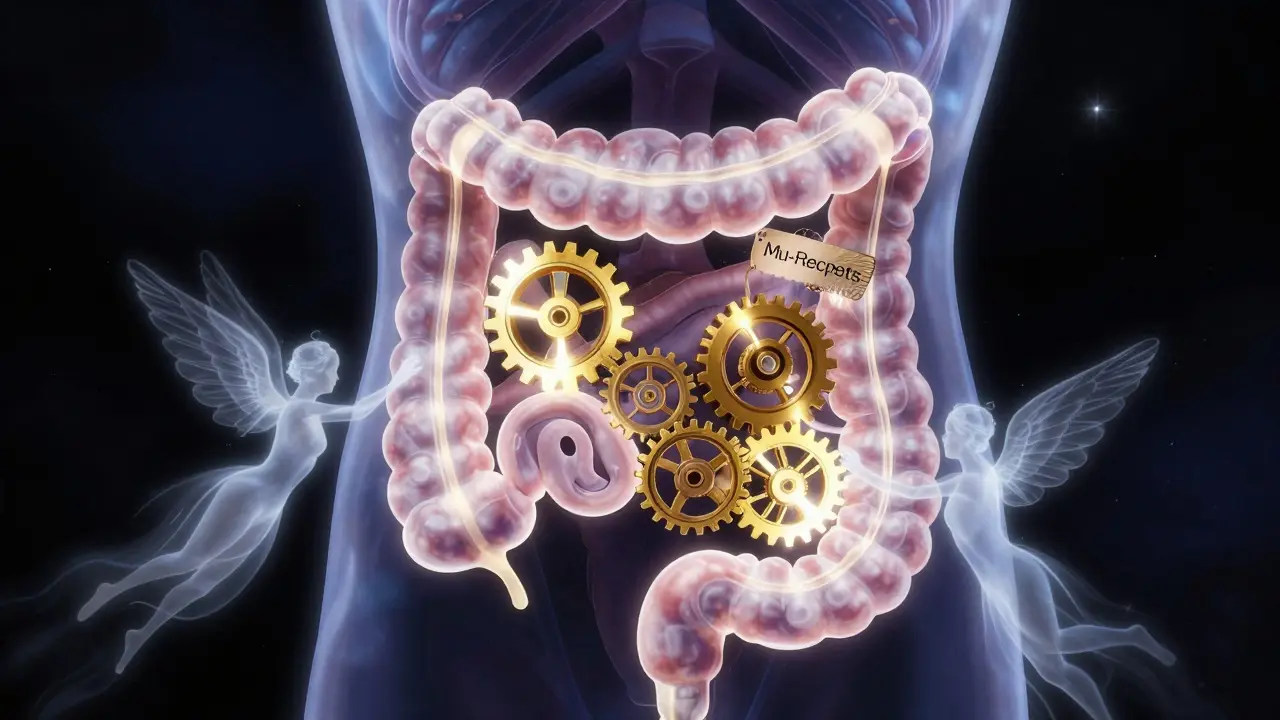
To treat OIC effectively, you first need to understand why it happens. When you take opioids, they bind to specific receptors in your brain to block pain signals. However, these same receptors-called mu-opioid receptors-are also found throughout your gastrointestinal tract. When opioids activate these receptors in your gut, they slow down the natural muscular contractions (peristalsis) that move food through your intestines.
This slowdown has several consequences:
- Delayed transit: Food moves slower through your small intestine and colon.
- Increased water absorption: Because stool stays in the colon longer, more water is absorbed from it, making the stool hard and dry.
- Reduced secretion: Your gut produces less fluid to help lubricate waste passage.
- Sphincter tension: The muscles that control defecation become tighter, making it harder to empty your bowels completely.
Because this mechanism is direct and continuous, standard remedies like eating more fiber or drinking more water are rarely enough on their own. They address the symptoms but not the root cause: the opioid’s effect on nerve signaling in the gut.
Prevention: Start Before Symptoms Begin
The most common mistake patients make is waiting until they are constipated before starting treatment. Expert consensus strongly recommends starting a bowel regimen at the exact same time you begin opioid therapy. Proactive management can prevent 60-70% of severe OIC cases.
Your baseline prevention strategy should include:
- Osmotic Laxatives: Polyethylene glycol (PEG) is often the first choice. It works by drawing water into the colon to soften stool. It is generally well-tolerated and effective for mild to moderate cases.
- Stimulant Laxatives: Senna or bisacodyl stimulate the nerves in the colon wall to encourage movement. These are often used in combination with osmotic laxatives for better results.
- Dietary Adjustments: While diet alone won’t cure OIC, adequate hydration and moderate fiber intake support overall gut health. Avoid excessive fiber if you are already severely backed up, as it can worsen bloating.
- Physical Activity: Gentle movement, such as walking, helps stimulate intestinal motility naturally.
Pharmacists play a critical role here. Studies show that when pharmacists intervene at the point of prescription, appropriate laxative initiation increases by 43%. Ask your pharmacist to review your regimen when you pick up your opioid prescription.
When Over-the-Counter Remedies Fail
For many patients, standard laxatives provide only partial relief or stop working entirely after a few weeks. If you are straining, feeling incomplete emptying, or going more than three days without a bowel movement despite using OTC meds, it is time to escalate treatment.
This is where prescription medications come into play. Two main classes of drugs are used for refractory OIC:
| Drug Class | Examples | How It Works | Key Considerations |
|---|---|---|---|
| PAMORAs | Methylnaltrexone (Relistor®), Naldemedine (Movantik®), Naloxegol (Movantik®) | Blocks opioid receptors in the gut without affecting pain relief in the brain. | Fast-acting (especially injectable forms). Risk of GI perforation in obstructed patients. High cost. |
| Chloride Channel Activators | Lubiprostone (Amitiza®) | Increases fluid secretion in the intestine to soften stool and promote movement. | FDA-approved primarily for women initially, though effective in men. Common side effect: nausea. |
Understanding PAMORAs: The Game Changer
Peripherally acting mu-opioid receptor antagonists (PAMORAs) represent a significant advancement in OIC treatment. Unlike traditional laxatives, PAMORAs target the specific mechanism causing OIC. They block the mu-opioid receptors in the gastrointestinal tract, reversing the slowing effect of opioids, while their chemical structure prevents them from crossing the blood-brain barrier. This means they restore normal bowel function without reducing your pain relief.
Methylnaltrexone (Relistor®): Originally approved as an injection, it works within 30 minutes for many patients. A once-weekly formulation was approved in 2023, improving convenience. It is particularly useful for patients with advanced illness or palliative care needs who have failed laxative therapy.
Naldemedine (Movantik®): An oral tablet taken daily. The 2024 ASCO guidelines specifically recommend naldemedine for cancer patients starting regular opioid therapy due to its preventive benefits on both constipation and opioid-induced nausea/vomiting.
Naloxegol (Movantik®): Another oral option, similar in action to naldemedine. It requires careful monitoring for gastrointestinal side effects.
Patient reports highlight the impact of PAMORAs. On chronic pain forums, 42% of users reported significant improvement with PAMORAs after failing other treatments. Many describe feeling "unblocked" for the first time in months. However, 28% reported abdominal pain as a side effect, so individual response varies.
Safety Warnings and Contraindications
While PAMORAs are highly effective, they are not safe for everyone. The most serious risk is gastrointestinal perforation. This rare but life-threatening complication occurs when the rapid return of bowel motility causes a tear in the intestinal wall, particularly in areas already weakened by disease or surgery.
PAMORAs are contraindicated in patients with:
- Known or suspected mechanical gastrointestinal obstruction
- Recent abdominal surgery
- Inflammatory bowel disease with active inflammation
- History of recurrent obstructions
Always inform your doctor about any history of bowel issues, surgeries, or inflammatory conditions before starting a PAMORA. The FDA requires a Risk Evaluation and Mitigation Strategy (REMS) for these drugs to ensure proper patient education.

Cost and Access Challenges
A major barrier to effective OIC treatment is cost. PAMORAs can cost $500-$900 per month without insurance coverage. Even with insurance, access can be difficult:
- 41% of Medicare Part D plans require prior authorization for PAMORAs.
- 28% of commercial plans impose step therapy requirements, forcing patients to fail cheaper treatments first.
- 57% of patients discontinue PAMORAs within six months due to cost or inadequate response.
To navigate this, work closely with your healthcare provider and pharmacist. They can help submit prior authorizations by documenting your failure of first-line therapies. Patient assistance programs offered by manufacturers may also reduce out-of-pocket costs.
Monitoring and Long-Term Management
Effective OIC management requires ongoing assessment. Use standardized tools like the Bowel Function Index (BFI) to track your progress. A BFI score above 30 indicates significant constipation requiring treatment escalation.
Regular check-ins with your healthcare team are essential. Discuss:
- Frequency and consistency of bowel movements
- Presence of straining or incomplete emptying
- Side effects from current medications
- Impact on quality of life
Do not hesitate to adjust your regimen. What works for one person may not work for another. Personalized OIC management based on individual response and genetic markers is emerging as a future direction, with predictions that by 2026, we will see more tailored approaches.
FAQs About Opioid-Induced Constipation
Will I always be constipated while taking opioids?
Unfortunately, yes, unless actively treated. Unlike other opioid side effects like drowsiness, constipation does not improve with tolerance. It persists as long as you take opioids. However, with the right prevention and treatment plan, you can maintain regular bowel movements and avoid severe complications.
Can I take PAMORAs if I have had abdominal surgery?
Not immediately. PAMORAs are contraindicated in patients with recent abdominal surgery or known/suspected gastrointestinal obstruction due to the risk of perforation. Always consult your surgeon and gastroenterologist before starting these medications if you have a history of bowel issues.
How quickly do PAMORAs work?
Injectable methylnaltrexone (Relistor) can work within 30 minutes for many patients. Oral PAMORAs like naldemedine and naloxegol typically take 1-3 days to show full effect. Consistency is key with oral formulations.
Is it safe to use stimulant laxatives long-term?
Yes, stimulant laxatives like senna and bisacodyl are considered safe for long-term use in OIC management. There is no evidence that they cause dependency or damage the bowel lining when used as directed. They are often used indefinitely alongside osmotic laxatives.
What should I do if I miss a dose of my OIC medication?
If you miss a dose of an oral PAMORA, take it as soon as you remember unless it is close to your next scheduled dose. Do not double up. For injectable methylnaltrexone, contact your healthcare provider for guidance on rescheduling. Missing doses can lead to a return of constipation symptoms.
Ellen Zeman
July 3, 2026 AT 18:01honestly this is such a lifesaver of an article, i have been struggling with this for years and never realized it was the opioids themselves causing the issue directly rather than just my body adjusting poorly.
it is so frustrating how doctors just prescribe pain meds without automatically prescribing the bowel regimen at the same time, like why do we have to wait until we are in agony before getting help?
i started taking polyethylene glycol as soon as i read about it here and wow, what a difference it makes when you actually address the root cause instead of just pushing through the discomfort.
thanks for sharing this info because it really empowers patients to advocate for their own health instead of feeling helpless.
Marlon Tomio
July 5, 2026 AT 15:23The entire medical establishment is complicit in this suffering by not mandating prophylactic laxatives. It is negligence disguised as standard practice. You do not need a degree to understand that if you slow down the gut, you must facilitate movement. The fact that PAMORAs cost $900 a month while generic senna costs pennies highlights the predatory nature of pharmaceutical pricing models. We are being milked for every symptom while the root cause-overprescription-is ignored entirely.
Casey Eickhoff
July 6, 2026 AT 06:38I appreciate the detailed breakdown of the physiological mechanisms involved here; it clarifies why simple dietary adjustments often fail to provide adequate relief for those on long-term opioid therapy.
It is crucial to note that while fiber is generally recommended for digestive health, excessive intake during severe constipation can indeed exacerbate bloating and discomfort, which is a nuance many patients overlook.
The distinction between osmotic and stimulant laxatives is particularly useful for understanding how different agents interact with the gastrointestinal tract, allowing for more informed discussions with healthcare providers regarding personalized treatment plans.
Sean Estabrooks
July 6, 2026 AT 09:18Wake up sheeple! The big pharma cartels want you dependent on these expensive PAMORAs forever. They know the truth: opioids rot your gut lining permanently. That's why they push the $900/month drugs instead of fixing the real problem. The FDA is in their pocket, hiding the data on long-term neural damage from mu-opioid receptor activation in the enteric nervous system. Don't let them turn you into a zombie paying rent for your own bowels. Natural remedies work better but they can't patent turmeric or magnesium citrate. Think critically!
Mary Howarth
July 8, 2026 AT 02:55Oh my goodness, I cannot tell you how much this resonates with me right now!
I have been dealing with chronic back pain for over five years, and the constipation side effect has been absolutely debilitating, making me feel so sluggish and uncomfortable all the time.
Reading about the PAMORAs gave me so much hope because I had tried everything from increasing water intake to walking daily, but nothing seemed to fully resolve the issue.
It is so encouraging to see that there are advanced options available that specifically target the receptors in the gut without affecting pain relief, which is exactly what I have been praying for.
I am going to print this out and take it to my doctor next week to discuss starting naldemedine, because I deserve to feel comfortable and healthy again!
rob van oudernallern
July 9, 2026 AT 04:06yeah man i totally agree with the point about starting prevention early, its crazy how many people wait till they are backed up bad before doing anything.
i used to think drinking more water would fix it but nah, once you start the opioids you gotta be on top of the laxatives from day one or else you are just asking for trouble.
the part about pharmacists helping out is spot on too, my local pharmacist actually helped me switch to a combo of senna and miralax and it worked wonders compared to just taking one thing alone.
Gavin Edley
July 9, 2026 AT 18:40You lot are all idiots for believing this corporate propaganda. My mate took Relistor and ended up with a perforated bowel because his GP didn't check his surgical history properly. Now he's suing the NHS and the drug company.
And don't get me started on the cost. Five hundred quid a month? For a pill? In this economy? It's robbery plain and simple. The government should be funding these treatments if they're forcing us to take opioids in the first place. But no, they'd rather let us suffer and save a few bob on the budget. Typical.
Sherrie Trecker
July 10, 2026 AT 07:33This article is completely missing the emotional toll this takes on patients. It is not just about bowel movements; it is about dignity. Imagine living in constant fear of having an accident in public because your body simply refuses to cooperate.
While the medical facts are accurate, the tone is so cold and clinical. It reduces human suffering to a series of receptor interactions and cost-benefit analyses. Patients need empathy, not just a list of contraindications. The stress and anxiety associated with OIC can worsen pain perception, creating a vicious cycle that this guide fails to acknowledge adequately.
Alana Frassinelli
July 11, 2026 AT 11:52i hear you on the emotional aspect sherrie, it is really hard to talk about this stuff openly because it feels so private and embarrassing even though it is a common medical side effect.
for me the hardest part was realizing that i could not just 'push through' it like i did with other symptoms, i had to accept that my body needed external help to function normally while on these meds.
once i stopped fighting it and started using the prescribed regimens consistently, the anxiety decreased significantly because i knew i had a plan in place, which made me feel more in control of my situation overall.
jeremy pritchett
July 12, 2026 AT 00:24listen up folks, stop complaining and start taking action! your health is in your hands not the doctors.
i switched to methylnaltrexone injections and within 30 minutes i felt like a new person, no more bloating, no more pain.
if you are still sitting there waiting for permission to feel good, you are part of the problem. demand better care, research your options, and dont let insurance companies bully you into cheap generics that dont work.
you got this! fight for your comfort!
Kimberly Simbulan
July 12, 2026 AT 17:35Sure, because nothing says 'empowerment' like injecting yourself with a $500-a-month drug that might rip your intestine apart.
But hey, at least you'll be empowered to visit the ER.
I'm sure the insurance adjusters will be thrilled to review your prior authorization forms while you're recovering from surgery.
Let's all pretend that step therapy requirements don't exist and that patient assistance programs actually cover everyone who needs them.
Wow, what a utopia we live in.
kavitha kumar
July 14, 2026 AT 12:45this is so true kimberly, i tried to get movantik but my insurance said i had to try three other things first which took months and i was suffering all that time.
it feels like they want us to fail so they can charge us more later.
i finally got approval after my doctor wrote a huge letter but by then i had lost so much confidence in the system.
hope someone finds a cheaper way soon because most of us cant afford these prices.
fred morgan
July 15, 2026 AT 10:03The information provided regarding the mechanism of action for PAMORAs is clinically accurate and aligns with current gastroenterological guidelines. It is imperative for patients to adhere strictly to contraindications, particularly concerning mechanical obstruction, to mitigate risks of serious adverse events. Regular monitoring via tools such as the Bowel Function Index ensures optimal therapeutic outcomes.