
Bisphosphonate & Calcium Timing Calculator
Maximize Your Osteoporosis Treatment Effectiveness
The right timing between bisphosphonates and calcium is critical. When taken together, calcium can reduce bisphosphonate absorption by up to 90%. This tool helps you calculate the proper timing to ensure maximum benefit.
How to Use This Tool
1. Enter the time you plan to take your bisphosphonate medication
2. Calculate the earliest time you can take calcium
3. Follow the instructions for best results
Your Timing Recommendation
Wait at least 30-60 minutes before taking calcium
Bisphosphonate Taken
Wait Time
Calcium Can Be Taken
Important Instructions
Take bisphosphonate with plain water only. Do not take with coffee, tea, juice, or milk.
Stay upright for 30-60 minutes after taking bisphosphonate to avoid esophageal irritation.
Take calcium with food (lunch or dinner) for optimal absorption.
Never take both medications at the same time—this reduces bisphosphonate effectiveness by up to 90%.
Imagine taking a pill every week to protect your bones, only to find out you’ve been doing it wrong all along. For millions of people with osteoporosis, that’s not a hypothetical. It’s reality. The most common osteoporosis drugs-bisphosphonates like alendronate, risedronate, and zoledronic acid-are powerful. They can cut your risk of a broken hip by nearly a quarter. But here’s the catch: if you take them with your morning calcium pill, coffee, or breakfast, you might as well have thrown the bisphosphonate away. Bisphosphonate and calcium don’t just coexist-they actively block each other.
Why Bisphosphonates Are So Effective (When Used Right)
Bisphosphonates aren’t just bone pills. They’re precision tools. These drugs stick to the surface of your bones like magnets, targeting the cells that break bone down-osteoclasts. Once attached, they shut down the enzyme these cells need to survive, essentially putting them to sleep. That’s how they preserve bone density. Studies show they reduce spine fractures by 40-50% and hip fractures by 20-25%. That’s not a small win. A broken hip at 70 can mean losing your independence-or your life. One in five people die within a year after a hip fracture. But here’s what most people don’t know: bisphosphonates don’t just stop bone loss. New research from 2023 shows they also help strengthen the internal network of bone cells (osteocytes), making bone less brittle. That’s why the fracture reduction is even bigger than what you’d expect from bone density scans alone.The Calcium Problem: Why Your Supplement Is Sabotaging Your Meds
Calcium is essential. Your body needs it to build and maintain bone. Guidelines from the American College of Rheumatology, the Endocrine Society, and the International Osteoporosis Foundation all say: if you’re on a bisphosphonate, you need 500-1,000 mg of extra calcium daily, on top of what you get from food. But calcium and bisphosphonates don’t play nice in your gut. When they meet, they form a hard, insoluble lump-like concrete mixing with water. That lump can’t be absorbed. It just passes through. Studies show that taking calcium at the same time as a bisphosphonate cuts the drug’s absorption by up to 90%. That means you’re not getting the full benefit. You’re paying for a powerful medicine-and getting almost nothing.The Exact Timing Rules (No Exceptions)
There’s one way to make this work: strict timing. No guessing. No shortcuts.- Take your bisphosphonate first thing in the morning, on an empty stomach. No food. No coffee. No juice. Not even a sip of anything but plain water.
- Wait at least 30 minutes (60 is better) before eating, drinking anything else, or taking any other pill-including calcium.
- Stay upright (sitting or standing) for the full 30-60 minutes. Lying down increases the risk of the pill sticking in your esophagus, which can cause irritation or ulcers.
- Take your calcium supplement later in the day-lunch or dinner is fine. Some people split it into two doses: 500 mg at lunch, 500 mg at dinner. That’s often easier on the stomach and helps absorption.
Why So Many People Get It Wrong
You’d think this would be simple. But it’s not. A 2022 survey by the National Osteoporosis Foundation found that 58% of people stop taking their bisphosphonates within the first year. The top reasons? Gastrointestinal side effects (31%), thinking the drug isn’t working (28%), and-here’s the kicker-difficulty managing the timing of multiple medications (23%). Reddit’s r/Osteoporosis community has over 12,000 members. In a recent survey, 67% of users said they were confused at first about when to take calcium. Many took it right after their bisphosphonate, thinking they were helping. Others took it at bedtime, forgetting the 30-minute rule. The result? Lower bone density, more fractures, and frustration.
Workarounds That Actually Help
Some drug companies noticed this problem. So they made packaging that helps. The Actonel with Calcium combo pack includes one risedronate tablet and six calcium tablets in a single blister pack. Each blister is labeled with the day and time. One side says “Take with water on empty stomach.” The other says “Take with food.” In clinical testing, this simple design improved correct dosing by 28%. On Drugs.com, users gave it a 4.2 out of 5. One reviewer wrote: “I used to forget which pill to take when. Now I just follow the arrows on the pack.” Another option? Use a pill organizer with time slots. Set phone alarms: “7 AM: Take alendronate with water.” “12 PM: Take calcium.” “6 PM: Take vitamin D.”Don’t Forget Vitamin D
Calcium doesn’t work without vitamin D. Your body needs it to absorb calcium from the gut and move it into your bones. Most people don’t get enough, especially in the UK, where sunlight is limited for half the year. Experts recommend 800-1,000 IU of vitamin D daily for anyone on osteoporosis meds. You can get it from food (fatty fish, fortified milk), but most people need a supplement. Take it with your calcium-not with your bisphosphonate. Vitamin D doesn’t interfere with bisphosphonate absorption, so you can take it at lunch or dinner alongside your calcium.The Risk-Benefit Balance
Some people worry about rare side effects: osteonecrosis of the jaw (ONJ) or atypical femur fractures. These sound scary. But the numbers tell a different story. To prevent one hip fracture over three years, you need to treat 44 high-risk patients with bisphosphonates. That’s the number needed to treat (NNT). To cause one case of ONJ? You’d need to treat 10,000 to 100,000 patients over a year. That’s less than 0.1% risk. Atypical femur fractures are slightly more common-about 1 in 1,000 to 1 in 10,000 patient-years-but still rare. Compare that to the risk of a hip fracture: 20-24% of people die within a year. The choice isn’t between two bad options. It’s between a small risk of a rare side effect and a very real risk of losing your mobility, your independence, or your life.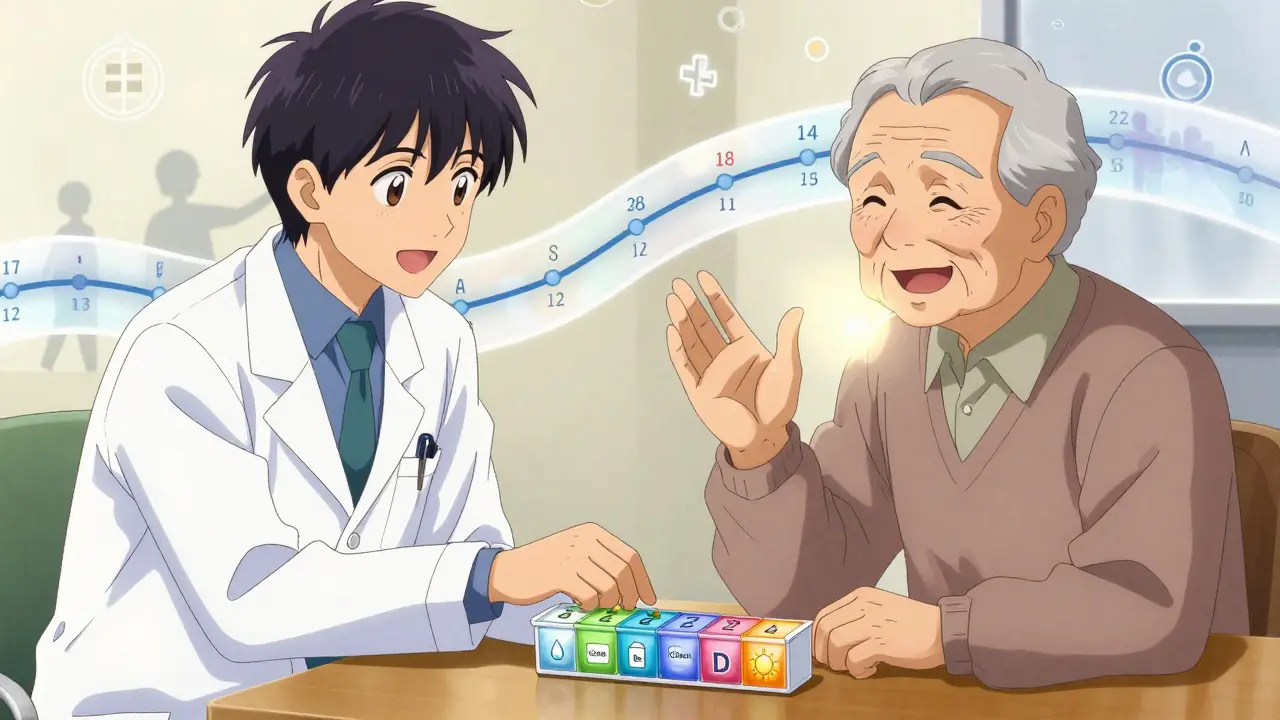
When to Pause or Stop
You don’t need to take bisphosphonates forever. Because they stick to bone for years-even over a decade-you can take breaks. The American College of Rheumatology recommends a “drug holiday” after 3-5 years for people with moderate risk and good bone density. Your doctor will monitor you with scans and adjust based on your fracture risk. If your risk is high-maybe you’ve already had a fracture, or you’re on long-term steroids-you may need to stay on longer. Always discuss this with your doctor. Don’t quit on your own.Real Talk: What Works in Real Life
A 72-year-old woman in Manchester took alendronate for three years. She kept forgetting the timing. Her bone density kept dropping. Then she started using a pill box with alarms. She took her bisphosphonate at 7 AM, waited an hour, then ate. Took calcium at lunch, vitamin D at dinner. Six months later, her scan showed improvement. She says: “It’s not hard. You just have to make it a habit.” Another man, 68, stopped his bisphosphonate because he thought it wasn’t working. He didn’t know he was taking calcium too soon. His doctor found out, adjusted his routine, and he’s now back on track. It’s not about willpower. It’s about systems.Bottom Line: Do This Today
If you’re on a bisphosphonate:- Take it first thing in the morning, with a full glass of plain water.
- Wait 60 minutes before eating, drinking, or taking any other pill.
- Take calcium and vitamin D at lunch or dinner.
- Use a pill organizer or app to remind you.
- Don’t skip vitamin D-it’s just as important as calcium.
- Talk to your doctor about whether you still need the drug, especially after 3-5 years.
Can I take calcium and bisphosphonates together if I swallow them with water?
No. Even if you take them both with water, calcium and bisphosphonates will bind together in your stomach and form an insoluble complex. This blocks the absorption of the bisphosphonate, reducing its effectiveness by up to 90%. Always separate them by at least 30-60 minutes.
What happens if I forget and take my calcium with my bisphosphonate?
If you accidentally take calcium with your bisphosphonate, don’t panic. Don’t take another dose of the bisphosphonate-that could cause stomach irritation. Skip your calcium for that day and resume your normal schedule tomorrow. One mistake won’t ruin your treatment, but doing it regularly will. Use alarms or a pill organizer to prevent repeats.
Is it better to take calcium in the morning or at night?
Take calcium with food, not on an empty stomach. Lunch or dinner is ideal. Your body absorbs calcium better when it’s taken with meals. Avoid taking it right before bed unless you’re also taking vitamin D-then it’s fine. The key is to keep it at least 60 minutes away from your bisphosphonate.
Do I need calcium if I eat dairy every day?
Maybe. The average diet in the UK provides about 700 mg of calcium daily. Most osteoporosis guidelines recommend adding 500-1,000 mg more. If you eat yogurt, cheese, fortified plant milks, or leafy greens regularly, you might be close. But most people still fall short. A blood test or food diary with your doctor can help determine if you need a supplement.
Can I take bisphosphonates with tea or coffee?
No. Tea, coffee, and even mineral water can interfere with bisphosphonate absorption. Only plain water is safe. Wait at least 30 minutes after taking the pill before drinking anything else. This includes herbal teas, juice, and soda.
Are there alternatives if I can’t follow the timing rules?
Yes. If the strict timing is too hard to manage, talk to your doctor about other options. Denosumab (Prolia) is an injection given every six months and doesn’t require fasting or timing restrictions. Teriparatide (Forteo) is a daily injection that builds new bone. Both are effective alternatives, especially for people who struggle with pill routines.
How long should I stay on bisphosphonates?
Most people take bisphosphonates for 3-5 years, then take a break-called a “drug holiday.” Because these drugs stay in your bones for years, the effect lasts even after you stop. Your doctor will reassess your fracture risk with bone scans and other factors. If your risk is still high, you may resume treatment. If it’s low, you can stay off for 1-3 years before rechecking.
Is there a link between calcium supplements and heart disease?
Some studies have raised concerns about calcium supplements and heart risk, especially if taken in large doses (over 1,200 mg/day) without vitamin D. But the evidence isn’t clear-cut. The bigger risk is not getting enough calcium-leading to fractures. Most experts recommend getting calcium from food first, then supplementing only if needed. Don’t exceed 1,200 mg total daily (food + supplements). Always take it with vitamin D and avoid mega-doses.
Andy Thompson
January 19, 2026 AT 12:25sagar sanadi
January 19, 2026 AT 22:20Thomas Varner
January 21, 2026 AT 11:41Art Gar
January 21, 2026 AT 16:34clifford hoang
January 23, 2026 AT 09:26Carolyn Rose Meszaros
January 24, 2026 AT 19:44Greg Robertson
January 25, 2026 AT 20:20Nadia Watson
January 27, 2026 AT 13:43Shane McGriff
January 28, 2026 AT 10:09Jacob Cathro
January 29, 2026 AT 14:45Paul Barnes
January 31, 2026 AT 10:02pragya mishra
January 31, 2026 AT 10:51Manoj Kumar Billigunta
February 2, 2026 AT 09:09Arlene Mathison
February 3, 2026 AT 17:51