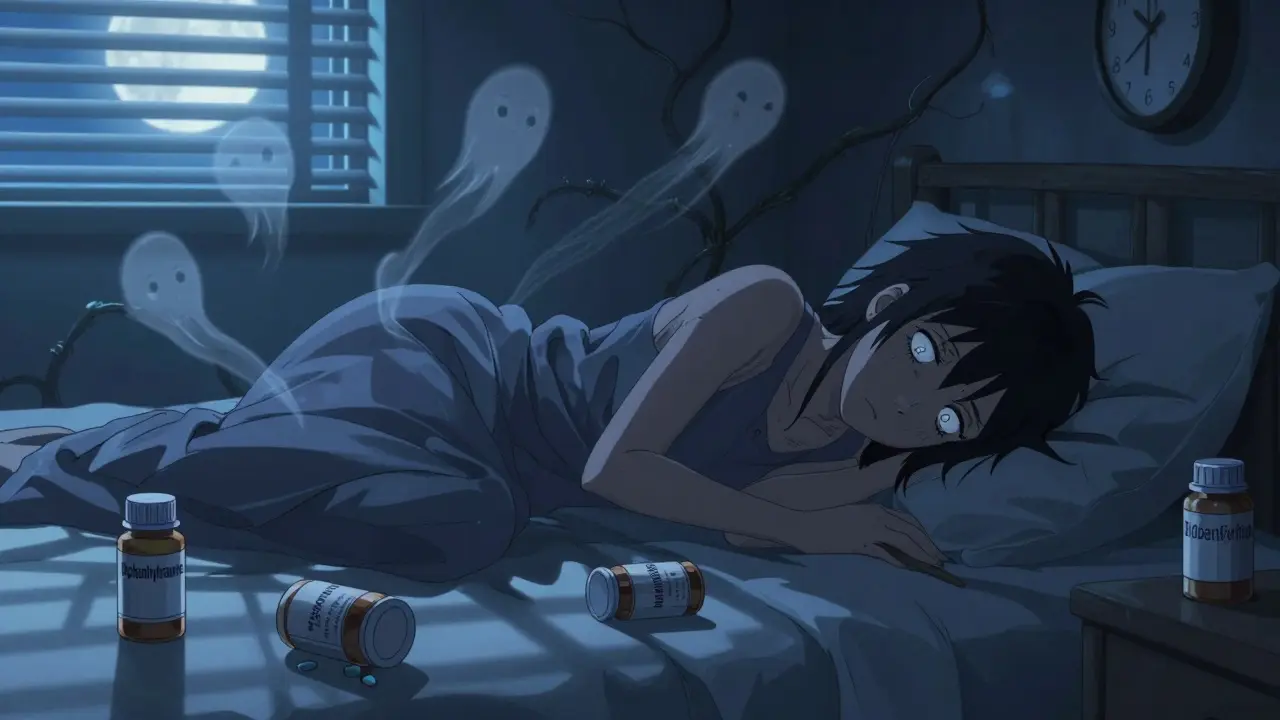
Most people reach for an OTC sleep aid when they’ve been lying awake for hours. It feels like a quick fix-pop a pill, fall asleep, wake up refreshed. But what’s actually in those little capsules or tablets? And what happens when you use them week after week? The truth is, OTC sleep aids aren’t harmless nightcaps. They come with real risks, especially if you’re using them longer than a few days.
What’s in OTC Sleep Aids?
There are two main types of over-the-counter sleep aids: antihistamines and supplements. The most common antihistamines are diphenhydramine and doxylamine. You’ll find them in brands like Benadryl, Sominex, Nytol, and Unisom SleepTabs. These drugs were originally made for allergies. Their sleepiness effect is just a side effect-something that happens because they block histamine in the brain, a chemical that keeps you alert.
The other type is melatonin, a hormone your body naturally makes to signal it’s time to sleep. OTC melatonin supplements come in doses from 0.5mg to 10mg. Some products also include herbal ingredients like valerian root or chamomile, but there’s very little evidence they work better than a placebo.
Here’s the catch: melatonin supplements aren’t regulated like real medicine. A 2017 study tested 31 melatonin products and found that the actual amount of melatonin in each pill ranged from 83% less to 478% more than what was on the label. So if you buy a 5mg pill, you might be getting less than 1mg-or more than 25mg. That’s not a typo.
How Well Do They Actually Work?
Don’t expect miracles. Clinical trials show OTC sleep aids reduce the time it takes to fall asleep by just 3 to 13 minutes. Total sleep time increases by about 20 to 60 minutes. That’s not much when you’re exhausted and hoping for a full night’s rest.
For occasional jet lag or a single bad night, they might help. But for chronic insomnia-which affects 1 in 10 adults-they’re not the answer. The American Academy of Sleep Medicine says there’s no good evidence these products work for long-term sleep problems. And they warn they might do more harm than good.
Side Effects You Can’t Ignore
Antihistamine-based sleep aids (diphenhydramine and doxylamine) are part of a class of drugs called anticholinergics. These drugs interfere with a brain chemical called acetylcholine. That’s why they cause dry mouth, blurred vision, constipation, and trouble urinating-especially in men with enlarged prostates.
But the biggest danger is for older adults. A 2019 study found that people over 65 who take these drugs are 50% more likely to fall. Falls are the leading cause of injury and death in seniors. The Beers Criteria, updated in 2023, lists diphenhydramine as a medication older adults should avoid because it increases confusion and dementia risk.
And that dementia link? A 2015 study tracked over 3,400 people for more than seven years. Those who took anticholinergic drugs regularly had a 54% higher risk of developing dementia. The more you take, the higher the risk.
Melatonin seems safer, but it’s not harmless. The most common side effect? Daytime drowsiness. Nearly half of users report feeling groggy the next day. One in three gets headaches. Two out of three report vivid dreams or nightmares-some so intense they wake up scared.
Higher doses (over 5mg) make things worse. People report nausea, dizziness, nighttime waking, irritability, and even bedwetting in kids. The NHS warns that melatonin can cause unexplained pain in arms or legs. If that happens, stop taking it.

Rebound Insomnia and Tolerance
One of the worst surprises people get? When they stop using the sleep aid, their insomnia comes back worse than before. This is called rebound insomnia. About 30% of people who use OTC sleep aids for more than two weeks experience this.
And then there’s tolerance. If you take melatonin or antihistamines every night for more than 10 days, your body may start to need more to get the same effect. Around 25% of daily users develop this. Suddenly, your 1mg melatonin doesn’t work anymore, so you up it to 3mg, then 5mg. That’s when side effects pile up.
Who Should Avoid These Completely?
If you have sleep apnea, OTC sleep aids are dangerous. They relax your throat muscles even more, which can make breathing interruptions worse during sleep. That’s a serious risk.
Pregnant women should avoid them. Diphenhydramine is labeled as “Pregnancy Category B,” meaning there’s no clear proof of harm-but there’s also not enough data to say it’s safe. Melatonin? Even less is known. The NIH says there’s not enough evidence to recommend it during pregnancy.
People with glaucoma, liver disease, or urinary problems should also skip these. Antihistamines can make all of these worse.

How Long Is Safe to Use Them?
The FDA says: don’t use antihistamine sleep aids for more than two weeks. The Cleveland Clinic agrees. If you still can’t sleep after 10 to 14 days, it’s time to talk to a doctor.
But here’s the problem: a 2022 survey found that 38% of users go past the two-week limit. Nearly 1 in 5 use them for more than a month. That’s not just common-it’s risky.
For melatonin, the European Food Safety Authority says doses above 1mg offer no extra benefit for most adults. Yet most store-bought pills contain 3mg, 5mg, or even 10mg. Start low. Try 0.5mg. Use it only on nights you really need it-not every night.
What Should You Do Instead?
There’s a better way. Cognitive Behavioral Therapy for Insomnia, or CBT-I, is the gold standard. It’s not a pill. It’s a set of techniques that retrain your brain and habits around sleep. Studies show it works for 70% to 80% of people-and the results last. Unlike pills, it doesn’t wear off. It doesn’t cause side effects. It doesn’t make you dependent.
CBT-I includes things like:
- Only going to bed when you’re sleepy
- Getting out of bed if you can’t fall asleep after 20 minutes
- Keeping a consistent wake-up time-even on weekends
- Avoiding screens and bright light before bed
- Using your bed only for sleep and sex
It’s not magic. It takes time. But it’s the only treatment proven to fix chronic insomnia without drugs.
Bottom Line: Use Them Sparingly
OTC sleep aids aren’t evil. Sometimes, they help-once. A trip across time zones. A night after a loss. A moment of extreme stress. But they’re not a solution. They’re a Band-Aid on a broken bone.
If you’ve been using them for more than two weeks, you’re not fixing your sleep-you’re masking the problem. And the longer you wait to address the real cause, the harder it becomes to fix.
Don’t keep reaching for the same bottle. Talk to a doctor. Ask about CBT-I. Try a sleep tracker. Cut back on caffeine after 2 p.m. Make your bedroom dark, cool, and quiet. These small changes add up.
There’s no shortcut to good sleep. But there are safer, smarter ways to get there.
Can I take OTC sleep aids every night?
No. OTC sleep aids are meant for occasional use-no more than 7 to 10 days in a row. Taking them nightly increases the risk of side effects like next-day drowsiness, confusion, and dependence. Long-term use of antihistamines is linked to higher dementia risk, especially in older adults. Melatonin can cause tolerance, meaning you’ll need higher doses over time. If you still can’t sleep after two weeks, see a doctor.
Is melatonin safer than diphenhydramine?
Melatonin has fewer severe side effects than antihistamines like diphenhydramine, but it’s not risk-free. It doesn’t cause the same level of cognitive impairment or fall risk. However, melatonin supplements are poorly regulated, and many contain far more or less than the label claims. Common side effects include vivid dreams, headaches, and daytime grogginess. Higher doses (over 5mg) can cause nausea, dizziness, and nighttime waking. It’s safer for short-term use, like jet lag, but not for chronic insomnia.
Why do OTC sleep aids make me feel groggy the next day?
Antihistamines like diphenhydramine and doxylamine have long half-lives-they stay in your system for hours. Even if you sleep 8 hours, the drug is still active in your bloodstream when you wake up. That’s why you feel foggy, slow, or uncoordinated. Melatonin can cause daytime drowsiness too, especially if you take too much or take it too late. The solution? Use the lowest effective dose and take it only 30 to 60 minutes before bed.
Can OTC sleep aids cause addiction?
OTC sleep aids don’t cause physical addiction like opioids or benzodiazepines. But they can lead to psychological dependence. You may start believing you can’t sleep without them. When you stop, rebound insomnia often kicks in-making you feel worse than before. This can create a cycle where you keep using them just to avoid the discomfort of not sleeping. That’s not addiction in the clinical sense, but it’s still a problem.
What’s the best alternative to OTC sleep aids?
Cognitive Behavioral Therapy for Insomnia (CBT-I) is the most effective, evidence-based treatment for chronic sleep problems. It’s recommended by the American Academy of Sleep Medicine as the first-line treatment. Unlike pills, CBT-I addresses the root causes of insomnia-like racing thoughts, poor sleep habits, and anxiety around sleep. Studies show 70% to 80% of people improve significantly, and the results last for years. Many online programs and therapists offer CBT-I, and some are covered by insurance.
Kunal Majumder
January 9, 2026 AT 18:25Been there. Took Unisom for a week straight after my dog died. Felt like a zombie the next day. Stopped. Started reading in bed instead. Fell asleep faster. No pills needed.
Jaqueline santos bau
January 10, 2026 AT 23:36OMG I CAN’T BELIEVE PEOPLE STILL TAKE THIS SHIT. My aunt took diphenhydramine for 3 years and now she forgets her own birthday. She thinks it’s ‘natural’ because it’s ‘over the counter.’ NO. IT’S A DRUG. AND IT’S KILLING HER BRAIN. I’M SORRY BUT I HAVE TO SAY THIS.
Ted Conerly
January 12, 2026 AT 15:48CBT-I changed my life. I was skeptical too. Thought I needed a pill. Turns out my brain just needed to unlearn bad habits. Took 6 weeks. Now I sleep like a baby. No meds. No guilt. Just peace.
anthony martinez
January 13, 2026 AT 22:58Interesting how the FDA says two weeks but 38% go past that. Guess people don’t read labels or just don’t care. Either way, it’s a quiet public health disaster.
Faith Edwards
January 15, 2026 AT 22:01It’s not just about sleep-it’s about the erosion of personal agency. We’ve outsourced our biology to chemically engineered convenience. The fact that melatonin is sold like candy in Walmart is a grotesque indictment of modern healthcare culture. I refuse to participate in this pharmacological farce.
Michael Marchio
January 16, 2026 AT 07:06Let’s be real-most people don’t have access to CBT-I. It’s expensive, hard to find, and insurance won’t cover it. Meanwhile, the pharmacy aisle is open 24/7. So yes, the science says don’t use these, but the reality is that people are exhausted, broke, and desperate. Judging them won’t fix anything. We need systemic change, not just moralizing.
neeraj maor
January 16, 2026 AT 08:03Did you know the FDA doesn’t regulate supplements because of a 1994 law pushed by big pharma lobbyists? Melatonin pills are filled with fillers, heavy metals, and sometimes even benzodiazepines. They’re testing these on you. You’re a lab rat. Wake up.
Mario Bros
January 17, 2026 AT 12:36Just tried 0.5mg melatonin for jet lag. Worked like a charm. No grogginess. Took it 45 min before bed. Didn’t even need to set an alarm. Small dose = big difference. Try it.
Ritwik Bose
January 17, 2026 AT 23:20Thank you for this. As someone from India, I’ve seen my uncle take antihistamines for insomnia for 8 years. He didn’t know the risks. This post should be translated and shared widely. Knowledge saves lives.
McCarthy Halverson
January 18, 2026 AT 21:34Stop the pills. Try cold room. No screens. Same time up. That’s it. Works. Not magic. Just science.
Dwayne Dickson
January 20, 2026 AT 04:42While I appreciate the clinical rigor of this piece, I must emphasize the epistemological limitations inherent in self-reported sleep data. The placebo effect in melatonin usage is confounded by cognitive bias, and the longitudinal correlation between anticholinergic burden and neurodegeneration remains statistically significant but causally indeterminate without controlled trials.
Saumya Roy Chaudhuri
January 20, 2026 AT 19:49MY SISTER TOOK 10MG OF MELATONIN EVERY NIGHT FOR A YEAR. SHE HAD NIGHTMARES SO BAD SHE SCREAMED IN HER SLEEP. ONE NIGHT SHE GOT UP AND STARTED DANCING IN THE KITCHEN AT 3AM. WE THOUGHT SHE WAS POSSESSED. TURNED OUT IT WAS THE SUPPLEMENT. NEVER AGAIN. I’M STILL TERRIFIED.
Jake Kelly
January 21, 2026 AT 19:50I used to take these every night. Felt guilty. Then I started journaling before bed. Just 5 minutes. Wrote down one good thing from the day. And guess what? I stopped needing the pills. Not because I was perfect, but because I gave myself space to breathe.
chandra tan
January 21, 2026 AT 23:36In India, we have this thing called ‘jadoo’-magic. But sleep? No magic. Just discipline. No phone after 10. Light off. Cool room. Tea with ajwain. Simple. Works better than any pill. We didn’t need big pharma to teach us that.
Bradford Beardall
January 22, 2026 AT 02:12Wait-so if melatonin isn’t regulated, why do stores sell it in the same aisle as aspirin? That’s like selling lithium in the candy section. Who approved this? And why does no one talk about it?