You pick up your prescription at the pharmacy counter. The pharmacist hands you a bag with a label that says generic. You expect to pay less than if it were the brand-name version. But when you swipe your card, the charge is higher than expected-or maybe even higher than what you’d pay for the brand. How does that happen?
The answer isn’t simple. It’s buried in insurance rules, rebate structures, and a system designed more for middlemen than patients. While generic drugs are supposed to be cheaper, the reality of out-of-pocket costs-what you actually pull from your wallet-can surprise you. Sometimes, switching to a brand-name drug saves you money. Other times, paying cash at a transparent pharmacy beats using your insurance entirely.
This guide cuts through the noise. We’ll look at why generic drugs don’t always cost less, how insurance plans twist the math, and where you can find real savings without sacrificing quality or coverage.
Why Generic Drugs Aren’t Always Cheaper for Patients
Let’s start with the basics. A generic drug is a medication with the same active ingredient as a brand-name drug but sold under a different name. The FDA requires generics to prove bioequivalence, meaning they work the same way in your body. They might have different fillers or colors, but the medicine inside is identical. Because manufacturers don’t spend billions on research and development, generics typically cost 80-85% less than their brand-name counterparts.
So why do some patients pay more for generics? The problem lies in how insurance companies calculate what you owe.
In many health plans, your out-of-pocket cost depends on your plan type:
- Copayment plans: You pay a fixed amount (e.g., $10) regardless of the drug’s price. If the list price goes up, your cost stays the same.
- Coinurance plans: You pay a percentage of the drug’s price (e.g., 20%). If the list price rises, your bill rises too.
- Deductible-based plans: You pay the full negotiated price until you hit your deductible, then insurance kicks in.
A 2021 study published in JAMA Network Open followed 79 brand-name drugs and found no direct link between rising list prices and patient spending for those with flat copays. But for people with coinsurance or deductibles, every price hike hit them directly. That means if your insurer negotiates a high “rebate” with a brand manufacturer but passes none of that savings to you, you’re stuck paying the inflated list price.
Here’s the kicker: rebates go to insurers and Pharmacy Benefit Managers (PBMs), not patients. So while the system looks efficient on paper, your wallet feels the pinch.
The Medicare Part D Trap: When Brands Cost Less Than Generics
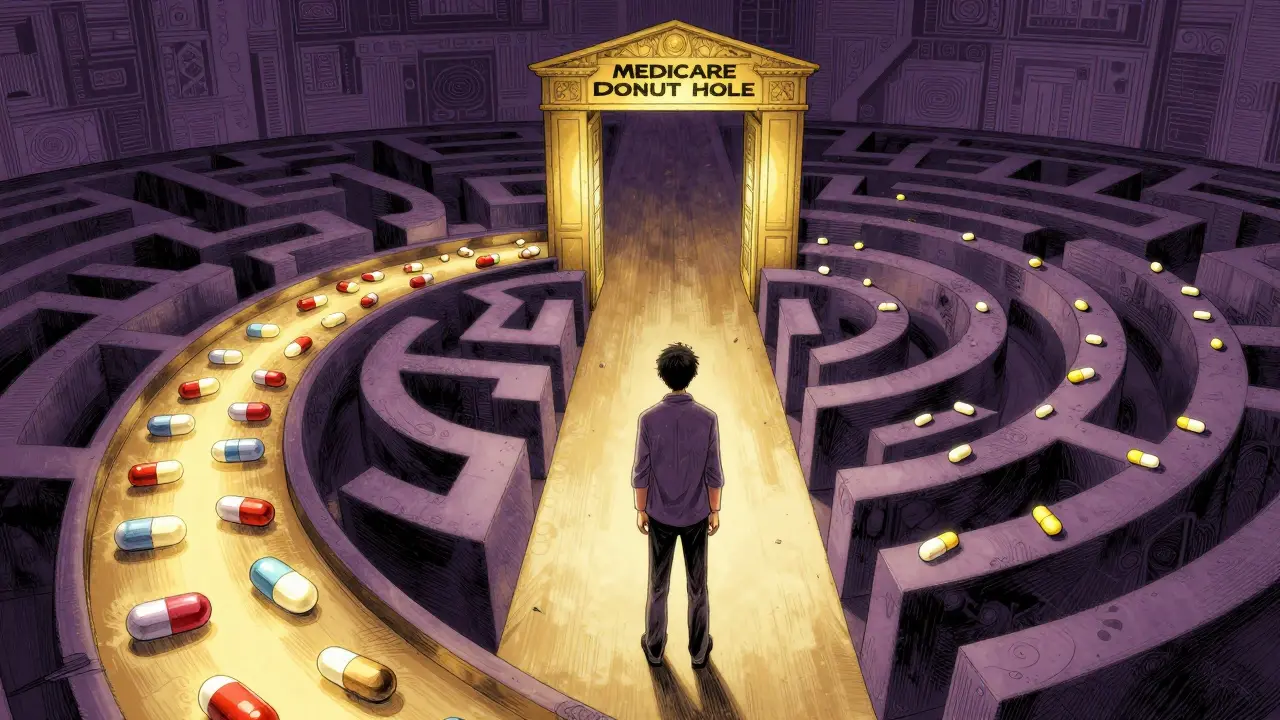
If you’re on Medicare, things get even stranger. Medicare Part D has a coverage gap known as the “donut hole.” Once you spend a certain amount out-of-pocket, you enter this phase where you pay more until you reach catastrophic coverage.
Here’s where it gets twisted: Brand-name manufacturers offer discounts during the donut hole that count toward your out-of-pocket total. Generic manufacturers do not. This creates a perverse incentive.
| Drug Type | Discount Applied in Donut Hole | Impact on Reaching Catastrophic Coverage |
|---|---|---|
| Brand-Name Drugs | Yes (manufacturer pays discount) | Patient reaches catastrophic coverage faster |
| Generic Drugs | No | Patient must spend significantly more out-of-pocket |
In 2019, Vanderbilt University researchers found that patients using brand-name drugs needed to spend just $982 to exit the donut hole. Those relying on generics had to shell out $3,730-a 279% higher threshold. By 2020, the overall spending requirement jumped from $5,100 to $6,350, making the gap wider still.
Dr. Stacie Dusetzina from Vanderbilt put it bluntly: Fixing this wouldn’t make generics cheaper-it would make brands more expensive by removing their artificial advantage. Until policy changes, patients caught in the donut hole often face a brutal choice: switch to a pricier brand or keep paying out of pocket for longer.
Who Really Benefits From Generic Drug Pricing?
Generics save the U.S. healthcare system billions. In 2020 alone, they saved an estimated $338 billion. Over ten years, that number climbs to nearly $2.4 trillion. Yet despite representing 90% of all prescriptions filled, generics account for only about 18% of total retail drug expenditures ($350 billion in 2020).
Where does the rest of the money go?
Pharmacy Benefit Managers (PBMs). These intermediaries negotiate prices between drug makers and insurers. They take a cut-often hidden-from both sides. According to the USC Schaeffer Center, market distortions caused by PBMs mean patients overpay for generics by 13-20%. That’s billions lost to supply chain inefficiencies and lack of price transparency.
Meanwhile, cash payments for prescriptions dropped by half between 2015 and 2020. Only 4% of U.S. prescriptions were paid for in cash in 2020-but 97% of those cash purchases were for generics. Why? Because when you bypass insurance, you avoid the PBM markup.
Real Savings: Cash Pharmacies vs. Insurance Plans
Some pharmacies are flipping the script. Mark Cuban’s Cost Plus Drug Company (MCCPDC) sells generics at wholesale cost plus a small margin. No rebates. No middlemen. Just transparent pricing.
A 2024 study analyzed 124 generic drugs and found patients could save on 11.8% of prescriptions by buying from MCCPDC instead of using insurance. Median savings? $4.96 per pill. Not life-changing, but meaningful when multiplied across dozens of monthly prescriptions.
Uninsured patients saw the biggest wins. Medicaid enrollees saw zero savings because their programs already cap costs tightly. But commercially insured folks? Many discovered they were paying more through insurance than they would have paying cash.
Other options include GoodRx coupons and Blueberry Pharmacy, which operate similarly. These services let you compare cash prices instantly and often beat insurance copays-even for covered drugs.
What Doctors Can Do (And What You Should Ask For)
Your doctor plays a role here too. If a brand-name drug is medically necessary, they can write “dispense as written” or “do not substitute” on the prescription. This forces the pharmacy to fill the brand, triggering any applicable rebates or prior authorizations.
Prior authorization means the insurer reviews whether the brand is truly needed. It’s bureaucratic, yes-but sometimes worth it if the brand qualifies for better coverage or lower out-of-pocket costs due to rebate structures.
As a patient, you have power too. You can refuse a generic substitution if you prefer the brand. You can ask your pharmacist to check cash prices before running your insurance. And you can request a formulary tier review to see if another equivalent drug sits on a lower-cost tier.
Don’t assume your insurance plan knows best. Often, it doesn’t.
Looking Ahead: Policy Changes That Could Help
There’s hope on the horizon. Congress has shown interest in capping out-of-pocket spending in Medicare Part D. The Medicare Payment Advisory Commission (MedPAC) has recommended excluding manufacturer discounts from out-of-pocket calculations to level the playing field between generics and brands.
But these fixes won’t come overnight. In the meantime, patients need tools to navigate the current mess.
Start by understanding your plan design. Are you on a copay, coinurance, or deductible-based model? Check your Explanation of Benefits (EOB) after each fill. Compare cash prices online. Use apps like GoodRx or visit transparent pharmacies like MCCPDC for routine meds.
And remember: just because a drug is labeled “generic” doesn’t mean it’s automatically cheaper for you. The system is broken-but you can work around it.
Are generic drugs really as effective as brand-name drugs?
Yes. The FDA requires generic drugs to demonstrate bioequivalence, meaning they contain the same active ingredients and work the same way in the body. Differences may exist in inactive ingredients like fillers or dyes, but these do not affect efficacy or safety for most patients.
Why do I sometimes pay more for a generic than a brand-name drug?
This usually happens due to insurance plan structure. In Medicare Part D, brand-name manufacturers offer discounts in the coverage gap (“donut hole”) that count toward your out-of-pocket maximum, helping you reach catastrophic coverage faster. Generic manufacturers do not provide these discounts, so you may end up paying more out of pocket for longer.
Can I choose to pay cash for my generic prescription instead of using insurance?
Absolutely. Many patients save money by paying cash at transparent pharmacies like Mark Cuban’s Cost Plus Drug Company or using discount coupons from GoodRx. Cash prices often bypass Pharmacy Benefit Manager markups and can be significantly lower than insurance copays or coinsurance amounts.
What is the “donut hole” in Medicare Part D?
The donut hole is a coverage gap in Medicare Part D where beneficiaries pay a larger share of their drug costs after reaching initial coverage limits but before qualifying for catastrophic coverage. During this phase, brand-name drugs receive manufacturer discounts that count toward your out-of-pocket total, while generics do not-creating uneven financial burdens.
How can I reduce my out-of-pocket prescription costs?
Compare cash prices versus insurance copays using tools like GoodRx or pharmacy websites. Consider transparent-cost pharmacies such as MCCPDC for common generics. Ask your doctor about therapeutic alternatives on lower formulary tiers. Review your insurance plan’s benefit design (copay vs. coinsurance) and consider switching plans during open enrollment if possible.
Do Pharmacy Benefit Managers (PBMs) inflate drug prices?
Research suggests yes. PBMs act as intermediaries between drug manufacturers and insurers, negotiating rebates and fees that rarely benefit patients directly. Studies indicate patients overpay for generics by 13-20% due to PBM-driven market distortions and lack of price transparency.
Will future policy changes help lower out-of-pocket costs?
Potentially. Proposals include capping out-of-pocket spending in Medicare Part D and reforming how manufacturer discounts are counted toward patient thresholds. However, implementation timelines remain uncertain, and immediate relief requires individual action through price comparison and alternative purchasing channels.