PK vs PD Interaction Simulator
Select a scenario to analyze the interaction mechanism:
Analysis Result
Understand why these drugs clash.
You take a pill for your blood pressure. You take another for your cholesterol. Maybe one for anxiety too. It feels harmless enough, right? But inside your body, these medications might be fighting each other-or teaming up in dangerous ways. This isn't just theory; it's biology. When multiple drugs enter the system, they don't just sit there. They interact. And understanding *how* they interact is the difference between effective treatment and a trip to the emergency room.
Most people hear 'drug interaction' and think of a vague warning on a label. But there are two distinct mechanisms at play here: pharmacokinetic and pharmacodynamic interactions. One changes how much drug is in your blood. The other changes what that drug does to your body. Knowing which is which helps you understand why your doctor monitors certain levels or avoids specific combinations entirely.
What Is Pharmacokinetics? (What the Body Does to the Drug)
Think of pharmacokinetics as the journey of the drug through your body. Scientists often summarize this with the acronym ADME: Absorption, Distribution, Metabolism, and Excretion. If a drug doesn't reach its target in the right amount, it won't work. Conversely, if too much reaches the target, it becomes toxic.
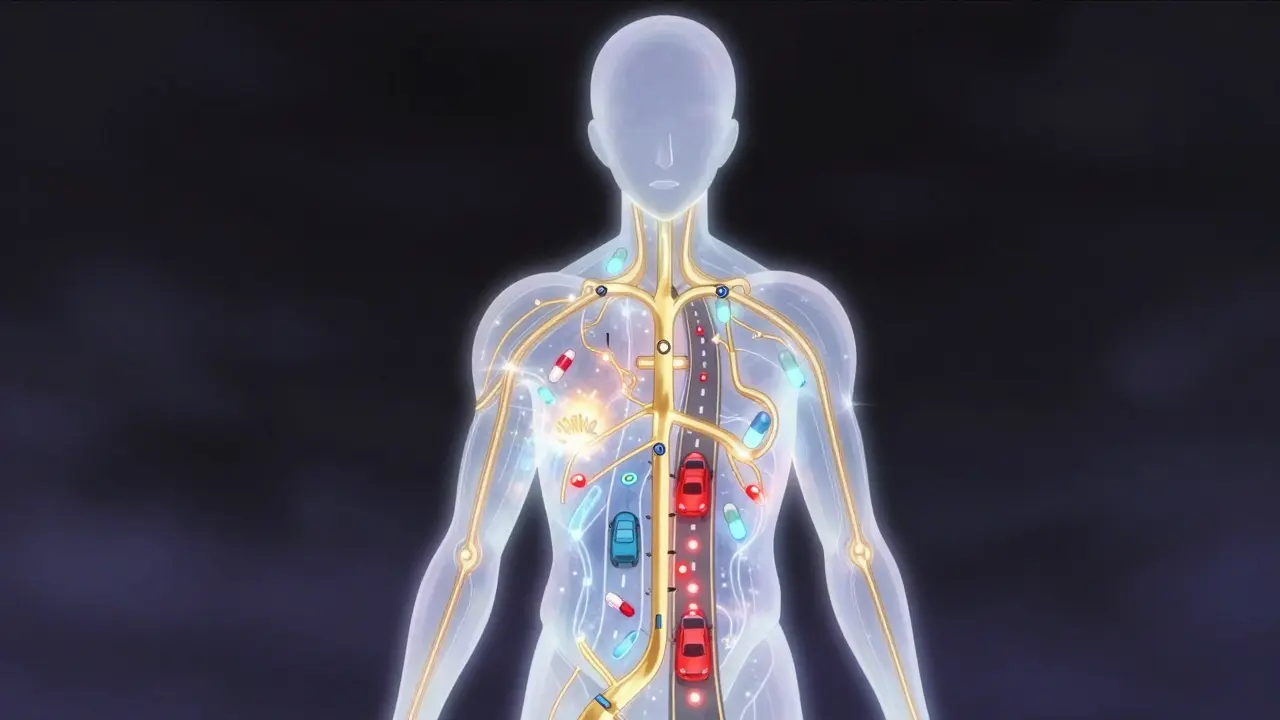
A pharmacokinetic interaction happens when one drug alters this journey for another. It’s like a traffic jam on the highway to your heart. The car (the drug) is fine, but the road conditions have changed.
- Absorption: Some drugs bind together in the stomach before they can even enter the bloodstream. For example, antacids containing calcium or magnesium can latch onto quinolone antibiotics like ciprofloxacin. According to FDA prescribing information, this binding can reduce antibiotic absorption by 75-90%. That means most of the medicine never makes it into your system to fight the infection.
- Distribution: Drugs travel through the blood attached to proteins. If Drug A kicks Drug B off the protein, more free Drug B circulates. Warfarin, a common blood thinner, is heavily bound to plasma proteins. If you introduce phenylbutazone (an older anti-inflammatory), it displaces warfarin, potentially increasing free warfarin concentration by 300%, leading to severe bleeding risks.
- Metabolism: This is the big one. Your liver uses enzymes to break down drugs so they can be eliminated. The Cytochrome P450 family, especially CYP3A4, handles about 75% of all metabolism-based interactions. If you take clarithromycin (an antibiotic), it inhibits CYP3A4. If you’re also taking simvastatin (for cholesterol), the enzyme can’t break it down fast enough. Studies in the New England Journal of Medicine show this can increase simvastatin exposure by 10-fold, raising the risk of muscle damage.
- Excretion: Kidneys filter drugs out of the body. Probenecid, used for gout, blocks the transporters that remove penicillin from the blood. This keeps penicillin levels high for longer, which was historically useful but requires careful dosing today.
The key takeaway? Pharmacokinetic interactions change the concentration of the drug at the site of action. They shift the dose-response curve horizontally. You either have too little drug (treatment failure) or too much (toxicity).
What Is Pharmacodynamics? (What the Drug Does to the Body)
If pharmacokinetics is about the journey, pharmacodynamics is about the destination. It describes the biochemical and physiological effects of the drug on its target receptors. A pharmacodynamic interaction occurs when two drugs affect the same physiological system, regardless of their concentrations.
Imagine two people pushing a car. If they push in the same direction, the car moves faster (additive/synergistic). If one pushes forward and the other backward, the car stalls (antagonistic). The strength of the pushers (drug concentration) matters less than the direction they are pushing.
There are three main types of pharmacodynamic interactions:
- Additive Effects: The combined effect equals the sum of individual effects. Taking aspirin and warfarin together increases bleeding risk because both interfere with clotting, albeit through different mechanisms. The result is a higher chance of hemorrhage than either drug alone would cause.
- Synergistic Effects: The combined effect is greater than the sum. This is dangerous with central nervous system depressants. Combining opioids with benzodiazepines doesn't just add sedation; it multiplies the suppression of breathing. This synergy is a leading cause of fatal overdoses.
- Antagonistic Effects: One drug blocks the effect of another. Naloxone is designed specifically to antagonize opioid receptors, reversing overdose effects immediately. Similarly, beta-blockers can block the intended heart-rate-lowering effect of beta-agonists used for asthma.
According to a 2023 review in Pharmacological Reviews, pharmacodynamic interactions account for 85% of central nervous system drug issues. These interactions shift the dose-response curve vertically-changing the maximum effect possible, not just the amount of drug needed.
Key Differences: Mechanism and Management
Why does distinguishing between PK and PD matter? Because the solution to the problem depends entirely on the mechanism. You cannot manage them the same way.
| Feature | Pharmacokinetic (PK) | Pharmacodynamic (PD) |
|---|---|---|
| Primary Change | Drug concentration in blood/tissues | Physiological response/receptor activity |
| Mechanism | ADME processes (Absorption, Distribution, Metabolism, Excretion) | Receptor binding, signal transduction, physiological pathways |
| Predictability | Often predictable via Therapeutic Drug Monitoring (TDM) | Harder to predict; depends on complex biological systems |
| Management Strategy | Dose adjustment, timing separation, monitoring levels | Avoid combination, switch drug class, monitor clinical signs |
| Common Culprits | CYP450 inhibitors/inducers, narrow therapeutic index drugs (Warfarin, Digoxin) | CNS depressants, anticoagulants, cardiovascular agents |
Dr. David E. Golan from Harvard Medical School puts it simply: PK interactions change the curve horizontally (you need more or less drug to get the same effect), while PD interactions change it vertically (the ceiling of effectiveness is lowered or raised).
In practice, PK interactions are often manageable. If an antibiotic raises statin levels, a doctor might lower the statin dose temporarily. However, PD interactions frequently require avoiding the combination altogether. For instance, combining MAO inhibitors with SSRIs carries a risk of serotonin syndrome-a life-threatening condition caused by excessive serotonin activity. No amount of dose reduction fixes this receptor-level clash; the drugs must not be mixed.

Real-World Clinical Scenarios
Let’s look at how these concepts play out in everyday healthcare. Understanding the 'why' behind these warnings helps patients advocate for themselves.
Scenario 1: The Blood Pressure Puzzle (PD Interaction)
Many patients take ACE inhibitors for hypertension. NSAIDs like ibuprofen are commonly used for pain. Individually, they are safe. Together, however, NSAIDs inhibit prostaglandins, which helps maintain kidney blood flow. ACE inhibitors rely on prostaglandins to some extent to lower blood pressure effectively. The result? The NSAID blunts the blood pressure-lowering effect of the ACE inhibitor. Dr. David J. Greenblatt notes this can reduce antihypertensive efficacy by 25-30%. This is a classic pharmacodynamic antagonism. The fix isn't changing the dose of the blood pressure med; it's switching to acetaminophen for pain.
Scenario 2: The Cholesterol Crisis (PK Interaction)
A patient starts clarithromycin for a sinus infection while on simvastatin. Clarithromycin inhibits CYP3A4. Simvastatin levels skyrocket. Within days, the patient develops severe muscle pain (myopathy). This is a pharmacokinetic issue. The management here involves stopping the antibiotic, lowering the statin dose significantly, or switching to a statin not metabolized by CYP3A4 (like pravastatin).
Scenario 3: The Sedative Stack (PD Synergy)
An elderly patient takes zolpidem for sleep and tramadol for back pain. Both depress the central nervous system. Even at normal doses, the combination can lead to respiratory depression. This is pharmacodynamic synergy. Electronic health records flag this as high severity because the outcome (stopped breathing) is catastrophic and immediate upon co-administration.
Who Is Most at Risk?
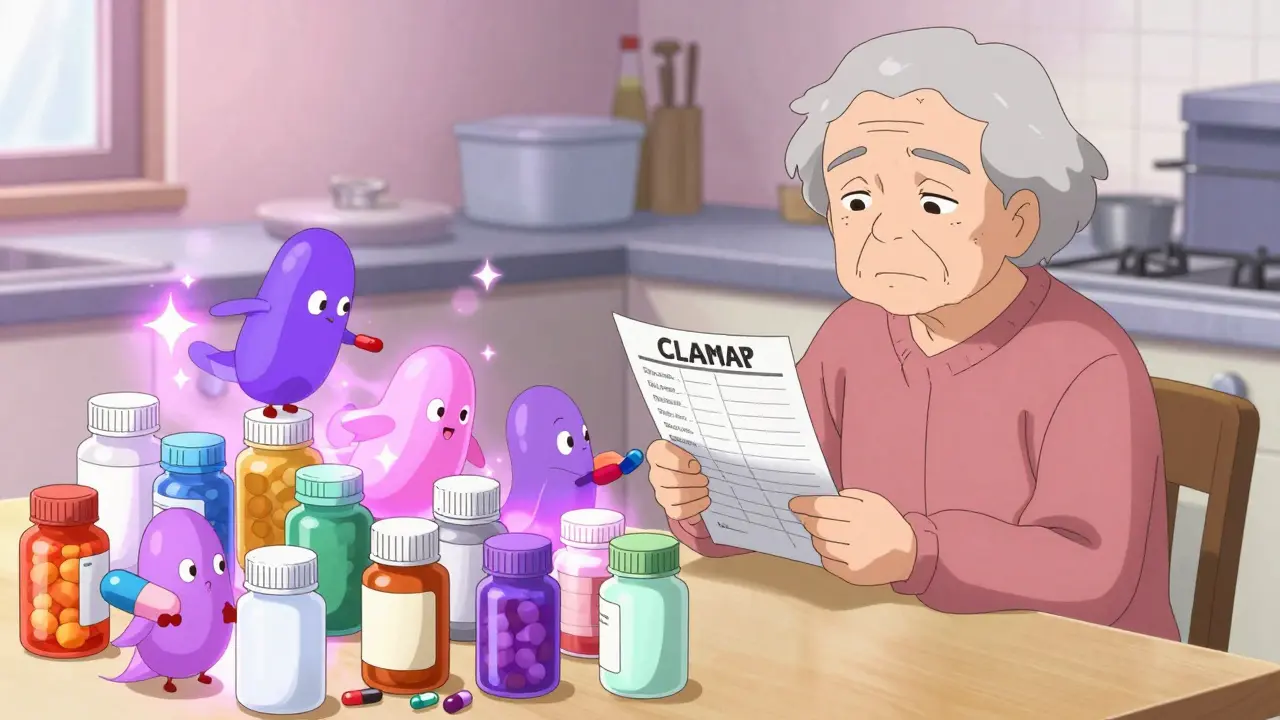
Not everyone is equally vulnerable. Polypharmacy-the use of multiple medications-is the biggest driver of interactions. According to CDC data, 15% of adults aged 65+ take five or more medications daily. This group faces the highest risk.
Narrow therapeutic index (NTI) drugs are particularly sensitive to pharmacokinetic changes. These include warfarin, digoxin, lithium, and phenytoin. A small change in concentration leads to toxicity or failure. The UK Specialist Pharmacy Service notes that PK interactions account for 68% of significant issues with NTI drugs.
Conversely, pharmacodynamic interactions dominate in cardiovascular care (52% of cases) and mental health treatments (78% of CNS interactions). Patients on complex regimens for heart disease or depression need close monitoring for additive side effects like bleeding, falls, or sedation.
How Technology and Guidelines Are Helping
We aren't left guessing. Modern healthcare relies on robust screening tools. Electronic Health Record (EHR) systems like Epic now flag over 1,200 high-severity pharmacokinetic and nearly 1,000 pharmacodynamic interactions automatically. These alerts are based on updated databases like the Flockhart Table.
Guidelines from organizations like the National Institute for Health and Care Excellence (NICE) and the American Society of Health-System Pharmacists (ASHP) emphasize proactive management. ASHP identifies CYP3A4-mediated interactions as the most critical PK issues requiring intervention.
Furthermore, pharmacogenomics is emerging as a tool to personalize risk. The Clinical Pharmacogenetics Implementation Consortium (CPIC) provides guidelines for 32 gene-drug pairs where genetic testing can predict how well a patient metabolizes certain drugs, adding another layer to PK prediction.
Machine learning models are also improving prediction accuracy. A 2023 study in Nature Medicine showed AI could predict pharmacodynamic interactions with 89% accuracy, outperforming traditional methods. While not yet standard in every clinic, this technology promises to catch subtle PD clashes that humans might miss.
Practical Steps for Patients and Clinicians
So, what should you do? Knowledge is power, but action saves lives.
- Maintain a Master List: Keep an updated list of all prescriptions, over-the-counter meds, and supplements. Bring it to every appointment. Supplements like St. John’s Wort are potent CYP3A4 inducers and can drastically lower drug levels.
- Ask About Timing: For absorption-based PK interactions, spacing doses can help. Take iron supplements two hours apart from thyroid medication. Ask your pharmacist if timing matters for your specific regimen.
- Monitor for Symptoms: Know the signs of toxicity. Muscle pain for statins, unusual bruising for blood thinners, extreme drowsiness for sedatives. Report these immediately.
- Utilize Pharmacist Expertise: Pharmacists are medication experts. A 2022 survey by the American College of Clinical Pharmacy found that pharmacist-managed services reduced adverse drug events by 42%. Don't hesitate to ask for a medication review.
- Understand the 'Why': If a doctor refuses to prescribe a combination, ask if it's a PK or PD issue. If it's PK, maybe a dose adjustment works. If it's PD, the alternative drug is likely necessary.
Drug interactions are inevitable in modern medicine, but adverse outcomes are not. By distinguishing between what the body does to the drug and what the drug does to the body, we can navigate polypharmacy safely.
What is the simplest way to remember the difference between PK and PD interactions?
Use this rule: Pharmacokinetics (PK) is about concentration (how much drug is in your blood). Pharmacodynamics (PD) is about effect (what the drug does to your body). PK asks "Where did the drug go?" PD asks "What did the drug do?"
Can food cause pharmacokinetic interactions?
Yes. Grapefruit juice is a famous example. It inhibits CYP3A4 enzymes in the gut, similar to some antibiotics. This can increase the absorption and blood levels of many drugs, including certain statins and blood pressure medications, leading to potential toxicity.
Are pharmacodynamic interactions always dangerous?
Not always. Sometimes clinicians intentionally combine drugs for synergistic effects, such as using two antibiotics to treat resistant infections. However, unintended PD interactions, like combining sedatives, are often dangerous due to additive side effects like respiratory depression.
How quickly do these interactions happen?
Pharmacodynamic interactions often occur immediately upon taking the drugs together. Pharmacokinetic interactions may take a few days to manifest, especially if they involve enzyme induction or inhibition, which takes time to build up or wash out in the system.
Who is most likely to experience drug interactions?
Older adults taking multiple medications (polypharmacy) are at highest risk. People with liver or kidney disease are also vulnerable because their bodies process and eliminate drugs differently, making them more susceptible to pharmacokinetic changes.