
Probiotic & Antibiotic Compatibility Planner
Ready to Calculate
Enter your antibiotic time and select your probiotic strain to see the recommended schedule.
Why Your Gut Needs Backup When You Take Antibiotics
You have an infection. Your doctor prescribes a course of antibiotics. You take the pills as directed. The infection clears up, but then comes the crash: stomach cramps, bloating, and sometimes severe diarrhea. This is not just bad luck; it is the collateral damage of your treatment. Antibiotics are broad-spectrum weapons. They kill the bacteria causing your illness, but they also wipe out the trillions of beneficial microbes living in your digestive tract.
This disruption leads to a condition known as Antibiotic-Associated Diarrhea (AAD), which affects up to 30% of patients taking these medications. In worse cases, the void left by dead good bacteria allows dangerous pathogens like Clostridioides difficile to take over, leading to serious infections. For years, doctors have recommended adding probioticslive microorganisms that provide health benefits when consumed in adequate amounts to the mix. The idea is simple: replenish the good guys while you fight the bad ones. But does this strategy actually work, or is it just another wellness trend? The science says yes, but with important caveats about which strains you choose and when you take them.
The Evidence: Do Probiotics Actually Prevent Diarrhea?
If you look at the data, the answer is largely positive. A landmark meta-analysis published in the New England Journal of Medicine by Hempel et al. in 2012 reviewed dozens of randomized controlled trials involving nearly 9,000 patients. The results were clear: probiotics reduced the risk of antibiotic-associated diarrhea by approximately 42%. More recent studies, including a 2022 systematic review in the Journal of Medical Microbiology, have reinforced these findings, showing even higher efficacy rates-up to 66% reduction-in preventing specific complications like C. diff infections when the right strains are used.
However, "probiotics" is a catch-all term that covers hundreds of different bacterial and yeast species. Not all of them are created equal. The effectiveness depends heavily on the specific strain. Research consistently highlights two main contenders with the strongest evidence base:
- Lactobacillus rhamnosus GG (LGG): This is one of the most studied strains in the world. It has shown significant success in preventing AAD in both children and adults. It adheres well to the intestinal lining and helps restore balance quickly.
- Saccharomyces boulardii: Unlike other probiotics, this is a beneficial yeast, not a bacterium. Because it is a fungus, antibiotics do not kill it. This makes it uniquely effective during active antibiotic therapy, as it survives the treatment intact and continues to protect your gut.
Other strains, such as certain Bifidobacterium species, show promise for general microbiome restoration after the antibiotic course ends, but they lack the same robust clinical data for acute prevention during treatment.
Timing Is Everything: How to Take Them Together
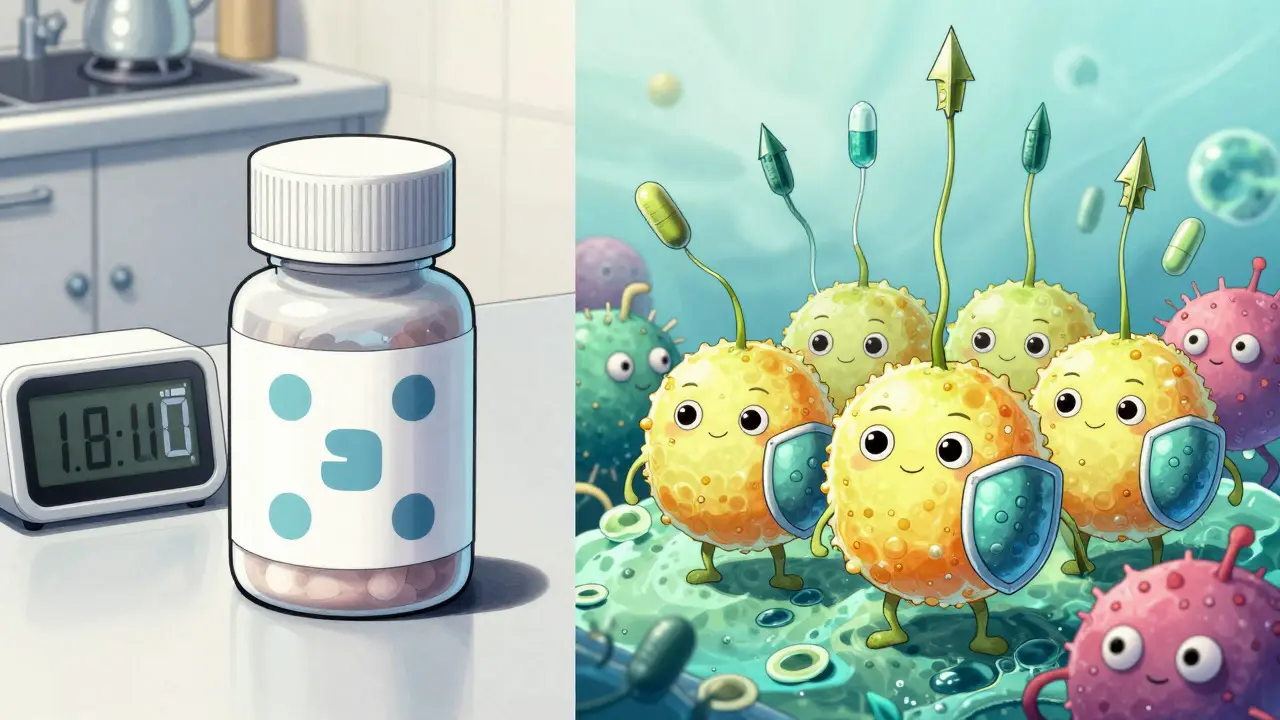
Here is where many people make a mistake. If you swallow your probiotic pill at the exact same time as your antibiotic pill, you might be wasting your money. Most antibiotics work by killing bacteria. Since most probiotics are live bacteria, the antibiotic can destroy the probiotic before it ever reaches your gut.
To get the benefit, you need to create a time buffer. The International Scientific Association for Probiotics and Prebiotics (ISAPP) recommends taking probiotics at least 2 to 3 hours apart from your antibiotic dose. For example, if you take your antibiotic in the morning with breakfast, take your probiotic at lunchtime or later in the afternoon. This gap allows the antibiotic to pass through your system without directly attacking the beneficial microbes you are trying to introduce.
There is one major exception to this rule: Saccharomyces boulardii. Since it is a yeast, it is naturally resistant to antibacterial drugs. You can take it closer to your antibiotic dose, though staggering it slightly still ensures optimal absorption. Always check the label instructions, but the 2-hour rule is a safe bet for bacterial probiotics like LGG.
Potential Risks and Who Should Avoid Them
While probiotics are generally considered safe for healthy individuals, they are not risk-free for everyone. The concept of "good bacteria" assumes your immune system is strong enough to keep them in check. If your immune system is compromised, these same organisms can become opportunistic pathogens.
You should consult your doctor before starting probiotics if you fall into any of these high-risk categories:
- Immunocompromised patients: People undergoing chemotherapy, those with HIV/AIDS, or recipients of organ transplants who are on immunosuppressants have a higher risk of developing bacteremia (bacteria in the blood) or fungemia (yeast in the blood) from probiotic supplements.
- Patients with central venous catheters: There have been documented cases of probiotic organisms entering the bloodstream through intravenous lines, leading to serious infections.
- Those with short bowel syndrome or severe pancreatitis: These conditions alter gut anatomy and function, increasing the risk of systemic infection from ingested microbes.
A study published in mSphere in 2025 also raised new concerns about antibiotic resistance genes (ARGs). Researchers found ARGs in 38% of commercial probiotic products tested. While the clinical significance of this is still debated, it suggests that some probiotics might inadvertently transfer resistance traits to other gut bacteria. This underscores the importance of choosing high-quality, third-party tested brands.
Choosing the Right Product: Quality Matters
The supplement industry is loosely regulated, which means not every bottle on the shelf contains what it claims. Independent testing organizations like ConsumerLab have found that label accuracy can vary wildly, with some products containing significantly fewer colony-forming units (CFUs) than advertised, or even expired cultures.
When shopping for a probiotic to use with antibiotics, look for these key features:
| Feature | Why It Matters | Recommended Standard |
|---|---|---|
| Strain Specificity | Generic labels like "Lactobacillus acidophilus" are less useful than full strain names like "L. acidophilus NCFM". | Look for the alphanumeric code after the species name. |
| CFU Count | You need enough live bacteria to survive stomach acid and colonize the gut. | Minimum 1 billion CFUs per dose; higher doses (10-50 billion) are common for therapeutic use. |
| Third-Party Testing | Ensures the product contains the stated strains and potency at the time of expiration. | Seals from USP, NSF, or ConsumerLab. |
| Storage Requirements | Some strains degrade at room temperature. | Follow storage instructions strictly; refrigerate if required. |
Avoid multi-strain blends unless they specifically include LGG or S. boulardii. Simpler formulas with proven strains are often more effective than complex cocktails with unverified ingredients. Also, be wary of products that claim to be "shelf-stable" without proper enteric coating technology, as heat can kill the cultures before you even open the bottle.

Addressing the Controversy: Do Probiotics Delay Recovery?
In 2018, a small study published in the journal Cell by Eran Elinav and colleagues sparked controversy. The researchers suggested that in some healthy individuals, taking multi-strain probiotics after antibiotics might actually delay the natural recovery of the gut microbiome. The theory was that the introduced probiotics competed with the native bacteria, preventing them from re-establishing their original dominance.
While this finding was alarming, it is important to contextualize it. The study involved only 21 participants, and the effects varied widely between individuals. Larger subsequent studies have not consistently replicated these findings. Furthermore, the primary goal of taking probiotics during antibiotic therapy is not necessarily to restore the pre-antibiotic microbiome exactly as it was, but to prevent immediate complications like diarrhea and C. diff infection. For most patients, especially those at high risk for side effects, the benefits of symptom prevention outweigh the theoretical risk of delayed ecological recovery.
Experts now suggest that instead of standard probiotics, some people might benefit from fecal microbiota transplantation (FMT) or personalized postbiotics for long-term restoration, but for the average person dealing with a standard antibiotic course, probiotics remain a valuable tool.
Practical Steps for Implementation
If you decide to add probiotics to your antibiotic regimen, follow this practical checklist to maximize benefits and minimize risks:
- Consult your healthcare provider: Especially if you have underlying health conditions or a weakened immune system.
- Select a proven strain: Choose a product containing Lactobacillus rhamnosus GG or Saccharomyces boulardii.
- Check the dosage: Aim for at least 1 billion CFUs daily, taken once or twice a day.
- Stagger the timing: Take the probiotic at least 2 hours after your antibiotic dose.
- Continue after treatment: Keep taking the probiotic for 1 to 2 weeks after finishing your antibiotics to help your gut fully recover.
- Monitor for side effects: Mild gas or bloating is common initially but should subside within a few days. If symptoms worsen, stop use and contact your doctor.
Remember, probiotics are a supportive measure, not a cure. They help mitigate the side effects of necessary medical treatments. By being informed about which strains work best and how to take them correctly, you can protect your gut health without compromising your recovery from infection.
Can I take probiotics at the same time as antibiotics?
It is generally recommended to wait at least 2 to 3 hours between taking your antibiotic and your probiotic. This prevents the antibiotic from killing the beneficial bacteria in the probiotic before they can reach your gut. The exception is Saccharomyces boulardii, a yeast-based probiotic that is resistant to antibiotics and can be taken closer to the antibiotic dose.
Which probiotic strain is best for preventing antibiotic-associated diarrhea?
The two most well-researched strains for this purpose are Lactobacillus rhamnosus GG (LGG) and Saccharomyces boulardii. Clinical studies have shown that these specific strains significantly reduce the risk of diarrhea and Clostridioides difficile infections compared to placebo or other less-studied strains.
Are there any risks associated with taking probiotics?
For most healthy people, probiotics are safe. However, individuals with weakened immune systems, those undergoing chemotherapy, patients with central venous catheters, or those with severe pancreatitis should consult a doctor first. There is a rare risk of infection (bacteremia or fungemia) in these vulnerable populations. Additionally, some people may experience mild gas or bloating when starting probiotics.
How long should I take probiotics after finishing antibiotics?
It is advisable to continue taking probiotics for at least 1 to 2 weeks after completing your antibiotic course. This helps ensure that your gut microbiome has sufficient support to recover and repopulate with beneficial bacteria, reducing the likelihood of lingering digestive issues.
Do all probiotics work the same way?
No, probiotic effects are highly strain-specific. Just because a product contains "Lactobacillus" does not mean it will have the same effect as one containing "Lactobacillus rhamnosus GG." Different strains have different functions and levels of scientific backing. Always look for the specific strain designation (usually followed by letters and numbers) on the label.
Earl Oleary
July 21, 2026 AT 11:00You people really think a $40 bottle of yogurt bacteria is going to outsmart a broad-spectrum antibiotic designed by pharmaceutical giants? It’s laughable. The article mentions the 2018 Cell study, but it buries the lede that probiotics might actually delay microbiome recovery in healthy adults. Most of you are just throwing money at a problem created by your own poor diet and over-reliance on meds. If you have to take antibiotics, you probably live wrong anyway. Stick to the timing advice if you must, but don’t expect miracles from a supplement industry that regulates itself like the Wild West.
Vineet Hawelia
July 21, 2026 AT 19:38While the skepticism expressed above has merit regarding regulation, the clinical data presented here is quite robust for specific strains. It is important to distinguish between general wellness marketing and evidence-based medicine. The distinction between Lactobacillus rhamnosus GG and generic blends is crucial. For those who must undergo antibiotic therapy, adhering to the 2-3 hour window is not merely a suggestion but a pharmacological necessity to ensure viability of the culture. One should proceed with caution and consult medical professionals, especially given the risks for immunocompromised individuals.
Laura Odom
July 22, 2026 AT 19:45oh my god stop acting like your gut is a fragile little snowflake that needs a babysitter every time you get sick. nature intended us to suffer through the aftermath of infection, its part of the cycle! these 'probiotics' are just corporate greed wrapped in a science-y label. i took them once and felt absolutely nothing except bloated and disappointed. why do we trust these lab-grown bugs more than our own bodies? its all about control. let the bad die so the good can rise, or whatever. also the spelling in this post is fine but the attitude is pretentious. lol.
Katie Caruthers
July 24, 2026 AT 15:24It is honestly terrifying how many people ignore the section on immunocompromised patients. I watched my cousin almost end up in ICU because she thought 'natural' meant safe while on chemo. You cannot just pop pills without understanding the moral responsibility of introducing foreign organisms into a weakened system. It feels like everyone is so eager to fix everything instantly that they forget biology takes time. We need to be more humble about our health choices instead of treating supplements like magic beans.
Megan Crossland
July 25, 2026 AT 11:21the yeast one is the only thing that makes sense since antibiotics cant kill fungi so why bother with the bacteria ones if they just die anyway. also most brands lie about the cfu count so youre basically eating expensive powder unless you buy from a brand that gets tested by third parties which costs way more. just eat fermented foods if you can handle them otherwise save your money. its all a scam mostly.
Jairam Prasad
July 26, 2026 AT 17:40In India, we have been using fermented foods like curd and kanji for centuries long before Western science started counting CFUs. The concept of balancing the gut after illness is ancient wisdom, not a new trend. However, the modern obsession with isolating single strains like LGG ignores the synergistic effect of diverse microbial communities found in traditional diets. Perhaps we should look less at the pill bottle and more at the plate. But then again, selling pills is more profitable than selling vegetables, no?
Gary Hull
July 27, 2026 AT 04:41everyone says lgg works but i tried it and got worse diarrhea. maybe its placebo for some and poison for others. the article says 42% reduction but what about the 58% who still got sick? thats huge. also who checks these studies? pharma companies paying researchers to say their competitor products work? seems fishy. i stick to drinking water and waiting it out. less risk of getting bacteremia from a contaminated capsule.
Padraic Cepek
July 27, 2026 AT 23:24This is another example of American over-medicalization. In other countries, people just tough it out. Why do we need a checklist for taking a pill? It’s pathetic. The government should ban these unregulated supplements before someone dies from a central venous catheter infection caused by a probiotic. Typical US nonsense where we try to hack our biology instead of living naturally. Waste of tax dollars researching this junk.
Mildred Fierce
July 28, 2026 AT 00:59The emotional toll of digestive distress is underestimated here. It is not just 'cramps,' it is a debilitating experience that ruins your quality of life. If a simple pill taken two hours apart can prevent that misery, it is worth the cost. The critics here sound like they enjoy suffering. The data on Saccharomyces boulardii is compelling because it bypasses the bacterial warfare entirely. Stop being contrarian and help people feel better. Your cynicism is draining.
Trey Newkerk
July 28, 2026 AT 05:56We are dancing around the real issue: the antibiotic resistance crisis. Taking probiotics might mask the symptoms while ARGs spread silently in our guts. The 2025 mSphere study mentioned is a ticking time bomb. We are feeding our guts resistance genes thinking we are helping. This is a false victory. The whole paradigm of 'good vs bad' bacteria is flawed. Microbes are complex ecosystems, not soldiers in a war. Wake up before you turn yourself into a superbug factory.