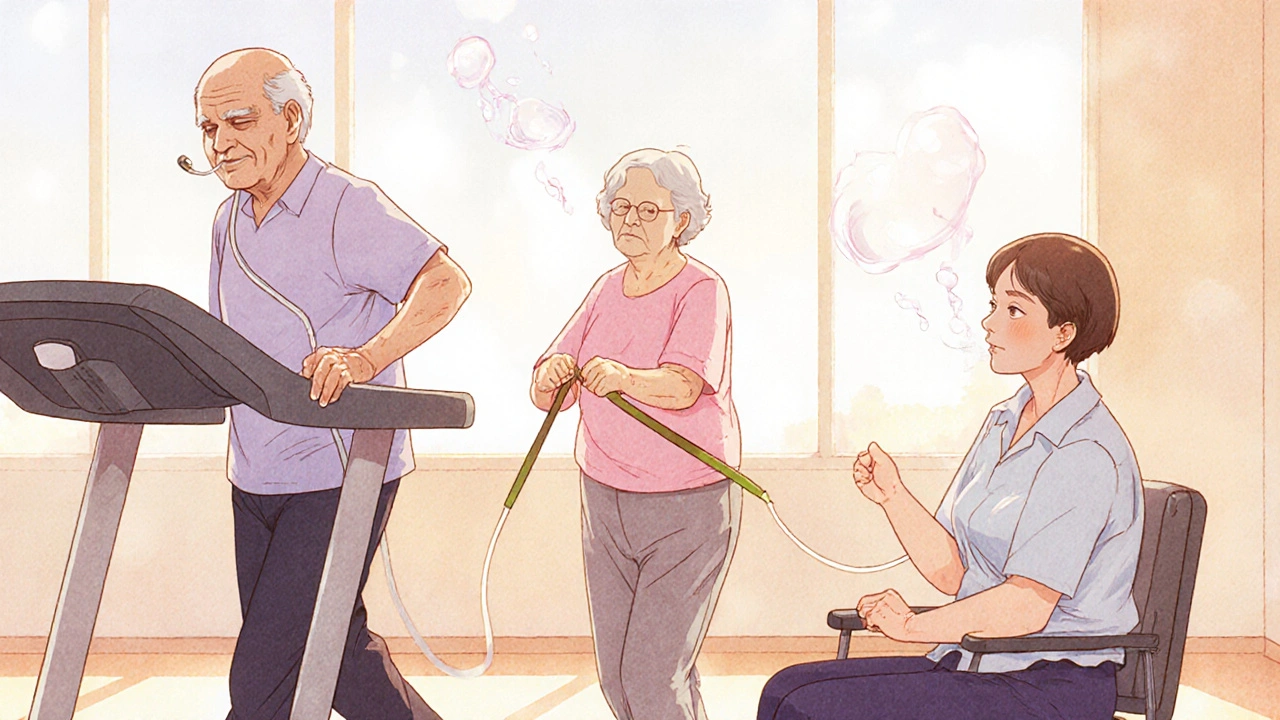
When you have a chronic lung disease like COPD, interstitial lung disease, or bronchiectasis, breathing isn’t just hard-it becomes the thing you think about every single day. You stop walking to the mailbox. You skip grocery trips. You avoid stairs. You feel tired even after sitting still. And no matter how many inhalers you use, the breathlessness doesn’t go away. That’s where pulmonary rehabilitation comes in-not as a miracle cure, but as the most proven, practical way to take back control of your life.
What Pulmonary Rehabilitation Actually Does
Pulmonary rehabilitation isn’t just exercise classes for people with lung problems. It’s a full program built around your needs, designed by a team of specialists: respiratory therapists, physical therapists, dietitians, nurses, and sometimes psychologists. The goal? To help you breathe easier, move better, and feel more confident doing everyday things. The science is clear. A 2023 review of 127 studies involving over 10,000 people found that those who completed pulmonary rehab improved their walking distance by an average of 38.5 meters on the 6-minute walk test-enough to go from needing to stop halfway to the mailbox to making it all the way without pausing. That’s not a small gain. That’s life-changing. It also reduces breathlessness. On the Medical Research Council scale, people saw a drop of 0.8 points-meaning they went from saying, “I get out of breath when walking up a hill,” to “I only get breathless when rushing.” That difference might sound minor, but for someone living with chronic lung disease, it’s everything.What’s Inside a Pulmonary Rehab Program?
Most programs last between 6 and 12 weeks, with sessions two to three times a week. Each session is about an hour to an hour and a half. Here’s what you can expect:- Exercise training: This isn’t about running marathons. It’s about rebuilding strength and stamina safely. Aerobic work like walking on a treadmill or using a stationary bike at 60-80% of your max effort. Strength training with light weights or resistance bands, focusing on legs, arms, and core. For some, neuromuscular electrical stimulation helps muscles fire better when they’re too weak to move on their own.
- Education: You’ll learn how your lungs work, why you feel short of breath, how your medications really help (and when they don’t), and how to spot the early signs of a flare-up. Many people say this part is the most valuable-they finally understand what’s happening in their body.
- Behavior change support: Quitting smoking? Managing anxiety? Eating better? These aren’t side notes-they’re part of the program. Psychologists and counselors help you build habits that stick.
- Monitoring and feedback: Your progress is tracked with tests like the 6-minute walk test, spirometry, and quality-of-life questionnaires. You’ll see your numbers improve over time, and your team adjusts your plan as you get stronger.
Who Can Benefit?
Pulmonary rehab was first created for people with COPD, but it’s now recommended for anyone with a chronic lung condition that limits their daily life. That includes:- COPD (all stages, but especially moderate to severe)
- Interstitial lung disease (like pulmonary fibrosis)
- Pulmonary hypertension
- Bronchiectasis
- Cystic fibrosis
- People preparing for or recovering from lung transplant
How It Compares to Just Taking Medication
Inhalers and pills help, but they don’t fix the muscle weakness, the fear of breathlessness, or the isolation that comes with chronic lung disease. Pulmonary rehab does. A 2023 analysis showed that rehab improved exercise capacity more than any single bronchodilator. The effect size? 0.91 for rehab versus 0.41 for medication. For dyspnea? 0.82 for rehab versus 0.35 for medication. For quality of life? 0.78 versus 0.38. And when compared to doing home exercises alone? Rehab leads to 37% greater gains in walking ability. Why? Because supervision, feedback, and accountability make all the difference. You’re not guessing if you’re doing it right. You’re guided, encouraged, and pushed just enough to improve-not hurt.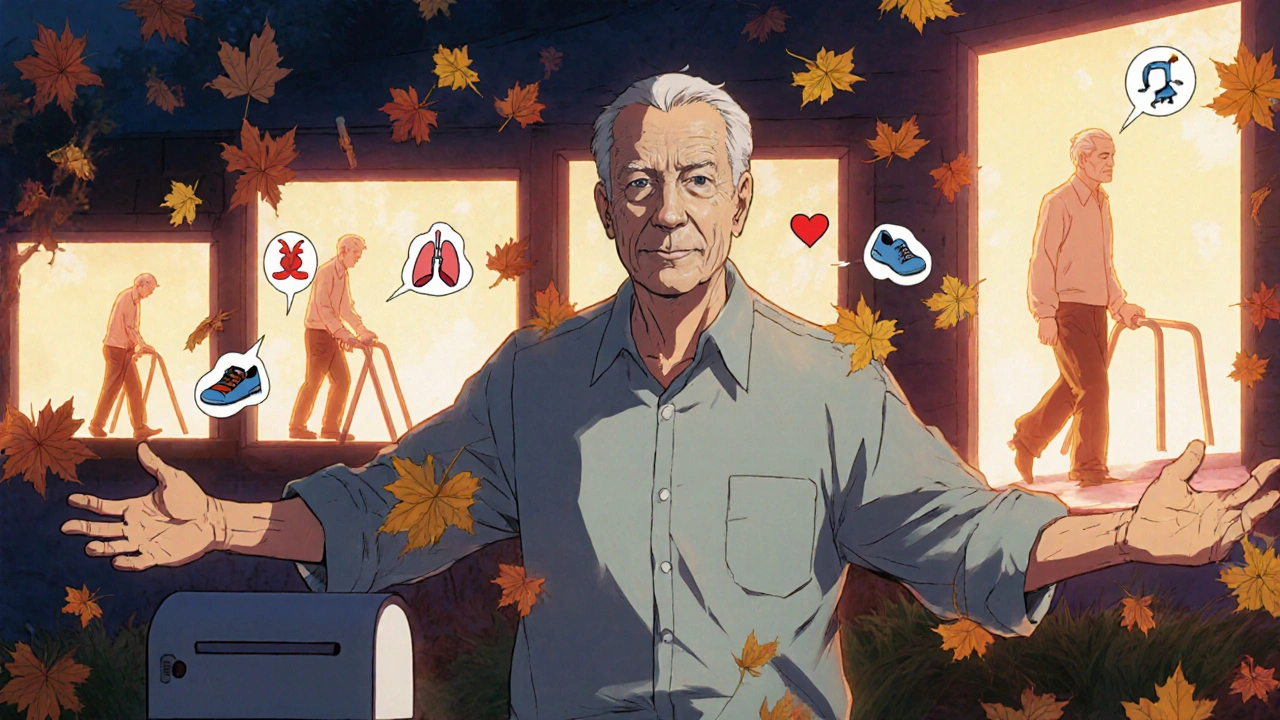
Real Stories, Real Changes
One 68-year-old man with COPD GOLD stage 3 walked just 182 meters on the 6-minute walk test before rehab. After 12 weeks? He walked 327 meters. For the first time in five years, he shopped for groceries on his own. Another participant, who’d been on 1 liter of oxygen all day, went off oxygen during daily activities after rehab. That’s not rare. Reddit threads from people with COPD are full of similar stories: “I can walk my dog now,” “I stopped canceling family dinners,” “I slept through the night for the first time in years.” A 2022 study of 127 people found that 89% said the most meaningful change was being able to walk to the mailbox without stopping. That’s not a statistic-that’s dignity.Barriers to Getting Started
The problem isn’t that rehab doesn’t work. It’s that most people who need it never get it. In the U.S., only 10-15% of eligible COPD patients join a program. In the UK, it’s about 12%. Why? Three big reasons:- Access: Only 57% of U.S. counties have a certified rehab program. If you live in a rural area, you might drive over an hour just for one session.
- Referral: Many doctors don’t know how to refer patients-or assume they’re “too sick” or “too old.” But age and severity aren’t barriers. The data shows even very frail patients benefit.
- Cost and coverage: Medicare covers 36 sessions per year, but you need a doctor’s order proving medical necessity. Some private insurers are slower to cover it. And even with coverage, you might still pay for transportation, parking, or missed work.
Telehealth and Home-Based Options
The pandemic changed everything. Telehealth rehab programs now show results just as good as in-person ones. A 2023 JAMA trial found no meaningful difference in walking distance or breathlessness between people doing rehab at home with video coaching versus those going to a clinic. Home programs use wearable sensors to track heart rate, oxygen levels, and movement. You get weekly check-ins with a therapist. Some use AI tools to adjust your workout based on how you’re feeling that day. These programs are growing fast-and they’re helping close the access gap.
What Happens After the Program Ends?
The biggest fear? “What if I lose all the progress?” The good news: most people keep the gains if they stay active. Rehab doesn’t end when the 12 weeks are over-it becomes your new normal. Many programs offer maintenance sessions once a week or monthly check-ins. Others connect you with local walking groups or community centers with low-impact exercise classes. The key is consistency. You don’t need to go back to a clinic. You need to keep moving. Walk a little more each day. Do your strength exercises twice a week. Use your breathing techniques when you feel tight. That’s the real success.How to Get Started
If you think pulmonary rehab could help you:- Ask your doctor for a referral. Say: “I’m still breathless even with my meds. Is pulmonary rehab right for me?”
- Check if your insurance covers it. Medicare does-but you’ll need a written order.
- Look for programs accredited by the American Association of Cardiovascular and Pulmonary Rehabilitation (AACVPR). They follow national standards.
- Call the American Lung Association’s Lung HelpLine at 1-800-LUNGUSA. They can help you find local programs.
- If travel is an issue, ask about home-based or telehealth options. Many centers now offer them.
Final Thoughts
Pulmonary rehabilitation isn’t a last resort. It’s the most effective thing you can do after a chronic lung disease diagnosis. It doesn’t reverse damage. But it rebuilds your ability to live. It turns fear into confidence. It turns isolation into connection. It turns “I can’t” into “I did.” The data doesn’t lie. The stories don’t lie. And if you’re still breathing-no matter how hard it feels-you deserve to feel better.Is pulmonary rehabilitation only for people with COPD?
No. While it was first developed for COPD, pulmonary rehabilitation is now recommended for anyone with a chronic lung condition that causes symptoms or limits daily activity. This includes interstitial lung disease, pulmonary hypertension, bronchiectasis, cystic fibrosis, and even people preparing for or recovering from lung transplant. The key factor isn’t the diagnosis-it’s whether breathing difficulties are affecting your life.
How long does it take to see results from pulmonary rehab?
Most people start noticing changes within 2 to 4 weeks. You might find you can walk further without stopping, or that you don’t need to rest as much after showering. By week 6 to 8, improvements in exercise capacity, breathlessness, and quality of life are typically measurable and significant. The full benefits usually peak around 12 weeks, which is why most programs last that long.
Do I need to be in good shape to join pulmonary rehab?
No. In fact, pulmonary rehab is designed for people who are already out of shape. The exercises start at a level you can handle-even if that means standing and doing arm movements for 5 minutes. The goal isn’t to push you to exhaustion. It’s to safely rebuild your strength and endurance over time. Many participants begin using oxygen or a walker and leave the program walking without assistance.
Can I do pulmonary rehab at home?
Yes. Home-based pulmonary rehab programs are now widely available and proven to be just as effective as in-person programs for most people. These programs use video calls, wearable monitors, and structured exercise plans sent to your phone or tablet. You still get support from a therapist, regular check-ins, and personalized adjustments. This is a great option if you live far from a clinic, have mobility issues, or prefer the comfort of home.
Will insurance cover pulmonary rehabilitation?
Medicare covers up to 36 sessions of pulmonary rehab per year if your doctor certifies that it’s medically necessary. Many private insurers also cover it, but you may need a referral or pre-authorization. Coverage varies by plan, so check with your provider. Even if you have coverage, you might still pay for transportation or parking. Some programs offer financial assistance or sliding-scale fees if cost is a barrier.
What happens if I miss a session?
Missing one session won’t ruin your progress, but consistency matters. Most programs have an average attendance rate of 78%. If you know you’ll miss a session, call ahead. Some programs offer make-up sessions or home exercises to keep you on track. The key is to not let missed sessions turn into long breaks. If you’re struggling with motivation, talk to your rehab team-they can adjust your plan or help you find ways to stay engaged.
Is pulmonary rehab safe for older adults?
Yes. Age is not a barrier. In fact, older adults often benefit the most because they’ve lost the most function over time. Rehab programs are tailored to each person’s abilities, regardless of age. Many participants are in their 70s and 80s. Safety is built into the program-vital signs are monitored, exercises are adjusted, and staff are trained to recognize signs of distress. If you’re stable enough to leave your house, you’re likely stable enough to join.
How long do the benefits last?
The benefits can last for years-if you keep up with what you learned. Studies show that people who continue exercising regularly after rehab maintain their improved walking distance and breathlessness levels. Those who stop all physical activity tend to lose gains within 6 to 12 months. The goal of rehab isn’t just to get better during the program-it’s to give you the tools, confidence, and habits to stay better for life.
Lauryn Smith
December 2, 2025 AT 20:18Pulmonary rehab changed my life. I was down to 150 meters on the 6-minute walk and couldn’t carry a laundry basket. After 12 weeks, I walked to the corner store alone for the first time in 3 years. No magic pill did that. Just sweat, patience, and people who didn’t give up on me.
Bonnie Youn
December 3, 2025 AT 17:53STOP waiting for your doctor to suggest it. Go in and demand it. They’ll tell you you’re too old too sick too anything but the data doesn’t care. You’re alive and you deserve to walk to the mailbox without crying. Do it for yourself. Now.
Amber-Lynn Quinata
December 4, 2025 AT 03:24I’m so tired of people acting like this is some new age miracle. My uncle did this and he still died of COPD two years later. You can’t fix broken lungs with yoga and treadmills. This is just a feel-good distraction for people who don’t want to accept the truth. 😔
Suzanne Mollaneda Padin
December 4, 2025 AT 13:42My mom did rehab after her lung transplant. She started with a walker and ended up gardening every morning. The education part was the game-changer-she finally understood why she felt dizzy after showering. It wasn’t the oxygen-it was the salt in her diet. Small things matter.
Erin Nemo
December 5, 2025 AT 13:59Just did my first session. I was scared I’d collapse. Ended up walking 5 minutes on the treadmill. Felt like a champion. Team high-fived me. I cried. This is the first time I’ve felt like I’m not just waiting to die.
ariel nicholas
December 5, 2025 AT 21:14Rachel Stanton
December 7, 2025 AT 03:53As a respiratory therapist, I’ve seen patients go from needing 10L of O2 to walking 400m without it. The science is rock solid. But the real win? The confidence. People stop apologizing for breathing hard. They stop canceling plans. That’s not just clinical-it’s existential. And yes, telehealth works. I’ve coached 70-year-olds in rural Kansas via Zoom. They’re thriving.
Charlotte Collins
December 8, 2025 AT 19:10Let’s be real-this program works because it forces you to be accountable. The moment you stop lying to yourself about your limits, progress happens. But most people don’t want that. They’d rather blame their meds, their age, their weather. The truth? You’re not too sick. You’re too scared to try.
Margaret Stearns
December 10, 2025 AT 18:50i did rehab last year. i thought i was too weak. turns out i was just scared. now i walk 2 miles every morning. my neighbor says i look like i have a secret. i do. i’m not done yet.
amit kuamr
December 11, 2025 AT 19:51Scotia Corley
December 13, 2025 AT 07:51While the statistical outcomes presented are statistically significant, one must consider the confounding variables inherent in self-selected cohorts. The placebo effect, coupled with increased social interaction, may account for a substantial portion of the perceived benefit. A double-blind, randomized controlled trial with a sham intervention is warranted before widespread institutional endorsement.
elizabeth muzichuk
December 13, 2025 AT 18:32I know someone who did this and then got COVID and died. So what’s the point? You think you’re getting better, but the system is just giving you false hope. They want you to think you’re in control. But you’re not. You’re just another patient in a long line. 💔
Debbie Naquin
December 15, 2025 AT 13:49Rehab isn’t about reversing pathology. It’s about redefining agency. When your body betrays you, movement becomes a radical act of self-assertion. The 6-minute walk isn’t a test-it’s a ritual of reclamation. You’re not training lungs. You’re retraining identity.
Karandeep Singh
December 17, 2025 AT 02:00Bonnie Youn
December 18, 2025 AT 03:12And if you’re thinking ‘I’m too old’-I’ve seen 87-year-olds lift 5-pound weights and cry because they haven’t felt their arms work in 10 years. Age is just a number. Fear is the real disease. Get up. Show up. You’ve got this.