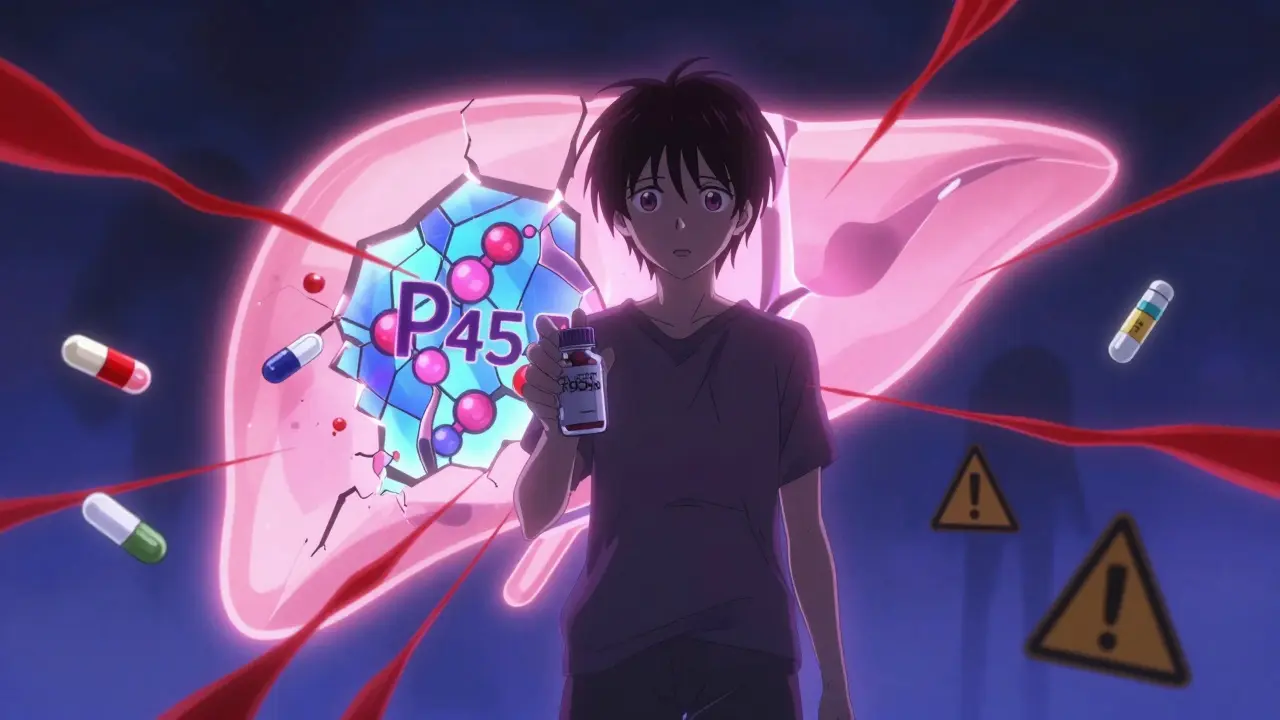
Most people take quercetin supplements thinking they’re just getting a natural antioxidant from apples and onions. But if you’re on any prescription medication, that daily pill could be quietly changing how your body handles your drugs-sometimes dangerously.
What Quercetin Actually Does to Your Liver
Quercetin isn’t just a plant pigment. At high doses-like those found in supplements-it acts like a molecular wrench thrown into your body’s drug-processing system. Specifically, it blocks key enzymes in your liver and gut called cytochrome P450 (CYP). These enzymes are responsible for breaking down over 70% of all prescription medications.
When quercetin shuts down CYP3A4, CYP2D6, and CYP2C19, your body can’t clear drugs the way it should. That means those drugs build up in your bloodstream. For some people, this isn’t just a minor bump-it’s a spike. Studies show drug levels can jump 20% to over 300% when taken with high-dose quercetin.
It’s not theoretical. In lab tests, quercetin blocked CYP2D6 by 70-85% at concentrations you can actually reach with a 500 mg supplement. That’s stronger than some prescription inhibitors doctors use on purpose. And it doesn’t stop at enzymes. Quercetin also jams up transporter proteins like OATP1B1 and BCRP, which control how drugs move into and out of cells. That’s a double hit: less breakdown, less removal.
Which Medications Are Most at Risk?
Not all drugs are affected equally. The real danger lies with medications that have a narrow therapeutic window-where the difference between a helpful dose and a toxic one is tiny.
- Warfarin (Coumadin): Quercetin can raise INR levels by 0.8 to 1.5 points. That’s enough to turn a stable patient into someone at risk of internal bleeding.
- Cyclosporine: Used after transplants, this drug must stay in a very tight range. Quercetin can push trough levels up 30-50%, raising the risk of kidney damage.
- Abemaciclib, Abrocitinib: These cancer and eczema drugs are metabolized by CYP3A4. Quercetin can raise their blood levels by 25-50%, increasing side effects like severe diarrhea, fatigue, and liver toxicity.
- Acenocoumarol: Another blood thinner. Quercetin increases its effect by 30-45%, with no way to predict who’s vulnerable.
- DOACs (apixaban, rivaroxaban): Even though these newer blood thinners don’t rely as heavily on CYP enzymes, quercetin still interferes with their transporters. The result? Up to 35% higher exposure. That’s why pharmacists now advise avoiding quercetin entirely if you’re on these drugs.
- Acetaminophen: Surprisingly, even common painkillers aren’t safe. Quercetin can raise levels by 20-30%, increasing the chance of liver injury-especially in people who drink alcohol or have existing liver issues.
These aren’t rare cases. In 2021, a study of 18.3 million Americans found that 42% of quercetin users took more than 500 mg per day. That’s the threshold where interactions become likely. And 23% took over 1,000 mg-doses linked to real-world toxicity in animal models.
Food vs. Supplements: Why the Difference Matters
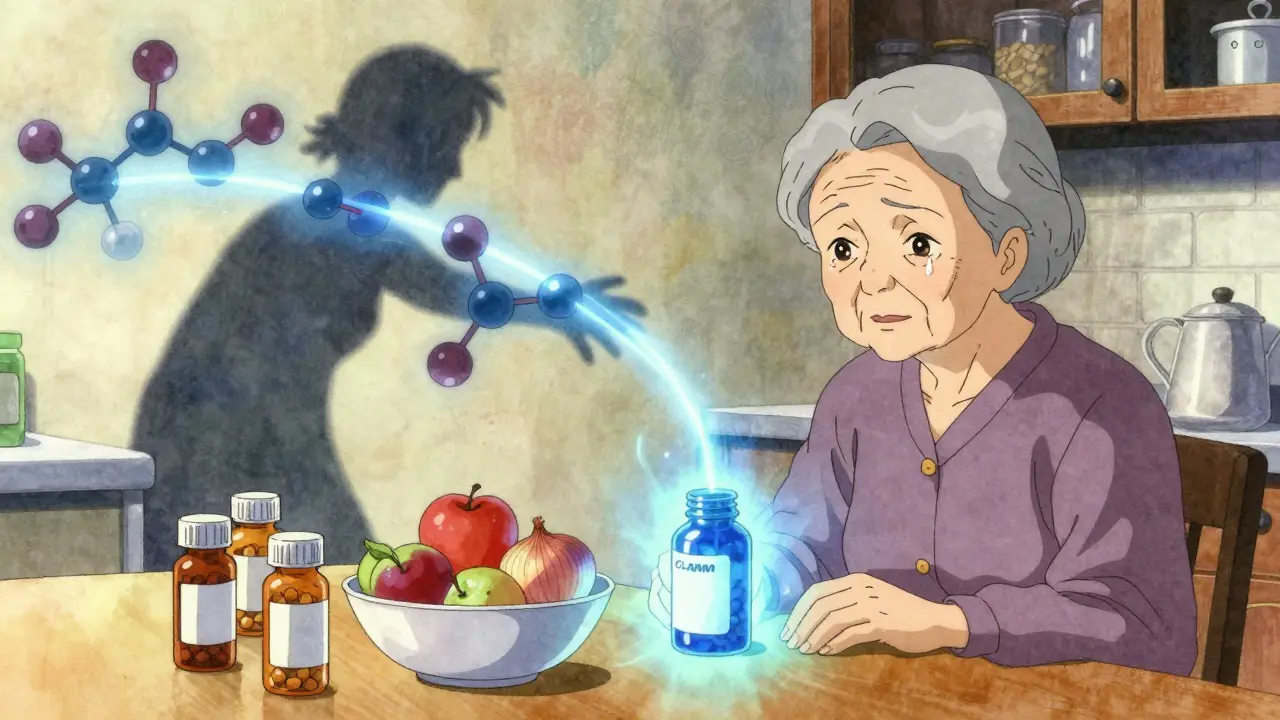
Here’s the twist: eating quercetin-rich foods like capers, red onions, or apples won’t cause these problems. Why? Because the body absorbs less than 2% of the quercetin from food. Plus, it’s bound to sugars (glycosides), which makes it harder to inhibit enzymes.
Supplements are different. They deliver pure quercetin aglycone-no sugar attached-and in doses that can be 100 times higher than what you’d get from diet. A single 500 mg pill equals the quercetin in over 100 apples. And unlike food, supplements bypass the natural limits your body uses to control absorption.
Even worse, many people don’t realize they’re taking quercetin. It’s hidden in “immune support” blends, “anti-inflammatory formulas,” and “natural allergy relief” products. Labels rarely say “quercetin” clearly. You might think you’re just taking vitamin C and zinc-and unknowingly risk a drug interaction.
Who’s Most at Risk?
Not everyone who takes quercetin will have an issue. But some groups are far more vulnerable.
- People over 65: Their liver and kidney function slows down. Studies show they clear quercetin metabolites 25-40% slower than younger adults, meaning it lingers longer and builds up.
- People on multiple medications: If you’re taking five or more drugs, the chance of overlapping enzyme inhibition skyrockets. Quercetin doesn’t just affect one pathway-it hits three major ones at once.
- Patients with liver or kidney disease: If your body can’t process drugs well already, adding quercetin pushes you over the edge.
- Transplant recipients: Cyclosporine and tacrolimus are life-saving but deadly if levels drift. Quercetin has no place in their regimen.
And here’s something most people miss: quercetin doesn’t just affect the liver. It also blocks enzymes in the gut wall. That means even if your liver is fine, the drug never even gets into your bloodstream the way it should. That’s why some interactions happen faster and stronger than expected.
What Should You Do?
If you’re on any prescription medication and take quercetin, stop assuming it’s harmless. Here’s what to do:
- Check your supplement label. Look for “quercetin” on the ingredients. If it’s not listed, check the “proprietary blend” section-sometimes it’s hidden there.
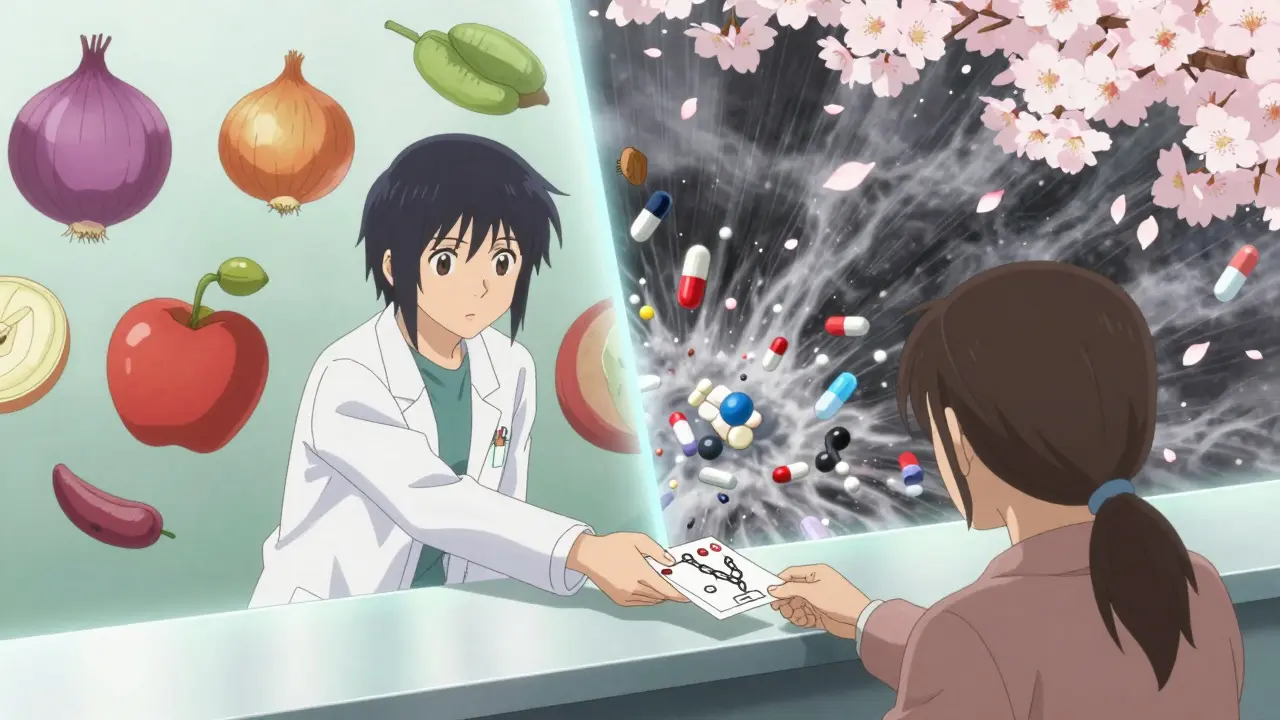
- Ask your pharmacist. Pharmacists have access to drug interaction databases. They can tell you in seconds if your meds are risky with quercetin.
- Don’t rely on “natural”. Just because something comes from a plant doesn’t mean it’s safe with drugs. Grapefruit is natural too-and it’s banned with dozens of medications.
- If you must take it, separate doses. Waiting 4-6 hours between your medication and quercetin can reduce interaction risk by 30-50%, according to pharmacokinetic models.
- Never exceed 500 mg/day. That’s the upper limit recommended by clinical pharmacists. Anything higher increases risk without proven benefit.
And if you’re not sure whether you’re taking quercetin? Stop taking all supplements for two weeks. Then restart one at a time. If your side effects change, you’ve found the culprit.
The Bigger Picture: Why This Isn’t Getting More Attention
Quercetin is a $387 million market. The supplement industry doesn’t have to prove safety before selling it. The FDA has issued 17 warning letters to quercetin brands for making illegal drug claims-but still, no mandatory labeling for interactions.
There are 147 documented cases of suspected quercetin-drug interactions in the FDA’s system. But experts estimate 90-95% go unreported. Most people don’t connect a new headache or bruising to a supplement they’ve been taking for months.
That’s changing. The FDA is working on a 2024 rule that would force high-risk supplements like quercetin to carry clear interaction warnings. But until then, the burden is on you.
This isn’t about fear. It’s about awareness. Quercetin isn’t evil. But treating it like a harmless vitamin is dangerous. When you mix supplements with medications, you’re playing with pharmacology-without a doctor’s oversight.
If you’re taking any drug with a narrow therapeutic window-or even just one that makes you feel different lately-ask yourself: Could quercetin be the hidden variable?”
Can I take quercetin with blood pressure meds?
It depends. Quercetin can interact with some blood pressure drugs, especially those metabolized by CYP3A4 or CYP2D6, like amlodipine, metoprolol, or carvedilol. It may raise their levels, leading to dizziness, slow heart rate, or low blood pressure. If you’re on these meds, avoid quercetin supplements or talk to your pharmacist first. Eating onions or apples is fine.
Does quercetin affect thyroid medication?
There’s no direct evidence quercetin interferes with levothyroxine (Synthroid) through enzyme inhibition. But some studies suggest it may reduce absorption by binding to the drug in the gut. To be safe, take levothyroxine on an empty stomach and wait at least 4 hours before taking quercetin. Never take them together.
How long does quercetin stay in your system?
Quercetin’s half-life is about 11-28 hours, but its metabolites linger longer. In older adults, clearance slows by up to 40%. That means even if you take it once a day, it can build up over time. For drug interactions, it’s not about timing one dose-it’s about consistent exposure. Stopping for 3-5 days is usually needed before interactions fully resolve.
Is rutin safer than quercetin?
Yes. Rutin is a glycoside form of quercetin found naturally in foods. It’s poorly absorbed and doesn’t inhibit CYP enzymes nearly as strongly. If you want the antioxidant benefits without the risk, choose rutin or stick to whole foods. Most supplement labels won’t make this clear, so check the ingredient carefully.
Can I take quercetin with statins?
Many statins-like atorvastatin, simvastatin, and lovastatin-are broken down by CYP3A4. Quercetin can raise their levels significantly, increasing the risk of muscle damage (rhabdomyolysis). This is a serious, potentially life-threatening interaction. Avoid quercetin supplements if you’re on these statins. Rosuvastatin and pravastatin are safer options since they don’t rely heavily on CYP3A4.
Are there any supplements that are safe to take with quercetin?
Vitamins like C, D, and E, as well as minerals like magnesium and zinc, don’t rely on the same enzyme pathways and aren’t known to interact with quercetin. Probiotics and fiber supplements are also generally safe. But if you’re on any prescription drug, always check with your pharmacist before adding any new supplement-even if it seems harmless.
Stacy Thomes
January 24, 2026 AT 05:42OMG I JUST REALIZED I’VE BEEN TAKING QUERCETIN WITH MY WARFARIN FOR SIX MONTHS-MY INR WAS FLUCTUATING LAST MONTH AND I THOUGHT IT WAS THE WEATHER. I’M DELETING EVERY SUPPLEMENT IN MY CABINET RIGHT NOW. THANK YOU FOR THIS POST.
Dawson Taylor
January 26, 2026 AT 00:05The biochemical mechanism described here is both elegant and alarming. The inhibition of cytochrome P450 isoforms by quercetin at pharmacologically relevant concentrations represents a clinically significant perturbation of drug homeostasis. One must question the regulatory oversight of nutraceuticals that function as pharmacodynamic modulators without labeling requirements.
Oladeji Omobolaji
January 26, 2026 AT 23:52Man, this is wild. Back home in Nigeria, people just swallow whatever powder they see on Instagram. I told my cousin he shouldn’t mix his blood pressure pills with that ‘natural immunity booster’-he thought I was being paranoid. Now I’m sending him this link.
dana torgersen
January 28, 2026 AT 19:55Okay so I just read this and I’m like… wait… I’ve been taking quercetin with my abemaciclib because I thought it’d help with inflammation?? And I’ve been feeling so tired and nauseous?? I didn’t think it was the supplement because it’s ‘natural’… like… why do we assume natural=good?? I’m so mad at myself… and also… why isn’t this on the bottle???
Sallie Jane Barnes
January 29, 2026 AT 01:51This is exactly the kind of information that should be mandatory on every supplement label. We are not children. We deserve to know what we’re putting into our bodies-especially when it can interfere with life-saving medications. Thank you for writing this with such clarity and urgency.
Susannah Green
January 30, 2026 AT 15:57Just as a pharmacist, I see this every week. Patients say, ‘I take this for my allergies,’ and I check their med list and find they’re on cyclosporine or a DOAC. I’ve had to call doctors to adjust doses because of quercetin. The worst part? They never mention the supplement unless I ask. Always ask about supplements-don’t assume. And if you’re on anything with a narrow therapeutic window, skip quercetin entirely. Rutin is your friend.
Kerry Moore
January 31, 2026 AT 03:07I appreciate the depth of this post. It’s rare to see such a thorough breakdown of pharmacokinetic interactions without sensationalism. The distinction between dietary intake and supplemental doses is critical, and the data on enzyme inhibition percentages is compelling. This should be required reading for anyone managing polypharmacy.
Sue Stone
February 1, 2026 AT 04:03So… I’ve been taking quercetin with my statin. Not the good kind. The one that makes me feel like I’ve been hit by a truck. I thought it was just aging. Guess I know what I’m cutting out this weekend.
Vanessa Barber
February 2, 2026 AT 07:57Yeah but have you considered that maybe the real problem is that we’re all on too many drugs to begin with? Maybe we should be fixing the root cause instead of blaming a plant compound that’s been around since humans ate plants.
charley lopez
February 3, 2026 AT 07:41Pharmacokinetic modeling indicates that quercetin’s inhibition of CYP3A4 and OATP1B1 is concentration-dependent and non-competitive. The aglycone form exhibits significantly higher bioavailability and enzyme affinity compared to glycosylated analogues. This explains the differential risk profile between dietary sources and isolated supplement formulations.
Janet King
February 4, 2026 AT 10:25My mom is 72 and takes five meds including warfarin. I printed this out and put it next to her pill organizer. If you’re on meds and taking supplements, please talk to your pharmacist. They’re the real superheroes here.
Andrew Smirnykh
February 5, 2026 AT 04:20In my country, we have a saying: ‘The medicine that heals can also kill if used without wisdom.’ This post is wisdom. Thank you for translating science into something people can actually use. I’ll share it with my uncle who’s a transplant patient-he’s been taking ‘immune boosters’ from a friend. He needs to hear this.