
Getting ready for cancer treatment brings a lot of questions, and honestly, it’s normal to feel overwhelmed. One of the biggest worries isn’t just the cancer itself, but what the treatment will do to your body day-to-day. Radiation therapy is a powerful tool that targets cancer cells, but it doesn't always spare the healthy tissue nearby. This means you might face specific challenges like sensitive skin or extreme tiredness.
You aren't alone in this. Statistics show that about 95% of people receiving external beam radiation experience some form of skin reaction. Similarly, roughly three out of four patients report feeling significant fatigue. While these numbers sound scary, knowing exactly what to expect changes everything. Instead of being caught off guard, you can prepare your routine, pick the right products, and build a plan for getting through those days. This guide breaks down the science behind the side effects and gives you actionable steps to protect your skin and manage your energy levels effectively.
Understanding Radiation Side Effects
Not every side effect looks the same for everyone. It depends heavily on where the treatment is focused and your own body's response. Medical experts generally group these reactions into two main buckets: acute effects and late effects. Acute effects are the ones you deal with during treatment or shortly after. These happen because radiation damages rapidly dividing cells first, which includes skin cells.
Imagine your skin like a garden. Radiation is like a heavy windstorm that knocks over the flowers closest to the source. This damage usually shows up within the first few weeks. Late effects, on the other hand, are like changes that appear months or years later. While we want to focus on managing what is happening now, understanding the difference helps you stay calm. Most of the tough stuff resolves once the sessions finish.
Type Onset Time Duration Acute Side Effects Weeks 2-4 of treatment Usually resolve 2-4 weeks post-treatment Late Side Effects Months to years later Can be permanent
Skin issues are the most visible sign. You might notice redness starting early, similar to a bad sunburn. As treatment continues, the skin could peel, itch, or blister if it gets moist desquamation. However, modern techniques like IMRT (Intensity-Modulated Radiation Therapy) have made a big difference. By shaping the beams precisely, doctors can reduce the dose hitting your healthy skin by up to 40%. Despite this technology, some irritation is still very common, so proactive care is key.
Essential Skin Care During Treatment
Treating your skin during radiation requires a gentle approach. Think of your treated area as being in a fragile state. Harsh actions can turn a minor irritation into a major wound. The goal is to keep the barrier intact without introducing bacteria or chemicals that irritate it further. You should wash the area gently with lukewarm water and a mild, fragrance-free soap. Avoid hot water, as high temperatures can increase inflammation.
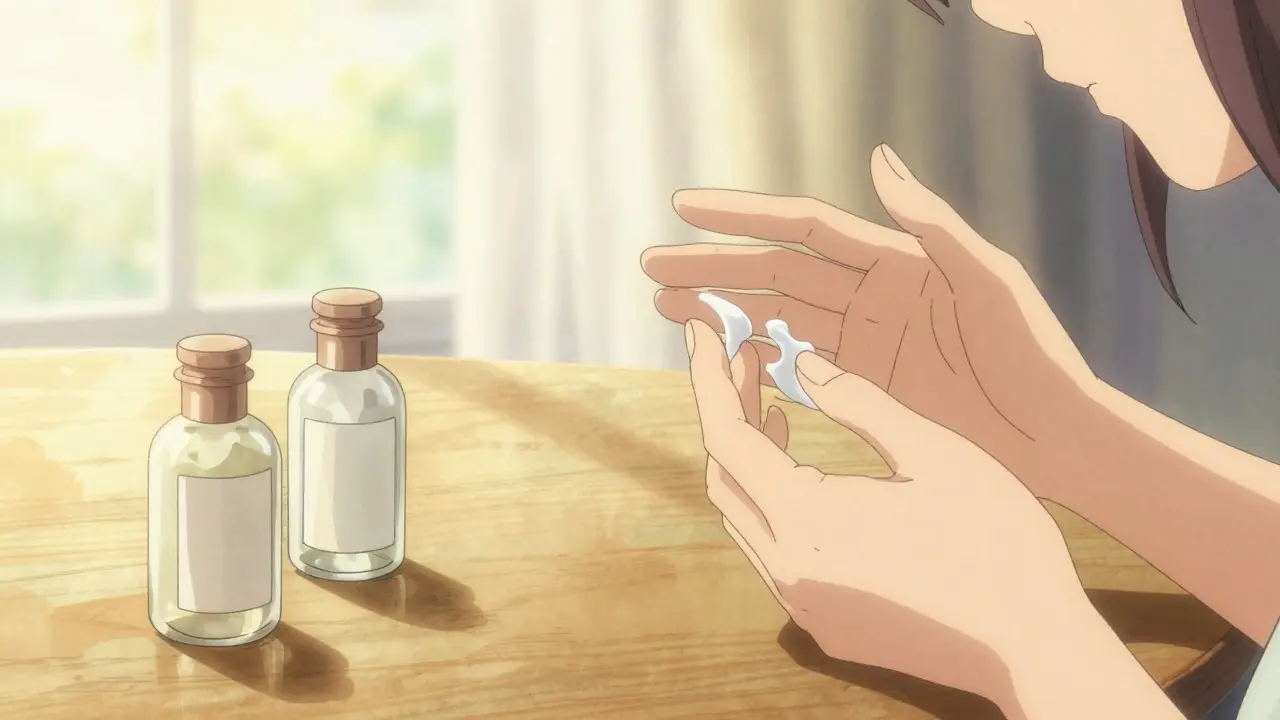
Cleaning isn't the only step; protection matters just as much. Once you dry your skin, wait until it is completely dry before applying anything. Apply a fragrance-free moisturizer within three minutes of bathing. This locks in hydration. Products containing ceramides or those recommended by your oncology nurse are excellent choices. Some patients find relief using barrier films like Cavilon or hydrogel dressings prescribed by their team.
Avoid certain things:
- Do not shave the treated area unless your doctor says it is okay. Shaving acts like sandpaper on already sensitive skin.
- No tape or stickers. If you need ECG electrodes, ask for the hypoallergenic kind. Peeling adhesive strips off your skin can cause significant trauma.
- Skip perfumes and deodorants. Even "natural" essential oils can sting significantly on compromised skin.
- Wear loose clothing. Cotton is your friend. Tight fabrics or wool friction can aggravate the burn sensation.
If you do develop blisters or open sores (moist desquamation), this signals Grade 2 or Grade 3 toxicity. Don't try to treat this yourself at home with random creams. Contact your specialist immediately. They may prescribe topical steroids or antimicrobial dressings to speed up healing and prevent infection.
Managing Cancer-Related Fatigue
Fatigue during cancer treatment is different from being tired after a long day at work. It is a deep exhaustion that rest doesn't seem to fix. You might feel drained after doing something small, like showering. It is important to know that this isn't just in your head. Research indicates that radiation affects your bone marrow and blood cells, which lowers your oxygen-carrying capacity naturally.
Here is a counterintuitive fact: moving your body actually reduces fatigue. A sedentary lifestyle tends to make you feel more sluggish. The NCI recommends moderate exercise, such as walking, for about 30 minutes most days of the week. It sounds exhausting to think about exercising when you are tired, but studies show it improves energy levels by improving circulation and mood. Start slow. Five minutes is a victory.
Sleep hygiene plays a massive role here too. Your sleep quality might drop due to discomfort or stress. Try to maintain a consistent wake-up time. Keep naps short-around 20 minutes. Long daytime naps can disrupt your night sleep cycle, leaving you feeling groggy. Also, track your symptoms. Using a diary or an app helps you identify patterns, like whether you feel worse after lunch or in the evening.
Sometimes, medications help. In cases of severe fatigue affecting daily function, doctors might consider drugs like modafinil. However, exercise and diet remain the foundation. Eating protein-rich meals helps repair muscle and maintains energy reserves. Hydration is equally critical, especially since dehydration amplifies feelings of weakness.

The Recovery Timeline After Treatment
One of the best parts of radiation is that unlike chemotherapy, side effects usually fade relatively quickly after the last session. It's a bit like recovering from surgery; you heal, but it takes time. For skin reactions, the redness typically starts calming down within two weeks of finishing treatment. Complete healing often takes 2-4 weeks total. The skin might look darker (hyperpigmentation) for a while, but this usually fades slowly over several months.
If hair loss occurred due to scalp radiation, regrowth follows its own schedule. About half of the hair usually grows back within 2-3 months. In rare cases, if the dose was very high, some areas might stay bald permanently, but this is uncommon for lower doses. Fibrosis, or hardening of the tissue, is a rarer late effect that might take 6-12 months to stabilize.
It is vital to listen to your body during this window. Don't rush back into intense routines. Give your body the chance to rebuild its energy stores. Continue using gentle skin care products for at least a month past your last appointment to support the delicate new skin layer forming underneath.
When to Contact Your Healthcare Team
While some discomfort is expected, certain signs mean you need professional help immediately. Do not ignore infections. Watch for oozing yellow fluid, red streaks spreading from the treatment site, or a fever over 100.4°F. These suggest a bacterial infection that needs antibiotics. Severe pain that prevents you from sleeping or eating is another major red flag.
You should also call if you notice unexpected bruising that isn't related to a bump, or if your skin feels extremely tight and shiny, which can indicate scarring processes starting early. Early intervention can stop problems from becoming long-term issues. Your medical team knows your specific tolerance levels and can offer prescription-strength solutions over-the-counter options cannot match.
Does radiation make you sick?
Unlike chemotherapy, radiation does not typically make you systemically sick with nausea or vomiting. It usually only causes illness if treating areas like the brain, stomach, or pelvis. Most side effects are localized to the area being treated.
How long does the radiation burn last?
Most skin burns start fading about 2 weeks after your final treatment. Full healing usually happens within 1 to 3 months, depending on the severity of the reaction and how well you followed the skincare advice.
Can I exercise while getting radiation?
Yes, light to moderate exercise is encouraged. Walking for 20-30 minutes helps boost your energy levels and combats the fatigue caused by treatment. Just avoid exercising directly on the treated skin area to prevent chafing.
What moisturizers should I use?
Use only fragrance-free, alcohol-free lotions. Brands like Cetaphil, Aveeno, or Biafine are commonly used. Always check with your oncology nurse first, as some products contain ingredients that might interact with radiation.
Will I lose my hair?
Hair loss usually only happens in the specific area being treated. If your head receives radiation, hair in that field will fall out. Body hair elsewhere remains unaffected. Regrowth typically begins within a few months of completion.
Marwood Construction
March 31, 2026 AT 10:28The clinical approach to dermatological integrity remains paramount when undergoing localized irradiation procedures. Medical literature consistently emphasizes the importance of maintaining hydration and avoiding mechanical friction on compromised tissue surfaces. Many patients underestimate the cumulative effect of thermal exposure during treatment sessions. It is essential to document baseline conditions prior to the initiation of therapy. Standardized washing protocols significantly reduce the risk of secondary infections in the targeted zones.
Carolyn Kask
April 1, 2026 AT 10:47Oh great, another person pretending they understand biology because they read a pamphlet at the waiting room. As if we didn't already know to keep it clean. Everyone acts like it is rocket science when really you just have to shower differently. I am tired of seeing these guides written for the general public who clearly cannot read the signs on the hospital wall.
Beccy Smart
April 2, 2026 AT 23:20People think they know better than science. 😤
Katie Riston
April 3, 2026 AT 00:02Pain is an inherent part of the healing journey that we must all navigate with grace. Suffering is optional even when the physical sensation cannot be avoided by medication. We often conflate the two distinct experiences in our daily lives. Radiation brings heat to the cellular level where invisible battles are fought. It also builds new life through recovery processes that we rarely celebrate publicly. Science calls this regeneration while the soul might call it purification. Religion could interpret these trials as spiritual testing grounds for the body. Modern medicine sits awkwardly between both secular and sacred interpretations of health. We rely heavily on lotions which are merely chemical interventions in a biological war. Our bodies react chemically too and sometimes reject those external aids initially. The skin barrier fails under pressure and requires significant time to regenerate fully. We must rebuild it brick by brick with patience rather than forceful action. Trust the process completely even when hope feels distant in the dark nights. Healing is not linear and expectations must align with biological reality. Eventually the storm passes leaving behind a landscape changed but resilient.
Adryan Brown
April 4, 2026 AT 17:36I find your perspective deeply comforting in its acknowledgment of the human struggle against medical adversity. It is fascinating how we view illness as an enemy rather than a guest in our own flesh. Perhaps shifting this internal narrative changes the outcome of the treatment phases themselves. Emotional states dictate physiological responses in ways that standard diagnostics often overlook entirely. We should embrace the uncertainty instead of fighting every shadow it casts upon our path forward. Resilience is built through acceptance rather than denial of the immediate discomfort involved here. Peace comes when we stop expecting control over forces beyond our comprehension anyway. Your words suggest that surrendering to the timeline of recovery allows space for growth to occur naturally.
emma ruth rodriguez
April 5, 2026 AT 23:56First!!; You MUST apply moisturizers within three minutes of bathing!!!. Also!!; Avoid hot water at all costs!!!. Please!!!; Consult your oncology team before trying random home remedies!!!. Hygiene is key;;; hygiene is vital!!!. Do not shave the area;;; do not shave at all!!!. Protect the skin barrier from trauma!!!.
Rick Jackson
April 6, 2026 AT 10:22That makes sense and sounds manageable for most patients. Thanks for the clarity on timing.
Charles Rogers
April 7, 2026 AT 06:13You people never listen until you burn yourself then you panic. Simple instructions are ignored for years until crisis strikes. It is human nature to seek shortcuts when discipline is required daily. Ignoring basic skin care rules leads to unnecessary hospital visits later. Why do patients always test the limits of their own fragile physiology? I have seen enough self-inflicted damage from ignoring simple warnings to last a lifetime. Stop looking for magic cures and follow the basic guidelines provided by professionals. Responsibility lies with the individual receiving the treatment primarily.
sanatan kaushik
April 8, 2026 AT 23:48Listen. Do not ignore the doctors. Follow rules. Eat good food. Drink water. Rest well. This is hard work but you survive. Many people fail because they give up early. Stay strong and fight the illness. Health comes back slowly. Do not rush recovery phase.
Jonathan Alexander
April 9, 2026 AT 13:18It feels terrifying yet hopeful at the same time. There is a weight to knowing exactly what hurts you. Silence speaks louder than any doctor ever could about the fear in this room.
Kendell Callaway Mooney
April 9, 2026 AT 13:57Use fragrance free products only. Drink lots of water every day. Ask the nurse about special creams. Keep clothes loose and soft. Sleep when your body tells you to. Recovery takes time so plan ahead. Take breaks when needed.