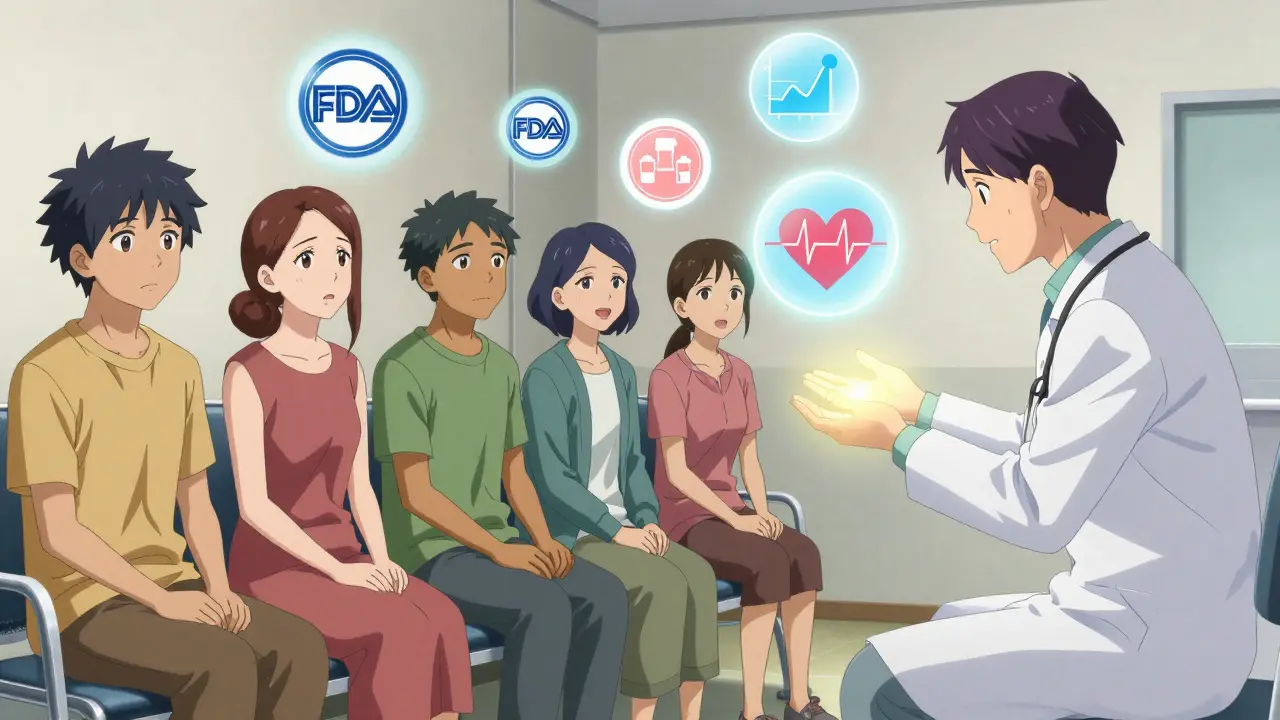
When your doctor switches your prescription from a brand-name pill to a generic version, you might feel a quiet unease. It’s not just about the price drop-it’s about the generic drug safety you’ve been told to trust. You’ve seen the ads, heard the stats: generics are 80% cheaper, make up 90% of all prescriptions, and save the U.S. healthcare system billions. But somewhere deep down, you wonder: Are they really the same?
Why Do People Doubt Generic Drugs?
It’s not irrational. The word "generic" itself carries baggage. For many, it means "cheap," "inferior," or "second-rate." That’s not how science sees it-the FDA requires generics to match brand-name drugs in strength, purity, and how quickly they enter the bloodstream. But science doesn’t always win in the human mind.
Studies show that 20% to 40% of patients aren’t sure if generics work as well. One in five actually believe they’re less safe. Why? Because of stories. A man on Reddit says his generic sertraline made him feel awful-until he switched back to the brand, and he felt fine. A woman in rural Alabama tells her pharmacist her blood pressure spiked after switching to a generic. These aren’t rare cases. PatientsLikeMe has over 1,200 reports of side effects or reduced effectiveness after switching. And when someone you know says "it didn’t work," that sticks harder than any FDA pamphlet.
Who’s Most Likely to Worry?
Not everyone feels this way. Risk perception isn’t random. It’s shaped by who you are.
Older adults-especially those over 60-are more likely to fear side effects. One study found 31.9% of seniors worried about generics, compared to 24.7% of younger people. Why? They’ve been on medications longer. They’ve seen what side effects feel like. And they remember when drug quality was less regulated.
People with lower education levels are 1.7 times more likely to think generics are different from brand-name drugs. Those with less income or who are unemployed or retired are more open to generics-but only if they’re told clearly why they’re safe. Meanwhile, those with higher education worry less about safety, but more about being switched without warning. They want control.
Race matters too. Black and Hispanic patients are nearly twice as likely as White patients to doubt generic safety. And rural patients often believe generics are weaker-so they need higher doses. That’s not true. But if your neighbor says her generic blood pressure pill didn’t work, you believe it.
The Doctor’s Role: The Most Important Factor
Here’s the surprising truth: how your doctor talks about generics makes all the difference. Research shows patients who get a clear explanation from their provider are 3.2 times more likely to accept a generic.
It’s not enough to say, "It’s the same." You need to say: "This pill has the exact same active ingredient. It’s tested to release the same amount into your body, within 5% of the brand. The FDA checks every batch. The only difference is the color and the name on the label."
But too often, doctors don’t say anything. Or worse-they say, "It’s cheaper," and leave it at that. That’s not reassurance. That’s a red flag.
Specialists are less likely to prescribe generics than primary care doctors. Why? Maybe they’re more used to brand-name trials. Maybe they’re afraid of liability. But patients notice. If your cardiologist won’t switch you, you assume there’s something wrong with the generic.
Pharmacists Are the Hidden Heroes
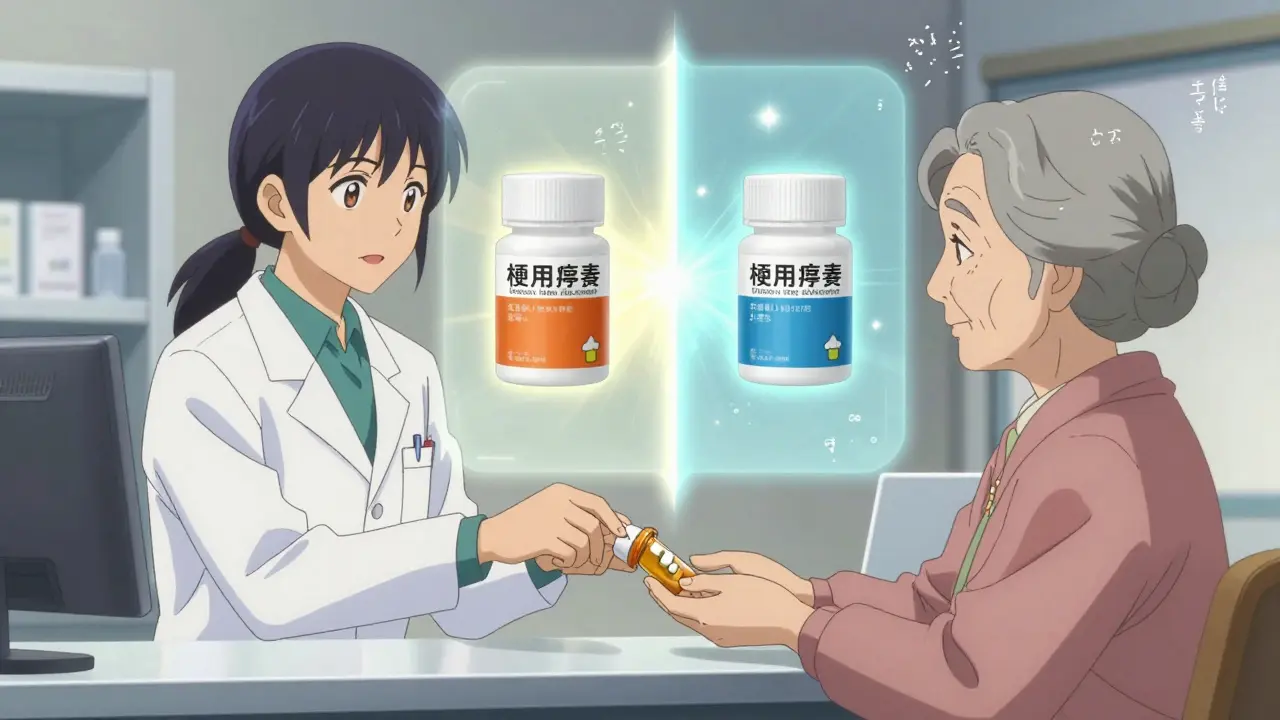
When you pick up your prescription, the pharmacist is often the last person who can fix a safety concern. A 2020 study found patients who got even a short chat with their pharmacist were 37% more likely to stick with the generic.
But here’s the problem: the average consultation lasts just 47 seconds. In that time, they’re scanning labels, checking insurance, answering five other questions. There’s no room for deep reassurance.
That’s why written materials matter. The FDA’s official guide on generics? Rated 3.2 out of 5 by health literacy experts. AARP’s guide? 4.5 out of 5. Why? Because AARP uses plain language. They say: "It’s the same medicine. Just cheaper. Here’s how we know." No jargon. No fine print.
The Real Cost of Fear
Every time someone refuses a generic because they’re afraid, it costs money. The U.S. spends $8 billion extra each year on brand-name drugs that aren’t necessary. That’s $8 billion that could go to vaccines, mental health care, or insulin for people who can’t afford it.
And it’s not just money. When patients stop taking their meds because they’re afraid of the generic, their condition worsens. Blood pressure spikes. Diabetes gets worse. Depression returns. These aren’t hypotheticals. They’re daily realities in clinics across the country.
Even insurance plans that charge $0 for generics see 18% higher use than those with tiered copays. When cost is removed, people are more willing to try-but only if they trust the medicine.
What’s Changing? And What’s Not
The FDA has spent $150 million since 2012 improving generic quality checks. They’ve launched multilingual campaigns. They’re using machine learning to predict who’s most likely to fear generics-so they can target them with better info. Early results? A 15% drop in safety concerns among Spanish-speaking patients.
But new challenges are rising. Complex drugs-like inhalers, eye drops, and topical creams-are harder to copy exactly. Patients notice. A 2023 survey found 48% of people worry about these "complex generics." And brand companies are playing games: they sell their own drugs as "authorized generics." It’s legal. But it confuses patients. If the brand company sells it as a generic… why did they say it was better in the first place?
What You Can Do
If you’re unsure about a generic:
- Ask your doctor: "Is this exactly the same as the brand? Can you show me the data?"
- Ask your pharmacist: "Can you explain how this version works?"
- Don’t assume a change in how you feel is the drug’s fault. Sometimes, stress, diet, or sleep changes are the real cause.
- If you think the generic isn’t working, don’t just switch back. Talk to your provider. Ask for a blood test or monitoring.
- Look for trusted sources: AARP, CDC, FDA. Avoid Reddit threads or Facebook groups unless you’re looking for stories-not science.
Most people who try generics report no difference. But that doesn’t matter if you’re the one who had a bad experience. The system needs to do better-not by forcing people to accept generics, but by helping them understand them.
Are generic drugs really as safe as brand-name drugs?
Yes. The FDA requires generic drugs to have the same active ingredient, strength, dosage form, and route of administration as the brand-name version. They must also be bioequivalent-meaning they deliver the same amount of medicine into your bloodstream at the same rate. Every generic is tested before approval, and the FDA inspects manufacturing facilities just like those for brand-name drugs. The only differences are inactive ingredients (like color or filler), which don’t affect safety or effectiveness.
Why do some people feel different on generic medication?
Sometimes, it’s psychological. If you expect a change, your brain may interpret normal sensations as side effects. But real differences can happen too. Some people are sensitive to inactive ingredients in generics-like dyes or fillers-which can cause minor reactions. In rare cases, complex drugs like inhalers or antiseizure medications have small variations in how they’re absorbed. If you feel worse after switching, talk to your doctor. Don’t assume it’s the drug’s fault, but don’t ignore it either.
Can generics be made in foreign countries? Is that unsafe?
Yes, many generics are made overseas-but so are brand-name drugs. The FDA inspects all facilities, whether they’re in the U.S., India, or China. The agency has over 3,000 inspectors worldwide and has shut down factories that didn’t meet standards. A 2023 report found 98% of generic manufacturing sites passed FDA inspections. The issue isn’t where it’s made-it’s whether the facility follows strict quality rules. The FDA ensures they do.
Why do some doctors refuse to prescribe generics?
Some doctors are cautious with certain drugs-like those for epilepsy, thyroid disease, or blood thinners-because small differences in absorption can matter. But for most medications, generics are just as effective. Other doctors may not know the latest evidence, or they’ve had a patient report a bad experience. Some also get pressure from drug companies. The key is to ask your doctor why they’re hesitant. If they can’t give you a clear, science-based reason, it’s worth getting a second opinion.
How can I tell if my generic is working?
Track your symptoms and, if possible, your measurements. For blood pressure, check it at home. For depression, note your mood daily. For cholesterol, ask for a blood test before and after switching. If you notice a clear change, talk to your provider. Don’t stop the medication. Instead, ask: "Could this be the generic? Should we switch back or try another?" Most of the time, the answer is no-but having data helps you and your doctor make the right call.
Final Thought
Generic drugs aren’t a compromise. They’re a proven, safe, and essential part of modern medicine. But trust doesn’t come from statistics. It comes from clear, honest conversations. When patients understand why generics are the same-and when providers take the time to explain it-the fear fades. The science is solid. Now, we just need to make sure the message gets through.
Dominic Punch
February 22, 2026 AT 15:47Let’s be real - generics aren’t just ‘same medicine, cheaper.’ They’re the backbone of affordable healthcare. I’ve been on generic metformin for 8 years. No issues. No ‘weird vibes.’ My grandma’s on generic lisinopril - BP stable, no hospital visits. The fear? It’s marketing. Brand pharma spends billions convincing you that ‘your life depends on that blue pill with the logo.’ Meanwhile, the FDA’s got inspectors in factories from India to Ohio checking every batch. If you’re scared, ask for the bioequivalence report. It’s public. It’s not magic. It’s math.
Brooke Exley
February 23, 2026 AT 16:54I switched my anxiety med to generic sertraline and felt like a zombie for two weeks. Then I realized I’d also started working night shifts and drinking more coffee. My doc laughed and said, ‘Your brain’s just scared it’s not the same.’ Turns out, it was. Not the drug. The stress. I now tell people: if you feel weird after switching, check your life first - sleep, sugar, stress. The pill? Probably fine. 💊
Alfred Noble
February 24, 2026 AT 22:54my pharmacist gave me a printed sheet from aarp last week and i actually read it. it said ‘same active ingredient, same dose, same effect’ and then showed a side by side of brand vs generic with a red arrow saying ‘this part is different’ pointing to the dye. i was like ohhhhh. so it’s not magic, it’s just color and filler. i’ve been on generic adderall for 3 yrs and never had a problem. why did i think it was different? bc ads made me think brand = better. dumb.
Matthew Brooker
February 26, 2026 AT 04:08Doctors don’t explain because they’re rushed. Pharmacists don’t explain because they’re overwhelmed. So patients are left with Reddit threads and aunt Linda’s story about her cousin’s cousin who got sick on generic insulin. We need more than pamphlets. We need 30-second videos in waiting rooms. ‘This is your medicine. This is how we know it works. This is why it costs less.’ Simple. Visual. No jargon. If we made this as routine as ‘wash your hands,’ trust would follow.
Jacob Carthy
February 27, 2026 AT 15:09Generic drugs are made in China and India and we’re supposed to trust them? The FDA? Please. I’ve seen what comes out of those factories. My uncle works in pharma - says half the generics are just rebranded leftovers from failed brand batches. They get stamped ‘FDA approved’ and shipped. No one checks. You think your blood pressure pill is safe? You’re just lucky. I stick to brand. Pay more. Sleep better.
Cory L
February 28, 2026 AT 15:34Here’s the thing - if you’re the one who had a bad experience, your fear isn’t irrational. It’s real. But it’s also not always the drug. I switched generics for my thyroid med and felt like I’d been hit by a truck. Turns out? I’d changed my morning coffee routine. Caffeine messes with levothyroxine absorption. My doc didn’t ask. I didn’t know. Now I track everything. If you feel off after switching - log your sleep, your meals, your stress. The pill’s probably fine. Your life? Maybe not.
David McKie
March 1, 2026 AT 09:25Oh sweet mercy. Another ‘trust the science’ sermon. The FDA? The same agency that let OxyContin through? The same ones who ignored warnings about Vioxx? You want me to believe that generics are ‘just as safe’? Please. The system is rigged. Brand names pay for approval. Generic manufacturers cut corners. And you? You’re the guinea pig. I stopped taking all generics after my kidney scan showed elevated creatinine on a cheap version of my blood pressure med. I went back to brand. My numbers dropped. Coincidence? I think not.
Stephen Archbold
March 3, 2026 AT 04:57my pharmacist gave me a hug and said ‘this is the same as the brand, just without the fancy wrapper’ and i cried. not because i was sad - because someone finally talked to me like a human. i’m 72, on 7 meds, and no one ever explains. they just hand me a pill and say ‘take it.’ i’ve been scared for years. now i ask. i check. i read the aarp one-pager. turns out, the dye’s the only difference. i’m not dumb. i just needed someone to speak plain.
Haley Gumm
March 5, 2026 AT 01:28My mom switched to generic statin and her cholesterol went up. She blamed the drug. I made her get a blood test before and after. Same levels. Turns out, she’d started eating oatmeal every day. Fiber lowers cholesterol. The generic wasn’t the problem - her diet was. We need more ‘track your numbers’ education. Not fear. Not ads. Just data.
Gabrielle Conroy
March 6, 2026 AT 06:04PLEASE PLEASE PLEASE ask your pharmacist! They’re the real MVPs! I had a 90-second chat with mine last month - she showed me the FDA bioequivalence chart, explained the 5% variance rule, and even drew a little diagram with a marker on a receipt. I felt so much better. Also, she gave me a free lollipop. 🍭 That’s service. If your pharmacist doesn’t do this, ask for someone who does. Or go to a chain that trains them. This matters. Your health matters. Don’t be shy - ask!
John Smith
March 7, 2026 AT 09:20Generic drugs are fine for peasants. I take brand. Why? Because I can. And because I don’t want to be some lab rat for Chinese factories and FDA bureaucrats who haven’t seen a real hospital since med school. If you’re okay with ‘close enough,’ go for it. I’ll take the real thing. And I’ll pay for it. Because my life isn’t a cost-cutting spreadsheet.
Shalini Gautam
March 8, 2026 AT 13:34My cousin in Delhi takes a generic made in India - same pill, same factory, same FDA inspection as the one I take in Texas. The only difference? The label. The science doesn’t care where it’s made. It cares if it works. And guess what? It does. We’re not different. The drug isn’t different. The fear is. Let’s stop letting marketing scare us into paying more for nothing.