
When you walk into a doctor’s office, ER, or hospital, one of the most important things you can do isn’t filling out another form-it’s telling the truth about everything you’re taking. Not just your prescriptions. Not just the ones your doctor knows about. Everything. Including that herbal tea you drink every night, the ibuprofen you pop for headaches, the fish oil pills your sister swears by, and the antacid you grab off the shelf when your stomach acts up. Missing even one item can put you at risk-seriously.
Why Your Medication List Matters More Than You Think
Every year in the U.S., between 7,000 and 9,000 people die from medication errors that could have been avoided. That’s not a typo. These aren’t rare mistakes. They happen because doctors don’t have the full picture. A patient might say they’re on three medications, but they’re actually on eight-including two over-the-counter drugs they forgot to mention. That’s why medication reconciliation-a formal process to compare your current meds with what’s documented in your chart-is now required by law during every transition of care: admission, transfer, discharge.
When done right, this process cuts adverse drug events by 30% to 50%. For people taking five or more medications, the risk of a dangerous error drops dramatically. Why? Because interactions between drugs aren’t always obvious. Mixing blood thinners with certain painkillers can cause internal bleeding. Combining antidepressants with herbal supplements like St. John’s Wort can trigger serotonin syndrome-a life-threatening condition. And if your doctor doesn’t know you’re taking all of them, they can’t see the danger coming.
What You Need to Track (And How to Keep It Accurate)
Don’t rely on memory. Memory fails. Stress makes it worse. Instead, build a real, updated list. Here’s what to include:
- Brand and generic names of all prescription drugs
- Dosage and how often you take them
- Over-the-counter medicines: pain relievers, sleep aids, antacids, allergy pills
- Vitamins, minerals, and supplements
- Herbal remedies and teas
- Topical creams or patches (yes, even the ones for your knee)
- Any medications you stopped taking and why
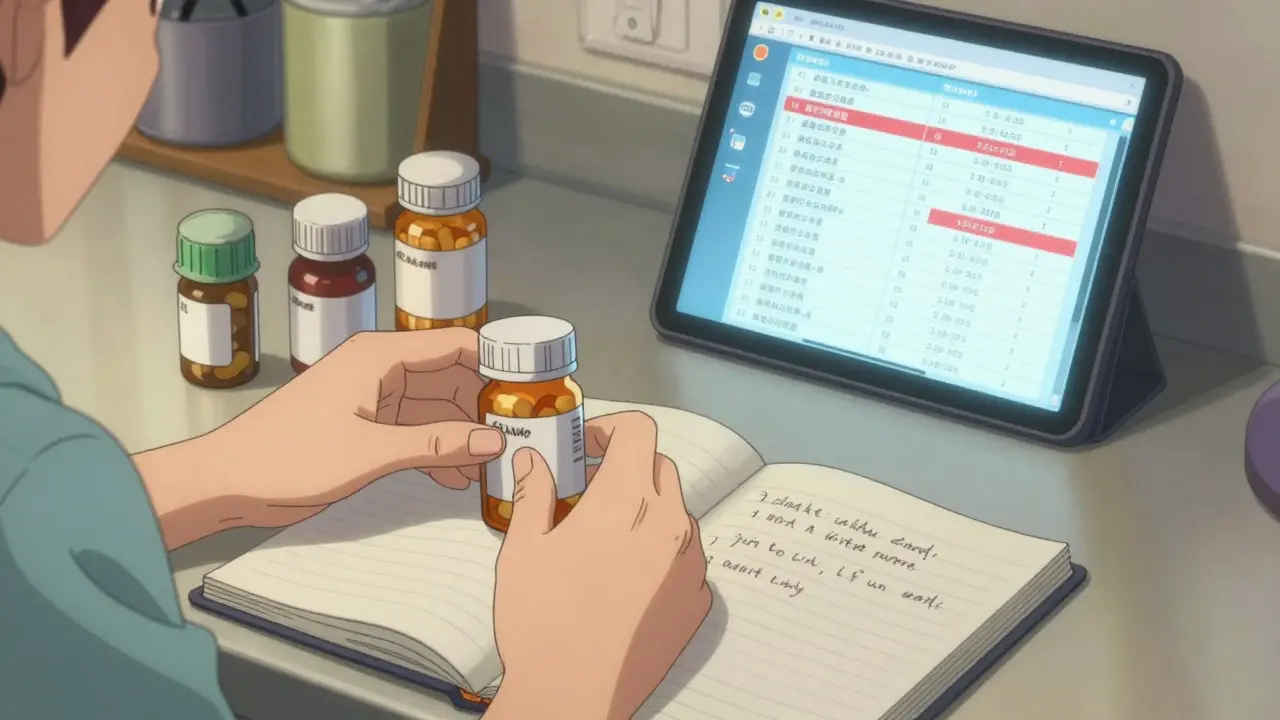
Doctors don’t always ask about supplements. But they should. And you shouldn’t wait for them to ask. A 2023 study found that 67% of patients don’t report over-the-counter meds or supplements unless prompted-and even then, many forget. The brown bag method works better than anything else. Before every appointment, gather every pill bottle, patch, and capsule you’re using and bring them in. This cuts medication discrepancies by 40% compared to just telling your provider what you take.
Update this list after every visit, every new prescription, every change. Keep it in your phone, on paper, in your wallet-just make sure it’s always current. If you use a patient portal, check that your medication list there matches what’s in your bag. Many portals auto-populate from pharmacy records, but they miss cash-pay meds and OTCs. Don’t trust automation. Verify.
How Technology Helps-And Where It Falls Short
Hospitals and clinics now use electronic systems that pull your medication history from pharmacies, insurers, and other providers. Services like Surescripts deliver over 3 billion medication histories annually, pulling data from nearly every pharmacy in the country. That sounds perfect, right? Not quite.
These systems still miss about 15-20% of prescriptions paid out-of-pocket. They rarely capture OTC meds unless you enter them manually. And if you’ve used different pharmacies-say, one for your heart meds, another for your diabetes pills-the system might not connect the dots. One patient in a 2023 Reddit thread said their 12-medication list was missing five because they were filled at different chains. That’s not a glitch. That’s the norm.
Even with all the tech, clinicians still override nearly half of all drug interaction alerts because they’re too vague. “Possible interaction with aspirin” doesn’t help if you’re on 12 drugs and the system flags every one. Alert fatigue is real. That’s why your input still matters more than any algorithm.
What Providers Are Doing Right (And Where They Still Struggle)
Good providers don’t just look at your list-they ask questions. They want to know: Why are you taking this? Have you noticed any side effects? Are you skipping doses because it’s too expensive? These aren’t small talk questions. They’re safety checks.
High-alert medications like insulin, blood thinners, and sedatives carry the highest risk. The Institute for Safe Medication Practices says these are the top culprits in serious errors. If you’re on any of them, make sure your provider flags them clearly. Ask: “Is this one of the high-risk drugs?” If they don’t know, it’s time to find someone who does.
But here’s the problem: not every clinic has the same tools. Rural hospitals still rely on paper lists. Emergency rooms are rushed. Nurses might only have five minutes to review your meds. That’s why your job isn’t done when you hand over your list. You need to speak up. Say: “I take this because my doctor said to. I haven’t taken this one in months. I’m worried about this side effect.”
Your Role in the Process
You’re not just a patient. You’re the most important member of your care team. No one knows your body like you do. No one has tracked your symptoms, your reactions, your missed doses, your cost struggles. That’s information no EHR can collect unless you give it.
Use the teach-back method. After your provider explains something, say: “So, just to make sure I got this right-you want me to take this pill once a day, with food, and stop the old one? And I should call if I feel dizzy or have dark stools?” If you can say it back clearly, you’ve understood it. If you can’t, they haven’t explained it well enough.
Bring a friend or family member to complex appointments. One person listens. One takes notes. One asks the questions the patient is too overwhelmed to ask. Caregivers report that 83% struggle to track medications for elderly relatives-and 41% have seen at least one error happen. You’re not alone. But you can break that cycle.

What to Do If Something Goes Wrong
If you think a medication error happened-maybe you were given the wrong drug, or your old meds were accidentally restarted-say something immediately. Don’t wait. Don’t assume it was a one-time mistake. Ask: “Can we review my full medication list again? I’m concerned about this change.”
Document everything. Write down the date, time, what was said, who was there, and what changed. If you’re discharged with a new list that doesn’t match your own, call the pharmacy or your doctor’s office right away. You have the right to an accurate record. And you have the right to ask for clarification.
There’s no shame in asking for help. One nurse practitioner on Reddit said patients who brought their pill bottles cut reconciliation time in half. That’s not just helpful-it’s lifesaving.
What’s Changing in 2026
The FDA is rolling out new labeling standards for high-alert drugs to reduce look-alike/sound-alike errors. Patient portals now let you view your medication list in real time-76% of patients can access this data. AI tools are being tested to predict discrepancies before they happen. Google Health’s prototype cut identification time by 63% in trials.
But none of this replaces you. Technology can flag a missing drug. It can’t tell your doctor you stopped taking your blood pressure pill because you couldn’t afford it. It can’t explain why you started taking turmeric after your knee surgery. Only you can.
The National Academy of Medicine estimates that if everyone shared their full medication history accurately, we could prevent 1.2 million adverse drug events by 2030-and save $21 billion. That’s not just a statistic. That’s your mom. Your dad. Your neighbor. Maybe even you.
So next time you’re asked, “What are you taking?” don’t say “I think I’m on…” or “I take the blue one.” Say: “Here’s everything. Let’s go through it together.”
Why is it important to tell my doctor about supplements and over-the-counter drugs?
Many supplements and OTC meds interact with prescription drugs in dangerous ways. For example, St. John’s Wort can reduce the effectiveness of birth control and antidepressants. Garlic supplements can thin your blood and increase bleeding risk during surgery. Even common painkillers like ibuprofen can raise your blood pressure or harm your kidneys if taken with certain heart or kidney medications. Doctors can’t protect you from interactions they don’t know about.
What is the brown bag method, and why does it work?
The brown bag method means bringing all your medications-prescription, OTC, supplements, creams-in their original bottles to your appointment. It works because it removes guesswork. You don’t have to remember names, doses, or schedules. The provider sees exactly what you’re taking, including expired pills or empty bottles that might indicate you stopped a drug. Studies show this cuts medication errors by 40% compared to verbal lists.
Can my doctor see all my prescriptions from other pharmacies?
Not always. Electronic systems pull data from pharmacies that use the same network, like those linked to your insurance or major chains. But if you fill prescriptions at different pharmacies, especially cash-pay ones, or if you buy meds online, that info might not be shared. That’s why bringing your own list is still essential-even in high-tech hospitals.
What should I do if I’m given a new medication and I’m not sure how it fits with my others?
Ask your provider or pharmacist: “Is this safe with everything else I’m taking?” Request a written summary of what to expect-side effects, timing, food interactions. If you’re unsure, don’t start it until you’ve had a second opinion. Many patients take new meds without asking because they’re afraid to seem difficult. But asking questions prevents harm.
How often should I update my medication list?
Update it every time you see a new provider, start or stop a medication, or change a dose-even if it’s just a one-time pill. Keep it in your phone and wallet. Review it monthly. If you can’t remember what you took last week, your list isn’t working. A current list isn’t a chore-it’s your safety net.
Are there any legal protections if I share my medical history?
Yes. Under HIPAA, your provider can share your medical information with other healthcare providers for treatment purposes without your permission. That means your pharmacist, your doctor, and the ER team can all see your full history if needed to keep you safe. You can’t be denied care for sharing this info. In fact, not sharing it puts you at greater legal and medical risk.
Aysha Siera
January 18, 2026 AT 11:32Selina Warren
January 19, 2026 AT 10:04Chuck Dickson
January 19, 2026 AT 19:09Robert Cassidy
January 21, 2026 AT 08:04Naomi Keyes
January 22, 2026 AT 09:59Dayanara Villafuerte
January 23, 2026 AT 15:38kenneth pillet
January 23, 2026 AT 19:58Tyler Myers
January 24, 2026 AT 19:17Kristin Dailey
January 25, 2026 AT 09:43Wendy Claughton
January 27, 2026 AT 05:23Stacey Marsengill
January 28, 2026 AT 15:56rachel bellet
January 29, 2026 AT 12:33Pat Dean
January 31, 2026 AT 06:25