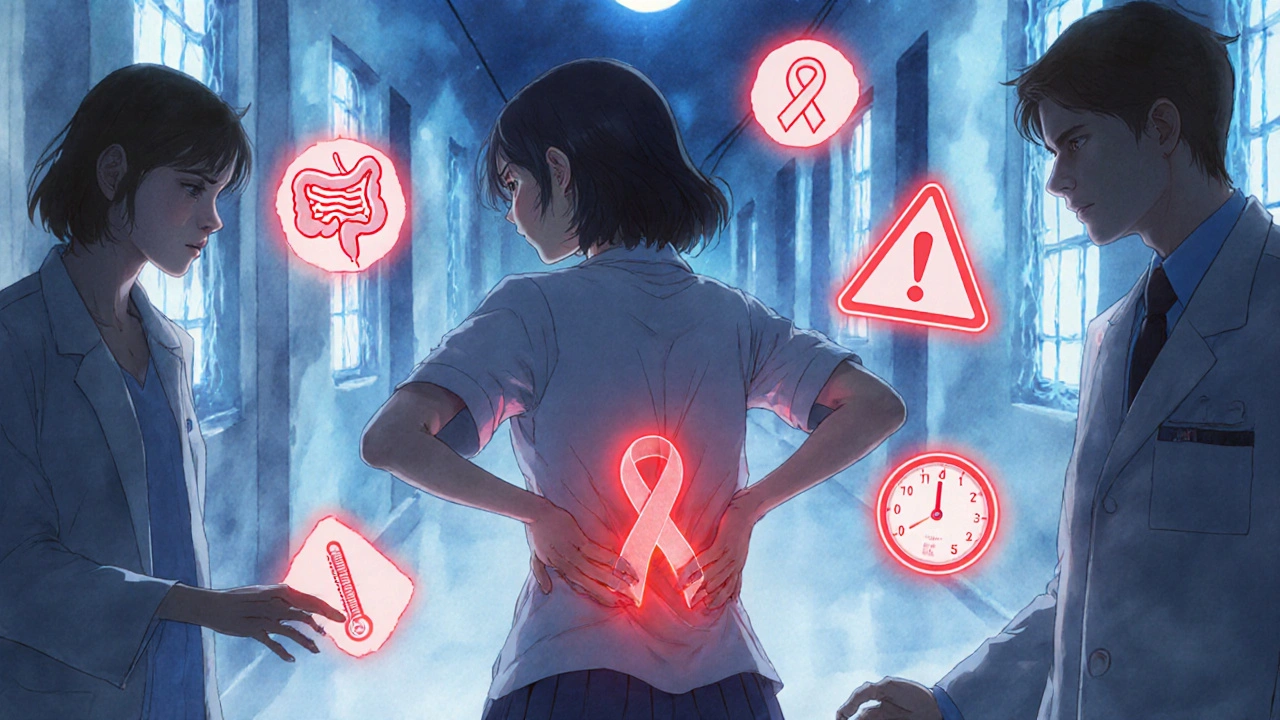
Learn the critical back pain red flags that signal serious conditions like infection, cancer, or nerve damage. Know when to skip imaging and when to seek emergency care to prevent permanent harm.
Read MoreBack Pain Red Flags: When to Worry and What to Do Next
When you have back pain red flags, warning signs that point to serious medical conditions behind common back discomfort. Also known as red flag symptoms, these aren’t just sore muscles—they’re your body’s alarm system. Most back pain is harmless and goes away on its own. But if you’re dealing with unexplained weight loss, numbness in your groin, or loss of bladder control, this isn’t normal. These aren’t just bad days—they’re signs you need urgent care.
Cauda equina syndrome, a rare but severe condition where nerves at the bottom of the spinal cord get compressed can cause permanent paralysis if ignored. It often shows up as sudden weakness in both legs, numbness around the anus or genitals, or trouble peeing. Spinal infection, like an abscess or osteomyelitis might follow recent surgery, IV drug use, or a urinary tract infection—and it can spread fast. Fever, night sweats, and pain that doesn’t improve with rest are clues. Then there’s cancer metastasis, when tumors spread from other organs to the spine. If you’re over 50, have a history of cancer, and your back pain gets worse at night or doesn’t respond to rest, that’s a red flag too.
Neurological symptoms like foot drop, tingling down one leg, or loss of reflexes can mean nerve damage from a herniated disc or spinal stenosis. These aren’t things to wait out. If you’ve had a recent fall or trauma and now can’t lift your foot, don’t assume it’s just a strain. Same goes for unexplained fever with back pain—you don’t need to be sick with the flu to have an infection hiding in your spine. And if you’ve lost control of your bowels or bladder, that’s not a side effect of stress. That’s a medical emergency.
Many people ignore these signs because they think, "It’s just back pain." But back pain red flags aren’t about stiffness or soreness after lifting boxes. They’re about changes in your body that shouldn’t happen. You don’t need to be an expert to spot them—you just need to know what to look for. The posts below break down real cases, what doctors look for, how tests are done, and what happens if you delay. You’ll find guides on when to rush to the ER, how to tell the difference between muscle strain and something worse, and what questions to ask your doctor before it’s too late. This isn’t about fear. It’s about knowing when to act.