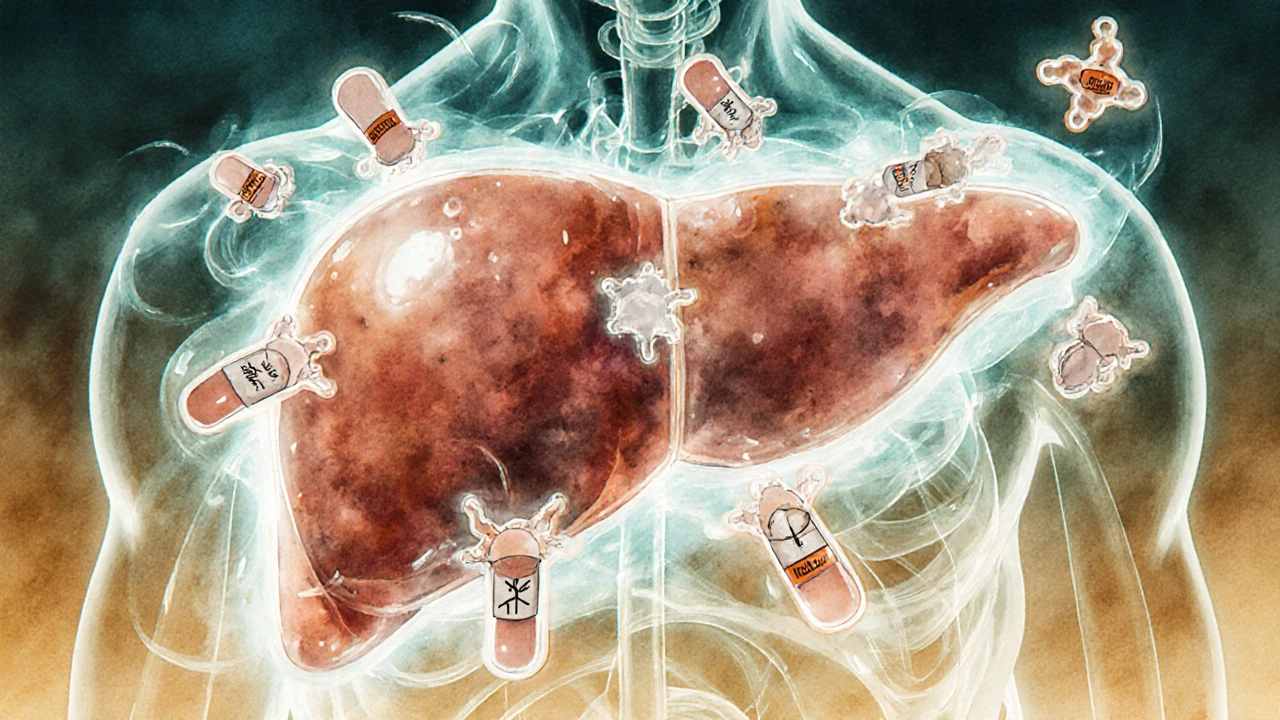
Milk thistle may help liver health, but it can interfere with medications metabolized by the liver. Learn how silymarin affects CYP enzymes and what to watch for if you're on warfarin, statins, or other common drugs.
Read MoreCYP450: How This Liver System Affects Your Medications
When you take a pill, your body doesn’t just absorb it and call it a day. It has to CYP450, a family of liver enzymes responsible for breaking down over 75% of all prescription drugs. Also known as cytochrome P450, this system is the main reason some drugs work for you but not for someone else—even if you’re taking the same dose. Think of CYP450 as your body’s chemical factory. It turns medicines into forms your body can use or get rid of. But if this factory is slowed down or sped up—by food, other drugs, or your genes—your medication can become useless, too strong, or even dangerous.
This isn’t theoretical. It’s why your pharmacist asks about everything you take, including herbal supplements. Grapefruit juice, a common breakfast drink. Also known as citrus paradisi, it blocks CYP450 enzymes and can turn a safe dose of blood pressure or cholesterol meds into a toxic one. Same with St. John’s wort, a popular herbal mood support. Also known as Hypericum perforatum, it speeds up CYP450 and can make your birth control, antidepressants, or transplant drugs stop working. Even smoking changes how CYP450 functions—it can cut the effectiveness of some drugs by half. Your genetics matter too. Some people naturally have slower or faster versions of these enzymes, which is why two people on the same drug can have totally different reactions.
That’s why CYP450 shows up in posts about antibiotics, ED meds, antidepressants, and even weight loss supplements. It’s the hidden link between what you take and how your body responds. If you’re on sildenafil, paroxetine, eplerenone, or any long-term medication, your CYP450 activity is quietly deciding whether it works, causes side effects, or interacts badly with something else. You don’t need to memorize enzyme names—but knowing this system exists helps you ask the right questions. When your doctor says "this drug might interact," they’re talking about CYP450. When your pharmacist warns you about grapefruit, they’re protecting your liver’s chemical factory. The posts below show real examples of how this system affects everyday meds—and what you can do to stay safe.