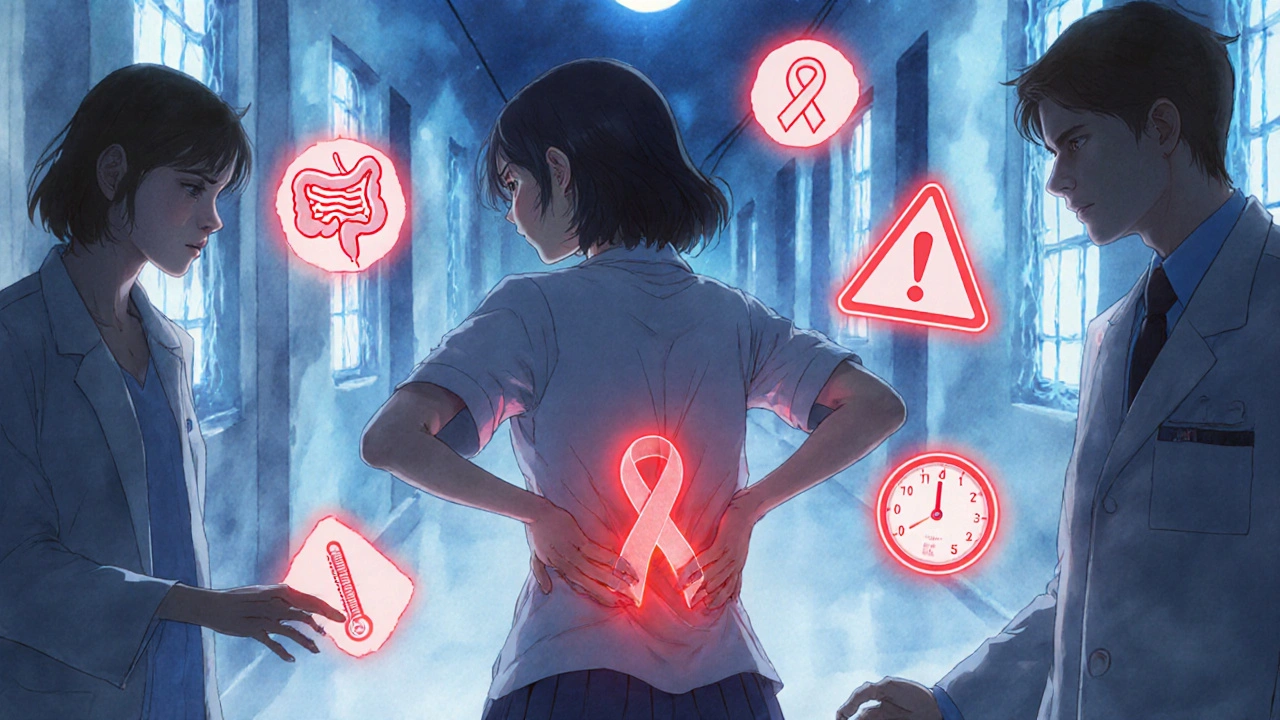
Learn the critical back pain red flags that signal serious conditions like infection, cancer, or nerve damage. Know when to skip imaging and when to seek emergency care to prevent permanent harm.
Read MoreWhen to See a Doctor for Back Pain
When you have back pain, discomfort in the lower, middle, or upper spine that can range from a dull ache to sharp, shooting pain. It's one of the most common reasons people visit a doctor. Most of the time, it gets better on its own with rest, movement, and over-the-counter pain relief. But back pain, discomfort in the lower, middle, or upper spine that can range from a dull ache to sharp, shooting pain isn't always harmless. Some types signal something serious—like a nerve damage, injury or compression of nerves that can cause weakness, numbness, or loss of control in limbs, a spinal infection, a rare but dangerous condition where bacteria or fungi invade the spine, often causing fever and worsening pain, or even a fracture, a break in one or more vertebrae, often from trauma or weakened bones due to osteoporosis. Knowing when to act can stop a small problem from becoming a life-changing one.
If your pain lasts more than six weeks, gets worse over time, or wakes you up at night, it’s not just a bad day. Same goes if you feel numbness, tingling, or weakness in your legs or feet. Those are signs your nerves might be under pressure. Losing control of your bladder or bowels? That’s an emergency—call a doctor right away. Fever with back pain? Don’t assume it’s the flu. It could be a spinal infection. If you’re over 50, have a history of cancer, or take steroids, even mild back pain needs checking. These aren’t just random rules—they’re based on real patterns doctors see in patients who waited too long.
You don’t need to rush to the ER for every twinge. But if you’ve tried rest, heat, and OTC meds for weeks and nothing changes, it’s time to talk to someone who can look deeper. A doctor can rule out hidden causes, order imaging if needed, or refer you to physical therapy before things get worse. The posts below cover real cases—like how a simple backache turned into a nerve issue, why some people mistake a spinal infection for the flu, and what to say to your doctor when you’re not sure if it’s serious. You’ll also find advice on when to push for tests, how to recognize red flags others miss, and what treatments actually help when pain won’t quit. This isn’t about scaring you. It’s about giving you the facts so you know when to act—and when to wait.