Opioid Tapering Calculator
Your Current Dose
Your Personalized Taper Plan
Enter your current dose and reduction rate to see your personalized taper schedule.
Why Tapering Opioids Isn’t Just About Stopping
Stopping opioids cold turkey isn’t just risky-it’s dangerous. Between 2012 and 2017, the FDA recorded over 100 cases of severe harm, including suicide attempts and uncontrolled pain, from patients who were abruptly taken off their medication. If you’ve been on opioids for more than a few weeks, your body has adapted. It’s not addiction-it’s physical dependence. And like any medication your body adjusts to, coming off it too fast triggers a cascade of uncomfortable, sometimes life-threatening symptoms.
The goal isn’t to quit as fast as possible. It’s to reduce pain, side effects, and withdrawal while keeping you stable. Many people think tapering means getting off opioids completely. But for many, the real win is lowering the dose enough to feel better-without the fog, constipation, or dizziness that high doses bring.
When Should You Consider Tapering?
You don’t taper just because someone told you to. You taper when the risks outweigh the benefits. Here’s when it makes sense:
- Your pain hasn’t improved in 3+ months despite the dose
- You’re taking more than 90 morphine milligram equivalents (MME) per day
- You’re mixing opioids with benzodiazepines or alcohol
- You’re experiencing drowsiness, confusion, or memory problems
- You’ve had a near-overdose or missed doses frequently
- Your doctor sees signs of worsening mental health-depression, anxiety, or suicidal thoughts
One study found that 35% of long-term users develop moderate to severe withdrawal symptoms during tapering. That’s not rare. But it’s preventable-if you plan it right.
What Happens If You Quit Too Fast?
Fast tapering isn’t just uncomfortable-it’s deadly. A 2021 study in the Annals of Internal Medicine showed patients who had their doses cut by more than 10% per week had a 68% higher risk of overdose and a 78% higher risk of suicide attempt or self-harm. That’s not a statistic-it’s a warning.
Why? When you drop the dose too quickly, your body goes into overdrive. Your nervous system, used to the calming effect of opioids, becomes hyperactive. That’s when you get:
- Intense anxiety (reported by 82% of those going through withdrawal)
- Insomnia that lasts for days
- Muscle aches so bad it feels like the flu
- Diarrhea, nausea, vomiting
- Sweating, chills, racing heart
And here’s the hidden danger: after a rapid taper, your tolerance drops. If you relapse-even with a small amount-you’re at risk of overdose because your body can’t handle what it used to.
How Slow Is Slow Enough?
There’s no one-size-fits-all schedule. But the safest approach follows these rules:
- Start with a 10% reduction every 2-4 weeks
- For doses over 120 MME, go even slower-5% per month
- Never reduce more than 25% in a single step
- Hold at each dose for at least 1-2 weeks before cutting again
For example: if you’re on 100 MME per day, your first cut would be to 90 MME. Stay there for 3 weeks. Then go to 80 MME. Repeat. Many patients need 6-12 months to taper fully. That’s not failure. That’s smart.
Some people think slower is weaker. But data says otherwise. A 2022 survey of 1,200 patients found 63% preferred a 10% monthly cut-and those people stuck with the plan 32% more often than those who tried faster tapers.
What Medications Can Help?
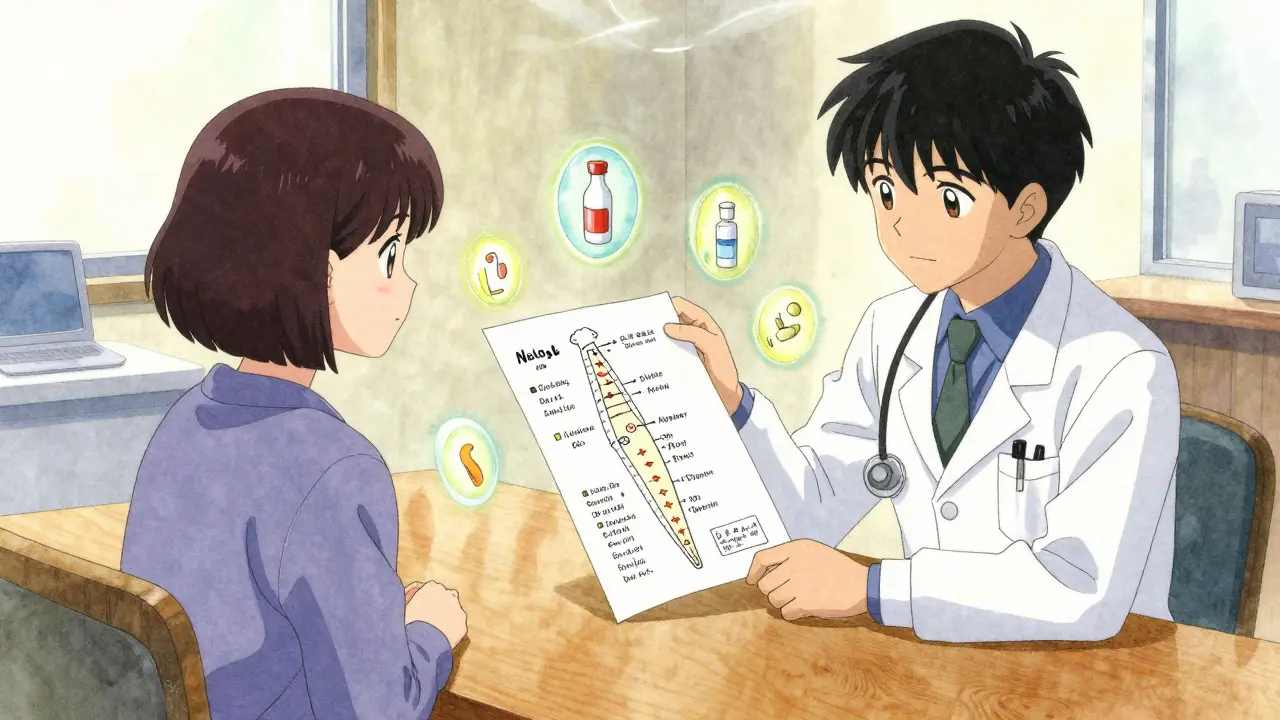
You don’t have to suffer through withdrawal alone. There are safe, non-opioid tools to ease symptoms:
- Clonidine (0.1-0.3 mg twice daily): Reduces sweating, anxiety, rapid heartbeat, and muscle aches
- Hydroxyzine (25-50 mg at bedtime): Helps with anxiety and insomnia without being addictive
- Loperamide (2-4 mg as needed): Stops diarrhea without affecting your brain
- NSAIDs or acetaminophen: For lingering pain-no opioids needed
These aren’t magic pills. But they’re proven to make the process bearable. And they’re recommended by the CDC and the National Academy of Medicine.
For high-risk patients-those with past substance use disorders, depression, or trauma-tapering should include therapy. Cognitive behavioral therapy (CBT) and physical therapy aren’t optional extras. They’re part of the treatment. One 2021 study showed that when patients got CBT along with tapering, failure rates dropped from 44% to just 19% in six months.
What About Naloxone?
If you’re on more than 50 MME daily, or if you’ve ever overdosed, or if you’re taking benzodiazepines, you need naloxone. Not just “in case.” You need it now.
Why? Forty-one percent of overdose deaths during tapering happen in the first 30 days. Your tolerance is dropping. Your body is vulnerable. Naloxone can reverse an overdose in minutes. It’s not a sign you’re failing-it’s a safety net. The Substance Abuse and Mental Health Services Administration (SAMHSA) says it’s essential.
Success Isn’t Always Zero
Many people believe the only win is stopping opioids completely. That’s not true. The goal isn’t a number on a chart-it’s your life.
68% of successful tapering plans don’t aim for zero. They aim for a dose that lets you sleep, move, think clearly, and be present with your family. Maybe that’s 30 MME. Maybe that’s 15. Maybe that’s 5. If you’re feeling better, functioning better, and not risking overdose-you’ve won.
One patient I worked with reduced from 180 MME to 40 MME. He didn’t stop completely. But he went from being bedridden to walking his dog every morning. He sleeps through the night. He’s back at work part-time. That’s not failure. That’s progress.

Why You Need a Written Plan
Verbal agreements don’t work. You need a written tapering plan-signed by you and your doctor.
Why? Because when things get hard-and they will-you need to remember why you started. A 2019 Oregon study found that 87% of successful tapers had a signed agreement. Only 52% of failed ones did.
Your plan should include:
- Your current dose and target dose
- How often you’ll reduce (e.g., 10% every 3 weeks)
- What symptoms to watch for
- When to pause or slow down
- Who to call if things get overwhelming
It’s not bureaucracy. It’s accountability-for you and your provider.
What If You Can’t Taper Alone?
You don’t have to do this in isolation. If your doctor doesn’t offer support, find someone who does. Look for pain clinics, addiction specialists, or mental health providers experienced in opioid tapering.
Since January 2024, all U.S. prescribers are required to complete 8 hours of opioid tapering training. That means more doctors are equipped to help. Ask if your provider has completed it. If not, ask for a referral.
And if you’re struggling with anxiety, depression, or trauma during tapering-get help. Therapy isn’t a luxury. It’s medicine.
Final Thought: This Is About Control
Tapering isn’t about giving up. It’s about taking back control. Control over your body. Control over your mind. Control over your life.
Every reduction is a step toward feeling more like yourself. Not numb. Not stuck. Not afraid of the next dose.
Slow is safe. Planned is powerful. Supported is successful.
Cam Jane
January 6, 2026 AT 06:34Also-naloxone is non-negotiable. Got mine from the pharmacy for $0 with insurance. Keep it in your glovebox.
Mukesh Pareek
January 8, 2026 AT 06:09Dana Termini
January 8, 2026 AT 12:21Matt Beck
January 8, 2026 AT 21:05It’s like losing a ghost that kept you warm… but also kept you from feeling the sun 🌞
Slow is not weak. Slow is sacred. Slow is the only way back to yourself.
Kelly Beck
January 10, 2026 AT 15:01P.S. Clonidine is a miracle worker. Don’t be shy about asking for it.
Beth Templeton
January 12, 2026 AT 00:57Susan Arlene
January 13, 2026 AT 22:32took 8 months
still on 15mme
but i can hold my coffee without shaking
thats enough
Indra Triawan
January 14, 2026 AT 01:35Melanie Clark
January 14, 2026 AT 05:38Venkataramanan Viswanathan
January 14, 2026 AT 05:47Vinayak Naik
January 15, 2026 AT 09:20it sucked. but i’m here. alive. and my dog still loves me. that’s the win.
Kiran Plaha
January 15, 2026 AT 11:14