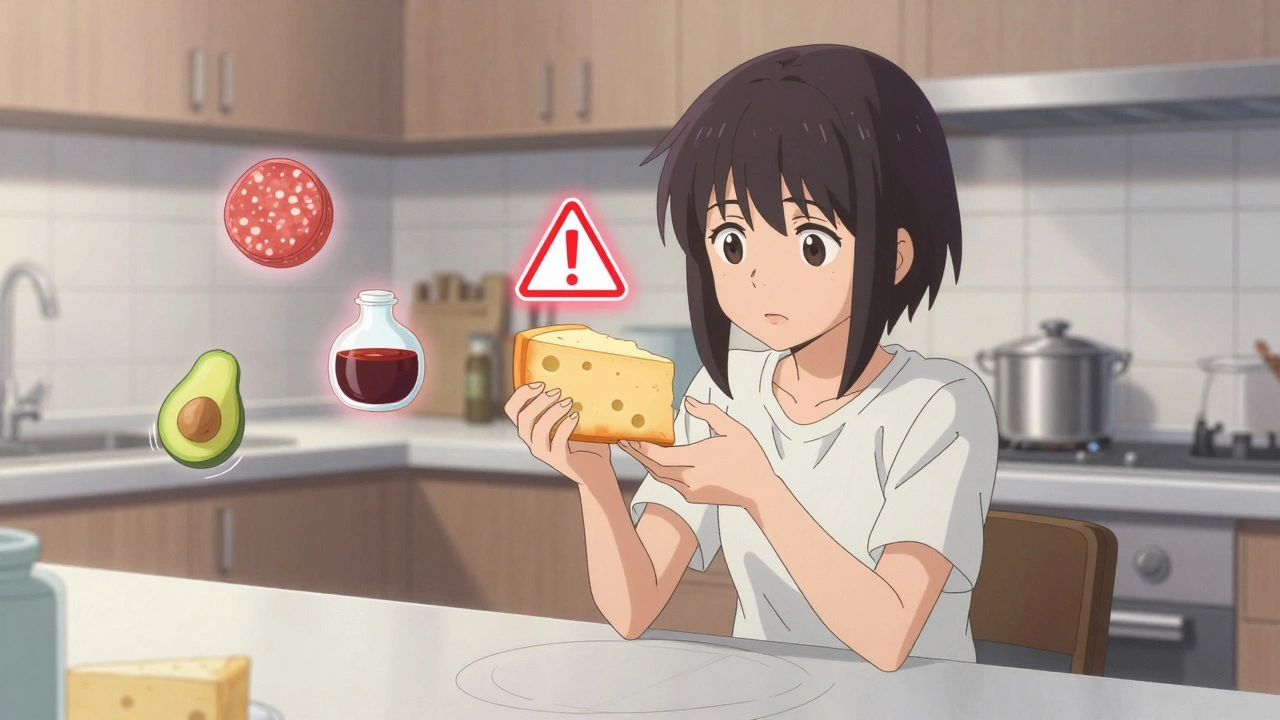
Tyramine Content Calculator
Calculate your total tyramine intake from foods and see if it exceeds the dangerous threshold (10-25mg). This tool helps you understand which foods are safe when taking MAOI antidepressants.
Based on medical guidelines, consuming 10-25mg of tyramine can trigger a hypertensive crisis for people taking MAOIs.
Added Foods:
Enter your food items to see your total tyramine intake.
When you're taking an MAOI antidepressant, what you eat isn't just about nutrition-it can be a matter of safety. Monoamine Oxidase Inhibitors (MAOIs) like phenelzine, tranylcypromine, and isocarboxazid are powerful tools for treating depression, especially when other medications haven't worked. But they come with a hidden risk: tyramine, a naturally occurring compound in certain foods. If you don't know which foods to avoid, you could trigger a sudden, dangerous spike in blood pressure-even from something as simple as a slice of cheese or a spoonful of soy sauce.
Why Tyramine Is Dangerous with MAOIs
Your body normally breaks down tyramine using an enzyme called monoamine oxidase-A (MAO-A), mostly in the gut and liver. MAOIs block this enzyme. Without it, tyramine builds up in your bloodstream. That’s not a problem for most people, but for someone on an MAOI, it’s a red flag. When tyramine floods your system, it forces your nerve cells to release large amounts of norepinephrine, a chemical that tightens blood vessels and speeds up your heart. The result? A rapid, severe rise in blood pressure-sometimes over 180/120 mmHg. This is called a hypertensive crisis. Symptoms include pounding headache, blurred vision, chest pain, nausea, and sweating. In rare cases, it can lead to stroke or death. The risk isn’t theoretical. Studies show that just 10 to 25 milligrams of tyramine can trigger this reaction in people on MAOIs. For context, one ounce of salami has about 50 mg. A tablespoon of soy sauce? Around 15 mg. You don’t need to eat a lot to cross the danger line.Which Foods Are High in Tyramine?
Tyramine doesn’t show up in fresh foods. It forms when proteins break down over time-through aging, fermentation, or spoilage. That’s why it’s common in preserved, aged, or fermented products.- Aged cheeses: Cheddar, Swiss, blue cheese, Parmesan, and other hard, aged cheeses can contain 50 to 400 mg of tyramine per 100 grams. Fresh cheeses like mozzarella, cottage cheese, and cream cheese are safe-under 10 mg per serving.
- Dried or cured meats: Salami, pepperoni, summer sausage, and other air-dried or fermented meats often have 50-100 mg per ounce. Fresh, unprocessed meats like chicken, beef, or fish are fine.
- Fermented soy products: Soy sauce, miso, tempeh, and fermented bean curd are high-risk. Traditional soy sauce can have up to 500 mg per 100 ml, but most commercial brands now contain around 30 mg. Still, even that much can add up if you're eating multiple servings.
- Fermented or pickled foods: Sauerkraut, kimchi, pickled herring, and certain pickles contain significant tyramine. Avoid them unless labeled as fresh or unpasteurized.
- Overripe fruits: Bananas, avocados, and figs become riskier as they ripen. A ripe avocado has about 0.5-3 mg per 100 grams, but if it’s mushy or brown-spotted, levels can jump to 10 mg or more.
- Tap beer and draft beer: These can contain 10-30 mg of tyramine per 100 ml due to natural fermentation. Bottled or canned beer is usually safe, but check labels. Wine (especially Chianti) is generally okay in moderation-around 10-20 mg per 100 ml. Distilled spirits like vodka, whiskey, or gin are low-risk.
- Yeast extracts: Marmite, Vegemite, and other concentrated yeast spreads are very high in tyramine. Skip them entirely.
What’s Safe to Eat?
You don’t need to go on a starvation diet. Most fresh, unprocessed foods are perfectly safe:- Fresh meat, poultry, fish, and eggs
- Fresh fruits and vegetables (except overripe bananas, avocados, figs)
- Most dairy products (milk, yogurt, fresh cheese, butter)
- Whole grains, pasta, rice, bread (unless it’s sourdough made with wild yeast)
- Most bottled or canned beverages, including coffee and tea
Not All MAOIs Are the Same
The old rule-“avoid everything”-doesn’t apply to everyone anymore. Newer forms of MAOIs have changed the game. The transdermal selegiline patch (Emsam) delivers the drug through the skin, bypassing the gut where tyramine is usually broken down. At the lowest dose (6 mg/24 hours), you don’t need to restrict your diet at all. Even at 9 mg/24 hours, restrictions are lighter than with older pills. Only at 12 mg/24 hours do dietary limits kick in again. Moclobemide is another option. It’s a reversible MAOI, meaning it doesn’t permanently block the enzyme. If tyramine shows up, the enzyme can still do its job. That’s why it’s used widely in Europe and carries far fewer dietary restrictions. So if you’re considering an MAOI, talk to your doctor about which one fits your lifestyle. For many, Emsam is a game-changer.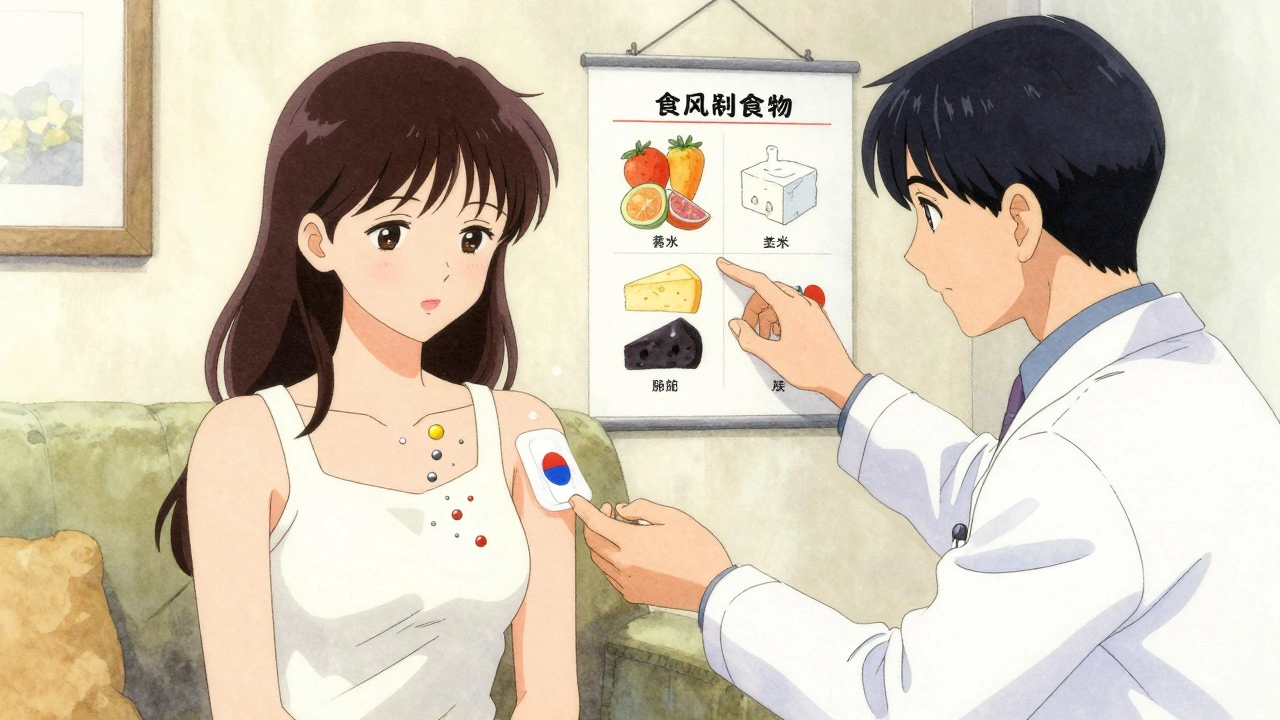
Other Hidden Risks
Food isn’t the only danger. Many over-the-counter and prescription drugs can interact with MAOIs, sometimes just as dangerously.- Decongestants: Pseudoephedrine and phenylephrine (found in cold and allergy meds) can cause severe blood pressure spikes. Use saline sprays instead.
- Pain relievers: Some cold medicines contain dextromethorphan or meperidine. Avoid them. Stick to plain acetaminophen.
- Herbal supplements: St. John’s wort, ginseng, and L-tryptophan can increase serotonin levels and trigger serotonin syndrome when mixed with MAOIs.
- Other antidepressants: Never start an SSRI like sertraline or fluoxetine within 14 days of stopping an MAOI. The combination can cause serotonin syndrome-a potentially fatal condition with fever, confusion, muscle rigidity, and seizures.
How Long Do Restrictions Last?
MAOIs don’t leave your system quickly. Irreversible MAOIs bind to enzymes for weeks. Even after you stop taking the pill, your body needs 2 to 4 weeks to make new enzymes. That means you must keep avoiding high-tyramine foods for at least two weeks after your last dose. Some doctors recommend waiting four weeks to be safe. Don’t assume you’re cleared just because you feel better. If you’re switching to another antidepressant, the 14-day washout period is non-negotiable. There are documented cases of death when people skipped this step.What to Do If You Accidentally Eat Something Risky
If you eat something high in tyramine-say, a slice of blue cheese or a sandwich with salami-and you start feeling a pounding headache, blurred vision, chest tightness, or a racing heart, act fast.- Call 999 or go to the nearest emergency room immediately.
- Don’t wait to see if it passes. Hypertensive crises can escalate in minutes.
- Bring your medication list with you.

Modern MAOIs Are Safer Than You Think
MAOIs used to have a scary reputation. But today, they’re prescribed more than ever-especially Emsam. In 2023, nearly 75% of all MAOI prescriptions in the U.S. were for the patch. Why? Because patients can live normally without constant fear of food. The key isn’t avoiding MAOIs. It’s understanding which one you’re on, knowing exactly what to avoid, and staying informed. Many people on MAOIs live full, active lives. They eat out, travel, and enjoy meals with family-just with a little more awareness. The American Psychiatric Association says dietary restrictions are still essential for older MAOIs-but they’re significantly reduced for transdermal selegiline. That’s progress.Final Checklist
Before you start or continue an MAOI, make sure you’ve covered these:- Know your exact medication and dose.
- Get a printed list of safe and unsafe foods from your doctor or pharmacist.
- Avoid aged, fermented, or spoiled foods.
- Check all OTC meds for decongestants or dextromethorphan.
- Carry an MAOI alert card in your wallet.
- Wait at least 14 days before starting any other antidepressant.
- Continue food restrictions for 2-4 weeks after stopping the MAOI.
Frequently Asked Questions
Can I drink wine while on an MAOI?
Yes, in moderation. Most wines, including Chianti, contain 10-20 mg of tyramine per 100 ml. One glass is usually safe. Avoid large quantities or fortified wines like port, which can be higher. Always check with your doctor if you’re unsure.
Is soy sauce always dangerous?
Not necessarily. Traditional fermented soy sauce can have up to 500 mg per 100 ml, but most commercial brands today contain around 30 mg. One tablespoon (15 mg) is usually safe for most people on older MAOIs, but avoid large amounts. Low-sodium soy sauce may have less tyramine, but always check the label.
Can I eat chocolate while on an MAOI?
Dark chocolate contains small amounts of tyramine-usually under 5 mg per ounce. Most people on MAOIs can safely enjoy a small piece. Avoid large amounts or chocolate with added nuts or dried fruit, which may increase tyramine levels. Milk chocolate is generally safer.
Do I need to avoid all fermented foods?
Not all. Yogurt, kefir, and other live-culture dairy products are typically low in tyramine because they’re fresh and not aged. But avoid fermented vegetables like sauerkraut, kimchi, and pickled herring. Stick to fresh, unfermented versions.
What if I’m on the Emsam patch? Do I still need to watch my diet?
At the lowest dose (6 mg/24 hours), no dietary restrictions are needed. At 9 mg/24 hours, you should avoid very high-tyramine foods like aged cheese and cured meats. At 12 mg/24 hours, you follow the same rules as with oral MAOIs. Always check your prescription label and ask your doctor.
Wendy Chiridza
December 4, 2025 AT 11:03Just started on Emsam 6mg and honestly I didn't believe the no-diet thing until I ate a slice of blue cheese and didn't turn into a human alarm clock. Game changer.
Jessica Ainscough
December 5, 2025 AT 17:38My grandma used to say if it looks like it’s thinking, don’t eat it. Turns out she was onto something with MAOIs. Fresh is best. I keep a little list taped to my fridge.
Gerald Nauschnegg
December 6, 2025 AT 16:45Bro I just ate a whole jar of soy sauce on rice because I thought it was low sodium. I’m fine. Probably. Should I be worried?
Pamela Mae Ibabao
December 8, 2025 AT 09:56That’s not even the half of it. Did you know that some kombucha brands have more tyramine than aged cheddar? And no, the label doesn’t say. I had to test 17 different ones before finding one that didn’t make me feel like my skull was going to split open. Your body is a minefield.
Josh Bilskemper
December 10, 2025 AT 07:48MAOIs are for people who can’t handle SSRIs. Real men don’t need dietary restrictions. I take mine with a shot of whiskey and a slice of pepperoni. If I die, I die. At least I lived.
Joanne Rencher
December 10, 2025 AT 11:46Why are we still talking about this like it’s 1998? The patch exists. Just use it. Stop scaring people with lists of banned foods. It’s not 1984.
Palanivelu Sivanathan
December 11, 2025 AT 20:34Think about it... tyramine is just nature's way of testing your soul's resilience... every bite of cheese is a karmic choice... the body remembers every drop of soy sauce... are you truly free if your diet is policed by enzymes?
Casey Lyn Keller
December 13, 2025 AT 16:54I’m convinced the FDA is hiding the real reason MAOIs are so restricted. They don’t want you to know that the pharmaceutical industry profits more from people needing emergency care than from them just eating safe food. It’s all about the money.
May .
December 13, 2025 AT 18:48My doctor said no aged cheese but I had some anyway. Felt weird for an hour. No crisis. Probably fine. Maybe they overreact.
Katey Korzenietz
December 13, 2025 AT 22:23People don’t read labels anymore. I saw someone at Whole Foods put a jar of Vegemite in their cart. I wanted to scream. You’re not just risking your life, you’re risking everyone’s peace of mind.
Mark Gallagher
December 14, 2025 AT 11:06So you’re telling me I can’t have a nice Reuben? I’ve been eating pastrami on rye for 20 years. Now you want me to give it up because of some enzyme? That’s not medicine, that’s fascism. And why is everyone acting like this is new? My uncle was on phenelzine in '78 and he ate everything. Lived to 89.
Kevin Estrada
December 15, 2025 AT 03:15Wait wait wait. So if I take the patch at 6mg I can eat ANYTHING? Even fermented tofu? Even kimchi? Even that weird blue cheese from the farmer’s market that smells like socks? I’m not joking. I need to know. This is life changing.
Adrianna Alfano
December 15, 2025 AT 03:27my friend on emsam had a heart attack after eating a banana that was too ripe. she was fine but it scared the hell out of her. so yeah even the ‘safe’ stuff has a gray zone. don’t be lazy. check your fruit. i keep a ripeness chart on my phone.
dan koz
December 16, 2025 AT 02:51Man in Nigeria we just eat everything and pray. My cousin on MAOI ate fermented yam, smoked fish, and palm wine. He woke up singing. No crisis. Maybe it’s all about faith.