Why Secure Storage Matters More Than You Think
Every year, over 90,000 people in the U.S. die from drug overdoses. Around 16,000 of those deaths are tied to prescription opioids - drugs that were meant to help, not harm. And here’s the hard truth: most of those opioids didn’t come from illegal dealers. They came from someone’s medicine cabinet.
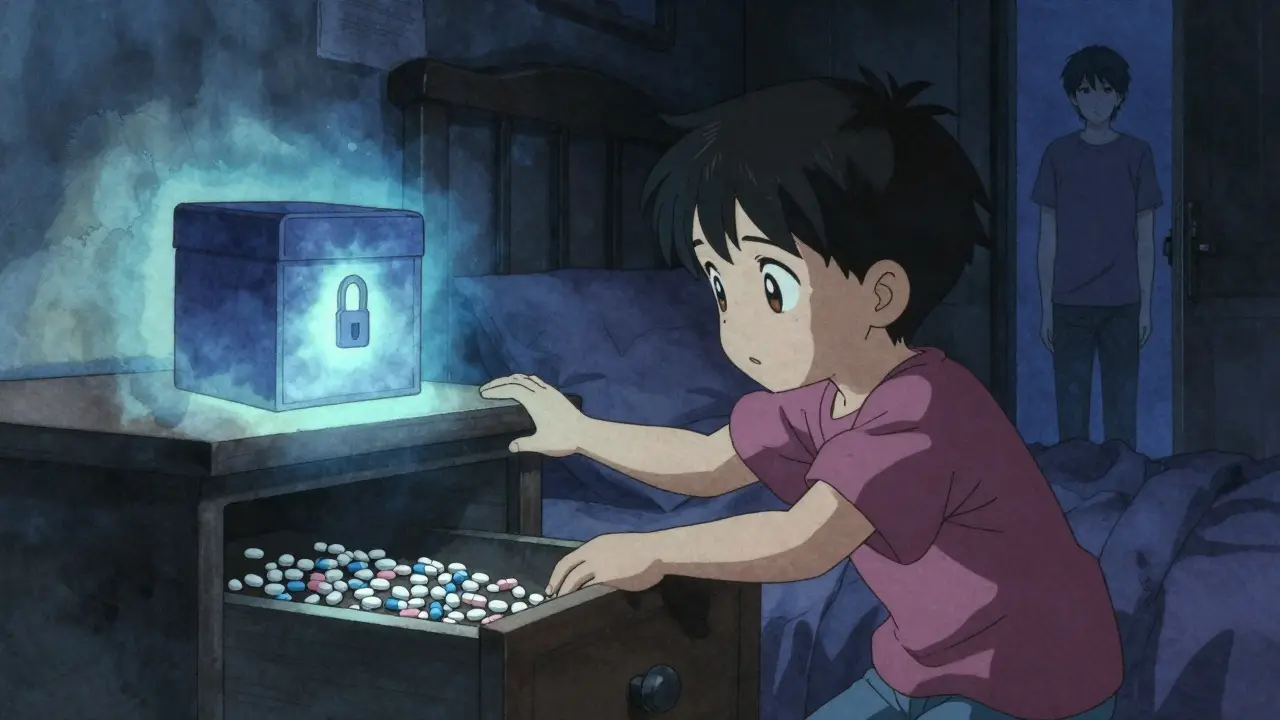
Studies show that more than half of people who misuse prescription opioids get them from friends or family members who didn’t lock them up. Kids, teens, even visitors - they find pills in nightstands, kitchen drawers, or bathroom cabinets. One wrong move, one unlocked box, and a life can change forever.
Storing high-risk medications properly isn’t about being paranoid. It’s about basic safety. It’s the difference between your child breathing normally and ending up in the ER. It’s the difference between your elderly parent taking their pain meds safely and accidentally swallowing twice the dose. This isn’t a suggestion. It’s a life-saving habit.
What Counts as a High-Risk Medication?
Not all prescription drugs are created equal when it comes to risk. High-risk medications include:
- Opioids - like oxycodone (OxyContin), hydrocodone (Vicodin), morphine, and fentanyl patches
- Benzodiazepines - such as alprazolam (Xanax) and diazepam (Valium), especially when mixed with alcohol or other drugs
- Sleep aids - like zolpidem (Ambien), which can cause dangerous confusion or memory loss if taken incorrectly
- Insulin and other injectables - if left unsecured, these can be misused or accidentally injected by someone unaware of dosage
These aren’t just “strong” drugs. They’re drugs that can shut down breathing, cause coma, or kill - even in small amounts if taken by someone who doesn’t need them.
The Gold Standard: Locked Storage
The most effective way to prevent accidental overdose? Lock it up.
Research from the Journal of the American Medical Association Pediatrics found that using a locked container reduces accidental pediatric ingestions by 87%. That’s not a small number. That’s almost all of them.
You don’t need a safe or a vault. A simple lockbox works. Look for ones that meet ANSI Grade 2 standards - meaning they can resist forced entry for at least 10 minutes. These are tested for real-world scenarios: kids pulling drawers, teens trying to break in, even pets knocking things over.
Basic lockboxes cost between $15 and $50. Biometric models with fingerprint access run $100-$150. Even the cheapest option is cheaper than an ambulance ride. Or worse.
Place it where it’s out of sight and out of reach - at least 4 feet off the ground. That’s above the reach of most children under 6. Avoid places like nightstands, countertops, or bathroom shelves. Those are the top three spots where kids find pills, according to the American Association of Poison Control Centers.
Keep Pills in Original Containers
It’s tempting. You’ve got a pill organizer with compartments for each day of the week. It’s neat. It’s easy. But it’s dangerous.
Transferring pills out of their original bottles removes critical safety info: the patient’s name, the drug name, dosage instructions, expiration date, and - most importantly - the child-resistant cap.
The Poison Prevention Packaging Act of 1970 requires these caps on most controlled substances. They’re not perfect, but they slow kids down. And in those extra few seconds, an adult might notice and stop them.
Studies show that medications kept in original containers have 40% fewer accidental ingestions than those moved to other containers. Yet, 68% of adults still transfer pills out of their bottles - mostly because they find the caps hard to open.
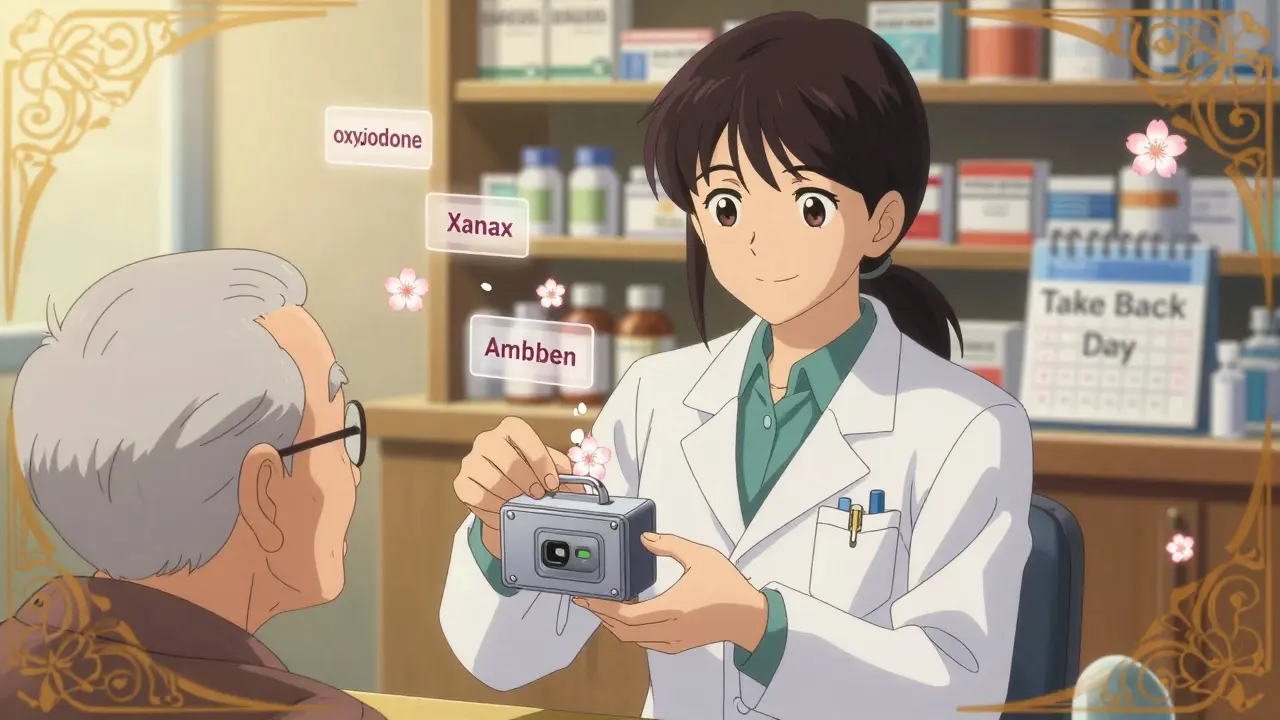
If you struggle with child-resistant caps, talk to your pharmacist. Many pharmacies offer easy-open caps at no extra cost. Some even sell lockboxes with built-in pill organizers that keep meds secure but still easy to access for the person who needs them.
Temperature and Environment Matter Too
Storing meds in a hot, damp bathroom? That’s a bad idea. Moisture and heat can break down pills, making them less effective - or even toxic.
The U.S. Pharmacopeia recommends keeping most medications between 68°F and 77°F (20-25°C). Brief excursions up to 86°F (30°C) are okay, but avoid places like:
- On top of the fridge (too warm)
- Inside a car (can hit 120°F in summer)
- Bathroom cabinets (steam from showers ruins packaging)
A bedroom drawer, a kitchen cabinet away from the stove, or a dedicated lockbox in a cool, dry room are ideal. If you’re storing fentanyl patches, check the label - some require refrigeration. Always follow the instructions on the bottle.
Track What You Have - Daily
Knowing how many pills are left isn’t just for doctors. It’s for your safety.
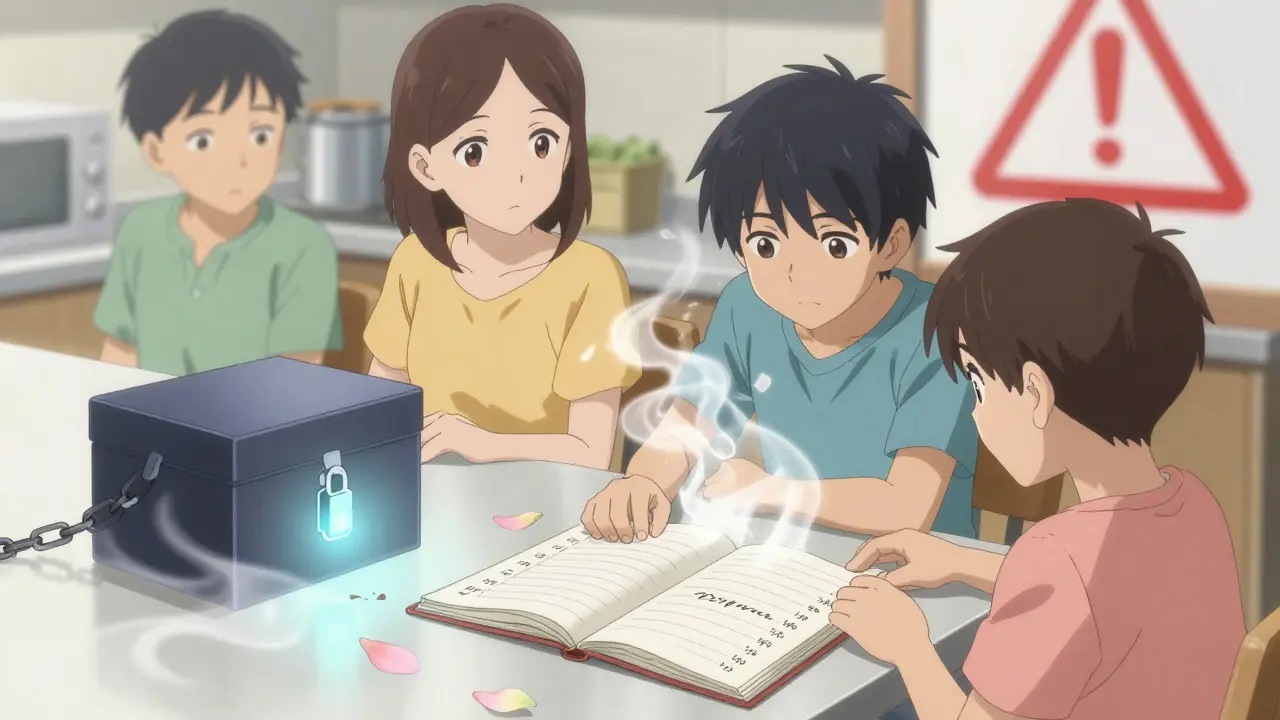
Connecticut’s health department recommends keeping a daily log: write down the date, time, and number of pills remaining. For example: “42 tablets at 8:00 AM, Jan 15.”
This simple habit helps you spot if someone’s taking more than they should. It also gives you proof if you need to talk to a doctor or pharmacist about unusual usage.
Some people use apps like Hero Health or MedMinder, which beep when it’s time to take a pill and log every time the box opens. But these cost $99-$149 and need Wi-Fi or charging. For most people, a notebook and pen work just fine.
What If You Can’t Use a Lockbox?
Not everyone can open a lockbox. Arthritis, shaky hands, vision problems - these are real barriers. And yes, 32% of users report this as a major issue.
There are solutions:
- Look for lockboxes with a 4-digit code instead of a key or combination dial. The Med-ic Safe Locking Pill Organizer is one example - it opens with a simple code, even if your hands are stiff.
- Ask your pharmacist about easy-open caps. Many pharmacies will replace standard child-resistant caps with a version that’s easier to twist open.
- Store the lockbox in a place where someone else can help - a caregiver, family member, or neighbor. Make sure they know the code or have the key.
Never skip storage just because it’s hard. There’s always a workaround. Your life - or someone else’s - might depend on it.
What About Disposal?
Unused pills shouldn’t sit around forever. Expired or unwanted meds are still dangerous.
The DEA runs National Prescription Drug Take Back Days twice a year - in April and October. Over 985,000 pounds of medication were collected in 2022 alone. Find your nearest drop-off site at dea.gov/takebackday.
If you can’t wait for a take-back day, mix pills with kitty litter or coffee grounds, seal them in a plastic bag, and throw them in the trash. Don’t flush them unless the label says to. Flushing pollutes water supplies.
And if you’re worried about someone else using your old meds - get rid of them. Now.
What Doctors Should Be Telling You (But Often Don’t)
Doctors are supposed to talk to you about safe storage every time they prescribe opioids or other high-risk drugs. The CDC says so. But a 2021 study found that only 37% of patients actually get this advice.
Don’t wait for them to bring it up. Ask:
- “Is this medication high-risk?”
- “Should I lock it up?”
- “Do you have a lockbox I can get from the pharmacy?”
Some pharmacies, like CVS, now give away free lockboxes to patients on opioids. Ask. It’s your right.
Real Stories, Real Consequences
One Reddit user wrote: “My doctor never told me to lock up my oxycodone. My 16-year-old found them in my nightstand and overdosed - thank God Narcan worked.”
Another parent on a parenting forum said: “The Walgreens lockbox saved my toddler from grandma’s fentanyl patches. She pulled three drawers down trying to get them.”
These aren’t rare cases. The Washington Poison Center logged over 1,200 cases in 2022 involving children under 6 who accessed unsecured medications. Nearly 90% of those happened because the drugs were left in plain sight.
Secure storage doesn’t just protect your kids. It protects your neighbors, your guests, your family. It protects you from guilt you’ll carry forever.
Final Checklist: Your 5-Minute Safety Routine
Here’s what you need to do today:
- Inventory - List every high-risk medication in your home. Include names, doses, and how many pills are left.
- Transfer - Put all pills back in their original bottles with child-resistant caps on.
- Lock - Buy or use a lockbox. Place it at least 4 feet high, out of sight.
- Track - Write down the number of pills each morning. Just one line. Takes 30 seconds.
- Dispose - Get rid of any expired or unused meds at a take-back location or by mixing with coffee grounds and tossing.
Do this once. Then check it every month. It’s not a burden. It’s a shield.
What If Someone Already Took a Pill?
If you suspect someone - child, teen, adult - has taken a medication that wasn’t prescribed to them, act fast.
- Call 911 immediately if they’re unconscious, having trouble breathing, or seizing.
- If they’re awake but confused, call the Poison Help hotline: 1-800-222-1222. It’s free, 24/7, and staffed by experts who’ve handled over 2 million calls in 2022 alone.
- Have the pill bottle ready. Tell them the name, dose, and how many were taken.
- Don’t wait to see if they “get better.” Some overdoses take hours to show up.
Narcan (naloxone) can reverse opioid overdoses. If you have it, use it. It’s safe. It won’t hurt someone who didn’t take opioids. Keep it in your lockbox - right next to the meds.
amanda s
December 17, 2025 AT 23:18Jigar shah
December 19, 2025 AT 15:26Nishant Desae
December 21, 2025 AT 02:13Meghan O'Shaughnessy
December 21, 2025 AT 07:57Jody Patrick
December 22, 2025 AT 13:33Radhika M
December 22, 2025 AT 18:03Philippa Skiadopoulou
December 24, 2025 AT 11:03Pawan Chaudhary
December 25, 2025 AT 20:18Jonathan Morris
December 27, 2025 AT 07:11Linda Caldwell
December 27, 2025 AT 23:38Anna Giakoumakatou
December 29, 2025 AT 00:37CAROL MUTISO
December 29, 2025 AT 12:25Erik J
December 30, 2025 AT 10:48BETH VON KAUFFMANN
December 31, 2025 AT 02:24Sam Clark
December 31, 2025 AT 20:59