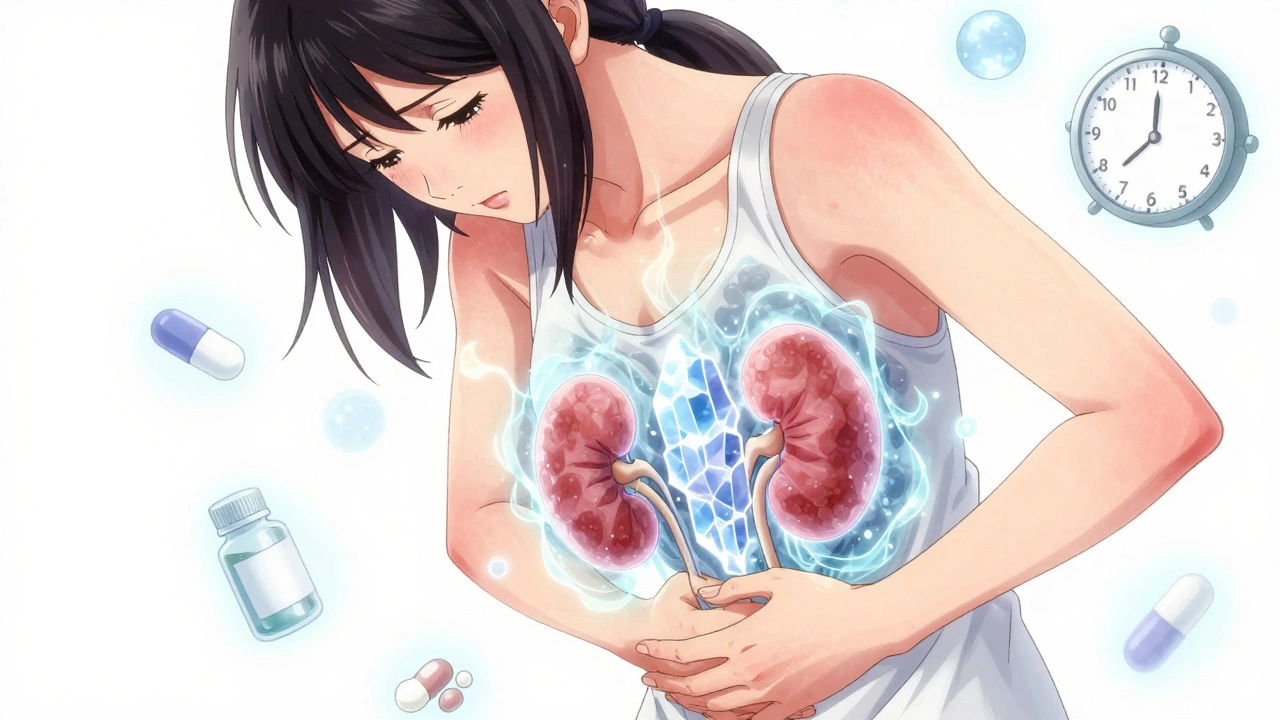
Medication-induced acute interstitial nephritis is a hidden cause of kidney damage. Learn the real signs, top drugs that trigger it, and what to do before permanent injury occurs.
Read MoreAcute Interstitial Nephritis Signs: What to Watch For and When to Act
When your kidneys suddenly stop working right, it’s often because of acute interstitial nephritis, a sudden inflammation of the kidney’s supporting tissue that can lead to rapid loss of kidney function. This isn’t a slow, quiet problem—it shows up fast, and if you miss the signs, it can turn into permanent damage. Also known as drug-induced interstitial nephritis, it’s one of the most common causes of sudden kidney failure in people taking new medications. Most cases happen after starting antibiotics, NSAIDs like ibuprofen, or proton pump inhibitors for heartburn. Your kidneys aren’t just filters—they’re complex organs, and when the space between their tubes gets inflamed, fluid and waste start backing up in your body.
The biggest red flags? A drop in urine output, unexplained fever, and swelling in your ankles or face. You might feel tired, nauseous, or have flank pain—like a deep ache just below your ribs. Blood tests will show rising creatinine, and urine may have white blood cells or eosinophils, which are telltale signs of this specific type of inflammation. It’s not the same as a urinary tract infection. This is deeper, inside the kidney itself. And it’s often missed because doctors don’t always connect a new pill you started three weeks ago to your sudden fatigue and swelling. If you’ve been on any new medication and feel off, this is something your provider should check.
Drug-induced kidney damage, a broad category that includes acute interstitial nephritis, is responsible for up to 20% of all hospital-related kidney failures. It’s preventable. The key is catching it early. Stopping the offending drug right away can reverse the damage in most cases—if you act before scarring sets in. But if you wait, you risk chronic kidney disease or even dialysis. That’s why knowing the signs matters more than you think. You don’t need to be an expert to spot them. If you feel worse after starting a new medicine, and your body starts holding fluid or your pee changes, don’t brush it off.
What you’ll find in the articles below are real cases, clear explanations of what triggers this condition, how it’s diagnosed, and how to protect your kidneys from common medications you might not even think of as risky. You’ll also see how age, existing kidney health, and other drugs play into your risk—and what steps to take if you’re already on a long-term medication that could be quietly harming you. No guesswork. Just what works.