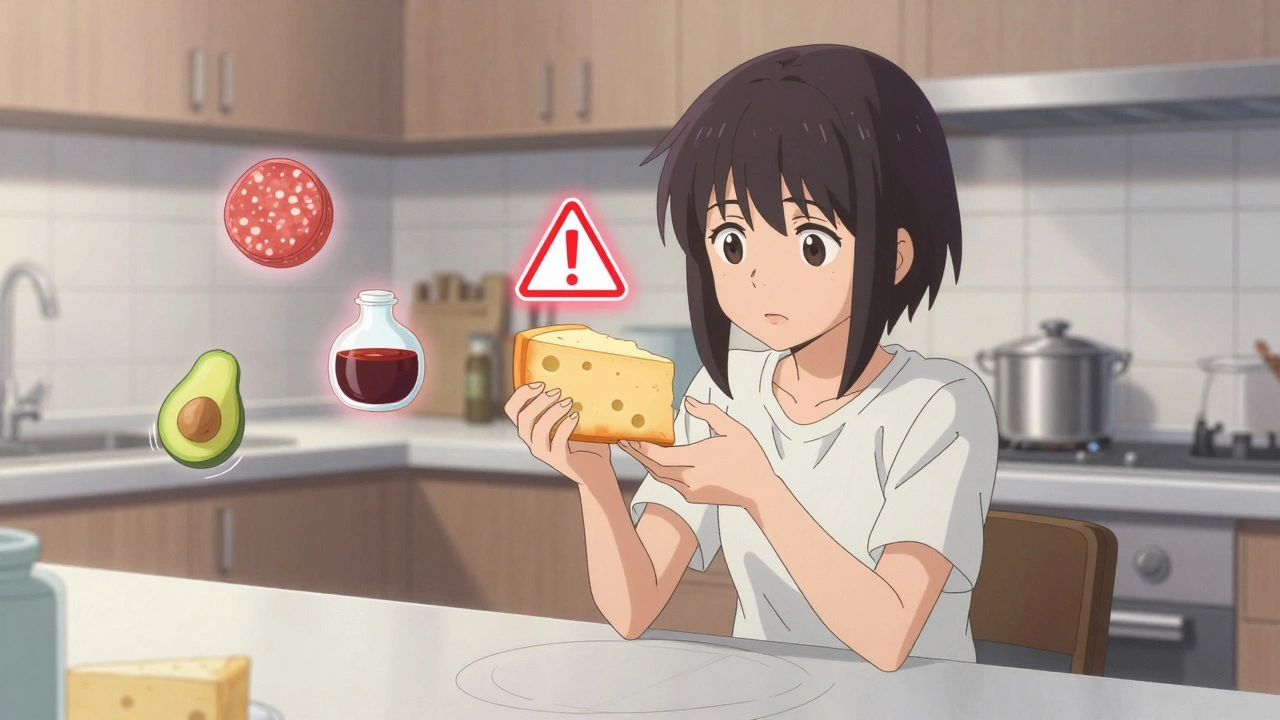
Learn which foods to avoid when taking MAOI antidepressants to prevent dangerous blood pressure spikes. Includes safe food lists, modern alternatives like Emsam, and emergency steps.
Read MoreAntidepressant Food Interactions: What to Eat and Avoid for Safe Treatment
When you take an antidepressant, a medication used to treat depression and some anxiety disorders by balancing brain chemicals like serotonin. Also known as mood stabilizers, these drugs help millions feel better—but they don’t work in a vacuum. What you eat can change how your body absorbs, breaks down, or reacts to them. This isn’t just about stomach upset. Some food combinations can lead to serious side effects, including a rare but dangerous condition called serotonin syndrome, a potentially life-threatening reaction caused by too much serotonin in the brain, or dangerously high blood pressure.
Take grapefruit, a common fruit that blocks enzymes in the liver responsible for breaking down many drugs. If you’re on certain antidepressants like sertraline or fluvoxamine, eating grapefruit can cause the drug to build up in your system. That means more side effects—dizziness, rapid heartbeat, confusion. It’s not a myth. Studies show this interaction can raise drug levels by over 50%. Then there’s tyramine, a natural compound found in aged cheeses, cured meats, and fermented foods. If you’re taking an older type of antidepressant called an MAOI, tyramine can spike your blood pressure to dangerous levels. One slice of blue cheese or a few bites of salami might be all it takes.
Even something as simple as alcohol can interfere. Mixing it with SSRIs like Prozac or Lexapro might make you feel more drowsy, slow your reaction time, or worsen depression symptoms over time. And while green tea or coffee might seem harmless, high caffeine intake can amplify nervousness or insomnia—side effects already common with many antidepressants. You don’t need to cut out everything. But knowing which foods and drinks to watch out for gives you real control over your treatment.
Some people think switching to natural supplements like St. John’s wort is safer. But it’s not. St. John’s wort can make many antidepressants work too well—or not at all. It’s a major player in drug interactions, when two or more substances affect each other’s effects in the body, and it’s often overlooked because it’s sold as a "natural" product. Your pharmacist needs to know you’re taking it. Same goes for omega-3s, magnesium, or vitamin D supplements—they can influence how your meds behave.
There’s no one-size-fits-all list. What’s risky for one person might be fine for another, depending on the exact drug, dosage, and your metabolism. But the pattern is clear: if you’re on an antidepressant, don’t assume food is just food. It’s part of your treatment plan. The posts below give you real, practical advice on what to avoid, what’s safe, and how to talk to your doctor or pharmacist about what you’re eating. No guesswork. No fear. Just clear, actionable info to keep your treatment working the way it should.