Learn how to safely store OTC medicines at home to prevent accidental poisoning, teen misuse, and expired drug risks. Step-by-step guide for families with kids and teens.
Read MoreChildproof Medicine Cabinet: Safe Storage for Kids and Medications
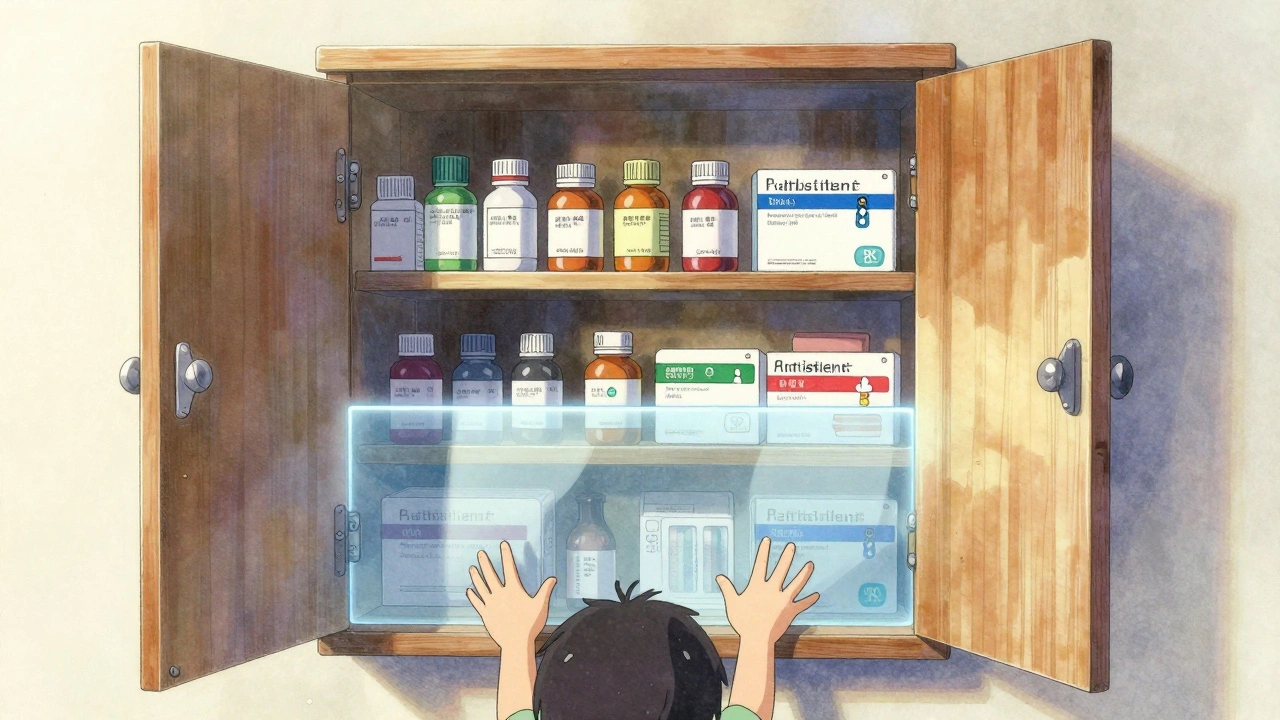
When you store medicines at home, you're not just keeping them organized—you're protecting your kids. A childproof medicine cabinet, a locked or secured storage unit designed to prevent children from accessing medications. Also known as a child-resistant medicine cabinet, it’s one of the simplest but most critical steps in poison prevention.
Every year, over 500,000 children under six end up in emergency rooms because they got into medicines. Most of these cases happen at home, often because the medicine was left out on a counter, in a purse, or in a cabinet that wasn’t truly locked. A childproof medicine cabinet isn’t just a fancy name—it’s a physical barrier. Think of it like a childproof cap on a bottle, but for your whole storage space. It should be high, out of reach, and locked with a mechanism kids can’t figure out. Even if you think your child is too young or too smart to open it, accidents happen fast. One moment of distraction is all it takes.
It’s not just about locking the cabinet. Where you put it matters too. The bathroom is the most common spot for medicine storage, but it’s also the worst. Humidity from showers can ruin pills, and kids can climb on sinks or toilets to reach shelves. A high closet in a bedroom or a locked cabinet in a hallway works better. And don’t forget about supplements, vitamins, and even nicotine patches—these aren’t just for adults. A child who thinks a gummy vitamin is candy might grab a melatonin or iron pill instead. That’s why your medication storage needs to include everything, not just prescription drugs. Even empty bottles can be dangerous if they still have residue inside.
Some parents think they’re safe because they only keep a few pills out. But that’s exactly how accidents start. One day you leave a painkiller on the nightstand. The next, your toddler finds it. A drug security system means consistency. No exceptions. No "just this once." The same rule applies to visitors’ bags. If someone brings medicine over, make sure it’s stored safely too. Kids are curious, and they watch adults. If they see you take pills from a drawer, they’ll want to know what’s inside.
You don’t need to spend a fortune. A simple lockable box with a combination or key, placed on a high shelf, works just as well as a fancy cabinet. The key is that it’s locked every single time—no matter how rushed you are. And don’t forget to check the locks regularly. Kids grow fast. What was out of reach last year might be just a step away now. If you’re storing insulin, asthma inhalers, or seizure meds, keep them accessible to you but not to them. A childproof cabinet doesn’t mean you can’t get to your meds quickly—it means no one else can.
Below, you’ll find real advice from people who’ve dealt with medication risks firsthand—from how to store pills so they don’t expire early, to why some medicines are more dangerous if swallowed by kids, to what to do if an accident happens. These aren’t theory pieces. They’re lessons learned from real situations. Whether you’re a new parent, a grandparent, or just someone who wants to make their home safer, this collection gives you the practical steps to keep medicines out of the wrong hands—and your family out of the ER.