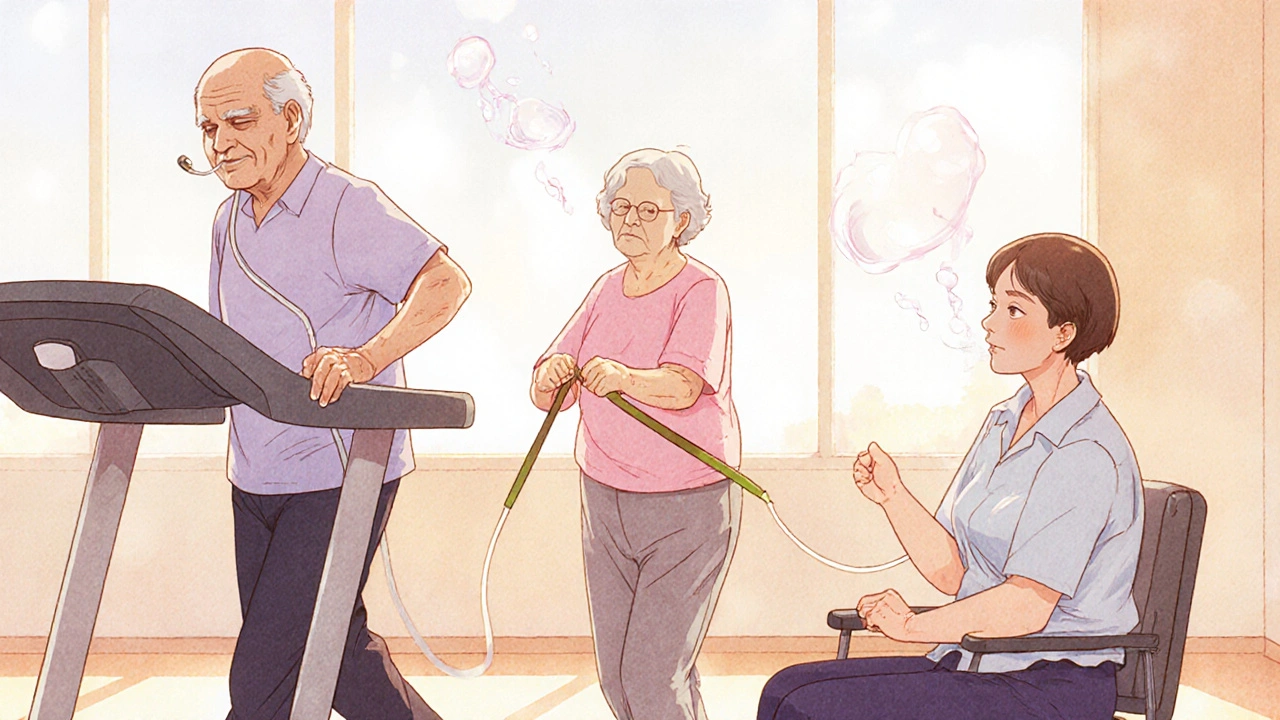
Pulmonary rehabilitation improves breathing, movement, and quality of life for people with chronic lung diseases like COPD and pulmonary fibrosis. It combines exercise, education, and support-backed by strong clinical evidence.
Read MoreChronic Lung Disease: Causes, Symptoms, and How to Manage It
When you have chronic lung disease, a long-term condition that makes breathing difficult and reduces oxygen flow to the body. Also known as chronic obstructive pulmonary disease (COPD), it includes emphysema, chronic bronchitis, and sometimes pulmonary fibrosis. Unlike a cold or flu, this isn’t something you shake off—it slowly worsens over years, often without clear warning until it’s advanced. Many people don’t realize they have it until they’re out of breath climbing stairs or walking to the mailbox. It’s not just smokers—long-term exposure to pollution, dust, or chemicals can also cause it. And while it can’t be cured, it can be managed. The key is catching it early and knowing what to do next.
One of the most common ways doctors check for it is through pulmonary function tests, a series of breathing tests that measure how well your lungs take in and release air. The main one, spirometry, a simple test where you blow into a tube as hard and fast as you can, shows if your airways are narrowed. If your results are low, it could mean COPD or another condition like interstitial lung disease. These tests aren’t just for diagnosis—they’re used to track how your lungs are doing over time. That’s why people with chronic lung disease often get them every year or two. And if you’re over 50 and have smoked, even a little, low-dose CT screening for lung cancer is recommended. It’s not about fear—it’s about catching problems before they become emergencies.
Managing chronic lung disease isn’t just about pills. It’s about daily habits: quitting smoking, avoiding smoke and fumes, staying active, and using inhalers correctly. Some people need oxygen at home. Others benefit from pulmonary rehab—where you learn breathing techniques and safe exercises. And while it’s not a cure, weight loss, even a small amount, can make breathing easier. The good news? There are tools, treatments, and strategies that work. You don’t have to accept breathlessness as normal. Below, you’ll find real guides on how to interpret lung test results, what screenings to ask for, and how to avoid mistakes that make things worse. These aren’t theory pages—they’re practical steps taken from people who’ve been there.