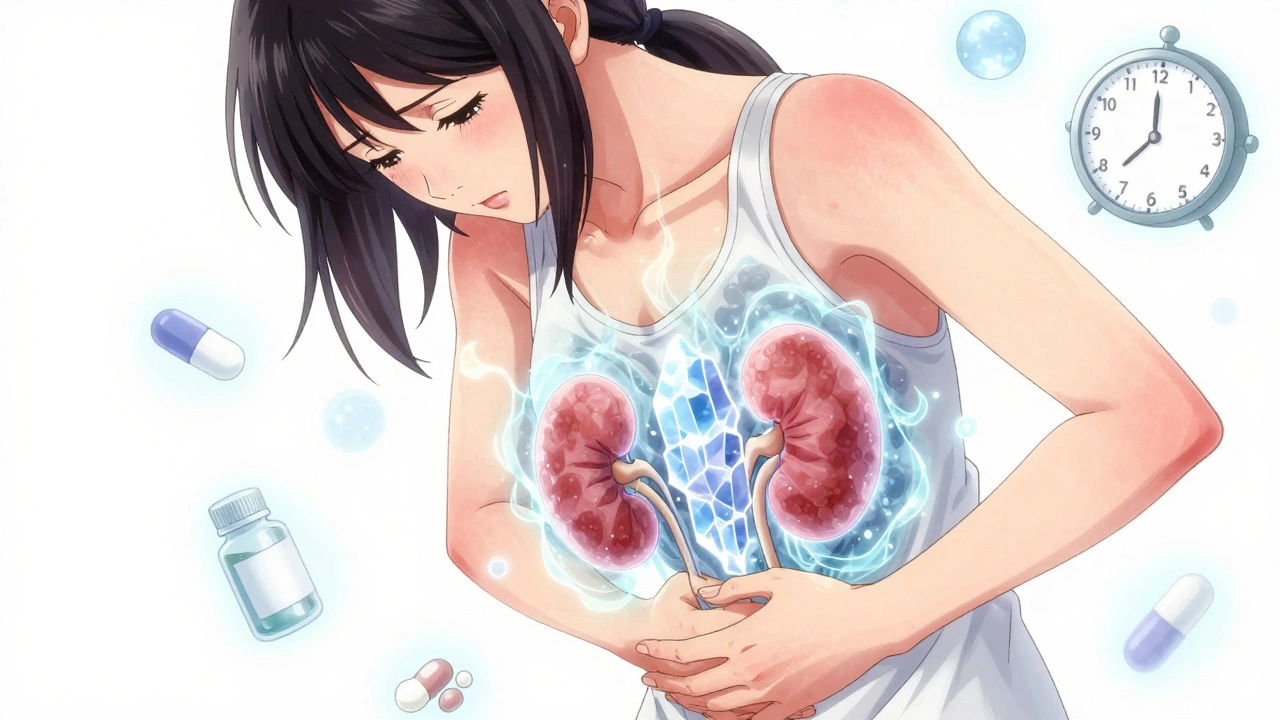
Medication-induced acute interstitial nephritis is a hidden cause of kidney damage. Learn the real signs, top drugs that trigger it, and what to do before permanent injury occurs.
Read MoreDrug-Related Kidney Injury: What You Need to Know About Medications and Kidney Damage
When you take a pill, your body doesn’t just absorb it—it processes it, filters it, and often sends it out through your kidneys, organs that filter waste and excess fluids from your blood. Also known as renal system, these two bean-shaped organs work nonstop, and they’re surprisingly vulnerable to the very drugs meant to help you. Drug-related kidney injury isn’t rare. It’s one of the most common causes of sudden kidney problems in hospitals and clinics, especially in older adults or people with existing health issues. Many people don’t realize that even common meds like ibuprofen, antibiotics, or blood pressure pills can stress or damage kidneys if used the wrong way.
This isn’t just about overdoses. Sometimes, it’s about dosing, how much and how often you take a medication—especially when kidney function drops with age or disease. A dose that’s fine for a 30-year-old might be dangerous for a 70-year-old with reduced kidney filtration. That’s why renal dosing adjustments, changes to medication amounts based on how well your kidneys are working matter so much. Even something as simple as a daily painkiller, taken for weeks, can quietly build up and cause harm if your kidneys aren’t clearing it out properly. Other culprits include contrast dyes used in scans, certain antibiotics, and even some herbal supplements. The risk goes up if you’re on multiple drugs at once—something called polypharmacy, taking five or more medications regularly—which many older adults face.
Most people don’t feel anything until the damage is already done. No sharp pain. No warning sign. Just fatigue, swelling in the ankles, less urine, or confusion. That’s why knowing your risk factors is key: diabetes, high blood pressure, heart failure, or just being over 65. If you’re on long-term meds, ask your doctor to check your kidney numbers at least once a year. Simple blood and urine tests can catch early signs before it turns serious. And if you’re switching meds, stopping one, or starting a new supplement, always ask: Could this hurt my kidneys? You’re not being paranoid—you’re being smart.
Below, you’ll find real-world guides on how medications interact with kidney function, how to spot hidden risks, and what steps to take to protect yourself. From adjusting doses based on age and health to understanding why some generics need special attention, these posts give you the tools to talk smarter with your doctor—and keep your kidneys working as they should.