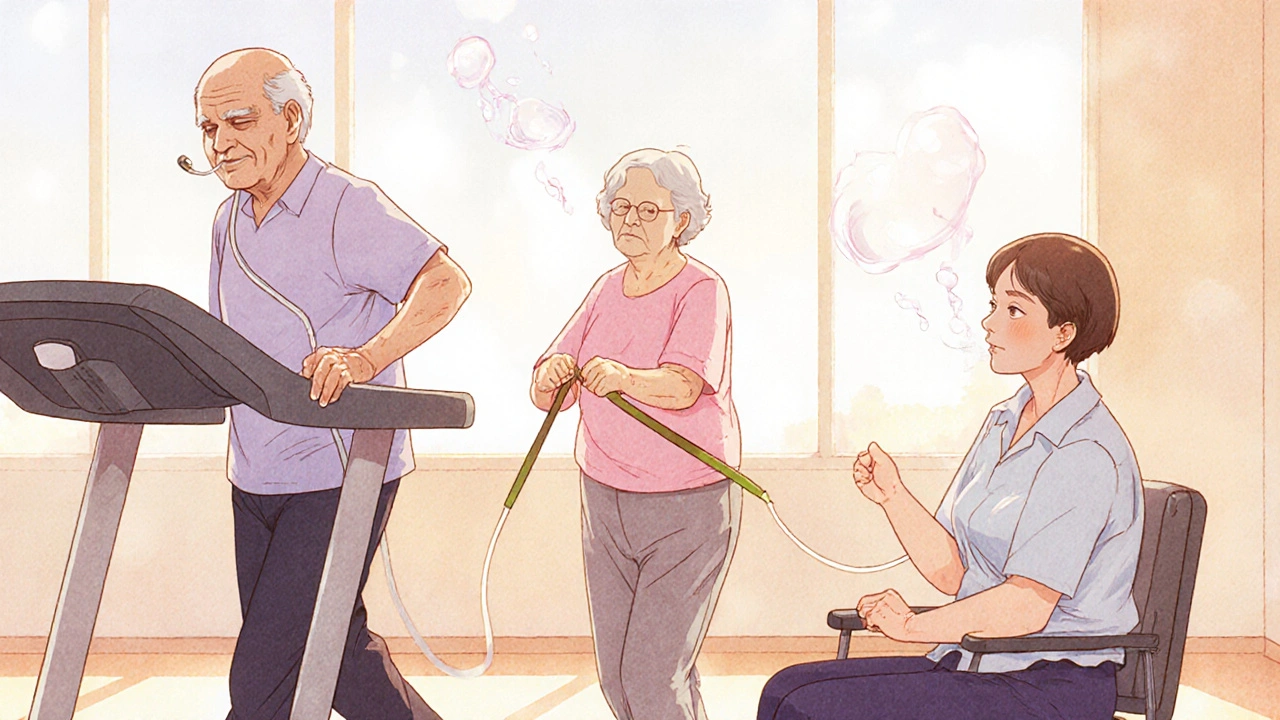
Pulmonary rehabilitation improves breathing, movement, and quality of life for people with chronic lung diseases like COPD and pulmonary fibrosis. It combines exercise, education, and support-backed by strong clinical evidence.
Read MoreExercise Training for Lung Disease: What Works and Why
When you have a lung disease like COPD, emphysema, or pulmonary fibrosis, your body doesn’t get enough oxygen — and that makes even simple tasks exhausting. But exercise training for lung disease, a structured program of physical activity designed to improve breathing and endurance in people with chronic respiratory conditions. Also known as pulmonary rehabilitation, it’s not about running marathons. It’s about getting back control of your daily life. Studies show people who stick with it can walk farther, climb stairs without stopping, and even spend less time in the hospital. This isn’t guesswork — it’s medicine, prescribed by doctors and proven in clinics worldwide.
What makes this different from regular workouts? pulmonary rehabilitation, a supervised program combining exercise, education, and breathing strategies for people with chronic lung conditions includes more than just walking. It builds respiratory therapy, techniques like paced breathing and diaphragmatic training that help manage shortness of breath during activity so you don’t feel like you’re gasping every time you stand up. It also adds light strength training — lifting small weights, doing leg raises — because weak muscles make breathing harder. And it teaches you how to move smarter: pacing yourself, using your arms to help your breathing, resting before you’re completely out of breath.
You don’t need a gym. Many people start with just a hallway at home, a chair, and a timer. The goal isn’t to push through pain — it’s to build stamina slowly, safely, and consistently. People who do this for even 8 weeks report feeling less anxious, sleeping better, and needing less oxygen support. And it works whether you’re in stage 1 or stage 4 of COPD. The key isn’t intensity — it’s regularity. Just 20 to 30 minutes, three times a week, can change how you feel.
What you’ll find in the posts below are real stories and facts from people who’ve been there. You’ll see how exercise training for lung disease connects to lung function tests, what breathing techniques actually help, and how to avoid common mistakes that make symptoms worse. There’s no fluff — just what works, what doesn’t, and how to start without feeling overwhelmed. These aren’t theories. They’re tools you can use tomorrow.