Learn which foods to avoid when taking MAOI antidepressants to prevent dangerous blood pressure spikes. Includes safe food lists, modern alternatives like Emsam, and emergency steps.
Read MoreHigh Tyramine Foods: What to Avoid and Why It Matters
When you take monoamine oxidase inhibitors, a class of antidepressants that block an enzyme that breaks down tyramine, your body can’t process tyramine, a naturally occurring compound found in aged, fermented, or spoiled foods the way it should. That’s where high tyramine foods, items that contain elevated levels of this amino acid become a real risk. Tyramine normally gets broken down by MAO enzymes, but when those are blocked by meds like phenelzine or tranylcypromine, tyramine builds up and triggers a sudden, potentially life-threatening surge in blood pressure. This isn’t just a minor side effect—it’s a medical emergency that can lead to stroke, heart attack, or severe headache.
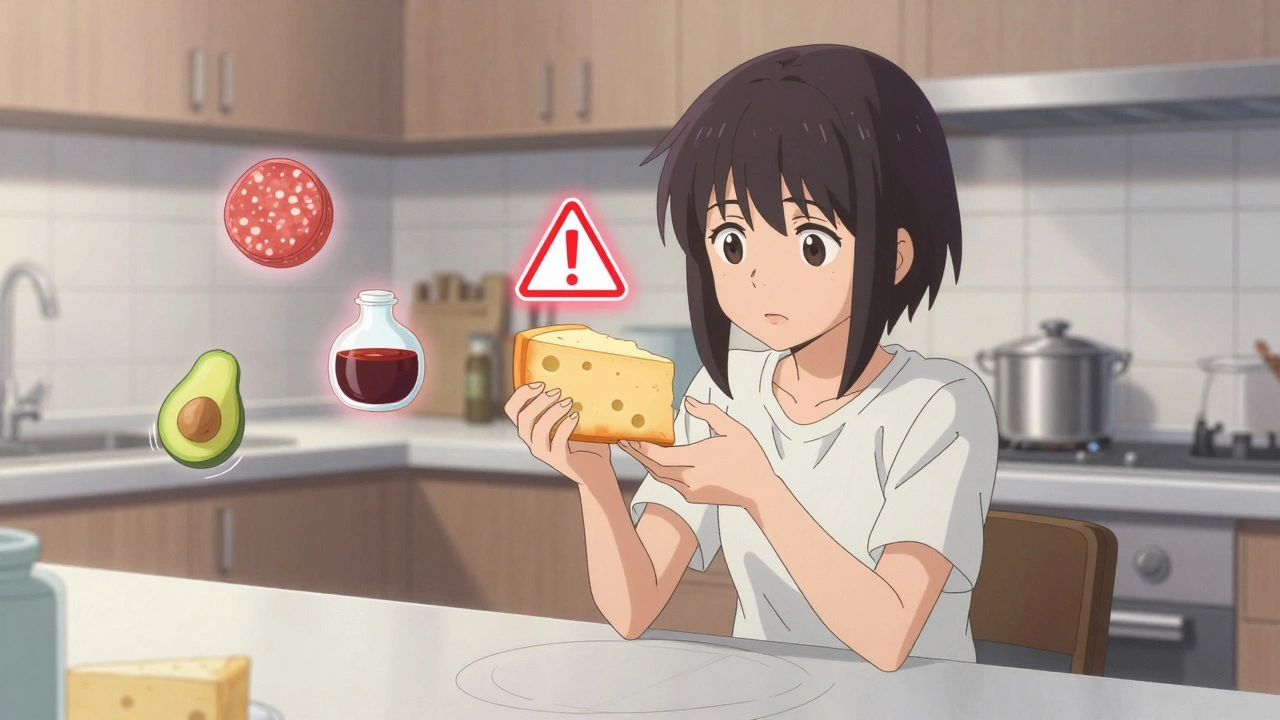
It’s not just about avoiding cheese or wine. Many everyday foods are loaded with tyramine because of how they’re made or stored. Aged cheeses like parmesan, blue cheese, and cheddar are the most well-known offenders, but so are cured meats like salami, pepperoni, and pastrami. Fermented soy products like soy sauce, miso, and tempeh can pack a punch too. Even leftover meals that sit in the fridge for days can become risky—tyramine levels rise as food ages or spoils. Beer, especially draft or homebrewed, and red wine are common triggers, but some non-alcoholic fermented drinks like kombucha can also contain enough to cause trouble. And don’t forget about pickled or smoked fish, overripe bananas, or fava beans. These aren’t exotic foods—they’re in most pantries. The problem isn’t the food itself, it’s the combo with your medication.
People on these meds often think they’re safe if they skip the obvious stuff, but the real danger is in the unnoticed details: a slice of aged cheddar on a sandwich, a splash of soy sauce in stir-fry, or a leftover piece of salami from last night’s snack. Your pharmacist might warn you, but unless you know exactly which foods to check, you’re guessing. That’s why understanding tyramine isn’t about memorizing a list—it’s about learning how food processing and storage change its levels. The goal isn’t to live on plain rice and boiled chicken. It’s to make smart choices so you don’t end up in the ER because of something you ate last night. Below, you’ll find real posts that dig into how medications interact with everyday items, how to spot hidden risks, and what to do if you accidentally eat something risky. This isn’t theory—it’s practical advice from people who’ve been there.