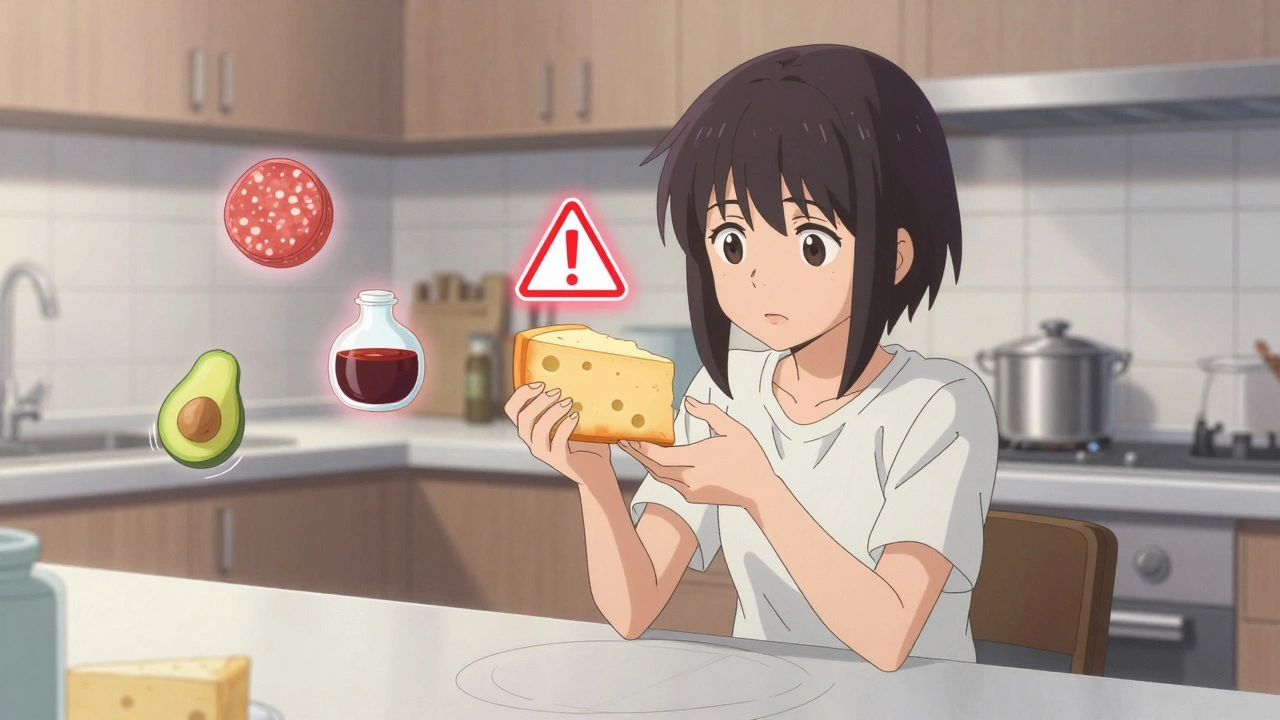
Learn which foods to avoid when taking MAOI antidepressants to prevent dangerous blood pressure spikes. Includes safe food lists, modern alternatives like Emsam, and emergency steps.
Read MoreMAOIs Diet: What to Eat and Avoid to Stay Safe
When you're taking monoamine oxidase inhibitors, a class of antidepressants that block enzymes breaking down neurotransmitters like serotonin and dopamine. Also known as MAOIs, they help with depression and anxiety—but they come with a strict dietary rule: avoid tyramine-rich foods. This isn’t just a suggestion. Eating the wrong food while on MAOIs can cause a sudden, life-threatening spike in blood pressure. It’s not rare. Emergency rooms see cases every year from people who didn’t realize their cheese or pickled fish could trigger a hypertensive crisis.
The real danger comes from tyramine, a naturally occurring compound that builds up in aged, fermented, or spoiled foods. Normally, your body breaks it down with the enzyme monoamine oxidase. But MAOIs shut that down. So tyramine piles up, forcing your blood vessels to constrict and your heart to race. That’s why you can’t have aged cheeses like blue, cheddar, or parmesan. No soy sauce, tap beer, or cured meats like salami. Even leftover meals left in the fridge too long can become risky. And it’s not just food—some over-the-counter cold medicines and herbal supplements like St. John’s wort can also interfere. Your pharmacist should flag these, but you need to know too.
What can you eat? Fresh meats, poultry, and fish. Plain dairy like milk and cottage cheese. Fresh fruits and vegetables. Baked or boiled potatoes. Bread and pasta. Most canned goods are fine if they’re not fermented or aged. The key is freshness. If it’s been sitting out or sitting in storage for days, skip it. Don’t guess. When in doubt, throw it out. This diet isn’t permanent—it’s only while you’re on the medication and for a couple weeks after you stop. But during that time, it’s non-negotiable.
People often think they can have "just a little" of the risky food. That’s how accidents happen. One bite of blue cheese with your salad, one glass of red wine at dinner—enough to send your blood pressure through the roof. Symptoms like pounding headache, blurred vision, chest pain, or nausea aren’t normal. They’re warning signs. If you feel any of these, seek help immediately. You’re not being overly cautious—you’re protecting your life.
This isn’t about restriction for the sake of it. It’s about control. MAOIs can be life-changing for people who haven’t responded to other antidepressants. But that benefit only lasts if you manage the risks. You don’t need to memorize a 50-item list. Focus on the big ones: aged cheese, cured meats, fermented soy, alcohol, and leftovers. Talk to your doctor or pharmacist about your usual meals. They can help you swap risky items for safe ones that still taste good.
Below, you’ll find real-world advice from people who’ve been there—how they adjusted their meals, what they learned the hard way, and how to avoid common mistakes that put your health at risk. These aren’t theory pages. They’re practical guides from patients and clinicians who know what works when your life depends on getting the diet right.